
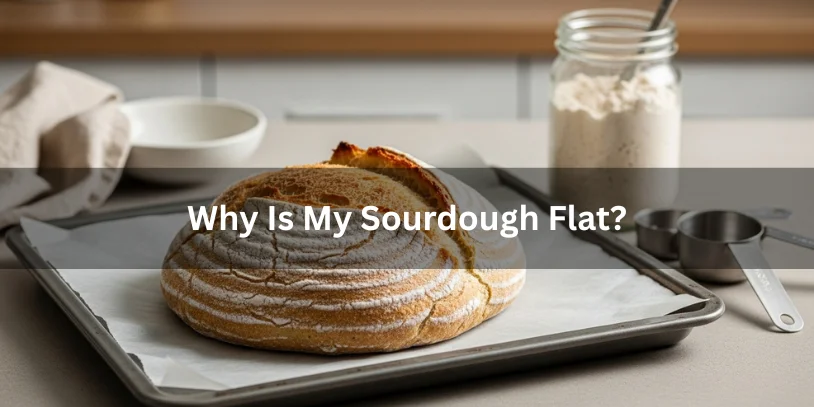
Flat sourdough is one of the most common—and confusing—problems for bakers. The dough bubbles, the loaf tastes good, yet it comes out wide, dense, and disappointing. If you’ve asked, “Why is my sourdough flat?” the answer usually lies in fermentation, structure, or baking conditions. The good news: it’s fixable. This guide explains the causes, helps you diagnose your issue, and shows professional techniques to achieve consistent oven spring—even at home.
What “Flat Sourdough” Actually Means
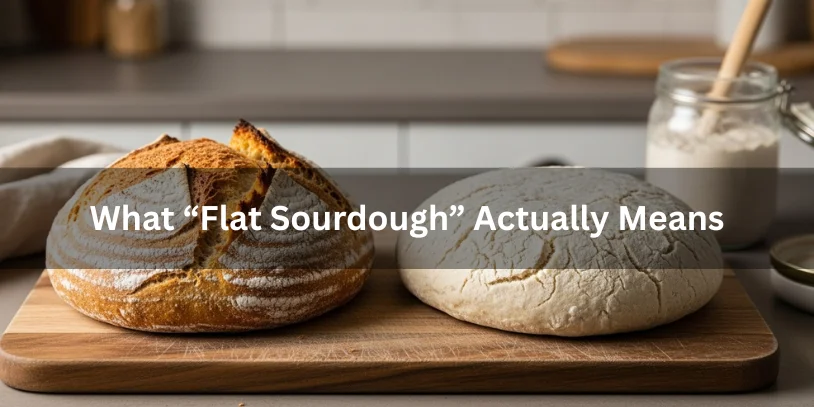
A flat sourdough loaf isn’t just about height. It usually shows up as one or more of these symptoms:
- The dough spreads outward instead of upward
- Little to no oven spring
- Dense or tight crumb
- Loaf collapses after scoring
- The shape looks more like a pancake than a boule
All of these point to the same core issue: the dough produced gas, but couldn’t retain it.
That failure can happen at four main stages:
- Starter development
- Fermentation and proofing
- Gluten strength and shaping
- Baking environment
Let’s break them down.
The Most Common Reasons Sourdough Turns Flat
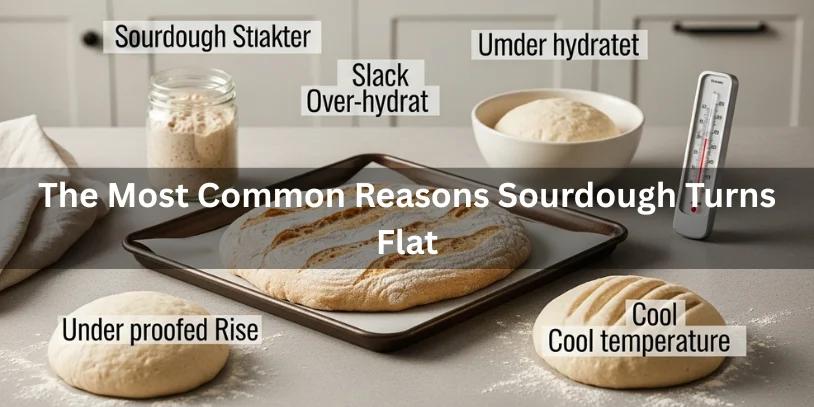
1. Weak or Immature Sourdough Starter
A weak sourdough starter is the #1 hidden reason sourdough doesn’t rise.
Signs of a weak starter:
- Doesn’t double within 4–6 hours after feeding
- Bubbles are small and uneven
- Smells overly sour or alcoholic
- Floats inconsistently (float test is unreliable alone)
Why this causes flat bread:
Wild yeast produces carbon dioxide, while lactic acid bacteria condition the dough. If yeast activity is low, gas production is insufficient. If bacteria dominate, the dough becomes acidic before structure develops.
How to fix it:
- Feed consistently at room temperature
- Use your starter at peak rise, not after it collapses
- Maintain a balanced feeding ratio (for example, 1:2:2 starter, flour, water)
- Avoid baking with a starter younger than 7–10 days
A bubbly starter alone isn’t enough—it must be strong, predictable, and well-timed.
2. Over-Fermented Dough (Most Common Overall Cause)
Over-fermentation happens when dough ferments too long or too warm.
Symptoms:
- Dough feels slack, sticky, and fragile
- Loses shape during shaping
- Spreads immediately after scoring
- Sour flavor without good rise
Why it causes flat sourdough:
As fermentation continues, acids weaken gluten. Eventually, the dough can’t hold the gas it produced, so it collapses either before baking or in the oven.
Fixes:
- Shorten bulk fermentation
- Reduce dough temperature
- Stop bulk fermentation at a 30–50% volume increase, not doubling
- Use visual and tactile cues instead of the clock
If your sourdough looks great during bulk but goes flat later, over-fermentation is likely the culprit.
3. Under-Fermentation (The Opposite, Often Misdiagnosed)
Under-fermented dough hasn’t developed enough gas or structure.
Symptoms:
- Dense crumb
- Pale crust
- Tight interior despite a strong outer shape
- Minimal oven spring
Why it happens:
The yeast hasn’t produced enough carbon dioxide, or fermentation was cut short due to low temperature or time.
How to fix it:
- Extend bulk fermentation slightly
- Ensure dough temperature stays in an active range
- Look for aeration and elasticity, not just time
Flat but dense sourdough is often under-proofed, not over-proofed.
Gluten Development: The Structural Backbone
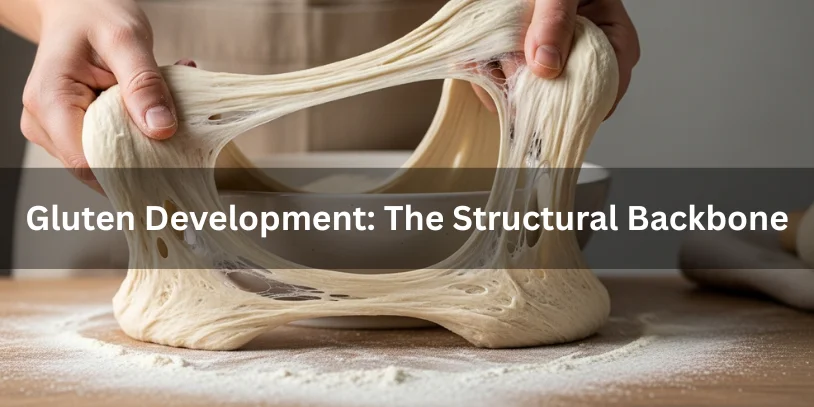
Even with perfect fermentation, sourdough will go flat if the gluten network is weak.
Common Gluten Problems
- Low-protein flour
- Excess hydration
- Inadequate folding
- Rough handling during shaping
Why gluten matters:
Gluten creates the elastic network that traps gas. Without it, carbon dioxide escapes and the loaf spreads.
How to Strengthen Gluten
- Use flour with adequate protein content
- Incorporate stretch-and-fold or coil folds during bulk fermentation
- Perform a windowpane test to assess elasticity
- Match hydration level to your skill and flour type
High-hydration dough is not beginner-friendly. Many flat loaves improve instantly when hydration is reduced.
Shaping and Surface Tension: Where Many Loaves Fail
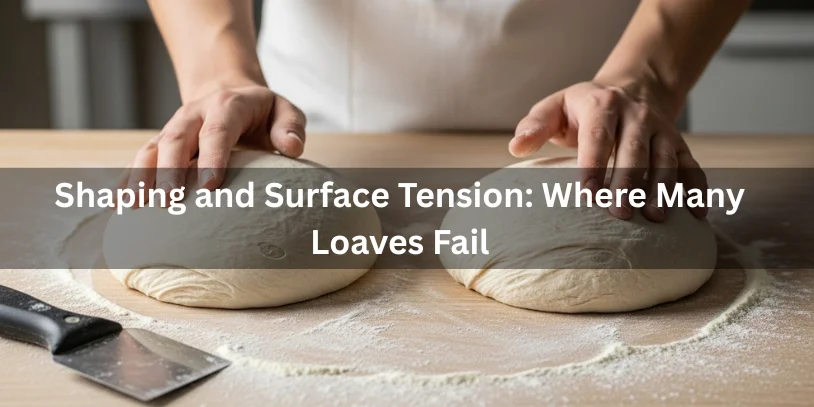
Shaping doesn’t just make bread look good – it gives the loaf strength.
Signs of Poor Shaping
- Dough relaxes immediately after shaping
- No resistance when tightening
- Loaf spreads sideways in the banneton
Why surface tension matters:
Shaping creates a taut outer “skin” that directs oven spring upward instead of outward.
Better Shaping Practices
- Pre-shape and let the dough rest before final shaping
- Use gentle but firm tension
- Avoid tearing the surface
- Place seam-side up in a banneton for support
A well-shaped loaf holds itself together before it ever hits the oven.
Baking Problems That Kill Oven Spring
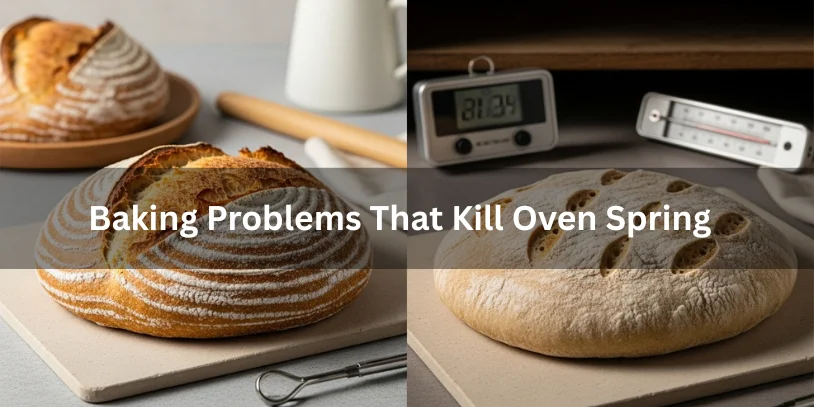
Sometimes the dough is fine-the oven isn’t.
Common Baking Issues
- Oven not fully preheated
- No steam during the first part of the bake
- Shallow or incorrect scoring
- Baking at too low a temperature
Why this matters:
Oven spring happens in the first 10–15 minutes of baking. Heat and steam allow gases to expand rapidly before the crust sets.
How to Improve Oven Spring
- Preheat your oven and baking vessel thoroughly
- Bake in a Dutch oven or with steam
- Score decisively to control expansion
- Start hot, then reduce temperature later
A strong dough baked poorly will still turn out flat.
Environmental Factors Most Bakers Ignore
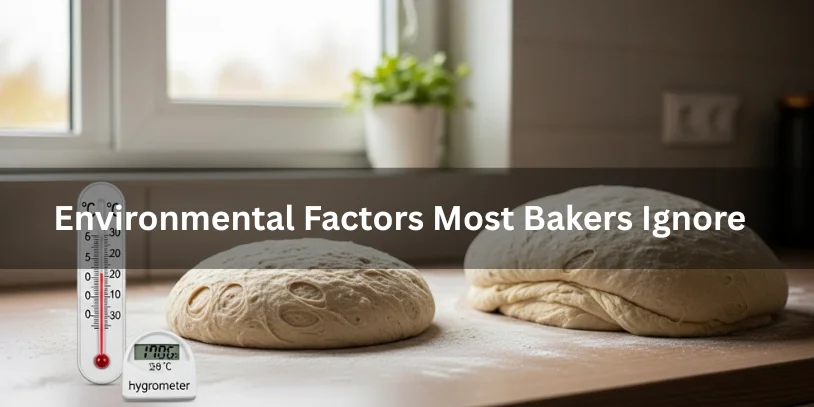
Climate and Temperature
- Warm kitchens accelerate fermentation
- Cold environments slow yeast activity
Altitude
- Higher altitude increases fermentation speed
- Proofing times must be shortened
Flour and Water Variations
- Protein content varies by region
- Mineral-heavy water can affect fermentation
If your sourdough suddenly starts failing after a move or seasonal change, environment is often the reason.
A Simple Diagnosis Framework
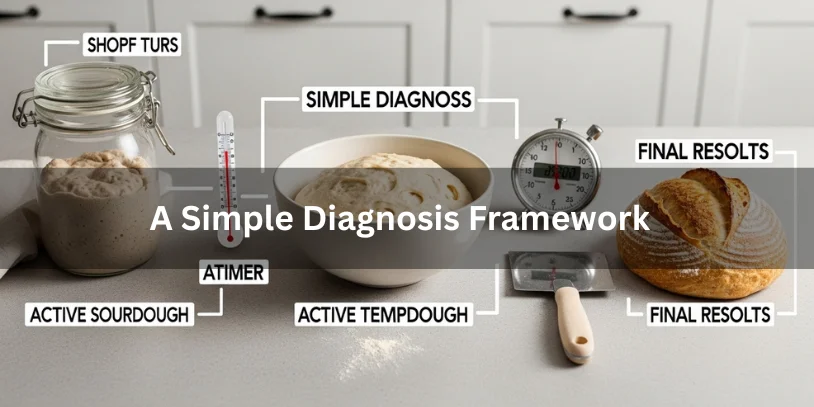
Ask yourself these questions in order:
- Did my starter reliably double before baking?
- Did the dough hold shape after final shaping?
- Did it spread before or after scoring?
- Was oven spring weak or nonexistent?
The first “no” usually reveals the root cause.
Tools That Make Flat Sourdough Less Likely

You don’t need commercial equipment, but these help:
- Digital thermometer (for dough temperature)
- Banneton basket (for structure)
- Bench scraper (for shaping tension)
- Dutch oven or baking stone
- Timer and notebook for tracking fermentation
Consistency matters more than complexity.
Can Flat Sourdough Be Saved?
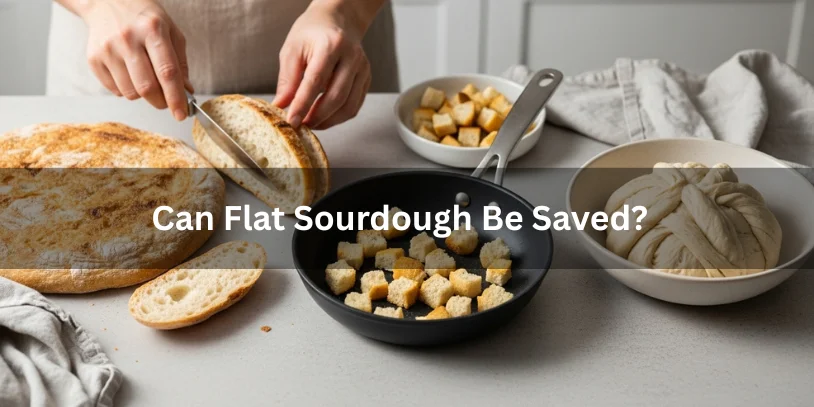
Flat sourdough is usually safe to eat. Texture suffers, but flavor is often fine.
Possible salvage options:
- Toasting
- Croutons
- Breadcrumbs
- Pan-fried slices
Once structure is lost, it can’t be fully restored—but it can still be enjoyed.
FAQs
Why does my sourdough spread instead of rise?
Usually due to weak gluten, over-fermentation, or poor shaping that lacks surface tension.
Can overproofed sourdough be fixed?
Mild overproofing can sometimes be corrected by reshaping, but heavily overproofed dough usually won’t recover.
Is flat sourdough undercooked?
Not necessarily. Flatness is typically a fermentation or structure issue, not a baking-time issue.
Why is my sourdough flat but bubbly?
Gas was produced, but the dough couldn’t retain it due to weak gluten or over-fermentation.
How do I know if my sourdough is overproofed?
Signs include sticky dough, loss of elasticity, and spreading instead of holding shape.
Does hydration affect sourdough rising?
Yes. Excess hydration weakens structure, especially for beginners or low-protein flour.
Why does my sourdough collapse after scoring?
This usually indicates overproofing or insufficient surface tension during shaping.
Conclusion
Flat sourdough isn’t random, and it isn’t a mystery. It’s feedback. When sourdough turns out flat, something went wrong with starter strength, fermentation timing, gluten development, shaping, or baking conditions.
By slowing down, observing your dough, and adjusting one variable at a time, you can turn flat, disappointing loaves into tall, structured sourdough with reliable oven spring.
Great sourdough isn’t about perfection—it’s about understanding cause and effect. Once you do, the rise follows naturally.
Pingback: Best Size Dutch Oven for Sourdough Bread (4.5 vs 5 vs 6 vs 7 Quart Explained) - DreamWhip Bakers