
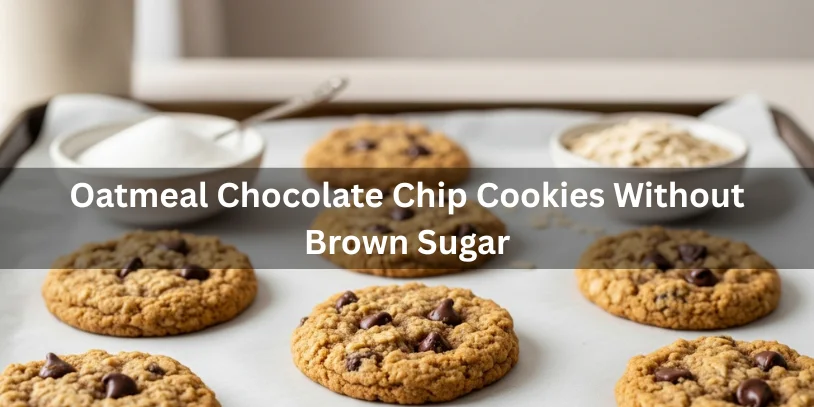
Oatmeal chocolate chip cookies without brown sugar aren’t a compromise—they’re a practical way to bake delicious cookies when brown sugar isn’t on hand, affordable, or preferred. With the right balance of white sugar, oats, moisture, and technique, these cookies stay chewy and flavorful. This guide explains why brown sugar matters, how to replace it, and how to get consistent, reliable results at home or in small bakeries.
What Are Oatmeal Chocolate Chip Cookies Without Brown Sugar?
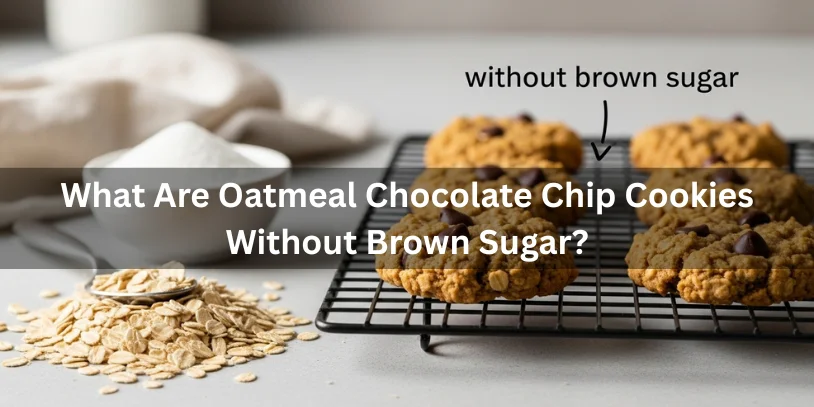
They are classic oatmeal chocolate chip cookies made without brown sugar, relying instead on white sugar and strategic moisture sources like milk, honey, or maple syrup. The oats provide structure and chew, while chocolate chips add richness and contrast.
Without brown sugar’s molasses content, the cookies bake lighter in color and require deliberate moisture management to avoid dryness or excessive crisping.
Why Brown Sugar Is Usually Used in Cookies
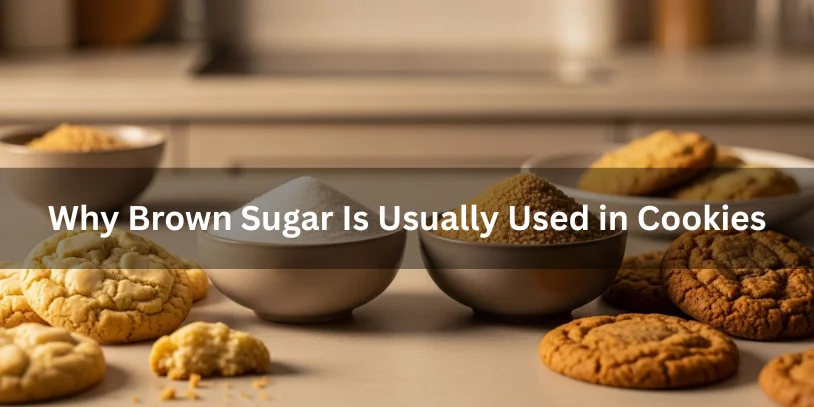
Brown sugar isn’t just about sweetness. It performs several technical roles in baking:
- Moisture retention: Molasses holds water, keeping cookies soft
- Chewiness: It slows sugar crystallization
- Flavor depth: Adds caramel notes
- Browning: Encourages deeper color during baking
When you bake oatmeal cookies without brown sugar, you remove all four effects at once. The solution is not a single substitute, but a system.
Can You Make Oatmeal Chocolate Chip Cookies Without Brown Sugar?
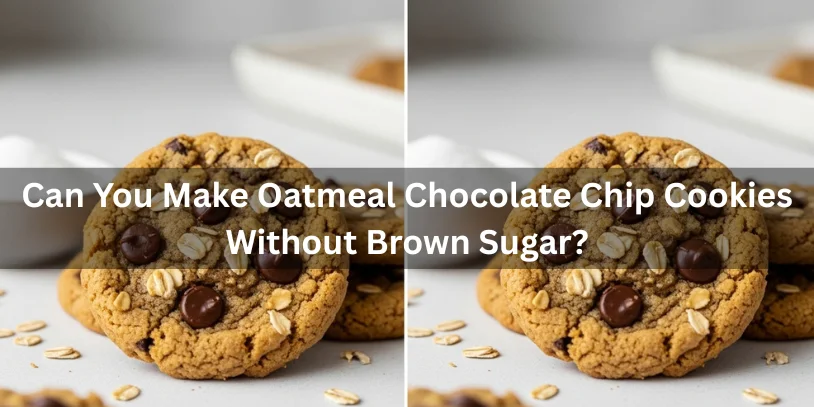
Yes. You can make excellent oatmeal chocolate chip cookies without brown sugar by combining white sugar with a small amount of added moisture and proper dough handling. The oats play a crucial role by absorbing liquid and creating chew when rested before baking.
White Sugar vs Brown Sugar: What Actually Changes?
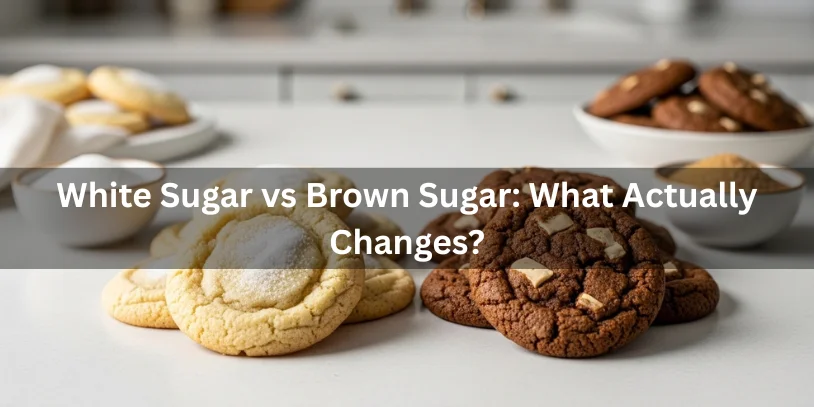
| Feature | With Brown Sugar | Without Brown Sugar |
|---|---|---|
| Color | Dark golden | Pale golden |
| Texture | Chewy, soft | Crisp edges unless adjusted |
| Flavor | Caramel, warm | Clean, sweet |
| Spread | Moderate | Slightly more |
| Moisture | Naturally high | Must be added |
Understanding this difference allows you to adjust intentionally instead of guessing.
The Core Principle: Replace Function, Not Ingredient
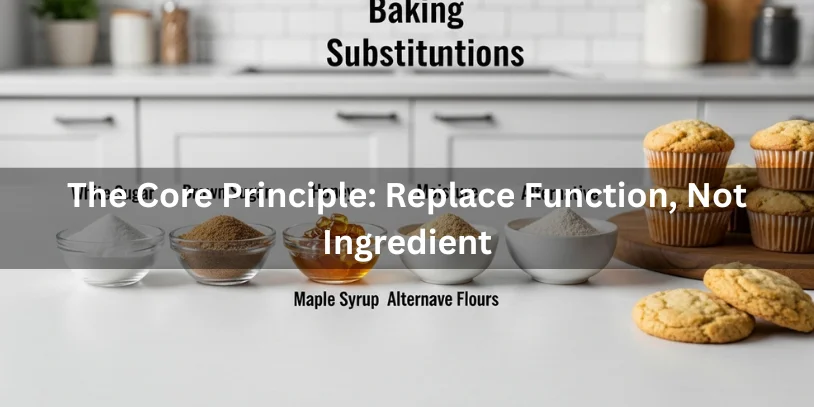
Brown sugar contains sucrose + molasses. When you remove it, you must replace:
- Sweetness → white sugar
- Moisture → liquid sweeteners or dairy
- Chew control → oats + dough rest
- Flavor depth → optional spices or syrups
This is why simply swapping brown sugar for white sugar often leads to dry or flat cookies.
Best Brown Sugar Substitutes for Oatmeal Cookies
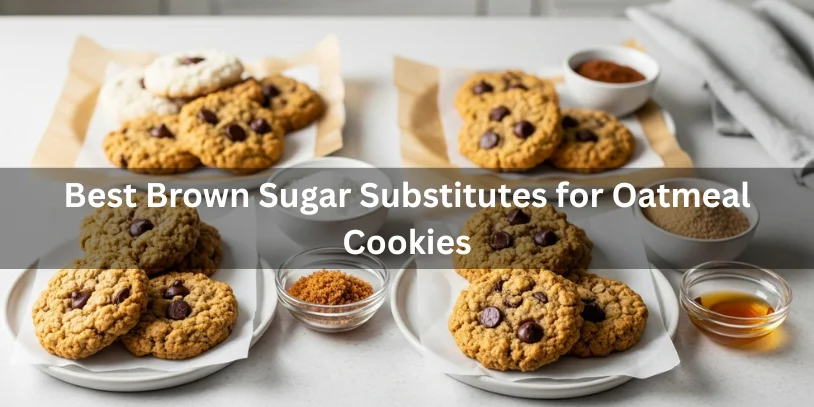
1. White Sugar + Milk (Most Accessible)
- Works globally
- Neutral flavor
- Best for pantry baking
Ratio:
Use white sugar as normal + 1–2 tablespoons milk per batch.
2. White Sugar + Honey
- Excellent chew
- Slight floral sweetness
- Ideal in dry climates
Note: Reduce other liquids slightly.
3. White Sugar + Maple Syrup
- Warm flavor similar to molasses
- Common in North America
- Adds moisture and color
4. Coconut Sugar
- Closest one-to-one replacement
- Naturally contains minerals
- More expensive in some regions
5. Date Syrup or Date Paste
- Popular in Middle Eastern kitchens
- Creates dense, soft cookies
- Strong flavor profile
Choosing the Right Substitute Based on Your Goal
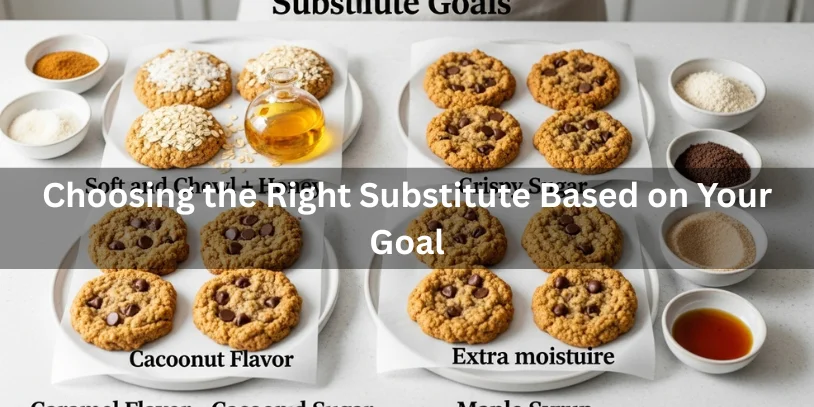
- Chewy cookies: Honey, maple syrup, dough rest
- Neutral flavor: Milk or water
- Caramel notes: Maple syrup or coconut sugar
- Vegan baking: Plant milk + maple syrup
- Bakery scaling: White sugar + measured liquid (consistent cost)
Ingredient Selection That Makes or Breaks Texture
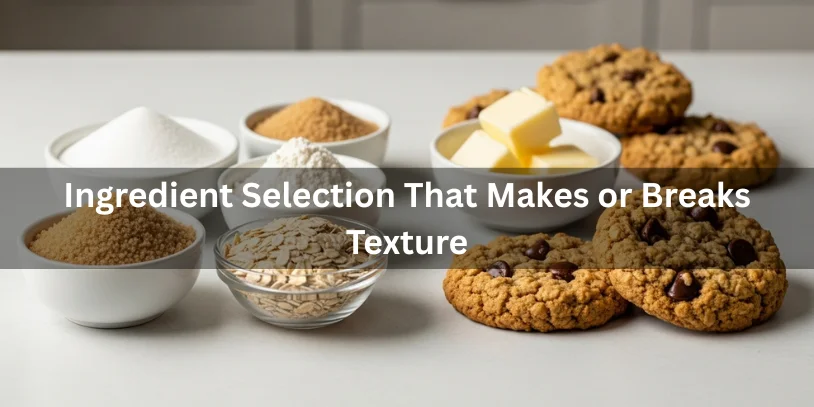
Rolled Oats vs Quick Oats
- Rolled oats: Chewier, structured, bakery-style
- Quick oats: Softer, less defined texture
For cookies without brown sugar, rolled oats are preferred because they compensate for lost chew.
Chocolate Chips
- Semi-sweet chips balance white sugar best
- Dark chocolate works well with honey or maple syrup
Fat Choice
- Butter gives flavor and spread
- Plant-based butter works but may require chilling
Step-by-Step Method (No Brown Sugar)
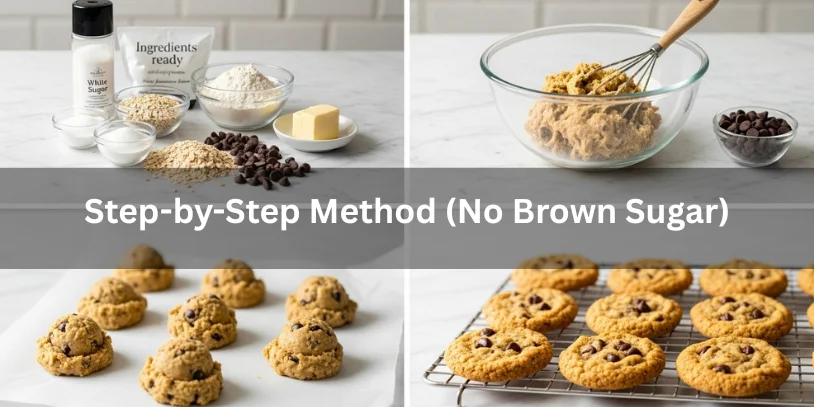
Ingredients
- All-purpose flour
- Rolled oats
- White granulated sugar
- Unsalted butter (or plant butter)
- Egg (or flax egg)
- Milk, honey, or maple syrup
- Baking soda
- Salt
- Chocolate chips
- Vanilla extract
Method
- Cream butter and white sugar until pale and fluffy
- Add egg, vanilla, and liquid sweetener or milk
- Mix dry ingredients separately
- Combine gently to avoid overworking
- Fold in oats and chocolate chips
- Rest dough 20–30 minutes
- Bake at moderate temperature until edges set and centers remain soft
The resting step is critical. Oats need time to hydrate and lock in moisture.
Why Dough Resting Matters More Without Brown Sugar
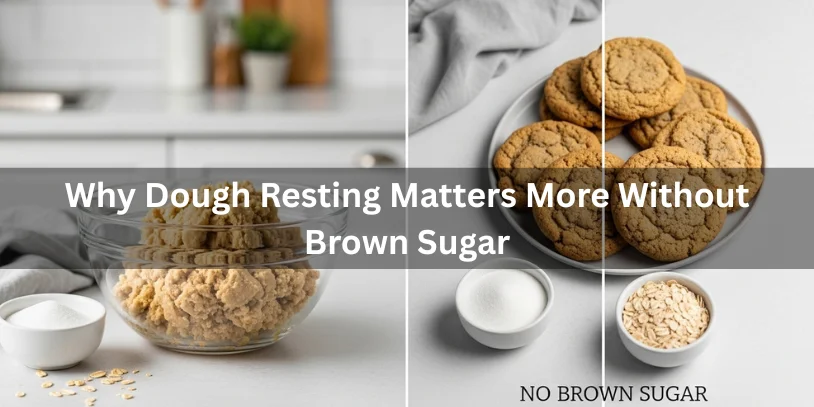
Oats absorb liquid slowly. Without molasses, that hydration step becomes essential. Skipping the rest often leads to:
- Dry centers
- Uneven spread
- Crumbly texture
Even a short rest dramatically improves chew.
Baking Time Adjustments That Prevent Dry Cookies
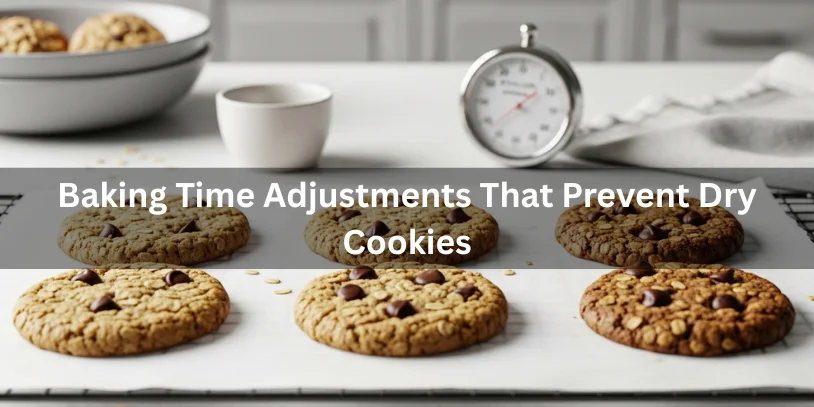
Without brown sugar, cookies can overbake quickly.
- Bake until edges are set
- Centers should look slightly underdone
- Cookies firm up while cooling
This is especially important in convection ovens or hot climates.
Climate and Regional Baking Considerations
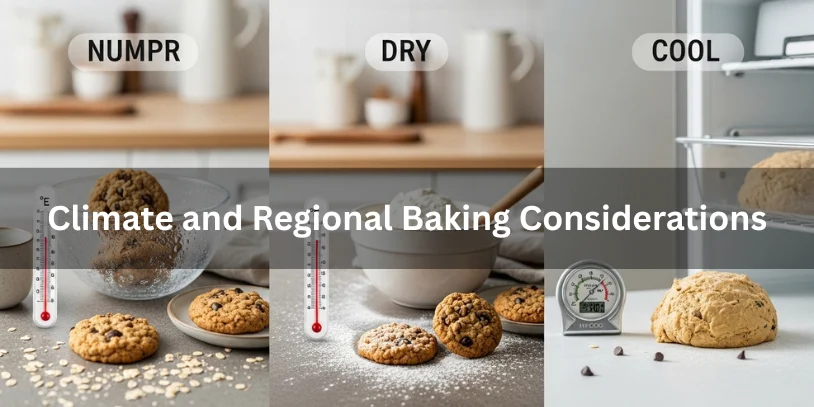
Dry Climates (Middle East, inland regions)
- Increase liquid by 1 tablespoon
- Cover dough while resting
Humid Climates (South Asia, coastal regions)
- Reduce liquid slightly
- Chill dough briefly before baking
UK & Australia
- Caster sugar dissolves faster than granulated sugar
- Slightly reduce creaming time to avoid excess spread
Scaling This Recipe for Bakeries
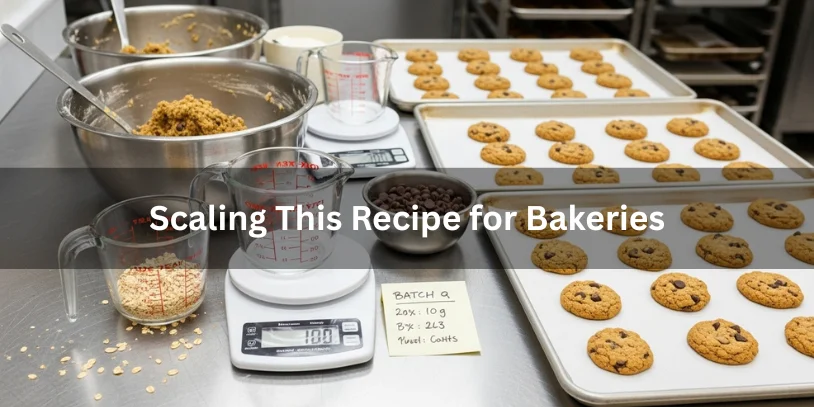
For small bakeries or commercial kitchens:
- White sugar offers stable pricing worldwide
- Liquid moisture can be standardized by weight
- Coconut sugar costs vary widely by region
- Dough resting improves batch consistency
This makes brown-sugar-free oatmeal cookies practical for global menus.
Common Problems and How to Fix Them
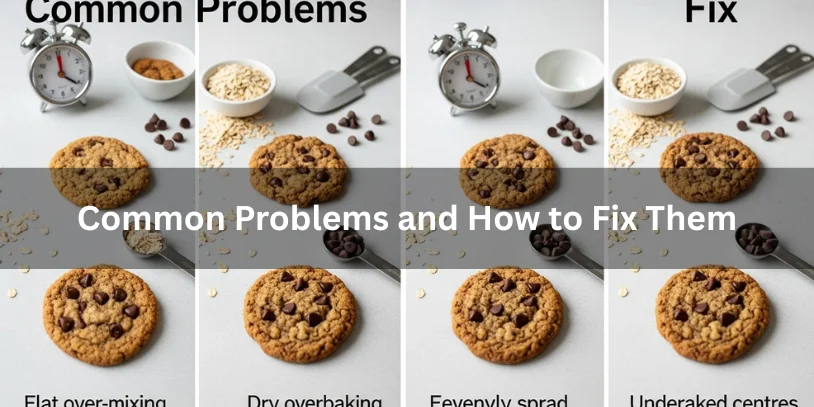
Cookies are dry
- Add more liquid
- Shorten bake time
- Increase dough rest
Cookies spread too much
- Chill dough
- Check butter temperature
- Reduce liquid slightly
Cookies taste flat
- Add cinnamon or vanilla
- Use maple syrup instead of milk
Cookies are pale
- This is normal without molasses
- Flavor is unaffected
Storage and Shelf Life
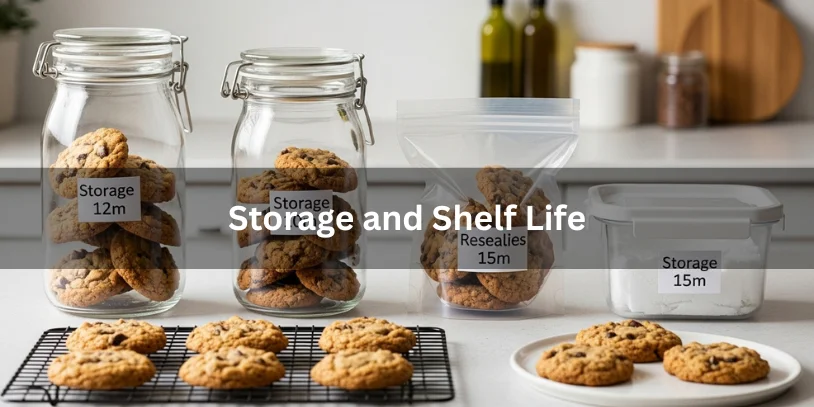
- Store airtight at room temperature for 3–4 days
- Freeze baked cookies up to 2 months
- Dough freezes well with white sugar base
Cookies without brown sugar stale slightly faster unless moisture is properly balanced.
Are Oatmeal Cookies Without Brown Sugar Healthier?
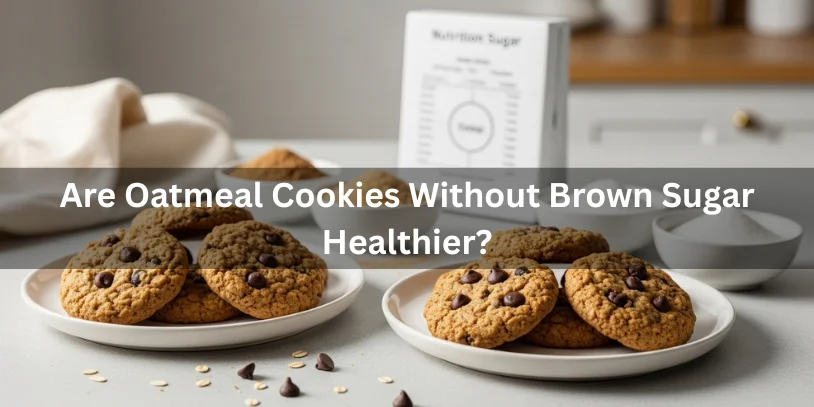
They are not automatically healthier, but they can be:
- Easier to reduce refined sugar
- Adaptable to natural sweeteners
- More flexible for dietary needs
Oats provide fiber and satiety regardless of sugar choice.
FAQs
Can I make oatmeal chocolate chip cookies without brown sugar?
Yes. Use white sugar with added moisture and rest the dough for best texture.
What happens if you don’t use brown sugar in cookies?
Cookies bake lighter, may crisp faster, and need moisture compensation.
What is the best substitute for brown sugar in oatmeal cookies?
White sugar plus honey or maple syrup gives the best balance of chew and flavor.
Why are my cookies dry without brown sugar?
Lack of molasses moisture and overbaking are the usual causes.
Do oatmeal cookies need brown sugar to be chewy?
No. Proper hydration and oat selection can create chew without it.
Can I use quick oats instead of rolled oats?
Yes, but texture will be softer and less structured.
Are these cookies suitable for vegan baking?
Yes. Use plant butter, plant milk, and flax eggs.
Conclusion
Oatmeal chocolate chip cookies without brown sugar are not a backup recipe—they’re a flexible, globally accessible way to bake consistently great cookies. By replacing brown sugar’s function instead of the ingredient itself, you control texture, moisture, and flavor with precision.
Whether you’re baking at home with limited ingredients or adapting recipes for international kitchens, this method delivers chewy centers, balanced sweetness, and reliable results every time.