
Why Cookies Turn Hard After Cooling (Quick Explanation)
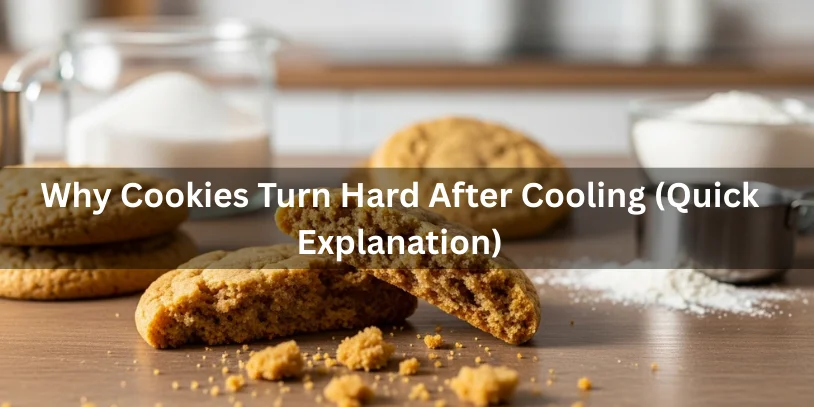
When cookies cool, moisture escapes, sugars crystallize, and starches firm up. If the recipe, bake time, or storage is even slightly off, that normal process turns cookies dry and hard instead of soft and chewy.
This problem is incredibly common. It affects first-time bakers, experienced home cooks, and even small bakeries. The key difference between soft cookies and hard ones usually comes down to minutes, grams, and storage choices—not baking talent.
What “Cookies Hard After Cooling” Really Means
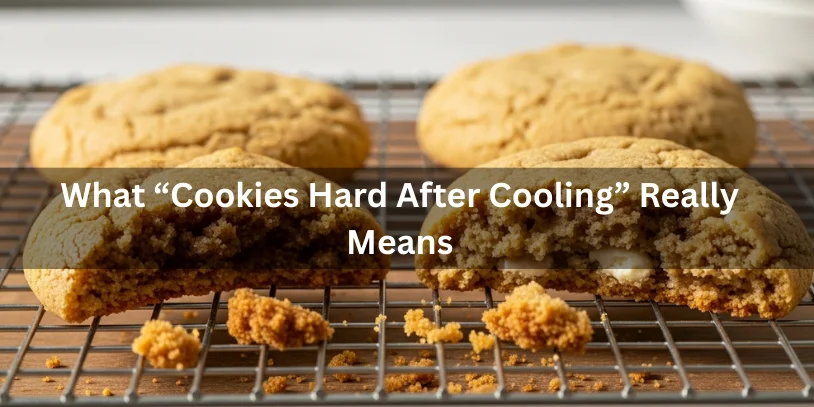
Cookies that are hard after cooling often:
- Feel soft straight out of the oven
- Firm up within 30–60 minutes
- Become stiff or brittle by the next day
This doesn’t automatically mean the cookies are burned. In many cases, they’re overbaked internally, low on moisture-retaining ingredients, or exposed to dry air too soon.
The Baking Science Behind Hard Cookies
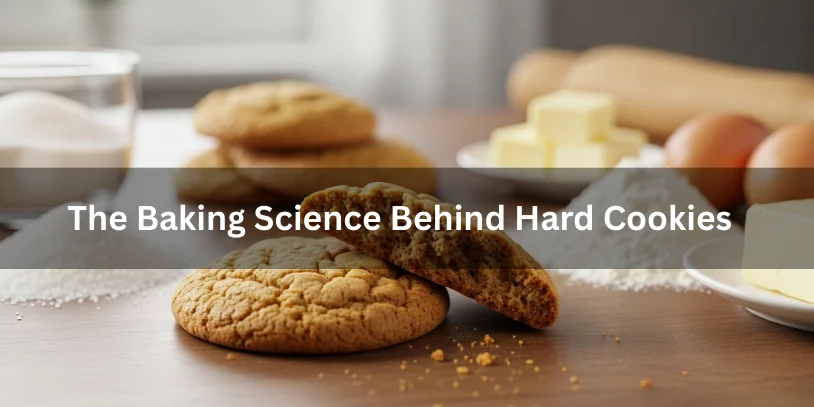
Understanding what happens as cookies cool makes the fixes much clearer.
Moisture Loss
Water evaporates rapidly as cookies cool. Cookies with low fat, low brown sugar, or too much flour lose moisture faster.
Sugar Crystallization
White sugar recrystallizes as it cools, creating a firmer bite. Brown sugar contains molasses, which slows this process and keeps cookies soft.
Starch Retrogradation
Flour starches realign and stiffen as temperature drops—similar to bread going stale. Excess flour accelerates this.
Heat Carryover
Cookies continue baking on the tray after removal from the oven. This “carryover baking” is a major cause of cookies that harden after cooling.
The Most Common Reasons Cookies Get Hard After Cooling
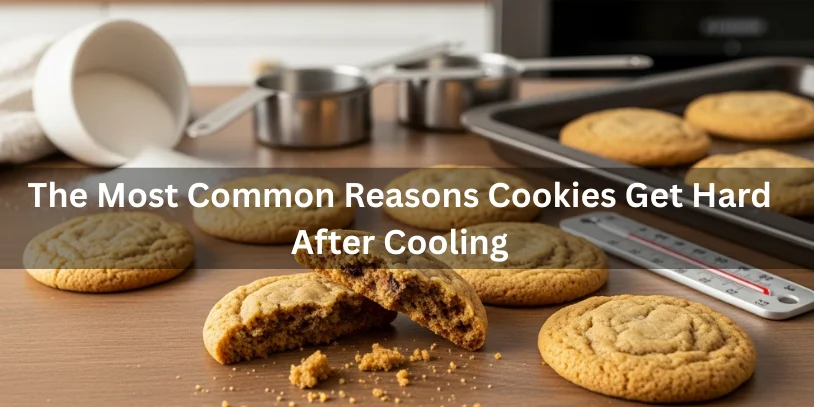
1. Overbaking (The #1 Cause)
Even one extra minute can push cookies past the moisture threshold.
Signs
- Golden edges with dry centers
- Cookies feel firm as soon as they cool
Fix
Remove cookies when centers look slightly underdone. They should finish setting on the tray.
2. Too Much Flour
Scooping flour directly from the bag packs it down, adding more starch than the recipe intends.
Fix
- Spoon flour into the measuring cup and level it
- Or use a digital scale for accuracy
3. Wrong Sugar Balance
- Too much white sugar = crisp, hard cookies
- Too little brown sugar = poor moisture retention
Fix
Use more brown sugar than white sugar for soft cookies.
4. Low Fat Content
Butter, oil, and egg yolks trap moisture. Reducing fat makes cookies dry faster.
Fix
- Avoid “low-fat” substitutions
- Don’t replace butter entirely with margarine
5. Oven Temperature Issues
Many ovens run hotter than the dial indicates, speeding moisture loss.
Fix
Use an oven thermometer and adjust temperature if needed.
Ingredient Choices That Make or Break Cookie Softness
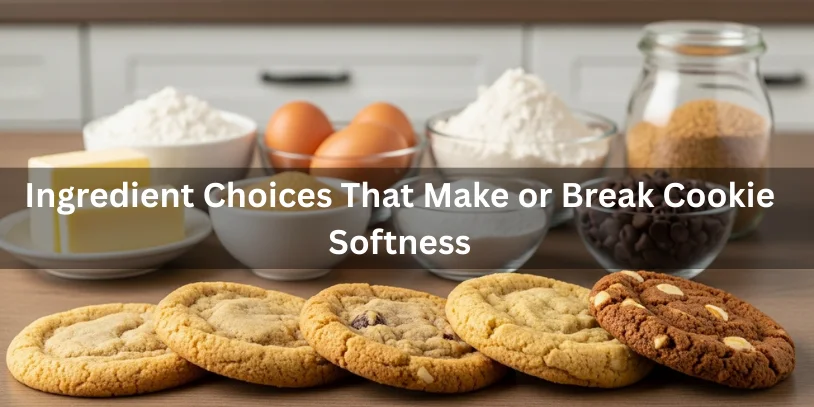
Butter vs Oil in Cookies
- Butter: Great flavor, moderate softness
- Oil: Excellent moisture retention, less flavor
Many bakeries use a combination for balance.
Brown Sugar vs White Sugar
| Sugar Type | Effect on Texture |
|---|---|
| Brown sugar | Soft, chewy, moist |
| White sugar | Crisp edges, firmer bite |
A common soft-cookie ratio is 60–70% brown sugar.
Eggs: Whole vs Yolk
- Egg whites add structure
- Egg yolks add fat and softness
For softer cookies, recipes may use extra yolk or one whole egg plus one yolk.
Baking Technique Mistakes That Cause Hard Cookies
- Baking until cookies “look done”
- Leaving cookies on hot trays too long
- Using dark metal baking sheets
- Skipping tray rotation
- Baking multiple trays unevenly
Cookies should look slightly underbaked when removed from the oven.
How Cooling Affects Cookie Texture
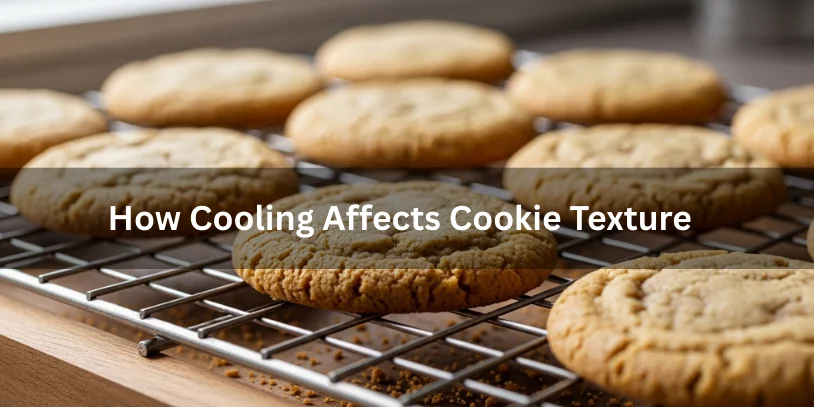
Proper Cooling Process
- Rest cookies on the tray for 3–5 minutes
- Transfer to a cooling rack
- Let cool fully before storage
Leaving cookies on a hot tray too long continues baking them from underneath.
Storage Mistakes That Make Cookies Hard Overnight
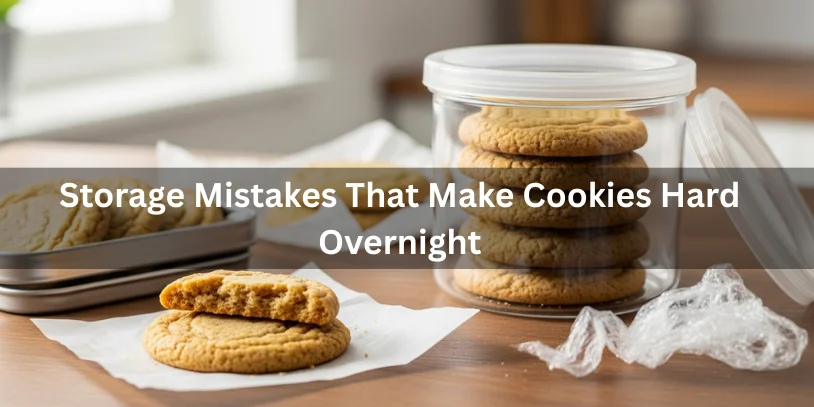
- Leaving cookies uncovered
- Storing in the refrigerator without sealing
- Using containers that aren’t airtight
Best Storage Method
- Fully cool cookies
- Store in an airtight container
- Add a slice of bread or tortilla to maintain moisture (replace daily)
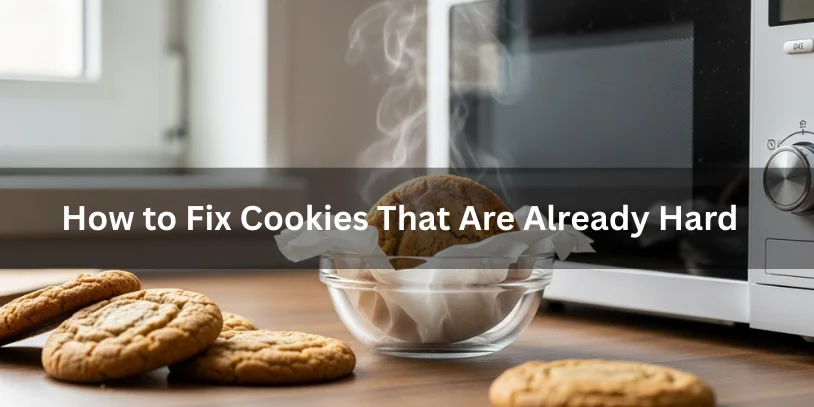
How to Fix Cookies That Are Already Hard
Quick Fixes
- Microwave with a damp paper towel for 10–15 seconds
- Seal in an airtight container overnight with bread
- Lightly steam in a covered container (short exposure only)
Long-Term Fixes
- Reduce bake time by 1–2 minutes
- Increase brown sugar slightly
- Add 1 teaspoon cornstarch to the dough
- Lower oven temperature by about 25°F (10–15°C)
Soft Cookies vs Hard Cookies: At-a-Glance Comparison
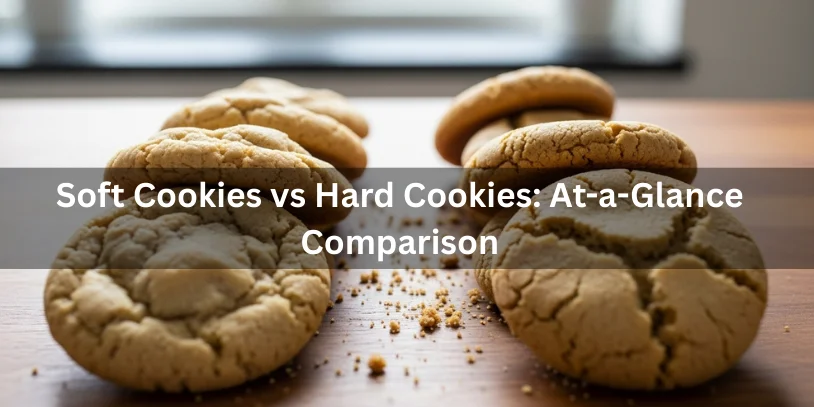
| Factor | Soft Cookies | Hard Cookies |
|---|---|---|
| Bake time | Slightly underbaked | Fully baked |
| Sugar | More brown sugar | Mostly white sugar |
| Flour | Properly measured | Excess |
| Fat | Adequate butter/oil | Reduced |
| Storage | Airtight | Exposed |
Climate and Environment Matter More Than You Think
Dry Climates
Cookies lose moisture faster.
- Increase fat slightly
- Store immediately after cooling
Humid Climates
Cookies stay soft longer but can turn soggy.
- Use airtight containers
- Avoid refrigeration unless sealed
High Altitude
Lower air pressure speeds evaporation.
- Slightly reduce baking time
- Increase moisture-rich ingredients
Commercial Bakery vs Home Baking: Key Differences
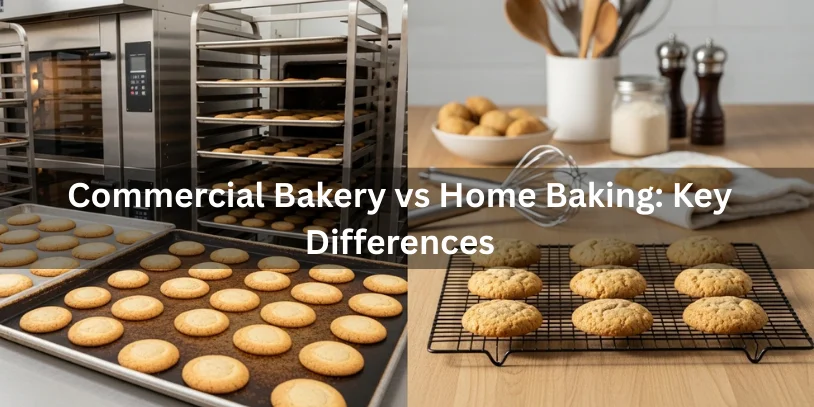
How Bakeries Keep Cookies Soft
- Higher fat ratios
- Precise bake timing
- Immediate airtight storage
- Controlled humidity environments
For Home Bakers
You can replicate this by:
- Baking in small batches
- Using timers religiously
- Storing cookies as soon as they cool
Tools That Help Prevent Hard Cookies
- Oven thermometer
- Digital kitchen scale
- Light-colored baking sheets
- Cooling racks
- Airtight storage containers
These tools are inexpensive and dramatically improve consistency.
When Crisp Cookies Are Actually the Goal
Not all hard cookies are mistakes. Some recipes are designed to be crisp:
- Biscotti
- Shortbread
- Ginger snaps
The key is intent. If you expect soft cookies but baked a crisp-style formula, the texture will feel wrong.
FAQs
Why are my cookies soft when hot but hard when cool?
Heat temporarily softens sugar and fat. Once cooled, moisture loss and sugar crystallization reveal the true texture.
Can hard cookies be softened permanently?
You can soften them temporarily, but fixing the recipe and bake time is the only permanent solution.
Does refrigerating cookies make them hard?
Yes, unless sealed tightly. Refrigeration accelerates moisture loss.
How long should cookies cool before storage?
Until fully room temperature, usually 30–45 minutes.
Why do bakery cookies stay soft longer?
They use precise ratios, controlled baking times, and airtight storage immediately after cooling.
Is overbaking always visible?
No. Cookies can be overbaked internally without looking burnt.
Can flour type affect cookie hardness?
Yes. Cake flour produces softer cookies than all-purpose flour.
Conclusion
Cookies that harden after cooling aren’t a failure—they’re feedback. In most cases, the fix is simple: bake less, measure better, and store smarter. By controlling moisture, sugar balance, and cooling, you can consistently produce soft, chewy cookies that stay that way for days.
Once you understand what’s happening beneath the surface, cookie texture stops being a mystery and becomes a skill you can repeat every time.