
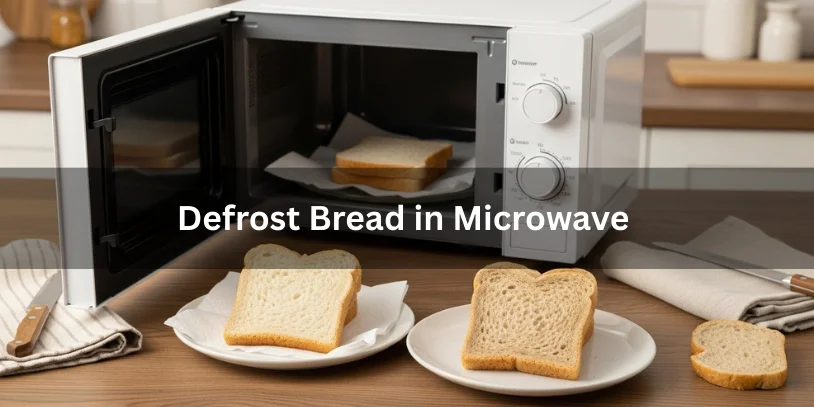
Yes, you can defrost bread in the microwave, but the trick is to use short bursts so it softens without turning rubbery or dry. The exact timing depends on whether you are defrosting slices, buns, rolls, or part of a loaf.
This guide shows how long to microwave frozen bread, how to defrost different types properly, and how to avoid the most common mistakes that ruin texture.
Can You Defrost Bread in the Microwave?
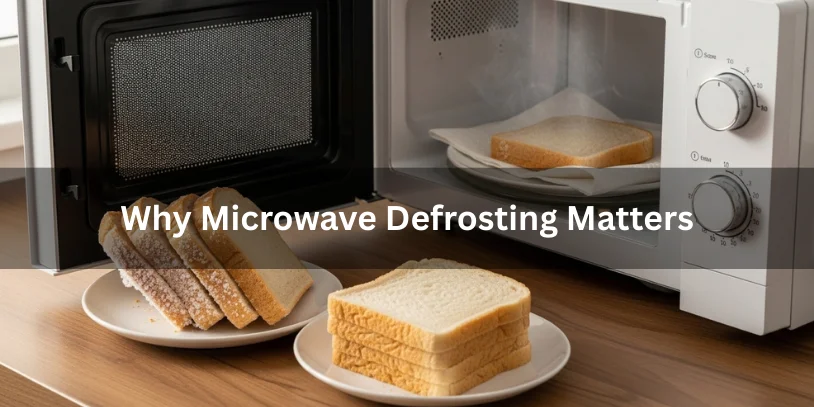
Yes, bread can be defrosted in the microwave. It is one of the fastest ways to soften frozen bread when you only need a slice, a roll, or a bun quickly.
The key is to use low power or short intervals instead of full power. That helps the bread thaw without becoming chewy, tough, or unevenly heated.
What Happens If You Microwave Bread the Wrong Way?
- Bread turns rubbery or tough
- Uneven thawing causes cold spots
- Overheating dries out slices
- Risk of consuming unsafe thawed bread if left too long
How Long to Defrost Bread in the Microwave
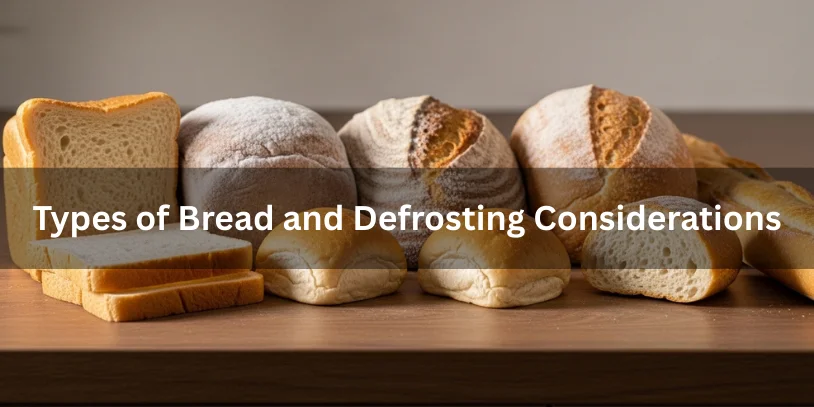
Not all bread thaws the same way. Understanding your bread type ensures proper texture:
| Bread Type | Ideal Microwave Method | Notes |
|---|---|---|
| White sandwich | Paper towel wrap, 10–12 sec per slice | Soft, light texture |
| Whole wheat | 12–15 sec per slice | Slightly denser, requires extra time |
| Artisan / sourdough | Damp cloth wrap, 15–20 sec per slice | Retains crust, needs resting |
| Flatbread / Roti | Damp cloth, 12–18 sec | Prevents dryness |
| Burger buns | Wrap individually, 15 sec | Perfect for sandwiches |
| Gluten-free | Damp wrap, 15–20 sec | Sensitive to moisture loss |
Thicker bread usually needs more time, but it is still safer to microwave in short bursts than in one long cycle.
How to Defrost Bread in the Microwave Step by Step
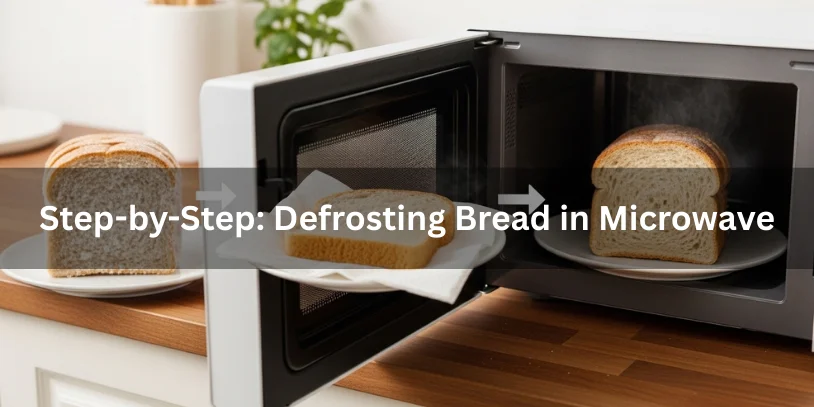
For Individual Slices
- Remove frozen slice from packaging.
- Wrap in a paper towel to retain moisture.
- Place on a microwave-safe plate.
- Set microwave power to 30–50%.
- Heat for 10–15 seconds.
- Check texture and repeat in 5-second intervals if necessary.
- Allow to rest for 30 seconds before eating.
For Multiple Slices
- Stack slices with paper towels between each.
- Heat 20–30 seconds depending on thickness.
- Rotate or flip for even thawing.
For Half Loaf
- Wrap the loaf loosely in paper towel or damp cloth.
- Microwave for 30 seconds, then flip.
- Repeat 20–30 second intervals until thawed.
For Whole Loaf
- Remove plastic packaging.
- Wrap in damp cloth to prevent crust drying.
- Microwave in 30-second intervals, checking after each.
- Let the loaf rest for 1–2 minutes before slicing.
How to Defrost Buns and Bread Rolls in the Microwave
Buns and bread rolls usually defrost quickly in the microwave because they are smaller than a full loaf. Wrap them lightly in a paper towel and microwave in short bursts so they soften without going chewy.
For most buns or rolls, start with about 10 to 15 seconds, then check and add a few more seconds only if needed. Let them rest for about 30 seconds before slicing or serving.
How to Defrost Hot Cross Buns in the Microwave
Hot cross buns can be defrosted in the microwave, and they usually respond well to short, gentle heating. Wrap one bun in a paper towel and microwave it for about 10 to 15 seconds, then let it sit briefly before checking the center.
If it is still cold, add another 5-second burst rather than one long blast. This helps the bun stay soft instead of turning tough or drying out around the edges.
How to Defrost Sourdough Bread in the Microwave
Sourdough usually needs a little more care in the microwave because it is denser than standard sandwich bread. Use a damp paper towel or cloth and microwave it on lower power or in short bursts so the crumb softens without the crust going hard.
For slices, start with about 15 to 20 seconds. For larger pieces, microwave in short intervals and rest the bread between rounds so the moisture redistributes more evenly.
Best Way to Defrost Bread in the Microwave
The best way to defrost bread in the microwave is to use low power or short bursts, wrap the bread lightly to protect moisture, and let it rest before eating. This helps the center thaw without making the outer edges hot, tough, or dry.
For most bread, short heating followed by a short rest works better than one long microwave cycle. That is especially true for buns, rolls, and thicker slices.
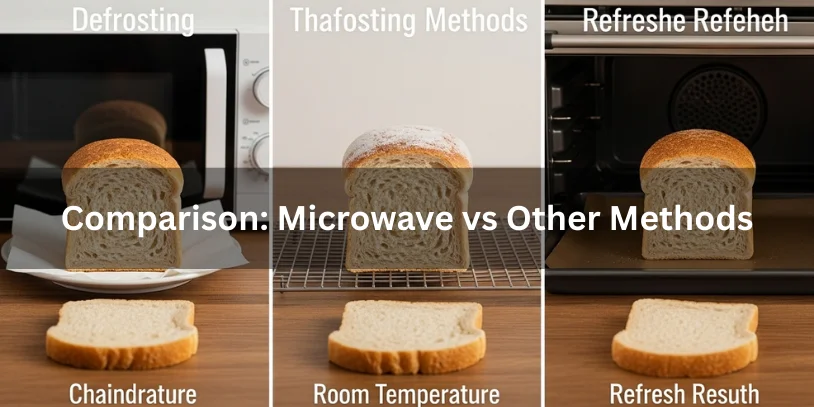
Comparison: Microwave vs Other Methods
| Method | Speed | Texture | Best Use |
|---|---|---|---|
| Microwave | Fastest | Good if careful | Individual slices, quick meals |
| Room Temp | Slow | Best crust and crumb | Artisan loaves, bulk thawing |
| Oven | Moderate | Excellent | Whole loaf, special occasions |
| Toaster | Quick | Slightly toasted | Sandwich slices, breakfast |
Tools and Appliance Settings
Use low power if your microwave allows it, usually around 30 to 50 percent. A microwave-safe plate and a paper towel or damp cloth help protect the bread from drying out too quickly.
If your microwave has a defrost setting, it can help, but short manual intervals usually give more control.
Common Mistakes to Avoid
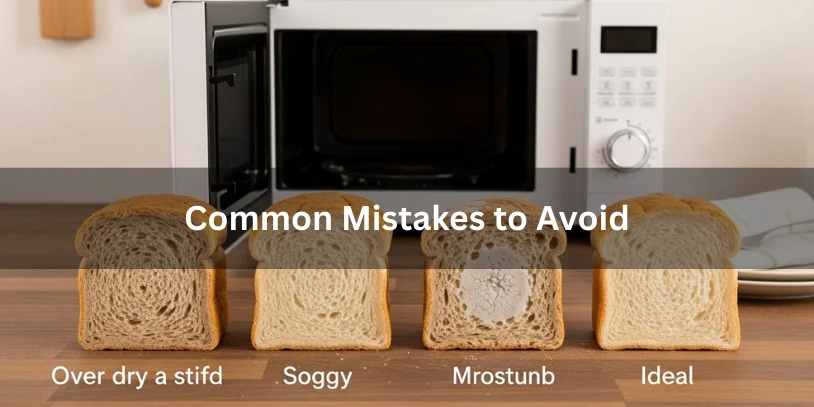
- Using full power: overcooks outer edges
- Defrosting in plastic packaging: risk of melting or chemical contamination
- Ignoring resting time: bread may be unevenly warm
- Skipping wrapping: moisture loss leads to tough slices
- Overheating artisan loaves: crust becomes hard
Food Safety Guidelines
- Freeze bread at −18°C or lower in airtight bags.
- Do not refreeze thawed bread.
- Consume immediately after microwaving.
- Follow USDA/FDA guidelines for food safety.
- Thawed bread: room temperature safe for 24–48 hours.
Alternative Defrosting Methods
- Room Temperature: Slowest, best texture, no appliances needed.
- Oven: Whole loaves, preheated 160°C (320°F) for 5–10 minutes.
- Toaster: Perfect for sliced bread; simultaneous thaw and toast.
- Air Fryer: 2–3 minutes for small loaves or buns, preserves crust.
Best Practices Checklist
Use low power settings
Wrap bread to retain moisture
Heat in short intervals
Rotate or flip slices for even thawing
Allow a rest period after microwaving
Toast afterward if desired
Avoid microwaving in plastic packaging
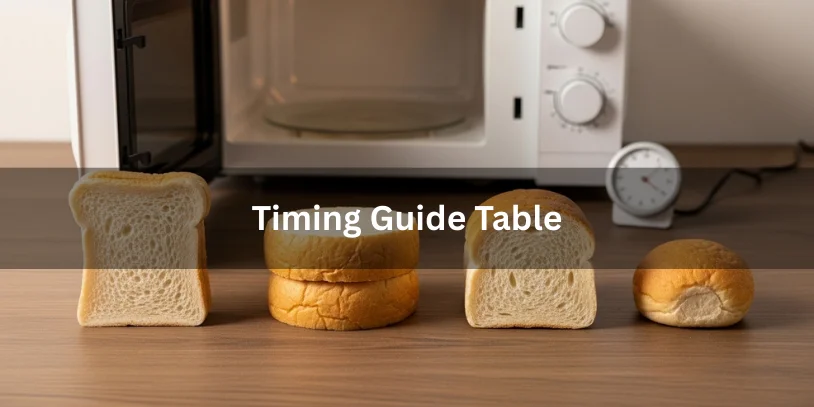
Timing Guide Table
| Bread Type | Microwave Time per Slice | Whole Loaf Interval |
|---|---|---|
| White | 10–12 sec | 30 sec |
| Whole Wheat | 12–15 sec | 30–40 sec |
| Artisan | 15–20 sec | 40–50 sec |
| Flatbread | 12–18 sec | 30–40 sec |
| Burger Buns | 15 sec | 30 sec |
| Gluten-Free | 15–20 sec | 35–45 sec |
Expert Tips
- Damp cloth wrapping prevents crust drying in thicker loaves.
- Short, interval heating avoids rubbery or chewy texture.
- Resting allows internal moisture to redistribute.
- Meal prep planning: partial thaw for sandwiches, full thaw for baking or toasting.
Frequently Asked Questions (FAQs)
1. Can you defrost bread in the microwave?
Yes. Bread can be defrosted in the microwave if you use low power or short bursts and avoid overheating it.
2. How long does it take to defrost bread in the microwave?
Most slices take about 10 to 15 seconds. Larger pieces, rolls, or parts of a loaf usually need short intervals of 20 to 30 seconds.
3. Why does microwaved bread turn rubbery?
Bread usually turns rubbery when it is overheated or microwaved at full power for too long.
4. Can you defrost buns in the microwave?
Yes. Buns usually defrost well in the microwave if wrapped lightly in a paper towel and heated for about 10 to 15 seconds at a time.
5. How do you defrost hot cross buns in the microwave?
Wrap one hot cross bun in a paper towel and microwave it for about 10 to 15 seconds, then let it rest briefly before checking if it is fully thawed.
6. Can you defrost bread rolls in the microwave?
Yes. Bread rolls can usually be defrosted in short bursts, then rested for about 30 seconds so the heat spreads more evenly.
7. Can you microwave frozen bread safely?
Yes, as long as you remove any non-microwave-safe packaging and use the bread soon after thawing.
8. Can you defrost sourdough bread in the microwave?
Yes, but sourdough usually needs more care because it is denser. A damp paper towel and short intervals work best.
9. Should you toast bread after microwaving it?
You can. Toasting often improves texture, especially if the bread feels a little soft after defrosting.
10. Can I toast bread straight from frozen instead?
Yes. For slices, toasting from frozen can sometimes give better texture than microwaving, especially if you want the bread crisp rather than soft.
Conclusion
Yes, you can defrost bread in the microwave, and it is usually the fastest option when you need bread quickly. The key is to use short bursts, avoid full power for too long, and let the bread rest before eating.
That same approach works for slices, buns, rolls, and even hot cross buns, though thicker or denser bread may need a little more care. Once you get the timing right, the microwave becomes an easy way to thaw bread without making it rubbery or dry.