
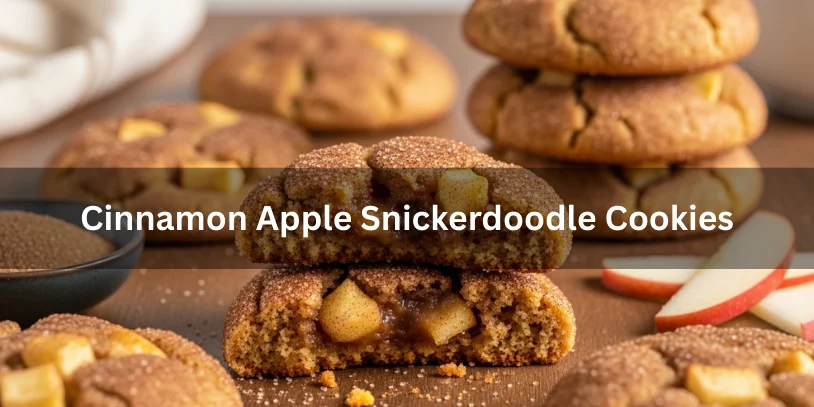
Cinnamon apple snickerdoodle cookies are classic snickerdoodles—soft, buttery, rolled in cinnamon sugar—with a real apple twist. The goal is a chewy center, lightly crisp edge, and a cozy “apple pie vibes” aroma without turning cakey or soggy.
A traditional snickerdoodle gets its signature tang and texture from cream of tartar paired with baking soda. Add apples—fresh, dried, freeze-dried apple powder, caramelized apples, or apple butter—and you get a fall-forward cookie that still tastes like a true snickerdoodle.
Why These Cookies Are Tricky (And Why They’re Worth It)

Apples bring flavor, but they also bring water. Extra moisture is the fastest path to:
- sticky dough that’s hard to roll
- cookies that spread too thin
- centers that bake up cakey instead of chewy
- muted apple flavor after baking
The payoff is huge when you manage moisture correctly: buttery cinnamon-sugar crust, warm spices, and a clear apple note that doesn’t disappear.
Who These Cookies Are For (And When to Make Them)
These cookies hit multiple occasions and audiences:
- Home bakers who want a reliable recipe with “no soggy cookies” results
- Cookie box builders making a seasonal assortment
- Bake sales and school events (they travel well)
- Gifting (fresh-baked or frozen dough balls as a “bake-at-home” gift)
- Buyers searching “cinnamon apple snickerdoodle cookies near me” for parties
They’re perfect for fall, holiday season, and any time you want a cinnamon-forward cookie with a fruit accent.
The Apple Method Matrix (Choose Your Apple Path)
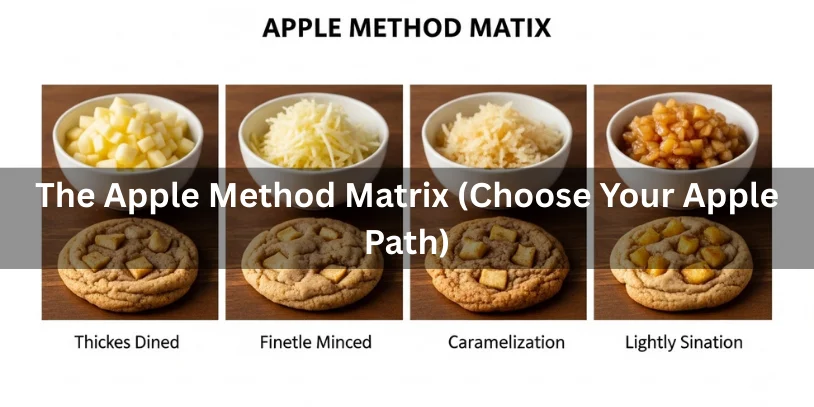
Pick one apple method based on your goals. This is the simplest way to avoid sticky dough and cakey texture.
| Apple Method | Apple Flavor | Moisture Risk | Best For | What to Do |
|---|---|---|---|---|
| Fresh diced apple | Bright, fresh | Medium | Real apple pieces | Dice small + blot twice + chill longer |
| Dried apples | Concentrated | Low | Consistent chew | Chop and fold in; normal chill |
| Freeze-dried apple powder | Strong, clean | Very low | Max flavor, no wet dough | Add to dry mix (or cinnamon sugar) |
| Apple butter | Deep, spiced | Low–Medium | “Apple butter snickerdoodles” vibe | Use small amount; chill well |
| Caramelized apples | Rich, jammy | Medium | Bakery-style depth | Cook off water fully; cool before mixing |
Quick decision rule:
If your #1 fear is sticky dough or cakey cookies, choose dried apples or freeze-dried apple powder.
Ingredients (What Each One Does)
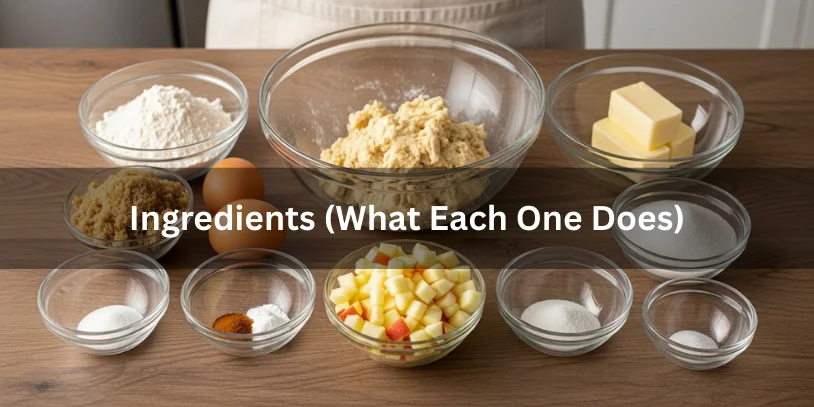
Core Snickerdoodle Ingredients
- All-purpose flour: structure; measure accurately to avoid cakey results
- Butter: flavor and spread; softened butter is easiest
- Granulated sugar + brown sugar: balance of crisp edges and chewy centers
- Egg + extra yolk: chew and tenderness
- Cream of tartar: classic snickerdoodle tang and texture
- Baking soda: lift and spread control with the acid from cream of tartar
- Cinnamon + sugar coating: the signature crust
- Salt + vanilla extract: boosts flavor clarity
Best Apples for Baking Cookies
Choose apples that hold their shape and don’t turn watery mush:
- Granny Smith: firm, tart (great balance with cinnamon sugar)
- Honeycrisp: crisp, sweet-tart
- Pink Lady / Jazz: firm and aromatic
Tools That Make This Easier
- Cookie scoop (even sizing)
- Parchment paper
- Wire rack
- A kitchen scale (optional, but helpful)
- Paper towels (for blotting apples)
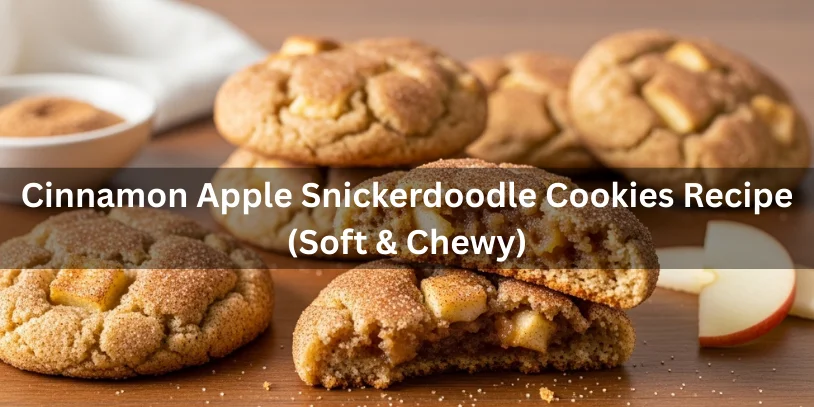
Cinnamon Apple Snickerdoodle Cookies Recipe (Soft & Chewy)
Yield and Timing
- Makes: 20–26 cookies (depending on scoop size)
- Prep: 20 minutes
- Chill: 60 minutes (or up to 24 hours)
- Bake: 10–12 minutes per batch
Ingredients
Dry
- 2 ¾ cups (330 g) all-purpose flour
- 2 tsp cream of tartar
- 1 tsp baking soda
- 1 tsp ground cinnamon
- ½ tsp fine salt
Wet
- 1 cup (226 g) unsalted butter, softened
- ¾ cup (150 g) granulated sugar
- ½ cup (100 g) light brown sugar
- 1 large egg + 1 egg yolk
- 2 tsp vanilla extract
Apple (choose one)
- Option A: 1 cup finely diced apple (about 1 medium), blotted very dry
- Option B: ¾ cup chopped dried apples
- Option C: 2–3 tbsp apple butter (plus optional 1–2 tbsp freeze-dried apple powder for extra punch)
Cinnamon Sugar Coating
- ⅓ cup (65 g) granulated sugar
- 1½ tbsp ground cinnamon
Step-by-Step Instructions
1) Prep your apples (this is where most recipes fail)
If using fresh apples:
Dice into small cubes (about ¼ inch / 6 mm). Spread on paper towels, press firmly, rest 5 minutes, then press again. The pieces should feel dry on the outside.
If using caramelized apples:
Cook diced apple in a skillet over medium heat until the moisture cooks off and the pieces look jammy—not wet. Cool completely.
2) Mix the dry ingredients
In a bowl, whisk flour, cream of tartar, baking soda, cinnamon, and salt.
3) Cream butter and sugars
Beat butter, granulated sugar, and brown sugar until lighter and fluffy, about 2–3 minutes. This helps with a softer, chewier texture.
4) Add eggs and vanilla
Mix in egg, yolk, and vanilla until smooth.
5) Combine wet + dry
Add the dry mixture to the wet mixture and mix just until no flour streaks remain. Don’t overmix—overmixing can push cookies toward tough or cakey.
6) Fold in your apple choice
Fold in blotted fresh apples, dried apples, or cooled caramelized apples. If using apple butter, mix it in gently.
7) Chill the dough
Cover and chill for at least 60 minutes. If using fresh apples, chilling is your best defense against excess spread and sticky dough. You can chill 2–24 hours for even better flavor and thicker cookies.
8) Preheat and prep cinnamon sugar
Preheat oven to 350°F / 175°C.
Mix cinnamon and sugar in a small bowl.
9) Scoop, roll, coat
Scoop dough into balls (1.5–2 tbsp). Roll in cinnamon sugar.
For a thicker coating, roll once, rest 2 minutes, then roll again.
10) Bake
Bake 10–12 minutes. The edges should look set, and the centers should look slightly underdone. That’s how you keep them soft and chewy.
11) Cool properly
Let cookies cool on the baking sheet for 5–8 minutes (they finish baking from residual heat), then transfer to a wire rack.
The “No Soggy Cookies” Moisture Checklist
If you remember only one section, make it this.
- Dice, don’t shred fresh apples unless you’re ready to reformulate moisture.
- Blot twice. Fresh apples should be dry on the surface.
- Chill the dough at least 60 minutes (longer for fresh apples).
- Bake on parchment to prevent sticking and promote even browning.
- Don’t overbake. Dry cookies aren’t better—just harder.
What Makes a Snickerdoodle a Snickerdoodle?
A snickerdoodle isn’t just a cinnamon cookie. It’s defined by:
- Cream of tartar (tang + classic texture)
- Baking soda working with the acid for lift
- Cinnamon-sugar coating that forms a fragrant crust
That’s the base you’re building on, whether you add apples, apple butter, or freeze-dried apple powder.
Substitutions (Including “No Cream of Tartar”)
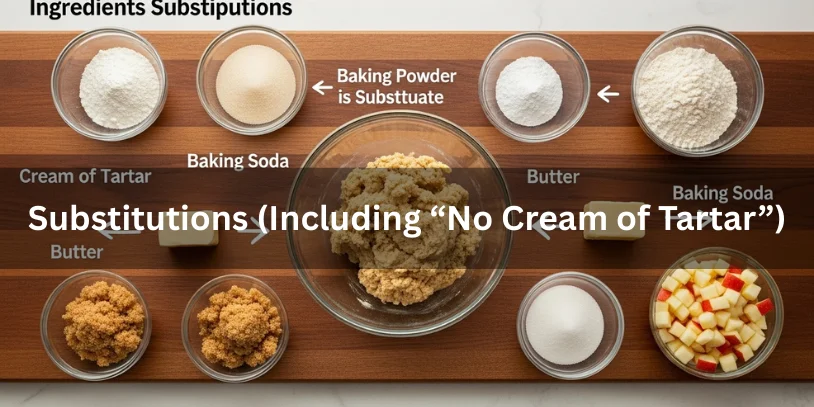
If you don’t have cream of tartar
You can still make a snickerdoodle-style cookie. The flavor won’t be quite as tangy, but it will be delicious.
- Replace cream of tartar + baking soda with 2 tsp baking powder
- Keep everything else the same
If you want stronger apple flavor
- Add freeze-dried apple powder to the dry ingredients (start with 1–3 tbsp)
- Use dried apples instead of fresh
- Add 2–3 tbsp apple butter for deeper, spiced apple notes
If you want extra depth
Try one of these:
- Brown butter (cool to soft-solid before creaming)
- Apple pie spice (small pinch)
- Toasted pecans or walnuts (adds crunch and warmth)
Variations (Types and Pros/Cons)
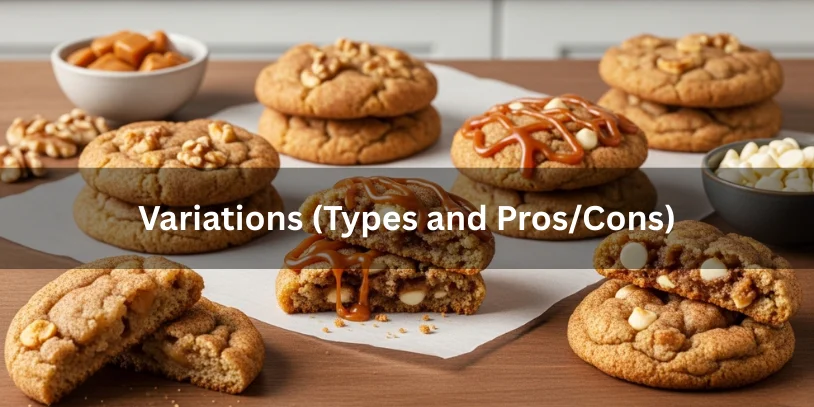
Caramel Apple Snickerdoodle Cookies
Pros: dessert-shop vibes, rich sweetness
Cons: caramel can melt and stick
Tip: use caramel bits or a drizzle after cooling.
Brown Butter Apple Snickerdoodles
Pros: deeper flavor, bakery-style aroma
Cons: one extra step and cooling time
Best with dried apples or freeze-dried apple powder to keep texture consistent.
Apple Butter Snickerdoodles
Pros: concentrated apple flavor without chunks
Cons: too much apple butter can soften dough
Keep it modest and chill well.
Troubleshooting: Fixes for Sticky Dough, Cakey Cookies, and Spread
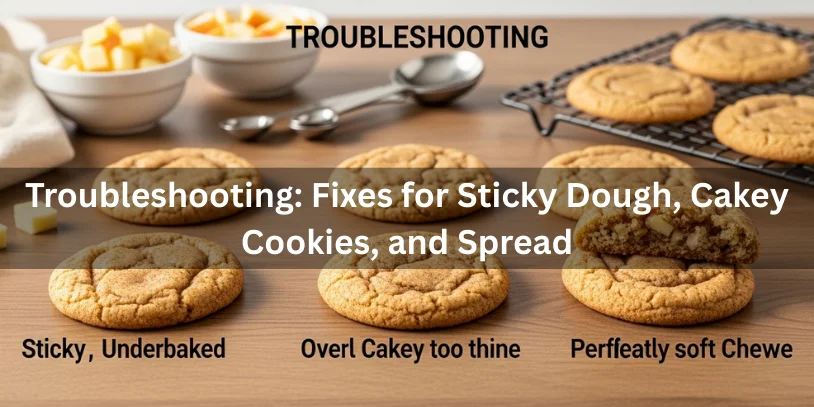
Why is my dough sticky?
Most often: apple moisture + warm butter + not enough chill time.
Fix fast:
- Chill 2 hours (or overnight)
- If it’s still unmanageable, mix in 1–2 tbsp flour and chill again
- Next batch: use dried apples or freeze-dried apple powder
Why did my cookies turn cakey instead of chewy?
Common causes:
- too much flour (packed measuring)
- overmixing after adding flour
- too much moisture from apples or apple butter
- baking too long
Fix next time: - spoon-and-level flour (or weigh it)
- stop mixing as soon as flour disappears
- blot apples more aggressively
- pull cookies when centers look slightly underdone
How do I prevent cookies from spreading too much?
- chill the dough longer
- bake on a cool baking sheet (don’t load dough onto a hot tray)
- keep apple pieces small and dry
- don’t over-soften butter
Apple flavor is weak—what now?
Apples can mellow in baking. Boost it by:
- adding freeze-dried apple powder
- using dried apples
- adding a small spoon of apple butter
- using aromatic apples like Pink Lady/Jazz
Storage, Shelf Life, and Freezing (Make-Ahead Friendly)
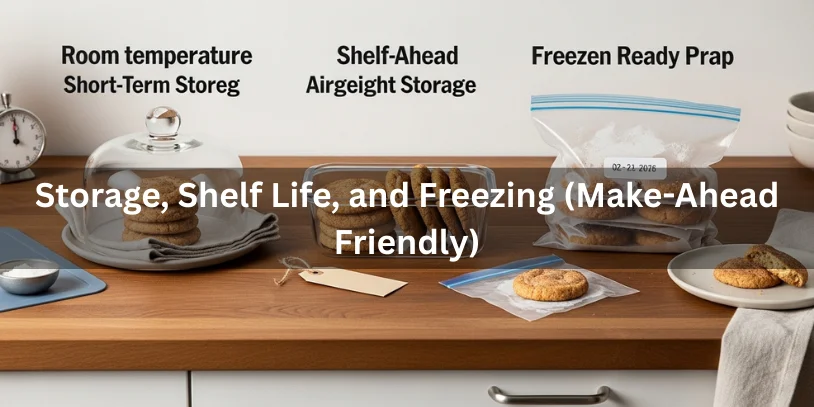
Storage
Because these contain fruit, store thoughtfully:
- Room temperature in a cool, dry kitchen: 2–3 days in an airtight container
- Warm or humid climate: consider refrigerating to keep them fresher and safer longer
If cookies lose their edge crispness, a short warm-up in the oven can revive texture.
Freezing baked cookies
Freeze in an airtight container with parchment between layers. Thaw at room temperature.
Freezing cookie dough balls (best option)
- Scoop and roll into balls
- Freeze on a tray until firm
- Store in a sealed bag or container
- Bake from frozen: add 1–2 minutes
This is perfect for holiday prep, busy weeks, and last-minute guests.
Bake vs Buy: A Simple Decision Guide (“Near Me” and Delivery)
Sometimes you don’t want to bake—especially for events. If you’re searching for “cinnamon apple snickerdoodle cookies near me,” here’s a practical way to choose.
Where to look
- Independent bakery
- Cookie shop
- Grocery store bakery
- Farmers market cookies (especially seasonal)
What to ask or look for
- Are they made with real butter?
- Do they use real apples, dried apples, or apple butter (not just flavoring)?
- Are they soft-baked or crisp? (You want soft-chewy for snickerdoodle style.)
- Are they baked today? Freshness matters most for cinnamon aroma.
Service language you’ll see (and can use when ordering)
- “Available for pickup in [city]”
- “Nationwide shipping”
- “Cookie delivery”
- “Same-day bakery delivery”
If you’re in the UK or Australia, you may see “snickerdoodle biscuits” in some shops—same concept, different wording.
Quick Kitchen Notes (Small Things That Matter)
- A cookie scoop improves uniform baking.
- Parchment prevents sticking and makes cleanup easy.
- Cooling on the tray for a few minutes helps the cookie set without overbaking.
- Cinnamon sugar coating is part of the identity—don’t skip it.
FAQs
1) Can I use fresh apples in cinnamon apple snickerdoodle cookies without making them soggy?
Yes—dice them small and blot them dry twice. Chilling the dough is essential for fresh apples, because it helps control spread and prevents wet pockets that can turn cookies cakey.
2) What apples are best for baking cookies?
Firm apples like Granny Smith, Honeycrisp, and Pink Lady/Jazz hold shape and keep flavor during baking. Very soft apples can break down into mush and add too much moisture.
3) What does cream of tartar do in snickerdoodles?
Cream of tartar gives snickerdoodles their classic tangy flavor and works with baking soda to create lift and a distinctive texture. It’s one of the key differences between snickerdoodles and standard sugar cookies.
4) I don’t have cream of tartar—what’s the substitute?
Use 2 teaspoons baking powder instead of cream of tartar and baking soda. The cookie will be slightly different (less tang), but you’ll still get a cinnamon-sugar coated snickerdoodle-style cookie.
5) Why are my apple snickerdoodles cakey instead of chewy?
Usually it’s too much flour, overmixing, too much apple moisture, or overbaking. Measure flour carefully, mix only until combined, blot apples thoroughly, and pull cookies when the centers still look slightly soft.
6) How do I stop these cookies from spreading too much?
Chill the dough longer, use a cool baking sheet, and keep apple pieces small and dry. Overly warm dough and watery apples are the main spread culprits.
7) Can you freeze snickerdoodle dough or baked cookies?
Yes. Freezing dough balls is the easiest: bake from frozen with 1–2 extra minutes. Baked cookies also freeze well; thaw at room temperature.
8) How long do cinnamon apple snickerdoodle cookies last?
In an airtight container, they’re best within 2–3 days at room temperature in a cool kitchen. In warm or humid conditions, refrigerate for better keeping and food safety.
9) How can I make the apple flavor stronger without making the dough wet?
Use dried apples, add freeze-dried apple powder, or mix in a small amount of apple butter. These options boost apple flavor without adding much free water.
Conclution
Cinnamon apple snickerdoodle cookies are all about getting the cozy apple-cinnamon flavor while keeping that classic snickerdoodle chew. Choose the right apple method, control moisture with blotting and chilling, and bake just until the edges set and the centers stay soft. Whether you’re baking a batch for a cookie box, freezing dough balls for later, or hunting for a bakery near you, these cookies deliver warm spices, real apple flavor, and a cinnamon-sugar finish that feels like fall in every bite.