
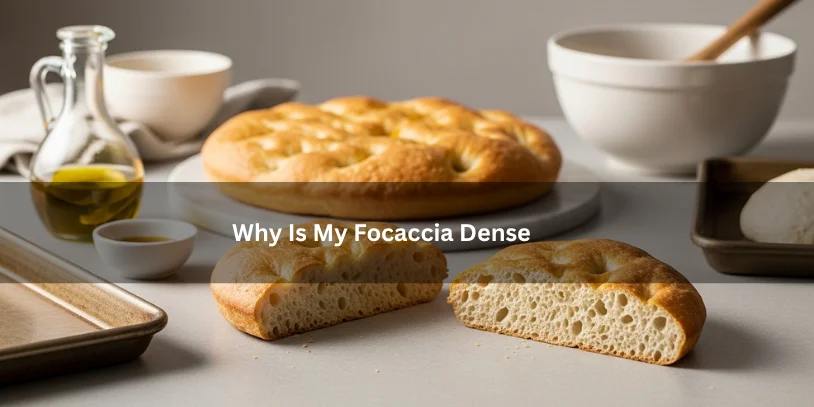
Dense focaccia usually comes down to one of five things: underproofing, low hydration, weak yeast activity, too much added flour, or rough handling that knocks out the gas your dough worked hard to build.
A good focaccia should have a light interior, a soft but structured crumb, visible bubbles, and a crisp exterior with plenty of olive oil flavor. When it turns out heavy, tight, flat, or bready instead of airy, the dough usually did not ferment enough, stretch enough, or hold onto enough gas before baking.
The good news is that dense focaccia is very fixable once you know where the process went wrong.
Quick Diagnosis Table
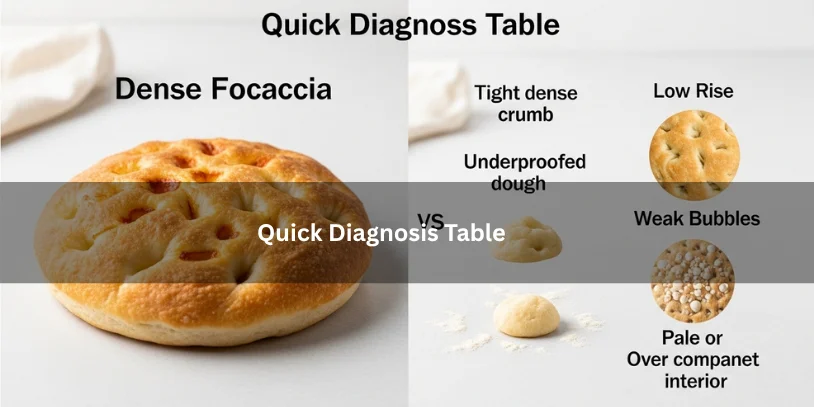
| Symptom | Most Likely Cause | What to Do Next Time |
|---|---|---|
| Tight crumb with very small holes | Underproofing | Let bulk fermentation or final proof go longer |
| Dense and tough texture | Too much flour or low hydration | Use a wetter dough and avoid adding flour during handling |
| Puffy before baking, then flat after baking | Overproofing or dough collapse | Shorten final proof and handle gently |
| Little rise at all | Weak or inactive yeast | Check yeast freshness and dough temperature |
| Sticky dough but still dense | Fermentation or gluten not developed enough | Use stretch and fold and rely on dough cues, not stickiness alone |
| Dense after fridge proof | Dough baked too cold or not fully proofed after refrigeration | Let it warm and become puffy before baking |
| No big bubbles | Dough lacked fermentation time or strength | Improve proofing, hydration, and folding |
What Makes Focaccia Light and Airy?
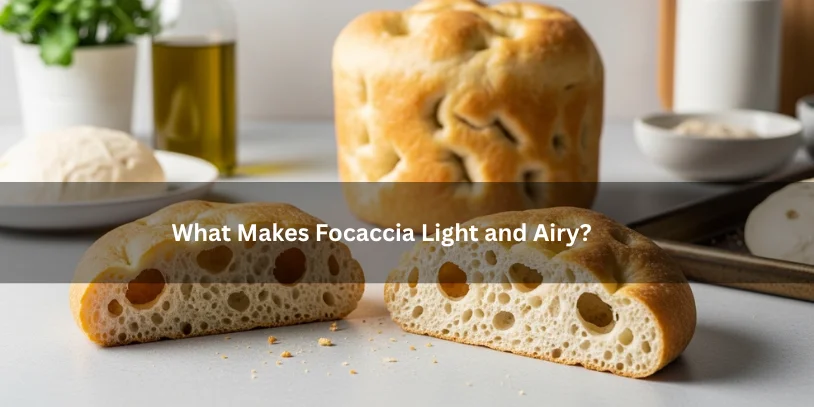
Focaccia depends on a few key things working together:
- enough water for a high-hydration dough
- active yeast and steady fermentation
- good gluten development
- gentle handling
- baking at the right moment
When these line up, the dough traps gas well and expands into an open crumb. When one or more are off, you get a dense bread texture instead of the airy crumb most people want.
Think of focaccia like a balance between structure and softness. The dough must be strong enough to hold bubbles, but relaxed enough to expand.
1. Your Focaccia Was Underproofed
This is the most common reason focaccia turns out dense.
If the dough did not spend enough time in bulk fermentation or final proof, the yeast had less time to create gas. That means fewer bubbles, less oven spring, and a tighter crumb.
Signs of underproofed focaccia
- the dough feels tight rather than puffy
- it springs back quickly when touched
- there are few surface bubbles
- it resists stretching in the pan
- the baked loaf feels heavy for its size
A lot of bakers rely too much on the clock. But dough does not care what the recipe said if your kitchen is cooler, your water was colder, or your yeast is slower than average.
What to do
Use visual cues over timing. Before baking, the dough should look slightly jiggly, puffy, and full of life. If it still feels dense in the pan, it probably needs more time.
2. Your Dough Hydration Was Too Low
Focaccia is supposed to be a wet dough. That sticky texture is not a flaw. It is part of what helps create an open crumb.
If your dough hydration is too low, the dough becomes stiff, harder to expand, and more likely to bake up tight. This often happens when flour is over-measured or extra flour is added because the dough feels messy.
Common hydration mistakes
- measuring flour by volume instead of using a kitchen scale
- adding flour during mixing because the dough seems too sticky
- dusting too much flour during shaping
- trying to make focaccia dough feel like standard sandwich bread dough
Better approach
Use wet hands, oiled hands, or a dough scraper instead of dumping in more flour. Focaccia dough should feel softer and looser than many other bread doughs.
3. You Added Too Much Flour During Handling
This is closely related to hydration, but it deserves its own section because it happens so often.
A sticky dough scares people. Then they add more flour. Then the dough gets easier to touch but loses the moisture that helps create that lighter interior.
What happens when too much flour is added
- the dough becomes tight and less extensible
- gluten can feel stronger, but the crumb becomes tougher
- bubbles stay small instead of opening up
- the finished bread tastes more bready than airy
Better handling tools
- bench scraper or dough scraper
- well-oiled pan
- olive oil on hands
- short rest periods if the dough resists stretching
If your focaccia was dense and tough, too much flour is one of the first things to review.
4. Your Yeast Was Weak, Old, or Slowed Down
If the yeast was inactive or struggling, the dough could never build enough internal gas.
This may happen when:
- yeast is expired
- water was too hot during mixing
- dough temperature stayed too low
- salt hit the yeast directly in a concentrated spot
- the room was cold and fermentation stalled
Signs yeast activity was weak
- dough barely rose even after a long wait
- very few bubbles formed
- the dough smelled mostly like raw flour
- the crumb stayed compact with poor oven spring
What to do
Check the age of your yeast. Use warm, not hot, water. Keep the dough in a stable, room-temperature proofing environment. If you often bake in a cold kitchen, expect longer fermentation or try a warmer proofing spot.
5. Your Gluten Development Was Too Weak
Focaccia does not need aggressive kneading, but it still needs dough strength.
Without enough gluten development, the dough cannot hold onto gas. The yeast may be active, but the structure is not strong enough to keep those bubbles in place. That can lead to a flatter, denser loaf.
Best ways to build dough strength
- mix until there are no dry patches
- let the dough rest
- use stretch and fold during bulk fermentation
- give the dough time between folds
A no-knead bread can still be strong if you let fermentation and folds do the work.
6. You Overhandled or Degassed the Dough
Even well-proofed dough can lose its airy structure if it is pressed too hard.
This often happens when:
- shaping is too rough
- dimpling is too aggressive
- the dough is stretched repeatedly without rest
- you force it to fit the pan before it is relaxed enough
Dense but puffy before bake?
If your focaccia looked promising in the pan but baked denser than expected, rough handling could be the reason. The dough may have had good fermentation, but the gas escaped before it hit the oven.
Best practice
Dimple with your fingertips, not your whole hand. Press enough to create the classic focaccia surface, but do not mash the dough flat.
7. Your Focaccia Was Overproofed and Collapsed
Dense focaccia is not always underproofed. Sometimes the dough goes too far.
Overproofed dough can become fragile, lose structure, and partially collapse. When that happens, it may bake into a flatter, compressed loaf that still feels dense.
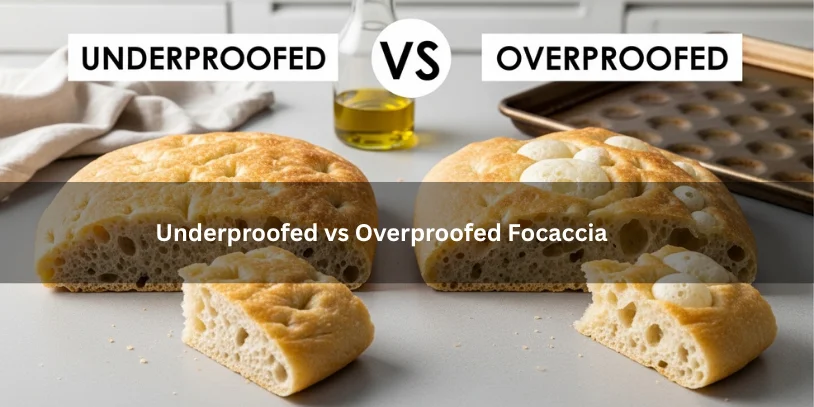
Underproofed vs Overproofed Focaccia
| Issue | What the Dough Looks Like | What the Baked Focaccia Is Like |
|---|---|---|
| Underproofed | Tight, resistant, not many bubbles | Dense, small holes, heavy crumb |
| Properly proofed | Puffy, airy, jiggly, visible bubbles | Light, open crumb, better oven spring |
| Overproofed | Fragile, overly gassy, deflates easily | Flat, sometimes dense or compressed |
If the dough was extremely inflated, then sank when touched or moved, overproofing may have been your problem.
Why Dense Focaccia Happens After Fridge Proof
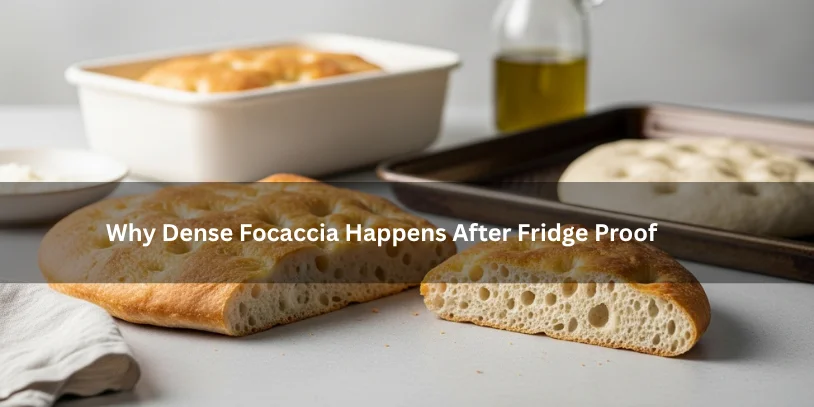
Cold fermentation can improve flavor and often helps create a beautiful crumb, but only if the dough is handled correctly afterward.
If your focaccia was dense after cold fermentation, a few things may have happened:
- it went into the oven while still too cold
- the dough needed more room-temperature proofing after refrigeration
- gluten weakened during a very long cold proof
- the dough was degassed while moving it to the pan
Cold dough can fool people. It may look developed, but it still needs time to relax, warm slightly, and regain visible puffiness before baking.
Sticky Dough: Normal or Problem?
A sticky dough is normal for focaccia. In fact, high hydration and sticky dough often go together.
But sticky dough alone does not guarantee an airy crumb. Sticky dough can still bake dense when:
- it is underproofed
- it has weak gluten development
- it was handled roughly
- fermentation was too slow
- it was spread too thick in the pan
So yes, sticky focaccia dough is normal. But sticky and dense usually means the problem is not hydration alone. It is more often fermentation or structure.
Why Your Focaccia Rose in the Bowl but Baked Flat
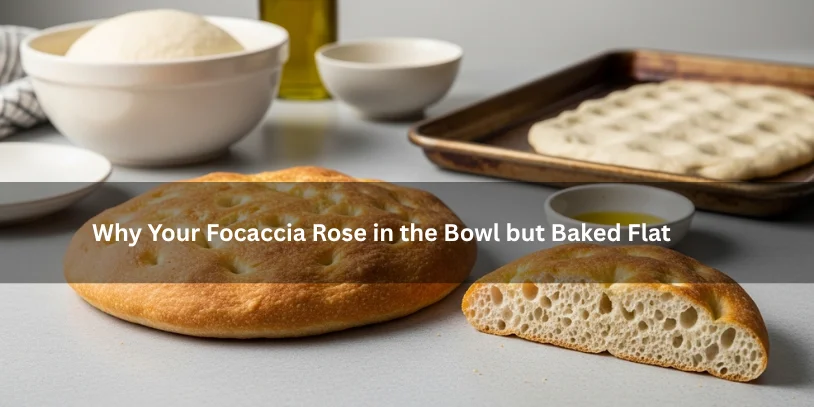
This is one of the most frustrating outcomes.
Usually it points to one of these:
- the dough was overproofed and collapsed
- the gas was knocked out during shaping or dimpling
- the final proof in the pan was not adequate
- the dough spread too much and became too thin or too uneven
- oven heat was not strong enough for good oven spring
A rise in the bowl is not the same as a well-risen focaccia. What matters is whether the dough still has strength, extensibility, and enough trapped gas when it enters the oven.
How to Fix Dense Focaccia Dough Before Baking
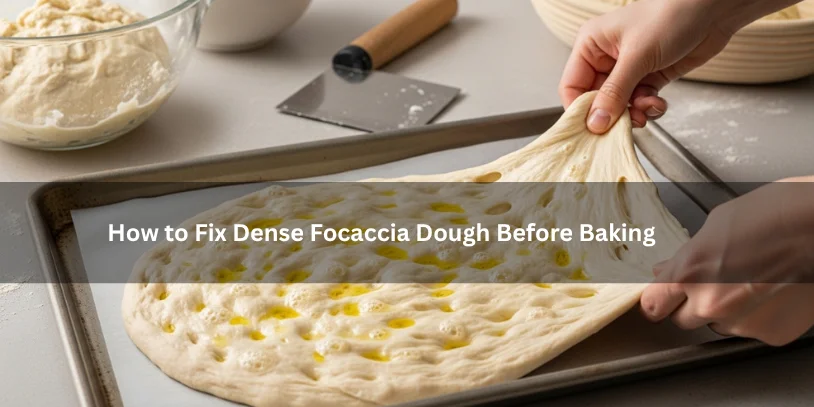
If you have not baked it yet, you may still be able to improve it.
If the dough feels tight and not bubbly
- give it more time
- move it to a warmer spot
- keep it covered so it does not dry out
If the dough seems stiff
- avoid adding more flour
- let it rest
- use gentle stretch and fold if still early in the process
If the dough was refrigerated
- let it sit at room temperature until it looks puffy
- do not bake it straight from a cold, dense state unless your method specifically calls for that and the dough already looks ready
If you think you degassed it
- let it rest again in the pan
- allow a short final proof before baking
How to Get Big Bubbles and an Open Crumb Next Time
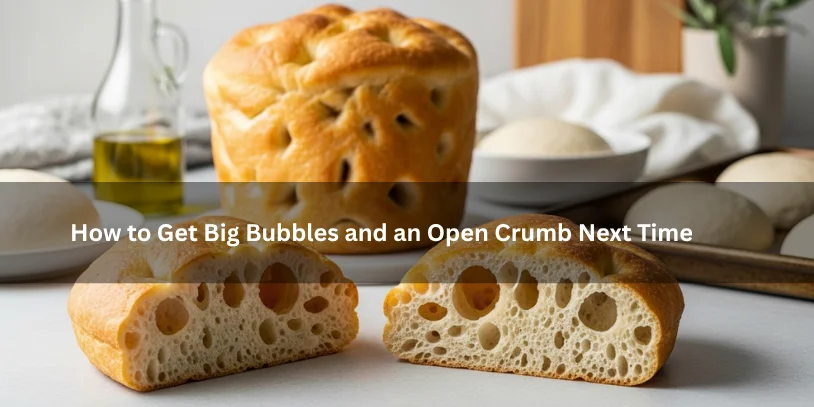
If your goal is a more airy, bubbly focaccia, focus on these five upgrades:
1. Use a kitchen scale
Cup measurements can add too much flour without you realizing it.
2. Keep the dough well hydrated
High hydration supports larger bubbles and a lighter interior.
3. Use stretch and fold
This helps build dough strength without overworking the dough.
4. Watch for proofing cues
Look for surface bubbles, a puffy shape, and a jiggly feel.
5. Handle gently
Treat the dough like it already contains the crumb you want to preserve.
Final Pre-Bake Checklist
Before your focaccia goes into the oven, ask yourself:
- Does the dough look puffy?
- Are there visible bubbles?
- Does it feel airy instead of tight?
- Did I avoid adding unnecessary flour?
- Did I dimple gently?
- Is the oven fully preheated?
- Did the dough have enough final proof in the pan?
If several answers are no, the crumb will probably be tighter than you want.
FAQs
Why is my focaccia dense and not fluffy?
It is usually underproofed, too dry, or overhandled. Dense focaccia often means the dough did not build enough gas or lost that gas before baking.
Can too much flour make focaccia dense?
Yes. Extra flour lowers dough hydration and makes the crumb tighter, tougher, and less open.
Should focaccia dough be sticky?
Yes. Sticky dough is normal for focaccia, especially at higher hydration levels. Sticky does not mean the recipe is wrong.
Can overproofed focaccia be dense?
Yes. If the dough overproofs and collapses, it can bake flat and feel dense or compressed instead of airy.
Why did my focaccia not rise in the oven?
Possible reasons include underproofing, weak yeast, cold dough, low hydration, or poor oven spring from insufficient preheating.
Why is my focaccia dense after cold fermentation?
It may have needed more room-temperature proofing after the fridge, or it may have been handled too roughly before baking.
How do I know focaccia is ready to bake?
It should look puffy, have visible surface bubbles, and feel slightly jiggly and airy in the pan.
Why are there no big holes in my focaccia?
This usually points to underproofing, low hydration, too much flour, or not enough dough strength from folding.
Is all-purpose flour the problem?
Not necessarily. You can make good focaccia with all-purpose flour, but protein content, hydration, and fermentation still matter. Bread flour may give a little more structure.
Can I fix dense focaccia after baking?
You cannot fully change the crumb after baking, but you can learn from the texture. A dense loaf is still useful for sandwiches, dipping, croutons, or pan-toasting.
Conclusion
If your focaccia came out dense, the problem was most likely fermentation, hydration, handling, or structure, not bad luck.
Start by checking whether the dough was truly proofed, whether you added extra flour, whether your yeast was active, and whether you handled the dough gently enough to keep the bubbles intact. In many cases, one small adjustment makes a huge difference.
For your next batch, trust dough cues more than the clock, keep the dough wetter than you think it should be, use stretch and fold for strength, and bake only when the dough looks puffy and alive. That is how you move from a dense, heavy loaf to the airy, open-crumb focaccia you were aiming for.