
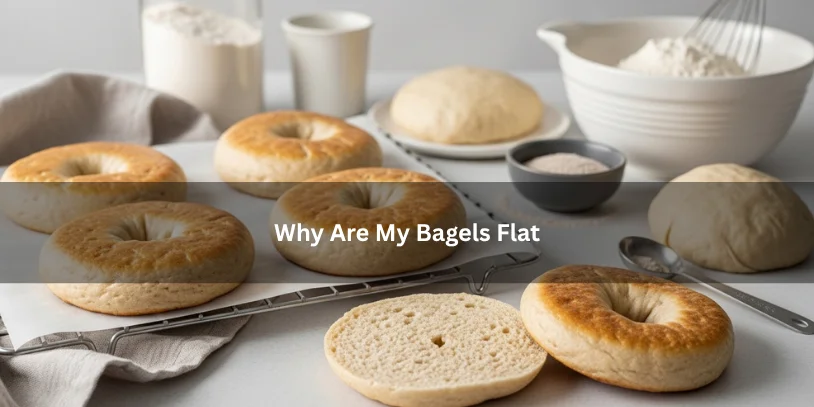
If your bagels keep coming out flat, the problem is usually not random. In most cases, flat bagels happen because the dough is overproofed, too wet, under-kneaded, made with weak flour, shaped too loosely, or boiled too long.
That is the short answer.
The useful answer is figuring out which one of those happened in your batch, because flat, wrinkly, dense, and deflated bagels do not all come from the exact same mistake. Once you know where the structure broke down, your next batch gets much easier to fix.
What flat bagels usually mean
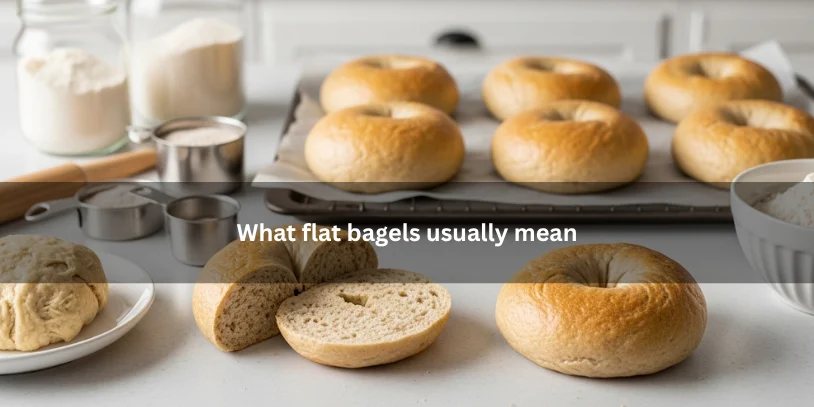
A proper bagel is not supposed to be fluffy like sandwich bread. It should be chewy, compact, shiny, and sturdy, with enough oven spring to look full rather than spread out.
So when bagels turn flat, you are usually looking at a dough-strength problem, a proofing problem, or a shaping-and-boiling problem.
In simple terms, your dough could not hold its shape.
That can show up in a few different ways:
- bagels flatten after proofing
- bagels deflate after boiling
- bagels bake up dense and heavy
- bagels turn wrinkly instead of smooth
- bagels look airy but low
- bagels lose height post-boil
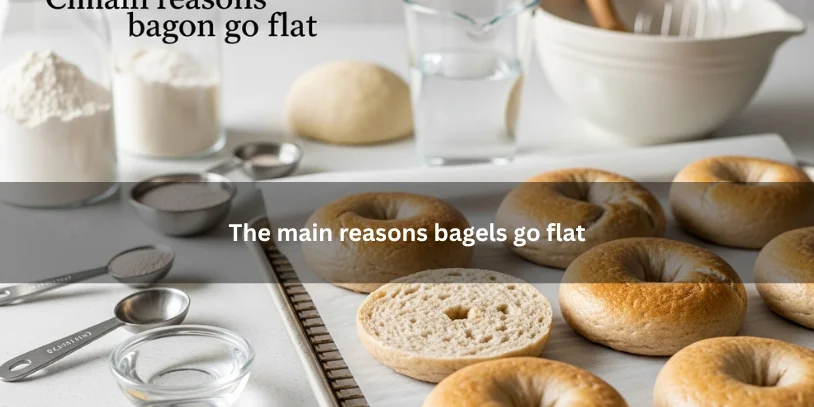
The main reasons bagels go flat
1. Overproofed dough
This is one of the most common causes.
Bagels should proof enough to get slightly puffy, but not so much that the gluten structure weakens. If they sit too long during final proofing or cold proof too far past their ideal point, they can collapse during boiling or bake low and wide.
Signs of overproofed bagels:
- they feel very airy and delicate
- they deflate easily when touched
- they flatten as soon as they hit the water bath
- they come out wrinkly after baking
- they have weak oven spring
If your bagels are flat after boiling, overproofing is one of the first things to check.
2. Dough is too wet
Bagel dough should be stiff. Not dry and crumbly, but definitely firmer than most bread dough.
If your dough is sticky, slack, or spreads on the bench, hydration may be too high. That can happen from too much water, inaccurate measuring, humid conditions, or flour that absorbs less than expected.
A too-wet bagel dough often leads to:
- flat and airy bagels
- bagels that spread instead of rising
- weak shaping tension
- poor chew
- trouble holding a clean ring shape
The right dough feel is closer to tacky than sticky.
3. Gluten development is too weak
Bagels need strong gluten development. That structure is what helps them stay round, hold gas, and survive proofing, boiling, and baking without turning into flat discs.
If you under-knead the dough, skip proper mixing, or use flour with low protein, the dough may never build the strength it needs.
Common clues:
- rough dough surface
- tears during shaping
- dough feels weak instead of elastic
- flat bagels with a dense crumb
- little oven spring
A windowpane test is useful here. If the dough cannot stretch thin without tearing, gluten development may not be where it needs to be.
4. Flour is too weak
All-purpose flour can work for bagels, but it does not always deliver the same strength and chew as bread flour or high-gluten flour.
If your goal is a New York-style bagel with height, tight crumb, chewy texture, and blistered crust, stronger flour usually gives better results.
Low-protein flour often leads to:
- flatter bagels
- softer crust
- less chew
- weaker dough strength
- more spreading after proofing
5. Shaping tension is too loose
Even good dough can bake flat if the shaping is weak.
Bagels need surface tension. Whether you use the rope-shaping method or the poke-and-stretch method, the dough should feel tight and well-formed before it proofs.
Loose shaping can cause:
- bagels that widen too much
- rings that spread out on the tray
- uneven shape
- weak lift after boiling
A tight preshape into a smooth ball helps a lot before final shaping.
6. Boiling too long or too aggressively
Boiling water is essential for classic bagels. It helps set the crust, improve shine, and build chew. But if the boil is too long, or the bagels are overproofed going into the water, they can deflate fast.
This is why people often ask, “Why are my bagels flat after boiling?”
Because boiling exposes weak structure immediately.
If they flatten right after the water bath, the top suspects are:
- overproofed dough
- weak gluten
- too-wet dough
- rough handling with a slotted spoon
- boil time that is too long
A gentle boil works better than a hard rolling one.
Flat vs wrinkly vs dense vs deflated bagels
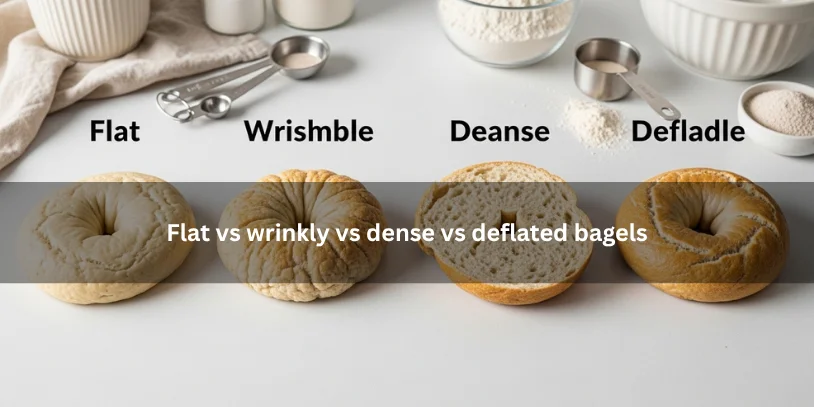
These are related, but not identical.
| Symptom | Most Likely Cause | What to Change |
|---|---|---|
| Flat and spread out | Overproofing, wet dough, weak shaping | Shorter proof, stiffer dough, tighter shaping |
| Wrinkly bagels | Overproofing, weak surface tension, rough handling | Cut proof short, preshape tighter, handle gently |
| Dense and heavy | Underproofing, weak gluten, low hydration balance, underbaking | Check proof level, knead better, review baking time |
| Deflated after boiling | Overproofing, too long in water, weak dough | Shorten proof, reduce boil time, strengthen dough |
This is where a lot of bakers get stuck. They see a dense bagel and assume overproofing, but dense and heavy can also come from underproofing or poor gluten development. That is why it helps to diagnose by stage, not just by the final look.
What happened at each stage?
Mixing stage
If the dough felt sticky and loose from the beginning, hydration or flour strength may have been off.
Bulk fermentation stage
If the dough became overly puffy or warm too early, it may have been pushed too far before shaping.
Shaping stage
If the dough tore, relaxed too fast, or would not hold a tight ring, it probably lacked dough strength.
Final proof stage
If the shaped bagels became fragile, overly airy, or hard to move, they may have overproofed.
Boiling stage
If they collapsed in the boiling water or came out flat immediately, proofing and dough strength are the main suspects.
Baking stage
If the oven spring was weak and the crust stayed pale or soft, oven heat, dough structure, or proof control may have been the issue.
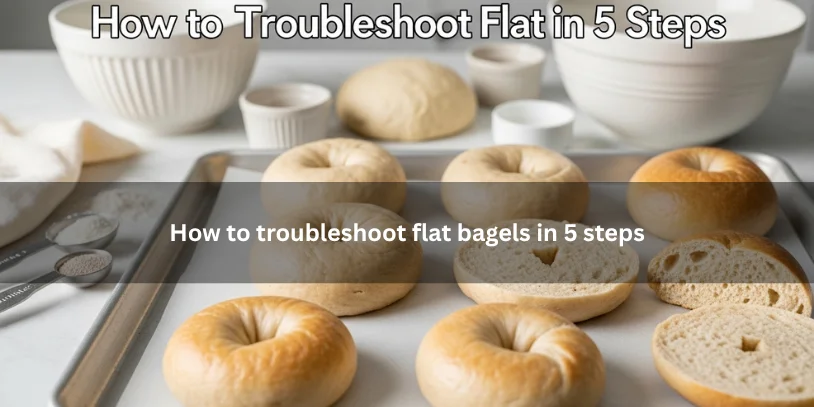
How to troubleshoot flat bagels in 5 steps
Step 1: Check how the dough felt
Ask yourself whether it felt stiff and structured or sticky and slack.
If it was too wet, start there.
Step 2: Check your flour
Bread flour is a stronger baseline than all-purpose flour. High-gluten flour goes even further if you want more chew and better structure.
Step 3: Check proofing
Better to slightly underproof bagels than overproof them. Bagels do not need to double dramatically before boiling.
A float test can help, but it should not be your only guide. A bagel can float and still be close to overproofed depending on dough temperature and timing.
Step 4: Check shaping tension
If the rings were loose and soft before boiling, they were more likely to flatten later.
Step 5: Check boil time and oven heat
A short, gentle water bath and a fully heated oven usually work better than long boiling and uncertain oven temperature.
Overproofed vs underproofed bagels
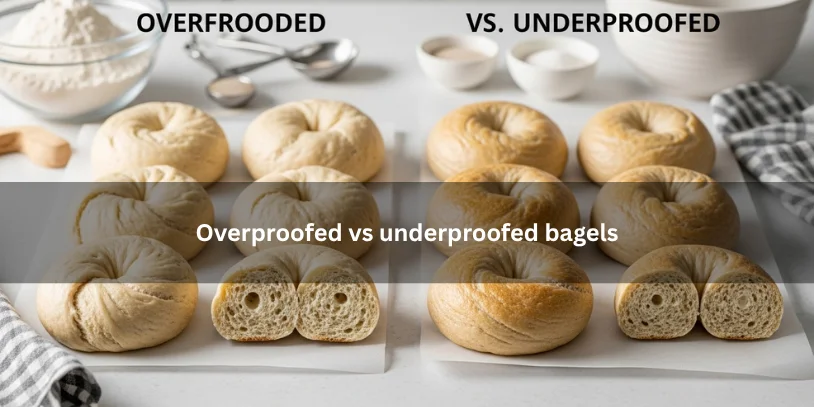
This is one of the most important comparisons.
Overproofed bagels
- very airy
- fragile to handle
- flatten in water
- wrinkle after baking
- lower oven spring
Underproofed bagels
- tighter and heavier
- dense crumb
- less expansion
- may sink at first during the float test
- can bake with a tight interior
If your bagels are flat and wrinkly, think overproofed.
If they are short, compact, and heavy without much spread, think underproofed or underdeveloped.
Sourdough bagels can go flat too
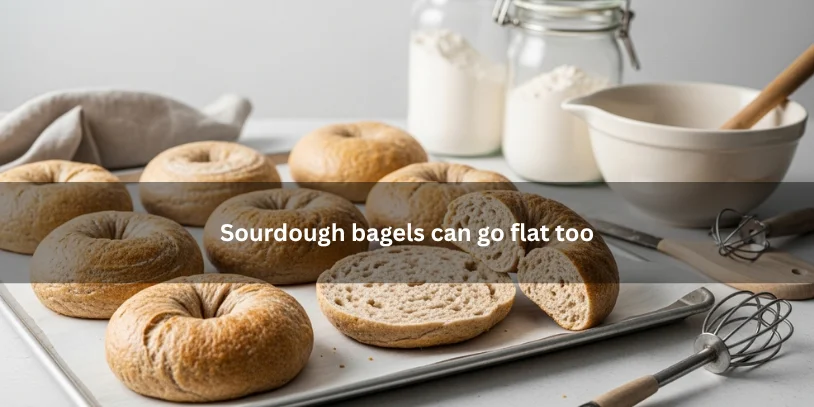
If you make sourdough bagels, the same core issues still apply, but timing gets trickier.
Sourdough starter adds more fermentation variability than commercial yeast, so dough temperature, starter strength, and cold proof timing matter even more.
Flat sourdough bagels often come from:
- overfermentation
- starter that is too acidic or too mature
- dough that proofed too long in the fridge
- weak shaping tension
- hydration that is too high for the flour used
So if you are wondering why your sourdough bagels are flat and airy, look at fermentation first.
What flour should you use?
For most bakers, the safest choice is bread flour.
If you want more chew and a more classic bakery-style result, high-gluten flour is even better.
All-purpose flour can still make decent bagels, but if your bagels are repeatedly flat, weak flour may be part of the issue.
Quick guide:
- All-purpose flour: softer, less structure, less chew
- Bread flour: stronger, better dough strength, better rise
- High-gluten flour: best for chewy texture and strong shape retention
Helpful tools and methods
You do not need fancy equipment, but a few basics help a lot:
- Kitchen scale: better accuracy than cups
- Bench scraper: easier handling for stiff dough
- Slotted spoon: safer transfer from boiling water
- Windowpane test: checks gluten development
- Float test: helps judge readiness before boiling
- Dough temperature control: useful when your kitchen runs warm
Barley malt syrup can also improve traditional flavor and color, though it is not the main reason bagels go flat.
Common mistakes that keep repeating
A lot of home bakers make the same few errors over and over:
- adding too much water because the dough feels stiff
- assuming bagels should proof like soft bread
- using all-purpose flour without adjusting expectations
- shaping too loosely
- boiling too long
- moving overproofed bagels too roughly
- ignoring how warm the kitchen is
- not paying attention to dough temperature during bulk fermentation or cold proof
Small bakery operators run into similar issues too, especially when timing drifts or dough sits longer than planned during production.
What to change next batch
If your bagels turned out flat, do not change everything at once.
Start with the most likely fix based on what you observed.
If they were flat after boiling
- shorten final proof
- reduce boil time
- handle more gently
- tighten shaping
If the dough was sticky and slack
- lower hydration slightly
- switch to bread flour or high-gluten flour
- knead more thoroughly
If they were flat and dense
- improve gluten development
- double-check proofing level
- make sure oven heat is strong enough for oven spring
If they were wrinkly
- proof a little less
- build more surface tension
- avoid over-handling after cold proof
Quick checklist before your next batch
Before you boil your next round of bagels, ask:
- Does the dough feel stiff but workable?
- Did I use strong enough flour?
- Did I knead until the dough felt elastic?
- Are the bagels slightly puffy, not fragile?
- Do the rings hold shape well?
- Am I using a gentle water bath?
- Is the oven fully heated?
If the answer to most of those is yes, your chances of getting fuller, chewier bagels go way up.
The bottom line
Flat bagels are usually a structure problem.
That structure can break down because of overproofing, weak gluten development, too much hydration, low-protein flour, loose shaping, or too much time in boiling water. Once you identify when the dough lost strength, the fix becomes much more obvious.
The good news is this problem is very fixable.
Most bakers get better results fast by tightening shaping, cutting proof time a little shorter, using stronger flour, and treating bagel dough like the stiff, high-structure dough it is supposed to be.
FAQs
Why are my bagels flat after boiling?
Flat bagels after boiling usually point to overproofing, weak gluten development, a dough that is too wet, or boiling them too long. If they lose height as soon as they leave the water, the dough structure was probably already fragile.
Can overproofing make bagels flat?
Yes. Overproofed bagels often become airy but weak, then flatten, wrinkle, or deflate during boiling and baking.
Can underproofing make bagels dense?
Yes. Underproofed bagels are usually tighter, heavier, and denser inside. They may not spread much, but they can still look low and feel too compact.
Is my bagel dough too wet?
It might be if it feels sticky, slack, and hard to shape. Bagel dough should be firm and structured, not loose like regular bread dough.
Does flour type matter for bagels?
Absolutely. Bread flour gives better strength than all-purpose flour, and high-gluten flour is even better for chewy texture and shape retention.
How long should I boil bagels?
Bagels should be boiled briefly, not aggressively overcooked in the water bath. If you boil too long, especially with overproofed dough, they can flatten fast.
Should bagels double before baking?
No. Bagels do not need a dramatic rise like sandwich bread. Slight puffiness is usually enough.
Why did my bagels sink when boiling?
They may have been underproofed, too cold, too dense, or not ready for the float test. Sinking can also happen if the dough structure is off.
Why are my bagels wrinkly?
Wrinkly bagels often point to overproofing, weak surface tension, or rough handling after proofing or boiling.
Why are my sourdough bagels flat?
Sourdough bagels often go flat because of overfermentation, high hydration, weak shaping, or a cold proof that went too long.
Conclusion
If your bagels came out flat, the smartest move is not starting over with a brand-new recipe. It is figuring out where the structure failed.
Check the dough feel, flour strength, proofing level, shaping tension, boil time, and oven heat. Fix the most likely weak point first, and your next batch should come out fuller, chewier, and a lot closer to the bagels you were aiming for.