
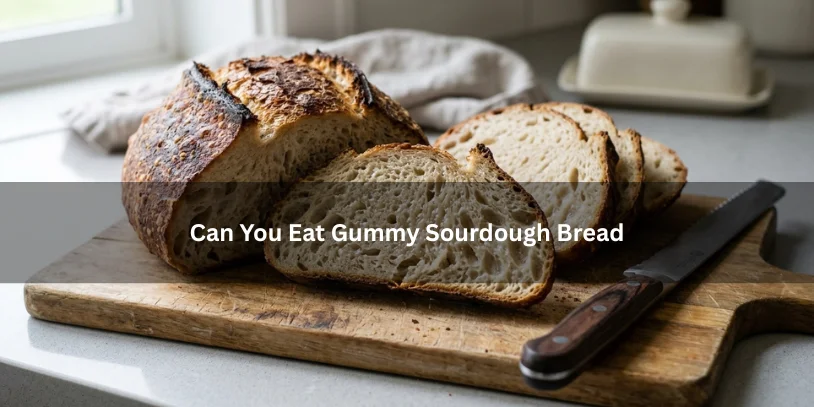
Yes, you can eat gummy sourdough bread if it is fully baked, mold-free, smells normal, and only feels slightly moist or tacky. Do not eat it if the center is raw, wet, slimy, moldy, or spoiled-smelling.
Gummy sourdough is usually a texture problem, not automatically a food safety problem. But there is an important difference between a loaf that is simply moist and one that is underbaked or unsafe.
A good sourdough loaf can have a slightly glossy, custardy crumb, especially if it is made with high hydration dough, whole wheat flour, rye flour, or a long fermentation. That does not always mean something is wrong.
The real concern is when the bread has a paste-like wet center, smells off, shows mold, or was not baked long enough. Raw flour can carry germs such as E. coli and Salmonella, and both the CDC and FDA advise against eating raw dough or uncooked flour products.
Quick Safety Table: Eat, Toast, Rebake, or Toss?
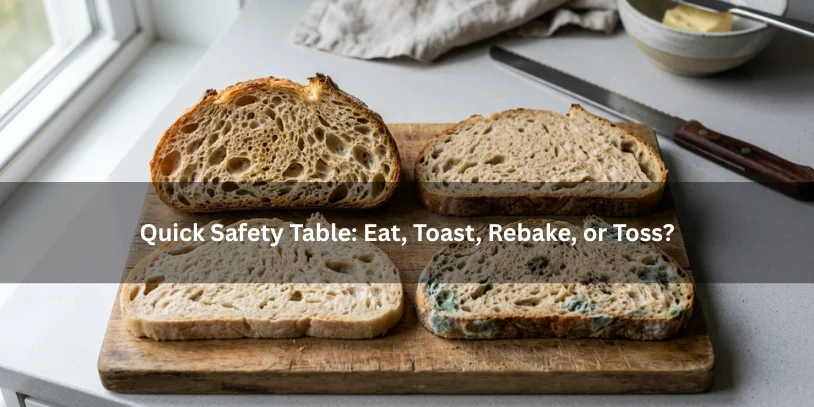
| Bread Condition | Safe to Eat? | Best Action |
|---|---|---|
| Slightly tacky crumb, normal smell | Usually yes | Eat or toast |
| Moist but fully baked | Usually yes | Cool fully, then slice |
| Wet, raw, paste-like center | No | Rebake only if fresh and clean |
| Mold anywhere on the loaf | No | Toss the whole loaf |
| Musty, rotten, or unusual smell | No | Toss |
| Slimy texture | No | Toss |
| Dense but cooked through | Yes | Toast, make croutons, or breadcrumbs |
| Bakery loaf is gummy inside | Maybe | Check for raw center; contact bakery if underbaked |
If the loaf smells normal, has no mold, and the crumb is just a little sticky, it is usually fine to toast. If it looks wet or raw in the middle, avoid eating it as-is.
What Does Gummy Sourdough Mean?
Gummy sourdough has a sticky, dense, wet, or tacky crumb instead of a light, chewy interior. It may cling to the knife, compress when sliced, or feel rubbery in the mouth.
A gummy crumb can come from:
- Underbaking
- Cutting the loaf too soon
- Too much water in the dough
- Weak gluten development
- Weak sourdough starter
- Underproofing
- Overproofing
- Rye or whole grain flour
- Poor oven heat
- Humid storage conditions
The word “gummy” can describe several different problems. A slightly moist sourdough crumb is very different from raw dough in the center.
Gummy vs. Raw vs. Spoiled Sourdough
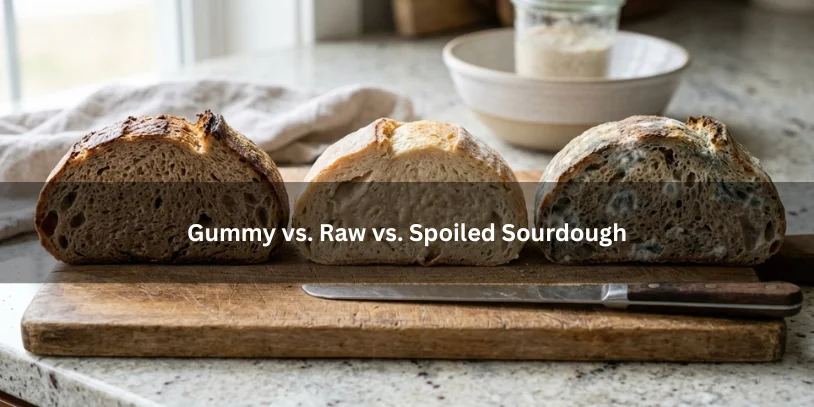
Gummy but Usually Safe
Your sourdough is probably safe if:
- It smells pleasantly sour, wheaty, or toasted
- The crust is well baked
- The crumb is moist but not wet
- There is no mold
- The texture improves when toasted
- It was cooled and stored properly
This kind of loaf may not be perfect, but it is usually edible.
Raw or Undercooked
Your sourdough may be undercooked if:
- The center looks wet or shiny in a paste-like way
- The knife comes out sticky with dough
- The loaf feels unusually heavy
- The bottom crust is pale or soft
- The crumb smears when pressed
- The center collapses after slicing
Undercooked sourdough should not be eaten as raw dough. Raw flour is not treated to kill germs, and baking is what makes flour-based dough safer to eat.
Spoiled or Unsafe
Do not eat sourdough if:
- You see mold
- It smells musty, rotten, or unpleasant
- It feels slimy
- It has strange discoloration
- It was stored damp in a sealed bag for too long
- It contains perishable fillings and sat out too long
Moldy bread should be discarded rather than trimmed, because bread is porous and mold can spread beyond the visible spot. USDA FSIS also warns not to sniff moldy food closely.
Why Is My Sourdough Bread Gummy Inside?
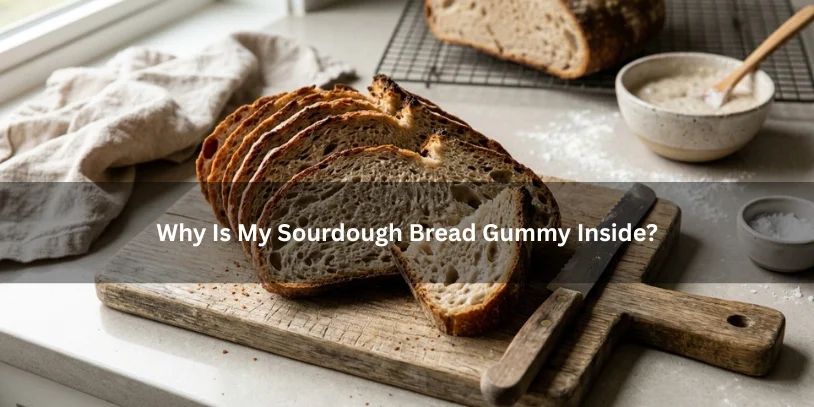
1. The Bread Was Underbaked
A dark crust does not always mean the inside is done. Sourdough can brown beautifully while the center remains underbaked, especially in large loaves or high-hydration doughs.
Use multiple doneness cues:
- Deep crust color
- Firm sides
- Hollow sound when tapped
- Fully set crumb
- Proper internal temperature
- Complete cooling time
King Arthur Baking recommends using several sensory cues, including aroma, color, feel, sound, and temperature, because no single test tells the whole story.
For many crusty sourdough loaves, bakers often look for an internal bread temperature around the low 200°F range, though the ideal number depends on the formula, loaf size, flour type, and hydration.
2. You Cut the Loaf Too Soon
Sourdough keeps setting after it leaves the oven. Steam is still moving through the crumb, and starches are still stabilizing.
If you slice too early, the crumb can turn sticky, gummy, or compressed.
A small loaf may need at least 1–2 hours to cool. Large whole grain or rye-heavy loaves often need longer.
3. The Dough Had Too Much Water
High hydration dough can create an open, glossy crumb, but it is harder to handle and easier to underbake.
If you are new to sourdough, a very wet dough may cause:
- Weak shape
- Poor oven spring
- Sticky crumb
- Dense bottom
- Wet center
Start with moderate hydration before trying advanced open-crumb recipes. Bread flour usually handles more water than lower-protein flour, while whole wheat, rye, and spelt absorb water differently.
4. The Starter Was Weak
A weak sourdough starter can leave the loaf dense and gummy because the dough does not ferment strongly enough.
Signs of a weak starter include:
- Slow rising after feeding
- Few bubbles
- Harsh or unpleasant smell
- Dough that barely rises
- Dense bread with little oven spring
Use your starter when it is active, bubbly, and near its peak.
5. The Dough Was Underproofed
Underproofed sourdough has not fermented long enough. It may look tight, heavy, and gummy because the dough did not build enough gas or internal structure.
Common signs include:
- Dense crumb
- Large tunnels near the top
- Heavy loaf
- Mild flavor
- Pale crust
- Tight, compressed interior
The fix is usually more fermentation time, warmer dough conditions, or a more active starter.
6. The Dough Was Overproofed
Overproofed dough can also become gummy. When fermentation goes too far, gluten weakens and the loaf may collapse.
Signs of overproofing include:
- Dough spreads after shaping
- Dough feels loose and fragile
- Loaf has poor oven spring
- Crumb is dense or sticky
- Flavor is sharply sour
In warm kitchens, dough can overproof faster than expected. Watch the dough, not just the clock.
7. Gluten Development Was Weak
Gluten gives sourdough structure. Without enough gluten development, the dough cannot hold gas well.
This can happen if:
- You skipped stretch and folds
- You used weak flour
- The dough was too wet
- You added too much bran-heavy flour
- You overfermented the dough
- You shaped too loosely
Stretch and folds, coil folds, and proper shaping help build a stronger crumb structure.
8. Rye or Whole Grain Flour Made the Crumb Wetter
Rye, whole wheat, and spelt can produce a denser, moister loaf than white bread flour. Rye especially can feel sticky because it behaves differently from wheat flour and does not build gluten structure in the same way.
A rye sourdough may naturally have a closer, moister crumb. That is not automatically unsafe, but it should not be wet, raw, or spoiled.
9. The Oven Was Too Hot or Too Cool
If the oven is too hot, the crust may brown before the center finishes baking. If the oven is too cool, the loaf may never get enough heat to set properly.
An oven thermometer is a simple way to check whether your oven runs hot or cold.
A Dutch oven, baking stone, or baking steel also needs enough preheating time. If the baking surface is not hot enough, oven spring and crumb structure can suffer.
10. Climate and Storage Made It Worse
Humidity affects sourdough. In humid cities such as Singapore, Dubai’s coastal areas, Sydney, Auckland, or parts of the southern United States, bread can soften faster after baking.
In cold kitchens, fermentation slows down. In hot kitchens, dough can overproof quickly. At high altitude, baking and moisture loss may need adjustment.
If you often search for “sourdough bread near me” or buy from an artisan sourdough bakery, ask how they recommend storing the loaf in your climate.
Can You Fix Gummy Sourdough After Baking?
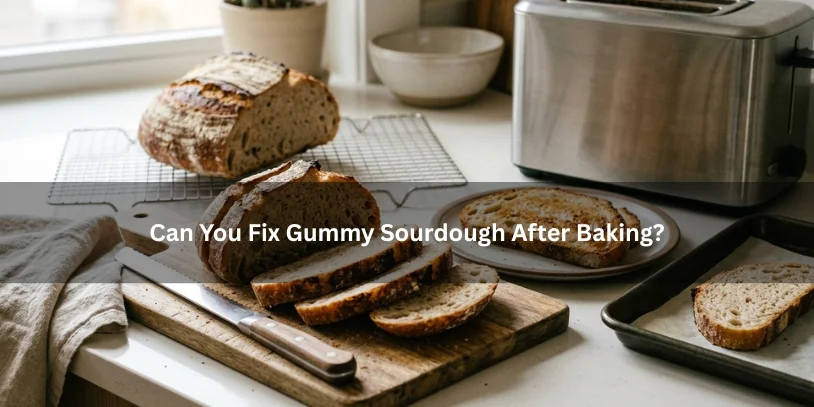
Sometimes. You can improve gummy sourdough if it is fresh, mold-free, and not spoiled. You cannot safely fix moldy, slimy, or contaminated bread.
Option 1: Toast It
This is the easiest fix for slightly gummy sourdough.
Toasting dries the crumb and improves texture. Use it for:
- Buttered toast
- Avocado toast
- Garlic bread
- Grilled cheese
- Open-faced sandwiches
Option 2: Rebake It
You can rebake gummy sourdough if it is freshly baked and simply underdone.
How to rebake it:
- Preheat the oven to a moderate temperature.
- Place the loaf or thick slices on a baking sheet.
- Bake until the center feels drier and more set.
- Cool completely before slicing again.
Do not rebake bread that smells spoiled, has mold, or has been sitting around cut open for a long time.
Option 3: Make Croutons
Dense but safe sourdough makes excellent croutons.
Cut it into cubes, toss with olive oil and seasoning, then bake until crisp. Use them on soups, salads, or roasted vegetables.
Option 4: Make Breadcrumbs
If the loaf is fully baked but too dense for sandwiches, dry it out and pulse it into breadcrumbs.
Use sourdough breadcrumbs for pasta, casseroles, meatballs, gratins, or crispy toppings.
Option 5: Use It in Bread Pudding or Strata
A safe but dense loaf can work well in custard-based dishes. Bread pudding, French toast casserole, and savory strata can turn a disappointing loaf into something useful.
Again, do not use bread that is moldy, slimy, or spoiled.
How to Prevent Gummy Sourdough Next Time
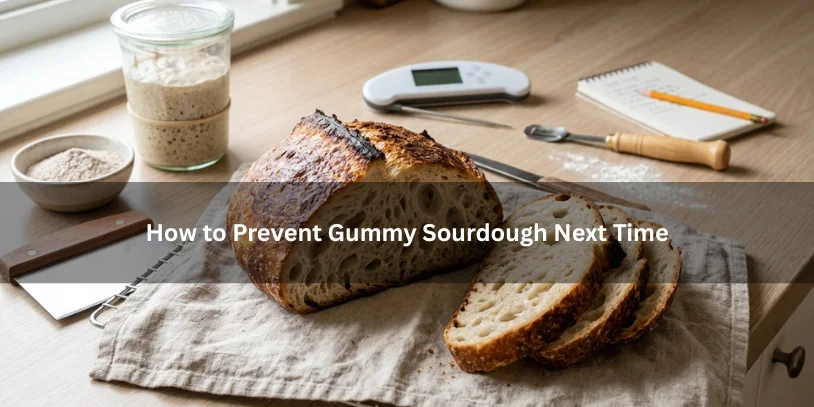
Use an Active Starter
Feed your sourdough starter regularly and use it when it is bubbly, risen, and active.
A healthy starter should smell pleasantly tangy, fruity, yeasty, or mildly acidic. It should not smell rotten or show unusual colored growth.
Reduce Hydration
If your sourdough keeps turning gummy, lower the water slightly.
For beginners, a moderate hydration dough is easier to mix, fold, shape, proof, and bake through. Once your loaves are consistent, you can gradually increase hydration.
Build Dough Strength
During bulk fermentation, use stretch and folds or coil folds. These help organize gluten and improve gas retention.
A stronger dough usually has:
- Better shape
- Better oven spring
- Less spreading
- More even crumb
- Less gumminess
Watch Bulk Fermentation Carefully
Bulk fermentation is one of the biggest sourdough turning points. Too short, and the bread can be tight and gummy. Too long, and the dough can collapse.
Look for dough that is aerated, smoother, slightly domed, and increased in volume. The exact rise depends on your recipe, flour, room temperature, and starter strength.
Do Not Rush the Cooling
Cooling is not optional. It is part of the baking process.
Place the loaf on a wire cooling rack so air can circulate. Avoid sealing warm bread in plastic, because trapped steam can soften the crust and make the crumb feel wetter.
Use the Right Tools
You do not need every sourdough tool, but a few make a real difference.
| Tool | Why It Helps |
|---|---|
| Digital kitchen scale | Measures flour and water accurately |
| Instant-read thermometer | Helps check doneness |
| Oven thermometer | Reveals oven temperature problems |
| Dutch oven | Traps steam for better oven spring |
| Wire cooling rack | Prevents soggy bottoms |
| Bench scraper | Helps handle wet dough |
| Banneton | Supports shaped dough |
| Bread knife | Reduces crumb compression |
A basic thermometer and scale are usually more important than premium accessories. A Dutch oven is helpful, but you can still make good bread with a baking stone, baking steel, or covered baking setup.
What If You Bought Gummy Sourdough From a Bakery?
Bakery sourdough can be more moist than supermarket sandwich bread, especially if it is an artisan loaf made with long fermentation and high hydration.
But it should not be raw, wet, slimy, or unpleasant-smelling.
If you bought a loaf from a local bakery and the center seems underbaked:
- Take a photo of the crumb
- Keep the receipt if you have it
- Contact the bakery politely
- Ask if that texture is normal for the style
- Request a replacement if the loaf is clearly underbaked
When searching for an artisan sourdough bakery near me, sourdough baking class near me, or best sourdough bakery in your city, look for bakeries that explain their fermentation process, storage advice, ingredients, and freshness standards.
Is Gummy Sourdough Worse for Children or Vulnerable People?
A fully baked, mold-free loaf that is only slightly gummy is usually a quality issue. But underbaked dough and spoiled bread deserve more caution.
Children, older adults, pregnant people, and people with weakened immune systems should be especially careful with undercooked flour-based foods. Raw flour and raw dough can carry harmful germs, and foodborne illness can be more serious for vulnerable groups.
If someone ate a small amount of slightly gummy but fully baked sourdough and feels fine, there is usually no reason to panic. If the bread was raw, moldy, or spoiled and symptoms develop, contact a medical professional or local health service.
Final Decision Guide
Use this simple rule:
Eat it if:
The bread is fully baked, smells normal, has no mold, and is only slightly tacky.
Toast it if:
The crumb is a little sticky but the loaf is otherwise safe.
Rebake it if:
It is freshly baked, mold-free, and clearly underdone in the center.
Repurpose it if:
It is dense but cooked through.
Toss it if:
It is moldy, slimy, spoiled-smelling, raw in the center, or stored unsafely.
FAQs
Can you eat gummy sourdough bread?
Yes, you can eat gummy sourdough bread if it is fully baked, mold-free, and smells normal. Do not eat it if the center is raw, wet, slimy, moldy, or spoiled-smelling.
Is gummy sourdough always undercooked?
No. Gummy sourdough can be undercooked, but it can also come from high hydration, weak gluten development, overproofing, underproofing, weak starter, or slicing the loaf too soon.
Can gummy sourdough make you sick?
Gummy texture alone does not always mean the bread will make you sick. The bigger risks are raw dough, raw flour, mold, spoilage, and unsafe storage.
Can you rebake undercooked sourdough?
Yes, if the loaf is fresh, clean, and mold-free. Return it to the oven at a moderate temperature until the center sets, then cool it completely before slicing again.
Why is my sourdough wet in the middle?
A wet center usually means the loaf was underbaked, too hydrated, cut too soon, or not fermented properly. It can also happen if the oven browned the crust before the center finished baking.
How long should sourdough cool before slicing?
Most sourdough loaves should cool for at least 1–2 hours before slicing. Large, whole grain, or rye-heavy loaves may need longer because the crumb continues to set as it cools.
What temperature should sourdough be inside when done?
Many crusty sourdough loaves finish around the low 200°F range, but doneness depends on the recipe, loaf size, hydration, and flour. Use temperature along with crust color, aroma, sound, and crumb texture.
Can I eat sourdough with mold if I cut the mold off?
No. Bread is porous, and mold can spread beyond what you can see. It is safer to discard the whole loaf rather than cut away the visible mold.
Why is my sourdough gummy after cooling?
If the loaf is still gummy after cooling, it may be underbaked, overhydrated, overproofed, underproofed, or made with weak flour or starter. Humid storage can also make the crumb feel damp.
Is bakery sourdough supposed to be gummy?
Artisan sourdough can be moist and slightly glossy, but it should not be raw, wet, slimy, moldy, or unpleasant-smelling. If the center seems underbaked, contact the bakery.
What can I make with gummy sourdough?
If the bread is safe and fully baked, use it for toast, croutons, breadcrumbs, grilled cheese, French toast, bread pudding, or savory strata.
Conclusion
Gummy sourdough bread is not automatically unsafe. If the loaf is fully baked, mold-free, and smells normal, it is usually safe to eat or toast. The texture may be disappointing, but it does not always mean the bread is raw.
The bread should be tossed if it has mold, a spoiled smell, sliminess, or a wet raw center that cannot be safely corrected. Do not try to save moldy bread by cutting off the visible spot, and do not eat raw sourdough dough.
For your next loaf, focus on the basics: use an active starter, reduce hydration if needed, strengthen the dough, proof carefully, bake long enough, and let the bread cool fully before slicing. Most gummy sourdough problems come from one of those steps, and fixing just one can make the next loaf dramatically better.