
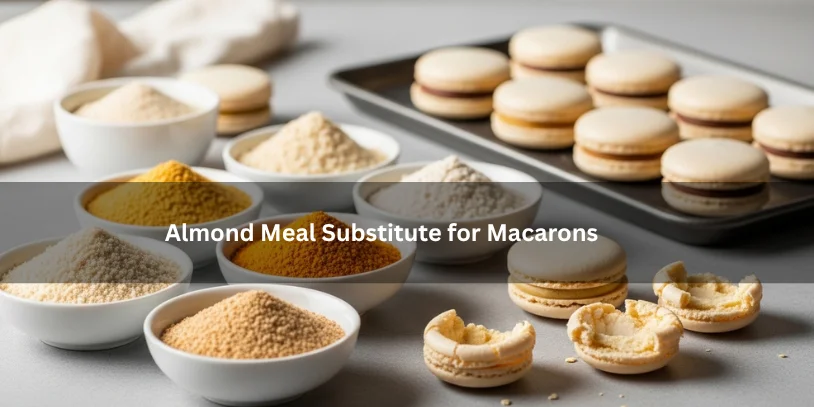
If you need a quick answer, the best almond meal substitute for macarons depends on your goal. For nut-free macarons, sunflower seed flour is the most practical option. For the closest classic result, finely sifted almond flour still wins, while hazelnut or pistachio flour works best as a partial swap. For budget practice, all-purpose flour can help you learn technique, but it will not give the same shell texture or finish as traditional French macarons.
What Is an Almond Meal Substitute for Macarons?
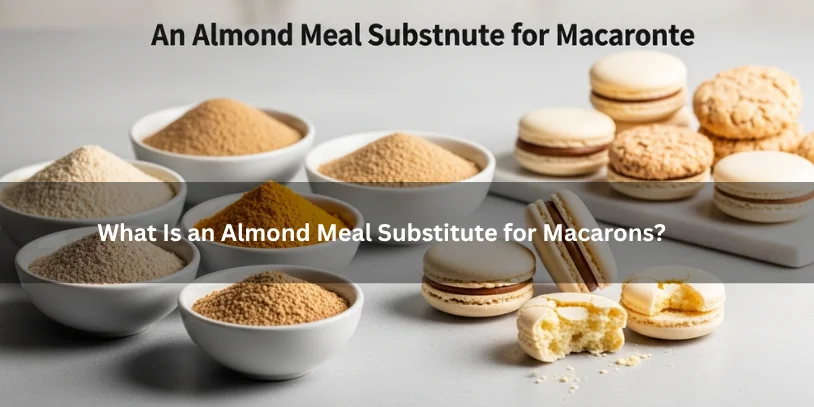
An almond meal substitute for macarons is any flour or finely ground ingredient used in place of almond flour or almond meal in the shell. Bakers usually look for one for four reasons: nut allergy, cost, availability, or experimentation.
That said, not every substitute behaves like almonds. Macarons are not regular cookies. Their shells depend on a delicate balance of meringue, powdered sugar, particle size, fat content, and careful macaronage. That is why a swap that sounds simple on paper can turn into rough tops, weak feet, or shells that look fine but chew like something completely different.
Why Almond Flour Works Better Than Most Alternatives
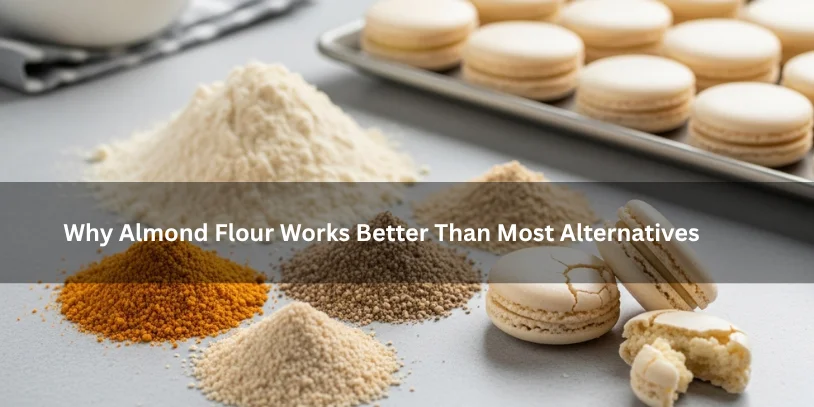
Traditional French macarons, the kind associated with names like Ladurée and Pierre Hermé, rely on finely ground blanched almonds for a reason. Almond flour is mild in flavor, pale in color, and fine enough to create smooth shells. It also contains enough fat to support that classic crisp shell and chewy center.
Almond meal is slightly different. It is often coarser and may include almond skin. That makes it more rustic and less ideal for polished macaron shells.
Almond Flour vs Almond Meal for Macarons
| Feature | Almond Flour | Almond Meal |
|---|---|---|
| Texture | Fine | Coarser |
| Color | Pale | Speckled or darker |
| Best for | Smooth shells | Rustic or emergency use |
| Shell finish | Cleaner, smoother | More textured |
| Macaron success rate | Higher | Lower unless well sifted |
If you only have almond meal, you do not always need to abandon the recipe. You can pulse it briefly in a food processor with part of the confectioners’ sugar, then sift it thoroughly through a fine sieve or sifter. The goal is to remove coarse bits before they disrupt shell texture.
The Best Almond Meal Substitutes for Macarons
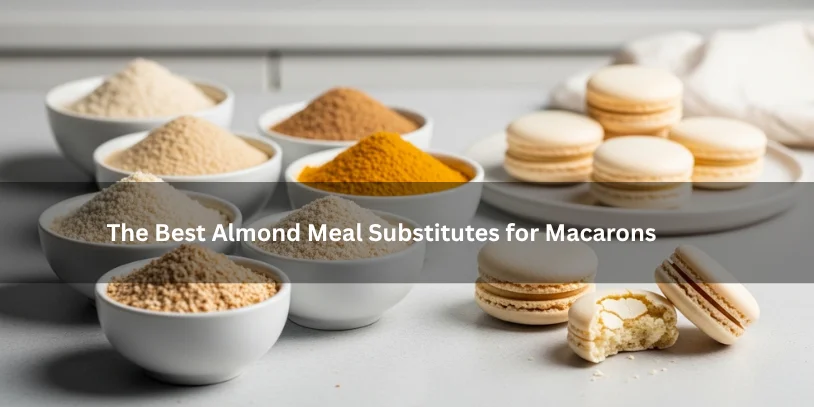
The best substitute depends on whether you want an authentic result, a nut-free option, or simply a cheaper way to practice.
1. Sunflower Seed Flour
This is the strongest choice if you need a nut-free substitute. It is not identical to almond flour, but it is one of the few alternatives that can still produce recognizable macaron shells with feet, a delicate crust, and a tender center.
Best for:
- nut-free macarons
- tree nut allergy households
- bakers who still want a proper shell rather than a lookalike cookie
Pros:
- closest practical nut-free option
- works better than random wheat-based swaps
- still gives a refined result with good handling
Cons:
- batter can behave differently during macaronage
- shells may be slightly darker or less smooth
- can be more sensitive to overmixing
2. Hazelnut Flour
Hazelnut flour is a strong option if nuts are fine and you want a premium flavor variation. It works best as a partial substitution rather than a full replacement. Think of it as a way to keep the soul of the macaron while changing the flavor profile.
Best for:
- chocolate, coffee, praline, and caramel fillings
- bakers wanting a richer, deeper nut flavor
- premium small-batch macarons
Pros:
- delicious flavor
- still feels close to a classic macaron
- works well with buttercream and ganache
Cons:
- stronger taste can overpower delicate fillings
- not ideal for nut-free baking
- better as a partial swap than a full one
3. Pistachio Flour
Pistachio flour is one of the most attractive premium options. It can produce beautiful flavor pairings and a more boutique feel, especially with rose, raspberry, orange blossom, cardamom, or white chocolate.
Best for:
- premium macarons
- gift boxes or special occasions
- flavor-forward shells
Pros:
- elegant flavor
- luxurious feel
- excellent with jam, buttercream, and ganache fillings
Cons:
- expensive
- can be oily depending on grind quality
- usually performs better as a partial swap
4. Pumpkin Seed Flour
Pumpkin seed flour is a more experimental route. It may appeal to bakers who want something seed-based but do not want sunflower. The problem is consistency. Brand quality, grind size, and flavor can vary a lot.
Best for:
- experimental almond-free baking
- seed-based alternatives when sunflower is unavailable
Pros:
- seed-based option
- can work in carefully tested batches
Cons:
- less predictable
- stronger flavor
- often not as smooth in finished shells
5. All-Purpose Flour
All-purpose flour is not the best almond flour substitute for macarons if your goal is an authentic French macaron. Still, it has value. It is one of the cheapest ways to practice piping, folding, drying, and baking without burning through expensive almond flour.
Best for:
- budget practice
- learning macaronage
- beginners who want to understand shell behavior
Pros:
- cheap
- easy to find
- helpful for low-cost practice batches
Cons:
- not gluten-free
- does not deliver classic texture
- shells can be more imitation than true macaron
Which Substitute Should You Choose?
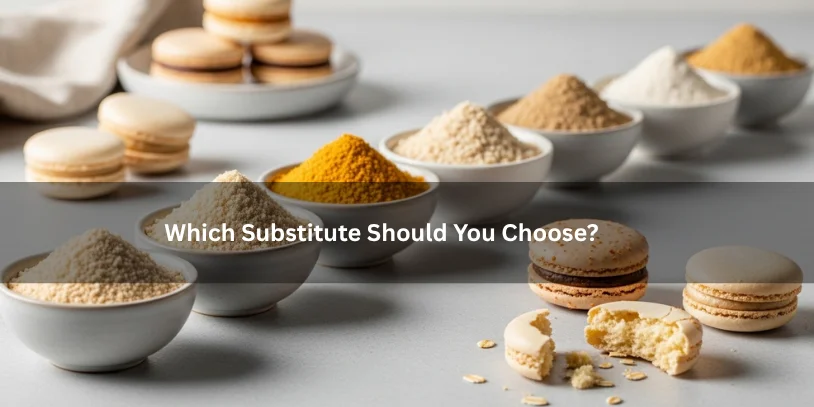
Here is the easiest decision framework.
Choose sunflower seed flour if:
- you need a nut-free option
- you are baking for someone with a tree nut allergy
- you still want a shell that feels like a real macaron
Choose hazelnut flour if:
- nuts are acceptable
- you want the closest premium variation
- your filling is bold enough to match it
Choose pistachio flour if:
- you want a luxury feel
- you are making specialty flavors
- you do not mind a higher ingredient cost
Choose all-purpose flour if:
- you are practicing technique
- you want to save money
- you understand it will not match the classic result
How to Adjust Your Recipe When Using a Substitute
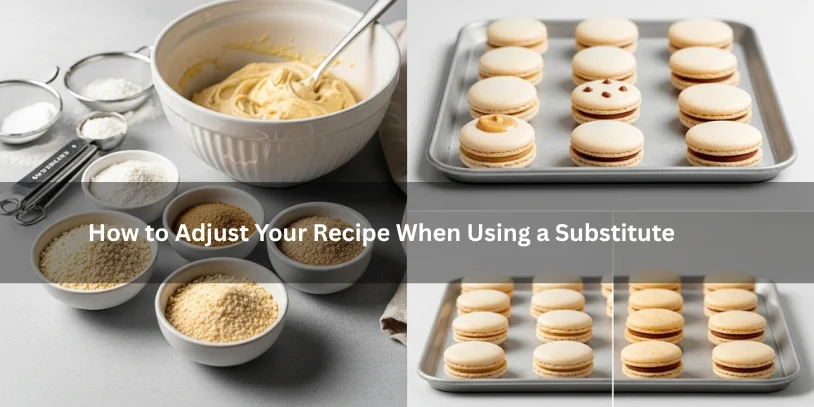
This is where many bakers go wrong. They swap the flour and expect everything else to stay the same.
Sift More Than You Think You Need To
Substitute flours are often coarser. If you skip careful sifting, your shells may turn textured, dull, or cracked. Use a fine sieve and do not force large bits through.
Watch Macaronage Closely
Macaronage is the folding stage where your dry mix is worked into the meringue. With substitutes like sunflower seed flour, the batter can loosen differently. It may not look exactly like almond-based batter, even when it is ready.
A stand mixer can help you build a stable Swiss macaron method or standard meringue, but the folding still needs judgment. The figure-8 test can help, but do not rely on it blindly. Watch how the batter flows and settles.
Weigh After Sifting if Needed
If your substitute loses a noticeable amount of coarse material in the sieve, weigh again. Otherwise, your dry ratio may be off.
Expect Texture Changes
Even the best substitute may affect:
- shell smoothness
- foot development
- chewiness
- crispness
- flavor balance
- maturing process after filling
That last point matters. Once you fill macarons with buttercream, ganache, or jam, they mature in the fridge and soften slightly. Substitute shells may absorb moisture differently, so do not judge them only five minutes out of the oven.
What to Do If You Only Have Coarse Almond Meal
A lot of bakers land here. They do not want a different substitute. They want to know whether the almond meal already in the pantry can be rescued.
Here is the best approach:
- Combine the almond meal with part of the powdered sugar.
- Pulse it briefly in a food processor.
- Sift it through a fine sieve.
- Discard the coarse bits.
- Re-weigh what remains before mixing it into the meringue.
This will not always create a bakery-perfect result, but it gives you a far better chance of smooth shells than using coarse almond meal straight from the bag.
What Substitutes Should You Avoid?
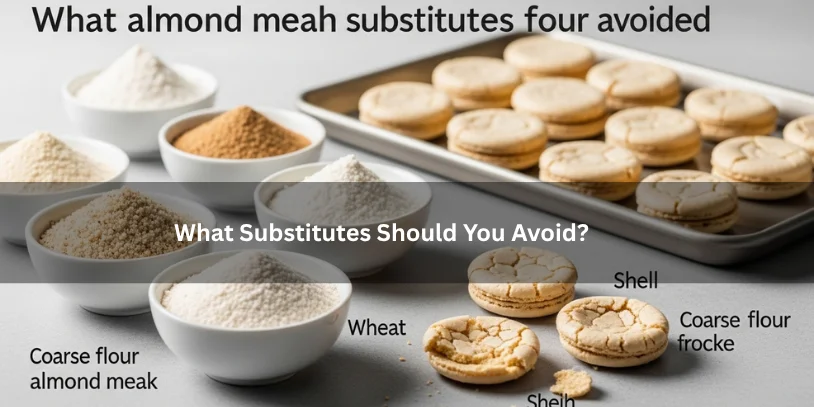
Some ingredients sound promising but usually disappoint in macarons.
Oat Flour
It may work in other gluten-free baking, but it does not mimic almond flour well in classic macaron shells. The result usually drifts too far from the original texture.
Coconut Flour
Coconut flour is highly absorbent and behaves nothing like almond flour. It can make the batter dry, unstable, or strangely dense.
Random Gluten-Free Blends
These are built for general baking, not for the very specific structure of macarons. They often contain starches or gums that change the shell too much.
Common Problems and How to Fix Them
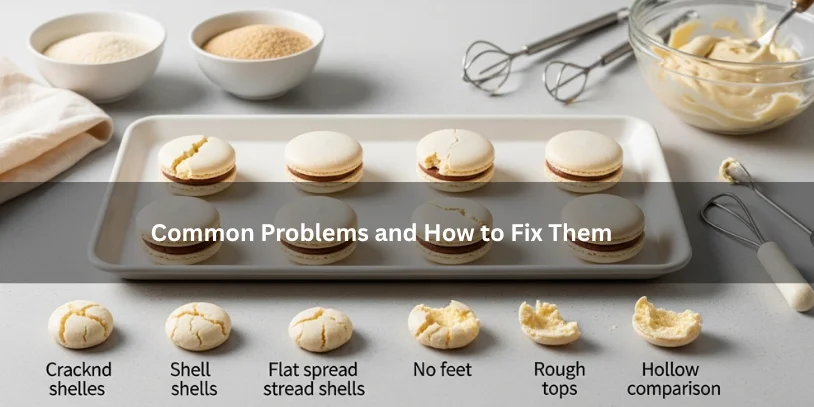
Rough, bumpy tops
Usually caused by coarse flour, poor sifting, or oily particles. Use a finer flour and do not skip the sieve.
No feet
Often linked to bad batter consistency, weak meringue, or a substitute that does not support the shell well. Make sure your egg whites are whipped properly and do not overmix during macaronage.
Spread-out shells
This usually points to overmixed batter. Some substitutes loosen faster than almond flour, so stop earlier than you think.
Brittle shells
This can happen with the wrong flour balance, overbaking, or low fat in the substitute. Remember that substitute macarons are often less forgiving.
Strange flavor
Some seed or nut flours are stronger than almond flour. Match them with stronger fillings. Hazelnut works beautifully with chocolate ganache. Pistachio pairs well with raspberry jam or orange buttercream.
Are They Still “Real” Macarons?
This is a fair question. If you replace almond flour, are you still making a French macaron?
The honest answer is yes, but with a limit. The shell can still be a macaron if it follows the same meringue-based structure and bakes into the familiar crisp shell, feet, and chewy center. But not every substitute gives the same result, and some push the final product closer to a macaron-style sandwich cookie than a classic Parisian macaron.
That distinction matters if you sell them, gift them, or serve them to someone expecting a Ladurée-style experience.
Safety Notes for Allergy and Gluten Concerns
If you are baking for allergies, ingredient choice is only part of the picture.
Keep these points in mind:
- nut-free shells are not truly allergy-safe if made in a kitchen with cross-contact
- sunflower seed flour can help with tree nut avoidance, but fillings also matter
- all-purpose flour makes the shells no longer gluten-free
- always label clearly if you are sharing or selling macarons
This is especially important when baking for children, schools, events, or mixed-diet households.
Practical Buying Guidance
If you are shopping for a substitute, look for:
- very fine grind
- dry texture, not oily
- fresh smell
- no large visible particles
- packaging that clearly identifies the flour source
If the flour looks coarse or damp, it is probably going to fight you in the bowl.
For most bakers, a smart buying path looks like this:
- buy sunflower seed flour for nut-free shells
- buy hazelnut or pistachio flour for premium variations
- use all-purpose flour only when the goal is technique practice, not authenticity
FAQs
Can you make macarons without almond flour?
Yes, but the result depends on the substitute. Sunflower seed flour is one of the best practical alternatives, while all-purpose flour works better for practice than for classic shells.
Is almond meal too coarse for macarons?
Often, yes. Almond meal is usually coarser than almond flour and may include skin. It can work if you pulse and sift it well, but it is less reliable for smooth shells.
What is the closest substitute to almond flour in macarons?
If you still want a similar shell structure, sunflower seed flour is the closest practical nut-free option. If nuts are fine, hazelnut flour is one of the best premium alternatives.
Can you use sunflower seed flour 1:1?
Sometimes, but it is safer to treat it as a separate formula rather than assuming a perfect one-to-one swap. The batter often behaves differently.
Can I use all-purpose flour in macarons?
You can, especially for budget practice, but it will not give the same classic French macaron texture, flavor, or finish.
Are macarons still gluten-free with substitutes?
Only if the substitute itself is gluten-free and the kitchen setup avoids cross-contact. Once you use all-purpose flour, they are no longer gluten-free.
Are pistachio and hazelnut better as partial swaps?
Yes. They usually perform best when used as part of the dry mix rather than as a complete replacement, especially if you still want the shell to feel close to classic macarons.
Can I use coconut flour or oat flour?
They are usually poor substitutes for macarons. Their texture and behavior are too different from almond flour, so the shells often fail or lose the classic character.
What filling works best with substitute macarons?
That depends on the flour. Hazelnut pairs well with ganache or praline buttercream. Pistachio goes well with raspberry jam, orange, or rose. Sunflower seed shells work well with vanilla buttercream, chocolate ganache, or fruit-based fillings.
Conclusion
The best almond meal substitute for macarons depends less on what is sitting in your pantry and more on what kind of result you want. If you need a true nut-free option, sunflower seed flour is the strongest choice. If you want a premium flavor variation, hazelnut or pistachio flour makes more sense. If your goal is cheap practice, all-purpose flour can teach you technique, but it will not give you the classic crisp shell, feet, and chewy center that make French macarons special.
If you only have coarse almond meal, do not panic. Pulse it, sift it, and use it carefully. Macarons reward precision, and that matters even more when you start substituting ingredients.