
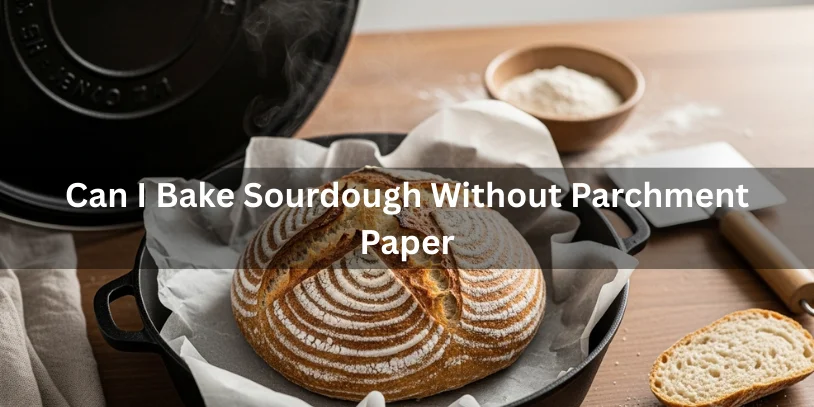
If you’re asking, “Can I bake sourdough without parchment paper?” the practical answer is yes—and you can still get strong oven spring, a clean “ear,” and a crisp crust. The key is choosing the right substitute for your setup and baking temperature.
In most homes, the real challenge isn’t the lack of parchment paper—it’s safe transfer into a very hot Dutch oven and preventing the loaf from welding itself to cast iron or enamel.
Quick Answer (What Most People Need)
Yes, you can bake sourdough without parchment paper (also called baking paper in the UK/AU). Use a rice-floured banneton, a grain barrier (semolina/cornmeal/oats), a silicone bread sling, or a well-managed no-liner method. Do not use wax paper for oven baking.
Why Parchment Paper Is Common in Sourdough Baking
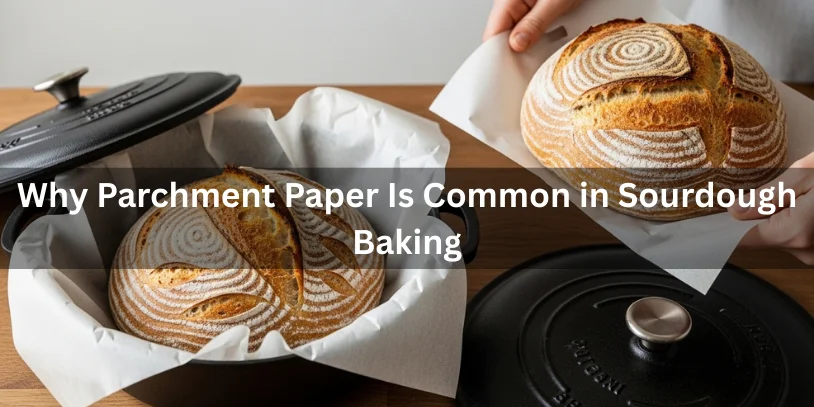
Parchment paper became the default for sourdough because it solves several pain points at once:
- Acts as a nonstick layer under wet, high-hydration dough
- Creates a simple “sling” for lowering dough into a preheated Dutch oven
- Reduces cleanup
- Helps prevent scorching when the bottom heat is aggressive (not always, but sometimes)
But parchment paper isn’t essential for artisan bread. Many professional bakers rely on peels, couches, flour dusting, and deck ovens with steam—no paper required.
Safety First: What Not to Use (And Why)
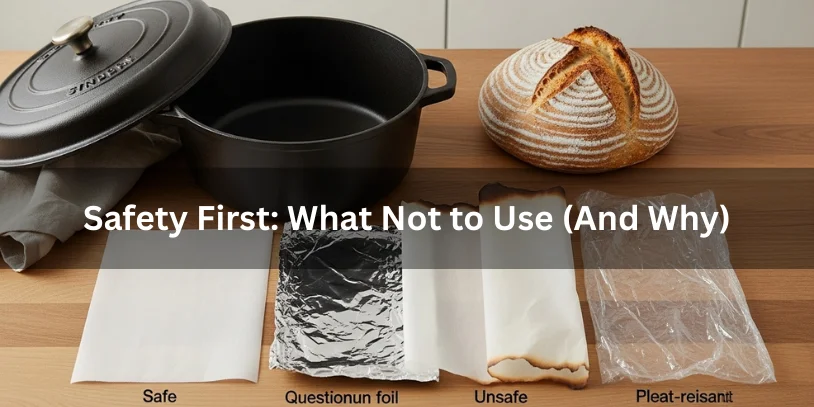
When you’re baking sourdough, temperatures often hit 232–260°C (450–500°F). That’s where material choice matters.
Wax Paper Is Not a Substitute
Wax paper is designed for wrapping and cold prep. In oven heat, wax can melt and smoke, and the paper can scorch. If you’re tempted to swap wax paper for parchment, don’t.
Watch the Broiler
Even parchment paper and many silicone items are not intended for broiler-level direct radiant heat. If your recipe uses a broiler finish, skip paper-like liners and use cookware rated for that environment.
“Greaseproof Paper” vs “Baking Paper” (Global Note)
In some countries, “greaseproof paper” is sold separately from “baking paper.” They’re not always interchangeable at high heat. If the packaging doesn’t clearly state oven use and a temperature rating, don’t treat it as parchment.
The Best Alternatives to Parchment Paper (At a Glance)
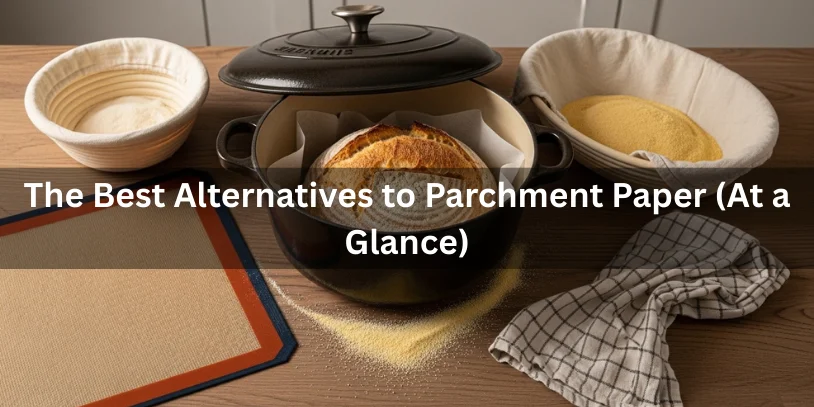
Below is a practical comparison based on the two big outcomes: safe transfer and nonstick performance.
| Alternative | Best For | Pros | Cons |
|---|---|---|---|
| Rice flour dusting (banneton + base) | Most sourdough loaves | Excellent release, neutral flavor | Requires proper flouring technique |
| Semolina or cornmeal barrier | Dutch oven, stone/steel | Reduces sticking, adds crunch | Can burn if heavily applied |
| Oats (rolled or quick) | Dutch oven boules | Pantry staple, pleasant texture | Adds visible “oat bottom,” can toast strongly |
| Silicone bread sling / silicone baking mat | Dutch oven users | Reusable, easy transfer | Must verify heat rating; cheap silicone can underperform |
| Lightly greased pan + flour | Loaf-pan sourdough | Simple for sandwich loaves | Not ideal for high-hydration boules |
| Aluminum foil (with technique) | Emergency use | Available almost everywhere | Not inherently nonstick; needs flour/oil strategy |
Choose Your Method: A Simple Decision Framework
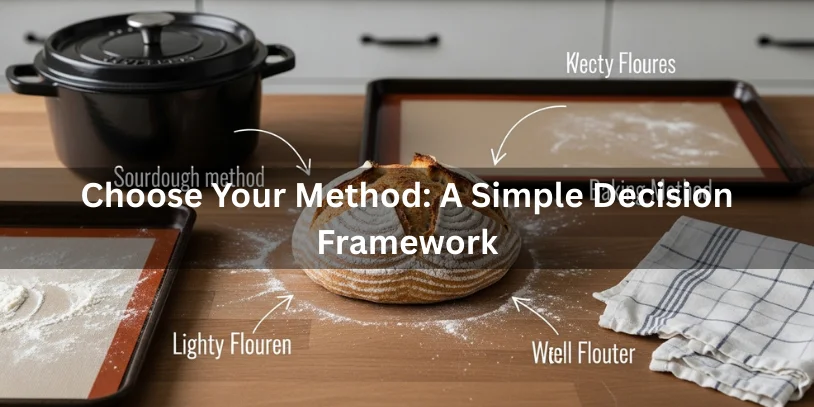
If you want a reliable outcome without guesswork, match your method to your equipment, skill level, and dough hydration.
If/Then Guide
- If you bake in a preheated Dutch oven and you’re a beginner:
Use a silicone bread sling or semolina/cornmeal under the loaf. - If you’re out of everything but pantry staples:
Use oats (or a light seed mix) as a barrier. - If you bake very high hydration (75%+):
Prioritize a rice-floured banneton + a barrier layer. - If you often get a burnt bottom:
Add a heat shield (rack position + insulation approach). - If you bake in a bakery or high-volume kitchen:
Use a peel + dusting flour workflow and reusable liners only when needed.
Method 1: Baking in a Preheated Dutch Oven Without Parchment
A Dutch oven (cast iron or enameled cast iron—think Staub-style cookware) traps steam from the dough, supporting starch gelatinization on the surface and a powerful early rise.
The biggest risk is transfer: a heavy pot, extreme heat, and fragile dough.
Option A: Semolina or Cornmeal Barrier (Fast + Effective)
Best when you want a simple, low-cost solution.
How it works: coarse grains create a “ball-bearing” layer between dough and hot surface. It reduces sticking and can improve bottom texture.
Steps
- Preheat the Dutch oven fully at 245–260°C (475–500°F) for 30–45 minutes.
- Turn dough out from a rice-floured banneton onto a lightly floured surface.
- Score with a bread lame.
- Sprinkle a thin layer of semolina or cornmeal into the hot Dutch oven.
- Lower the loaf in carefully, cover, and bake.
Pros
- Easy, pantry-adjacent in many countries
- Great release
- Adds a rustic crunch
Cons
- Too much can taste bitter if it burns
- Not as “clean bottom” as parchment
Option B: Oats Under the Loaf (The Pantry Emergency Hero)
Oats work similarly to cornmeal but with a softer, toastier finish.
Best for: people who are out of baking paper and don’t want to shop.
Steps
- Preheat Dutch oven as normal.
- Add a small scattering of oats to the base.
- Load the scored loaf on top.
- Bake covered, then uncovered to finish.
What to expect
- A visible oat “footprint”
- A lightly nutty aroma
- More browning if your oven runs hot
Option C: Silicone Bread Sling (Maximum Transfer Control)
If you want the easiest, safest loading method without disposable paper, a silicone bread sling is the modern upgrade. Some people use a silicone baking mat trimmed to fit, but a sling with handles is easier.
What to look for
- Clearly marked heat rating appropriate for your bake
- Thick, stable silicone that doesn’t feel flimsy
- Food-grade labeling and a reputable brand (Silpat-style quality is a useful benchmark)
Steps
- Place the sling on your counter.
- Invert the loaf onto the sling, score, and lift by handles.
- Lower into the Dutch oven, cover, bake.
Pros
- Best for burn prevention during loading
- Reusable, low waste
- Very beginner-friendly
Cons
- Heat ratings vary by manufacturer
- Cheap silicone can discolor, smell, or degrade sooner
Option D: No Liner (Direct Drop Method)
This is the cleanest, most classic approach—but it’s less forgiving.
Best for: confident bakers with good shaping and flouring technique.
Keys to success
- A properly preheated Dutch oven
- Strong dough structure (good gluten development)
- A well-floured proofing basket (rice flour helps)
Basic approach
- Invert, score, then lower the loaf in using hands or a bench scraper as support.
- Work smoothly to avoid degassing the dough.
Method 2: Cold Dutch Oven (Safer Handling, Slightly Different Results)
If you’re worried about burns or you bake with kids around, a cold-start Dutch oven can reduce risk.
How it differs
- You place the shaped loaf into a room-temp Dutch oven, then put it into a hot oven.
- You may see slightly less dramatic oven spring compared to a fully preheated pot, but it’s still very workable.
How to do it without parchment
- Use a silicone sling or a dusted barrier (semolina/oats) at the base.
- Bake covered first, then uncovered.
This method is especially useful for mixed audiences—home bakers get safety, and professionals can use it for training workflows.
Method 3: Baking on a Stone or Steel Without Parchment
If you bake sourdough on a baking stone or baking steel, parchment becomes optional because your transfer system changes. You’re typically using a baker’s peel and flouring strategy.
Best Setup
- Baking stone/steel fully preheated
- Peel dusted with semolina or rice flour
- A steam plan (pan of hot water, lava rocks, or a controlled spray—use caution)
Steps
- Preheat stone/steel for 45–60 minutes at 245°C (475°F).
- Turn out dough, score, transfer onto a dusted peel.
- Slide onto the hot surface.
- Add steam for the first 15–20 minutes to improve oven spring.
- Vent steam and finish to deepen crust via the Maillard reaction.
Why this works
- The flour layer prevents sticking on the peel
- Steam supports bloom and crust formation without a pot
Method 4: Loaf Pan or Sheet Pan Sourdough Without Parchment
For sandwich-style sourdough, parchment is nice but not necessary.
Loaf Pan Strategy
- Lightly grease the pan.
- Dust with flour (or use a thin coating of bran).
- Load shaped dough seam-side down.
- Bake at 190–220°C (375–425°F) depending on recipe and pan type.
This is ideal for lower hydration doughs and predictable slices.
Preventing Sticking Starts Before Baking
Many “stuck loaf” problems begin in the proof.
Banneton/Proofing Basket Release Tips
- Use rice flour (it absorbs moisture differently and reduces gumminess).
- Flour the basket more than you think you need, especially in humid climates.
- Consider a basket liner for very wet doughs.
- Don’t overproof—overproofed dough gets fragile and sticky.
Shaping Matters
A tight shape creates surface tension. That tension helps the loaf release cleanly, score well, and spring up instead of spreading out.
Troubleshooting: Fix the Most Common Failures
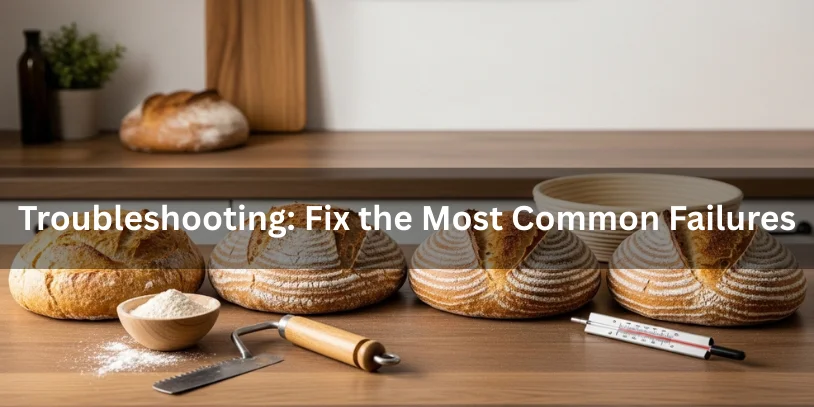
If you’re skipping parchment, these issues come up most often.
“My Sourdough Stuck to the Dutch Oven”
Likely causes
- Not hot enough preheat
- No barrier layer
- Dough too wet and slack
- Surface was greasy + flourless
What to do next time
- Add semolina/cornmeal/oats
- Use a silicone sling for transfer control
- Ensure a full preheat cycle
If it’s already stuck
- Let it cool 5–10 minutes; steam can release the bond.
- Use a thin spatula around the edge, gently.
“My Bottom Crust Is Burning Without Parchment”
This is extremely common with dark cast iron, ovens that run hot, or rack placement too low.
Fixes that work
- Move the rack up one level
- Reduce preheat temperature slightly (still keep it hot)
- Add a heat shield: place a sheet pan on the rack below, or create an insulation layer under the pot
- Use a barrier (semolina/oats) to slightly buffer contact heat
Think in terms of thermal conductivity: cast iron transfers heat aggressively. Insulation and rack placement change the heat flow.
“My Silicone Sling Smells or Discolors”
- Check that you didn’t exceed the manufacturer’s heat rating.
- Avoid direct contact with broiler heat.
- Avoid aerosol oil sprays that can polymerize and create odor at very high temps.
If the silicone feels thin, sticky, or off-gasses, replace it with a higher-quality product.
“My Dough Deflated When I Transferred It”
That’s usually a transfer technique issue, not a parchment issue.
Try this:
- Turn out onto a sling or floured surface
- Score quickly
- Load with one smooth movement
- Use a bench scraper as a support “hand” to prevent stretching
Flavor and Crust: Will Sourdough Taste Different Without Parchment?
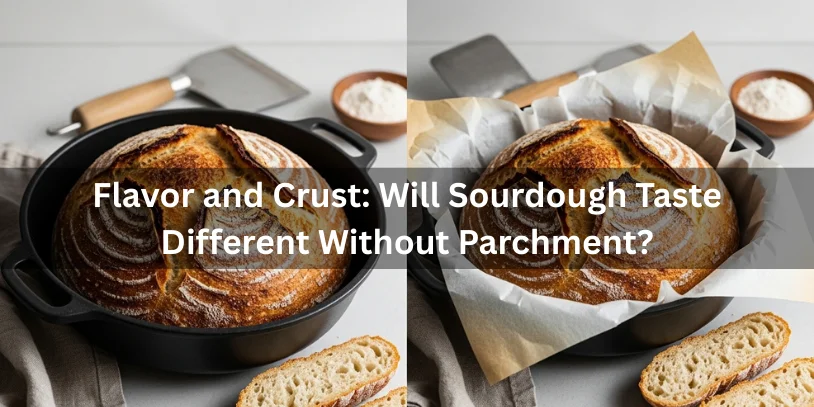
Parchment is mostly neutral. Without it, the difference comes from what replaces it:
- Semolina/cornmeal: crunchier bottom, slightly toasty notes
- Oats: visible oat texture, mild nutty aroma
- Bran/seed mix: rustic flavor and look
- Silicone sling: generally neutral, clean finish
- No liner: the purest “just bread” contact, but requires skill
If you’re chasing a specific bakery-style bottom crust, barriers can actually be a benefit.
Sustainability, Cost, and “Worth It” Buying Guidance
If you bake often, reusable options can be more practical than constantly buying baking paper.
A high-quality silicone mat or sling (Silpat-style durability is a common reference point) is usually a one-time purchase that can simplify your process. If you bake occasionally, pantry barriers like semolina or oats may be enough.
If you’re searching globally, you’ll also see “near me” availability play a role:
- “silicone bread sling near me”
- “baking paper near me”
- “banneton proofing basket near me”
- “restaurant supply store bread tools”
For bakeries and commercial kitchens, supplier sourcing often matters more than brand names—look for clear heat ratings, consistent sizing, and washable workflows.
Quick Checklist: Bake Sourdough Without Parchment (Successfully)
Before you start, confirm these points:
- Dutch oven or stone is fully preheated
- Banneton is dusted with rice flour
- Transfer plan is safe (sling, barrier, or direct drop)
- You’re not using wax paper
- You have a plan to prevent burnt bottoms (rack position + heat shield if needed)
- Your cooling rack is ready—steam needs to escape after baking
can i bake sourdough in dutch oven without parchment paper
Yes, you can. Parchment just makes life easier—it’s not required.
Here’s the “real kitchen” way to do it:
- Dust the bottom well with rice flour (best) or regular flour. Rice flour is like non-stick magic for bread.
- If you have it, add a little semolina or cornmeal too—it helps the loaf slide and not glue itself down.
- Lower the dough in carefully (hot pot + soft dough = messy if you drop it).
- If your dough is very wet, it’s more likely to stick—so dust a bit more.
can you bake sourdough without parchment paper
Yes, you can bake sourdough without parchment paper.
Parchment is mainly a “no-stress handle.” Without it, you just need a way to stop sticking and a safe way to drop the loaf into a hot pot.
What works:
- Dust the Dutch oven base with rice flour (best) or flour
- Add a little semolina/cornmeal if you have it
- Or use a silicone bread sling (reusable)
If the loaf smells fine and releases easily after baking, you did it right.
no parchment paper for sourdough
No parchment paper? You’re still good.
What I do is: preheat the Dutch oven, then right before the loaf goes in I sprinkle the bottom with rice flour (or flour + a little semolina/cornmeal if I have it). Then I lower the dough in gently—slow hands, hot pot.
If your dough is really wet, just dust a bit more so it doesn’t glue itself down. If it sticks once, don’t stress—next time rice flour fixes 90% of it.
do you have to use parchment paper for sourdough
No—you don’t have to use parchment paper for sourdough.
Parchment is just a helper: it makes it easy to lift the dough into a blazing hot Dutch oven and helps prevent sticking. If you skip it, just do one of these:
- Dust the pot with rice flour (best) or flour
- Add a little semolina/cornmeal for extra slip
- Use a silicone bread sling if you have one
Your bread will bake the same either way.
do you need parchment paper for sourdough
Nope, you don’t need parchment paper.
People use it because it’s the easiest “handle” for dropping a soft loaf into a really hot Dutch oven, and it helps with sticking. But if you don’t have it, just dust the bottom with rice flour (or regular flour), lower the dough in carefully, and bake like normal. Your sourdough won’t know the difference.
i don’t have parchment paper for my sourdough
No worries — you can still bake a great loaf.
Here’s the easy way without parchment:
- Preheat your Dutch oven like you normally do.
- Right before baking, dust the bottom with rice flour (best). If you don’t have rice flour, use regular flour, and if you have semolina/cornmeal, sprinkle a little of that too.
- Flip your dough out of the banneton, score it, then lower it in carefully (two hands, slow and steady).
- Bake as usual.
If your dough is very wet and you’re worried about sticking, you can lightly dust the loaf bottom too, or use a clean strip of cotton cloth as a temporary “sling” (just be careful not to leave it touching the sides where it could scorch).
FAQs
1) Can you bake sourdough in a Dutch oven without parchment paper?
Yes. Use a rice-floured banneton for release, then load with a silicone bread sling, semolina/cornmeal, oats, or a confident no-liner transfer.
2) What can I use instead of parchment paper for sourdough bread?
Top options are semolina, cornmeal, oats, a silicone bread sling, or a silicone baking mat rated for your oven temperature. For loaf pans, grease and flour works well.
3) Can I use wax paper instead of parchment paper for bread?
No. Wax paper is not designed for oven temperatures and can melt or smoke. It’s for wrapping and cold prep, not high-heat baking.
4) Can I use aluminum foil instead of parchment paper for sourdough?
In a pinch, yes—but foil isn’t naturally nonstick. If you use foil, treat it like a tool: add flour/semolina, or a light oiling strategy, and avoid it for long acidic contact.
5) Is it necessary to grease the Dutch oven if it’s well-seasoned?
Usually not. A fully preheated, well-seasoned cast iron surface plus a dusting barrier is often enough. Grease can smoke at high heat and may increase scorching in some ovens.
6) What if the bottom of my sourdough is burning without parchment paper?
Move the loaf higher in the oven, add a heat shield (sheet pan below), and consider a barrier like semolina or oats. Dark cast iron and low rack positions are frequent culprits.
7) Can I bake sourdough on a baking stone or steel without parchment paper?
Yes. Dust your peel with semolina or rice flour, slide the dough onto the stone/steel, and use steam in the first part of the bake for oven spring.
8) Why is my dough sticking to the banneton (proofing basket)?
It’s usually under-flouring, high humidity, or overproofing. Use rice flour, add more dusting than you think you need, and consider a liner for wetter doughs.
9) Does a silicone bread sling work at 500°F / 260°C?
Some do, some don’t—always check the product’s stated heat rating. Higher-quality silicone tends to perform better and smell less under intense heat.
10) I searched “can i bake sourdough without parchment papera”—is that different?
It’s the same question; the trailing “a” is commonly just a typing or copy/paste artifact. The methods and safety rules are identical.
Conclusion
Yes, you can bake sourdough without parchment paper—and in many cases, you may prefer it once you get comfortable with a better transfer method. Start with the safest path (a silicone sling or a simple semolina/oat barrier), master banneton release with rice flour, and add a heat shield if your bottom crust runs dark. Once your process is consistent, parchment becomes optional—not essential.