
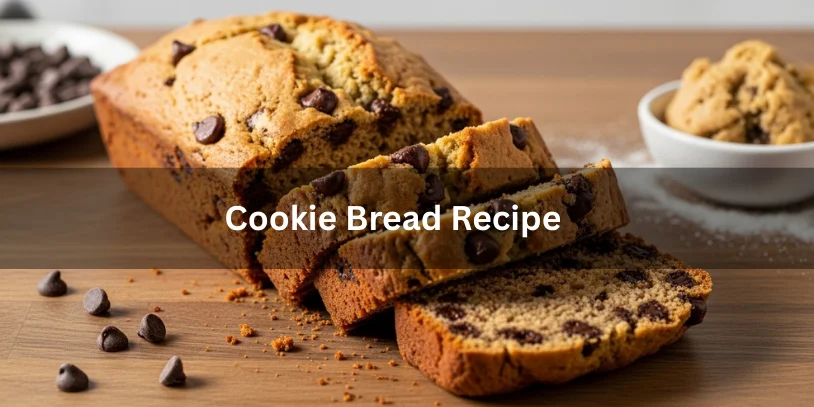
Cookie bread is cookie dough baked in a loaf pan, creating a thick, sliceable “cookie loaf” with chewy edges and a soft center. It’s not a quick bread (like banana bread) and it’s not cake—think of it as a giant cookie you can cut into neat slices.
Fast answer (short + direct): Cookie bread recipe is a soft cookie baked as one loaf instead of individual cookies, so you get crisp edges, a gooey middle, and zero scooping.
Why Cookie Bread Is Worth Making
Cookie bread solves a few real baking problems:
- No tray juggling: One pan, one bake.
- Better texture control: The loaf format protects moisture, helping avoid dry cookies.
- Perfect for sharing: Slice it for brunch, bake sales, or dessert boards.
- Beginner-friendly: Less stress about cookie spread and uneven batches.
It’s also flexible for different goals—whether you want a classic chocolate chip cookie bread, a sugar cookie loaf with sprinkles and glaze, or a cookie butter (Biscoff) loaf.
Cookie Bread vs. Blondies vs. Cookie Cake (Quick Comparison)
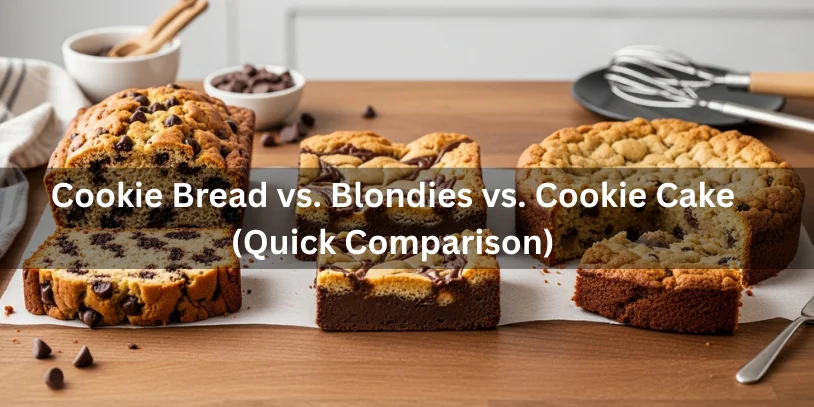
Here’s the simplest way to choose what to bake:
| Dessert | Best Texture | Pan | What it tastes like | When to choose it |
|---|---|---|---|---|
| Cookie bread | Chewy edges, soft center, sliceable crumb | Loaf pan (9×5 or 8.5×4.5) | A thick cookie in slices | You want “cookie, but easier” |
| Blondies | Dense, bar-like, buttery | Square/rect pan | Brown sugar bars | You want clean bars + even bake |
| Cookie cake | Softer, thicker cookie | Round pan | Cookie with cake vibes | You want a decorated centerpiece |
If you’re after the most “cookie-like” result with the least effort, cookie bread wins.
The Foolproof Cookie Bread Recipe (Chocolate Chip Cookie Loaf)
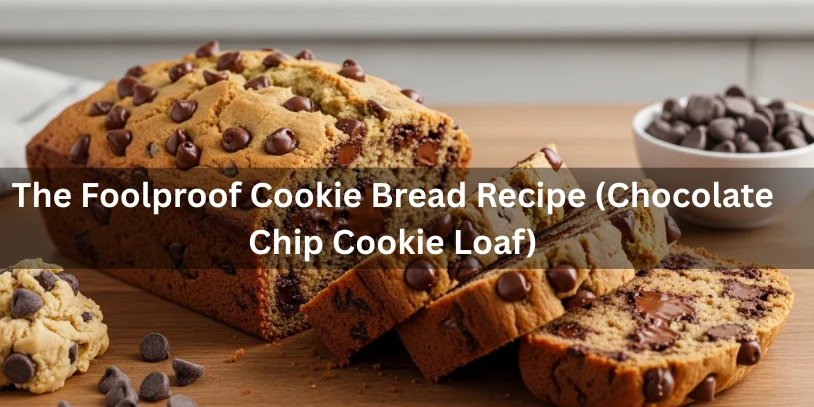
Short doneness answer (easy to remember)
Cookie bread recipe is done when the edges are set and lightly golden, the top looks matte (not wet), and a toothpick shows moist crumbs (not raw batter). The center should still feel slightly soft—carryover cooking finishes it.
Yield and timing
- Yield: 10–12 slices (9×5-inch loaf)
- Prep: 15 minutes
- Bake: 35–45 minutes
- Cool: 30–60 minutes (important for clean slices)
Ingredients (metric + imperial)
Wet ingredients
- 113 g (½ cup) unsalted butter, melted and cooled until warm (not hot)
- 150 g (¾ cup) brown sugar (light or dark)
- 50 g (¼ cup) granulated sugar
- 1 large egg
- 2 tsp vanilla extract
Dry ingredients
- 190 g (1½ cups) all-purpose flour
- 1 tsp cornstarch (optional, helps softness)
- ½ tsp baking soda
- ½ tsp baking powder (small amount helps sliceable lift)
- ½ tsp fine salt
Mix-ins
- 170 g (1 cup) chocolate chips or chocolate chunks (or a mix)
- Optional topping: a pinch of flaky sea salt
Equipment
- Loaf pan: 9×5-inch (standard) or 8.5×4.5-inch (taller loaf)
- Parchment paper sling (easy lift-out)
- Mixing bowl, whisk, spatula
- Cooling rack
- Optional: instant-read thermometer for confidence
Step-by-Step: How to Make Cookie Bread (One-Bowl Method)
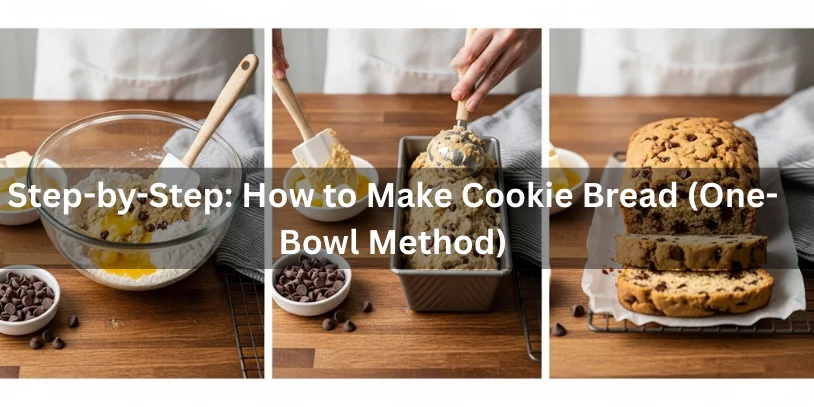
1) Prep the pan and oven
- Preheat to 175°C / 350°F.
- Line the loaf pan with parchment paper, leaving overhang to lift the loaf out.
Why it matters: Parchment prevents sticking and helps you remove the loaf without cracking.
2) Whisk butter and sugars
In a bowl, whisk melted (warm) butter with brown sugar and granulated sugar until glossy and smooth.
Why it matters: Melted butter boosts chew and gives you that classic cookie density without needing a mixer.
3) Add egg and vanilla
Whisk in the egg and vanilla extract until the mixture looks thicker and cohesive.
Tip: If your egg is cold and the butter is too warm, the mixture can look slightly separated. It usually corrects once flour is added.
4) Add dry ingredients (don’t overmix)
Sprinkle in flour, cornstarch (if using), baking soda, baking powder, and salt. Fold until you no longer see dry flour.
Why it matters: Overmixing develops gluten and can make cookie bread tough or cakey.
5) Fold in chocolate chips/chunks
Fold in chocolate chips and/or chocolate chunks. Save a small handful for the top.
Chips vs chunks:
- Chocolate chips hold shape and give consistent bites.
- Chocolate chunks melt more for gooey pockets.
6) Press into the loaf pan
Press the dough evenly into the pan. Top with the reserved chocolate and a tiny pinch of flaky sea salt if you like the sweet-salty vibe.
7) Bake
Bake until edges are set and lightly browned.
Cookie Bread Bake Time: Pan Sizes, Materials, and Doneness Tests
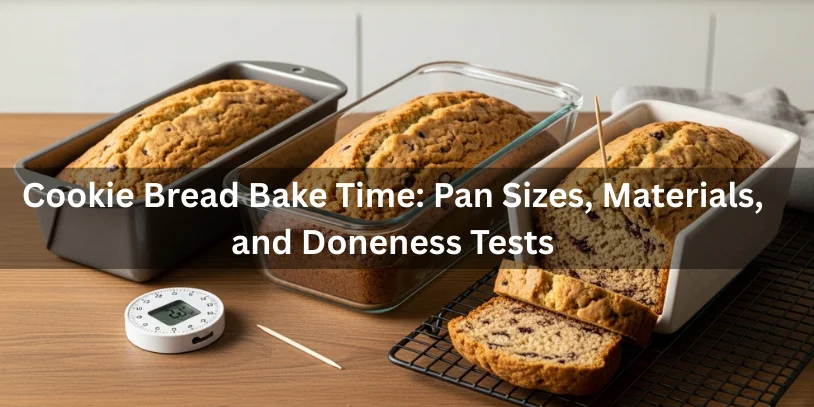
Bake time by pan size
| Pan | Typical bake time | What to expect |
|---|---|---|
| 9×5-inch loaf pan | 35–45 min | Classic thickness, easiest timing |
| 8.5×4.5-inch loaf pan | 40–55 min | Taller loaf, needs more time |
| 8×8-inch square pan | 25–35 min | More like cookie bars |
| Mini loaf pans | 18–28 min | Great for gifts, fast bake |
Pan material adjustments (the part many recipes skip)
- Light metal pan: Most predictable bake.
- Dark metal pan: Browning happens faster—start checking 5–8 minutes early; consider reducing oven temp to 170°C / 340°F if edges darken too quickly.
- Glass loaf pan: Often heats slower and bakes differently—expect longer bake time and watch the center closely.
Doneness cues (use two, not one)
Use a combo of these:
- Visual: top is matte, edges set
- Touch: center gently springs back but still feels soft
- Toothpick: moist crumbs, not wet batter
- Optional internal temperature: aim for ~88–96°C / 190–205°F in the center for a chewy loaf that isn’t raw
Cooling note: Cookie bread keeps cooking from residual heat. Pulling it when the center is slightly soft prevents dryness.
A Simple Decision Guide: Chewy vs Cakey Cookie Bread
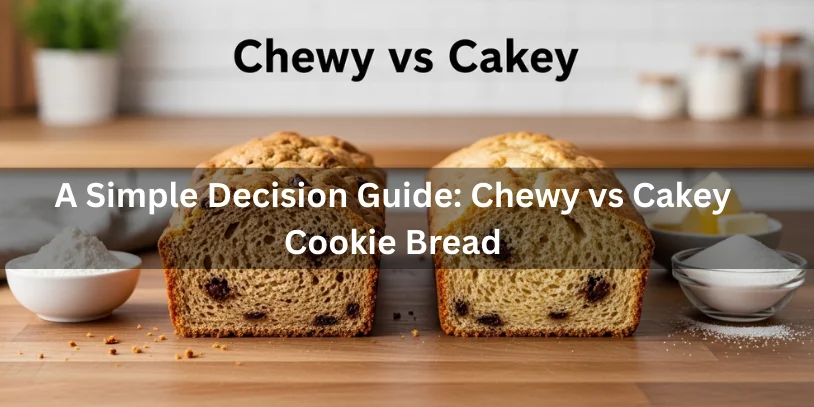
If you want chewy, cookie-like slices:
- Use melted butter (as written)
- Use more brown sugar than white sugar
- Keep baking powder small (½ tsp)
- Don’t overbake; cool fully
If you want a lighter, more cake-like loaf:
- Use softened butter and cream with sugars (hand mixer or vigorous whisking)
- Add an extra ¼ tsp baking powder
- Bake a little longer for a firmer set
Most people searching “cookie bread recipe” want the chewy version—cookie first, bread second.
Variations (Top Requests)
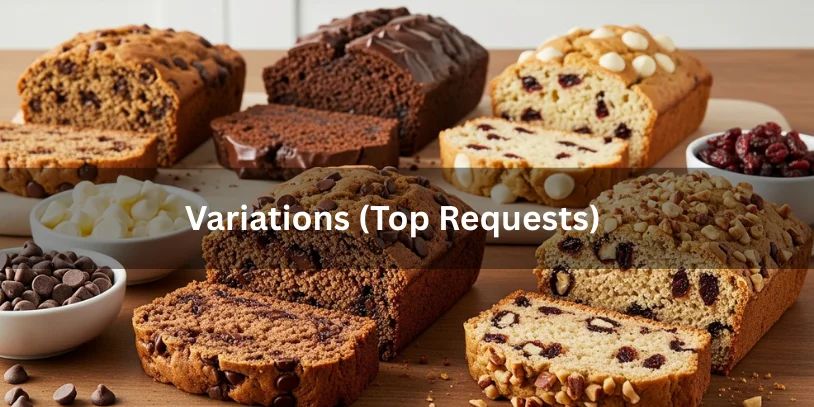
1) Sugar Cookie Bread (Sprinkles + Optional Glaze)
Swap chocolate chips for:
- 80–120 g (½–¾ cup) sprinkles (use jimmies for best results)
Optional glaze:
- 120 g (1 cup) icing sugar + 1–2 tbsp milk + ½ tsp vanilla
Drizzle over fully cooled loaf.
Best for: holidays, gifting, brunch tables.
2) Cookie Butter (Biscoff) Cookie Bread
Add:
- 80–120 g (⅓–½ cup) cookie butter/Biscoff spread
Reduce butter slightly (use 85 g / 6 tbsp butter) to keep texture balanced.
Mix-ins: crushed Biscoff cookies, white chocolate chips, or chopped chocolate.
3) Gluten-Free Cookie Bread
Use a 1:1 gluten-free flour blend in the same weight (190 g).
Tips:
- Don’t overbake—GF bakes dry faster.
- Cool completely before slicing for best structure.
4) Dairy-Free Cookie Bread
- Use plant-based butter (block-style if possible)
- Choose dairy-free chocolate chips/chunks
Texture may be slightly softer; chilling dough 10–15 minutes can help if it feels loose.
5) Paleo/Keto-ish Direction (When You Need It)
These versions vary widely by flour and sweetener. The most reliable approach is:
- Use almond flour/coconut flour blends designed for baking
- Expect a different crumb and bake time
If your priority is “cookie flavor in loaf form” rather than exact chew, this can work well.
Storage, Freezing, and Reheating
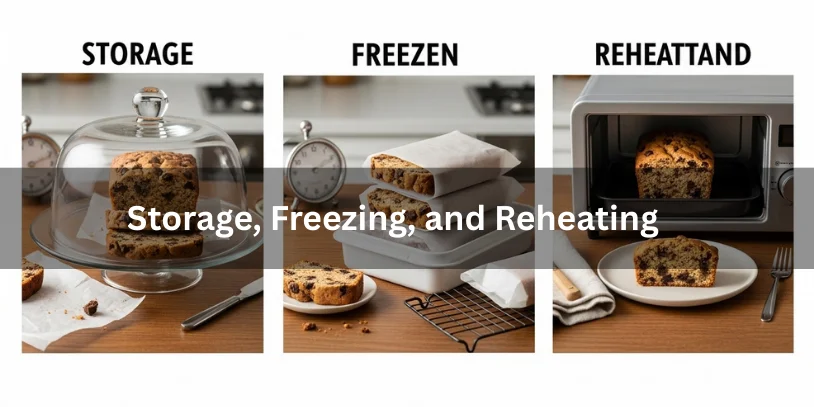
Cookie bread is at its best the day it’s baked—but it stores surprisingly well.
Storage
- Room temperature: 2–3 days, airtight
- Refrigerator: up to 1 week (reheat slices for better texture)
Freezing (best for portion control)
- Cool completely.
- Slice and wrap each slice.
- Freeze up to 2–3 months.
- Reheat: microwave 10–20 seconds or toaster oven until warm.
Troubleshooting: Fix the 4 Most Common Problems
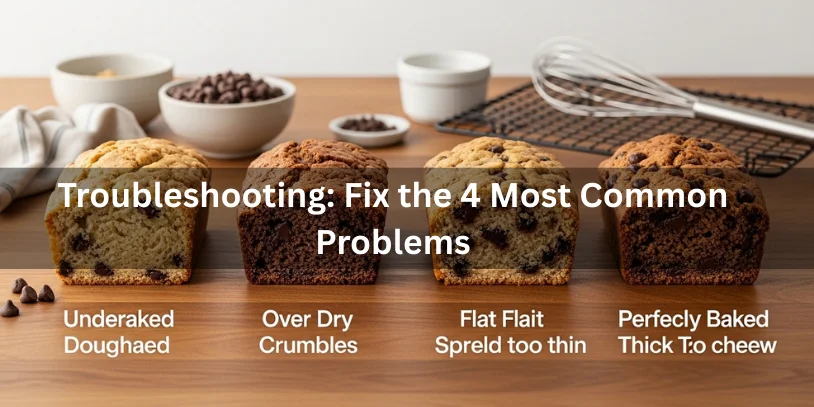
1) “My cookie bread is dry.”
Usually caused by: overbaking, too much flour, slicing too soon.
Prevention + fix:
- Pull it when the center is still a little soft.
- Weigh flour if possible; don’t pack cups.
- Cool at least 30–60 minutes before slicing.
- Next time, add 1 tbsp milk if dough seems unusually stiff.
2) “The middle is raw.”
Usually caused by: pan too small/tall loaf, oven running hot (edges set early), underbake.
Fix:
- Bake 5–10 minutes longer and tent with foil if the top is browning.
- Use the internal temp cue (88–96°C / 190–205°F).
- Confirm pan size (8.5×4.5 needs more time).
3) “It turned out cakey.”
Usually caused by: too much baking powder, overmixing, creaming too aggressively (if you used softened butter).
Fix:
- Keep baking powder modest.
- Fold flour just until combined.
- Use melted butter for denser, cookie-like texture.
4) “It’s greasy.”
Usually caused by: butter too hot, dough too warm, not enough flour.
Fix:
- Let melted butter cool until warm, not hot.
- If the dough feels overly soft, chill 10–15 minutes before baking.
Food Safety Note (Because “Cookie Dough” Makes People Nervous)
Cookie bread is baked fully, but it’s normal for the center to look slightly soft when it comes out. If you want extra confidence, use the internal temperature cue and avoid eating unbaked dough. Cooling also helps the loaf set and slice cleanly.
“Near Me” Shopping Tips (Light-Touch, Global-Friendly)
If you’re missing a tool or ingredient, these are the most common quick wins:
- Loaf pan near me: kitchenware shops, supermarkets, big-box retailers
- Chocolate chips/chunks near me: baking aisle or specialty chocolate section
- Vanilla extract near me: baking aisle; look for real extract if possible
- Parchment paper near me: baking aisle; grab pre-cut sheets if available
- Cookie butter/Biscoff spread near me: spreads aisle or international section
FAQs
1) Is cookie bread the same as cookie cake?
Not exactly. Cookie bread is baked in a loaf pan and sliced, while cookie cake is usually baked in a round pan and served like a cake. The flavor is similar, but thickness and bake time differ.
2) What’s the difference between cookie bread and a blondie?
Blondies are bar-style with a more uniform, dense structure. Cookie bread aims for a cookie-like chew with a soft center, baked as a loaf for sliceable pieces.
3) How long do I bake cookie bread in a 9×5 loaf pan?
Most cookie bread loaves bake in 35–45 minutes at 175°C / 350°F, depending on your oven and pan color. Start checking at 35 minutes using the doneness cues.
4) How do I tell when cookie bread is done?
Look for set edges, a matte top, and a toothpick that shows moist crumbs (not wet batter). The center should still be slightly soft; it firms up as it cools.
5) Can I make cookie bread without a mixer?
Yes. This recipe uses melted butter, so a whisk and spatula are enough. Just avoid overmixing once the flour goes in.
6) Why is my cookie bread dry?
Dry cookie bread usually comes from overbaking or too much flour. Pull it when the center is still soft and measure flour carefully—ideally by weight.
7) Can I make gluten-free cookie bread?
Yes. Use a 1:1 gluten-free flour blend at the same weight as the flour in the recipe. Watch bake time closely and cool completely before slicing.
8) Can I freeze cookie bread?
Absolutely. Slice, wrap, and freeze for up to 2–3 months. Warm a slice briefly to bring back that fresh-baked texture.
Conclution
Cookie bread is the easiest way to get the comfort of a thick cookie with the convenience of a single loaf pan. Follow the doneness cues, respect cooling time, and choose your texture path—melted butter for chewy cookie slices, creamed butter for a lighter crumb. Once you’ve nailed the classic chocolate chip version, the sugar cookie, cookie butter, and gluten-free variations make it a year-round go-to for sharing, gifting, and cravings.