
If you need to know how to chill a cheesecake quickly, the safest fast method is simple: let it stop steaming, cool it in stages, then refrigerate it uncovered before using the freezer only as a short finishing assist if truly needed. This article is built around that exact urgency-first need, including timing, texture, safety, and same-day serving decisions.
The fastest short answer
A cheesecake chills fastest when you cool it gradually instead of shocking it.
For most cheesecakes, the best approach is:
- Let it cool briefly after baking or assembling
- Place it on a wire rack or cooling rack
- Move it to the refrigerator uncovered
- Use the freezer only for a short final boost, not as the main setting method
That method helps protect the creamy texture, reduces condensation, and gives you a better chance of clean slices.
Why cheesecake still needs time even when it feels cold
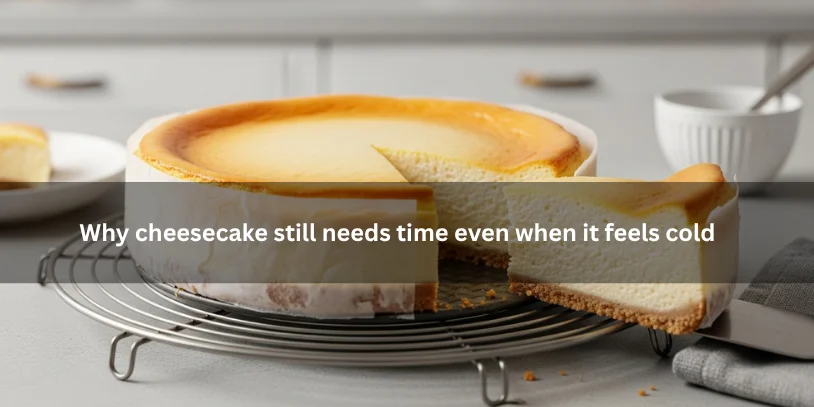
Cheesecake does not just need to become cool. It also needs to set.
That is where many people get frustrated. The outside can feel cold while the center is still too soft. A baked cheesecake firms as the heat leaves the filling. A no-bake cheesecake firms because the filling structure settles in the refrigerator. In both cases, the surface temperature and the internal texture do not change at exactly the same speed.
That is why a cheesecake can seem ready but still cut like mousse in the middle.
The best way to chill a baked cheesecake quickly
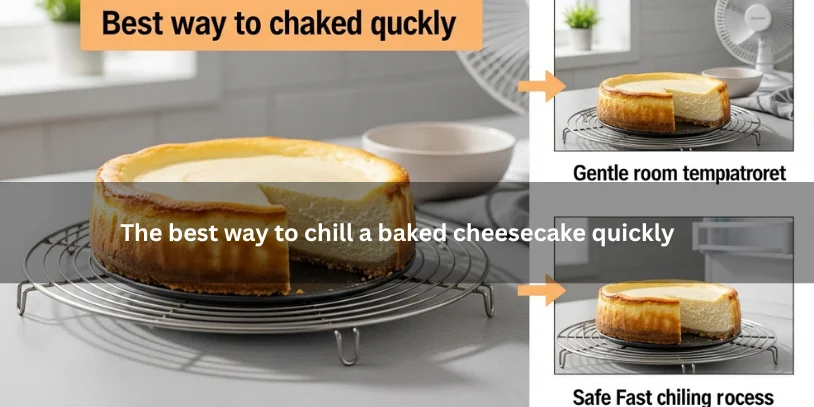
Baked cheesecake usually contains cream cheese, eggs, and often heavy cream, so the structure is rich but delicate. If you rush it too hard, you can end up with cracking, sweating, or an uneven center.
Step-by-step method
1. Remove it from the oven properly
Once baked, take the cheesecake out of the oven and place the springform pan on a wire rack. If you used a water bath or bain-marie, remove the pan from the hot water so it does not keep cooking.
2. Let the heavy steam fade
Do not trap heat immediately. If the cheesecake is still actively steaming, covering it or freezing it too soon can create condensation and damage the surface.
3. Cool at room temperature briefly
A short room temperature phase helps the pan lose heat without shocking the filling. This is especially useful if your cheesecake has a gentle wobble or jiggle in the center.
4. Refrigerate uncovered first
Place it in the refrigerator uncovered, or only loosely protected. This helps moisture escape instead of collecting on top.
5. Use the freezer only if you are truly short on time
If serving time is close, a short freezer finish can help after the cheesecake is already partly chilled. The freezer should support the process, not replace the refrigerator.
Best use case
This method works best for:
- full-size baked cheesecake
- mini cheesecakes
- cheesecake bars
- cheesecakes baked in a springform pan
How to chill a no-bake cheesecake quickly
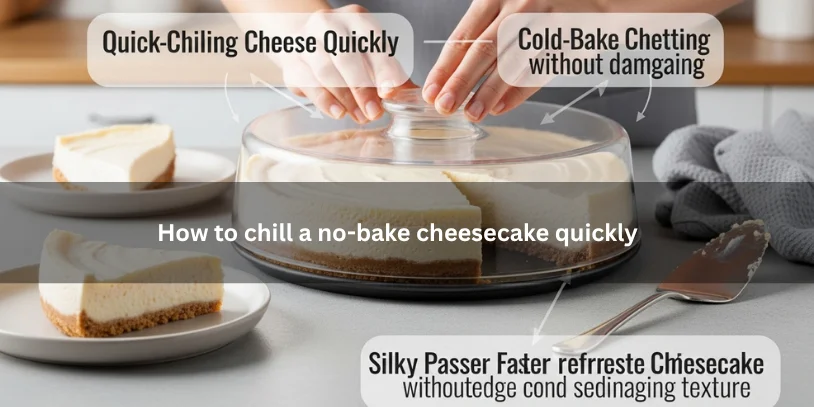
No-bake cheesecake is trickier when you are in a rush.
Because it relies on refrigeration rather than baking to develop structure, it is less forgiving. You can still help it along, but you cannot rush it the same way as a baked cheesecake without risking a soft center.
Best approach for no-bake cheesecake
- Use a shallower pan if possible
- Chill the crust before adding the filling
- Spread the filling evenly so it is not too deep
- Refrigerate immediately
- Avoid using the freezer as the main setting method
No-bake cheesecake often needs more patience than people expect. If speed matters, smaller portions are usually smarter than one thick whole cake.
Mini cheesecakes chill faster than full cheesecakes
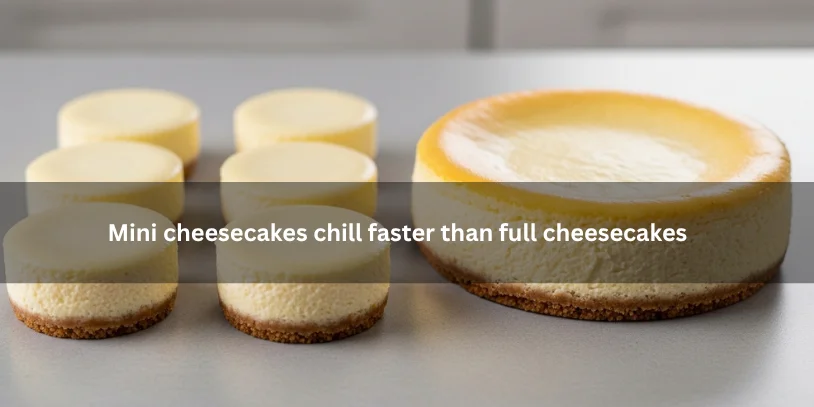
If your real goal is same-day cheesecake, mini cheesecakes are often the best answer.
A full cheesecake has a deeper center, which means it takes longer to cool and longer to firm. Mini cheesecakes, cheesecake cups, and cheesecake bars chill faster because the filling layer is thinner and cold air can work through it more quickly.
Best formats when time is tight
- mini cheesecakes
- cheesecake jars
- cheesecake bars
- shallow cheesecake pies
If you know in advance that you will need dessert quickly, choosing a smaller format is one of the easiest ways to avoid disappointment.
Baked vs no-bake vs mini vs Basque cheesecake
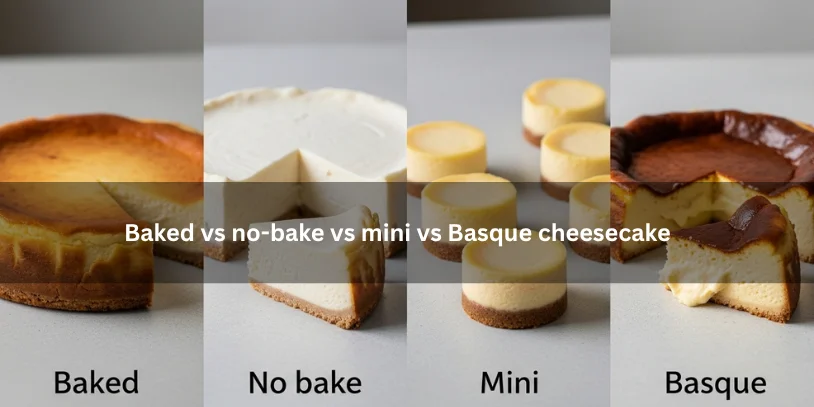
| Cheesecake type | How quickly it chills | Main risk when rushed | Best quick-chill strategy |
|---|---|---|---|
| Baked cheesecake | Moderate | Cracking, condensation, soft center | Brief cooling, then fridge, then short freezer assist if needed |
| No-bake cheesecake | Slower to set fully | Filling stays loose | Prioritize fridge time, use smaller format |
| Mini cheesecakes | Fastest | Overchilling edges | Cool briefly, refrigerate early |
| Basque cheesecake | Moderate | Texture changes if overchilled too fast | Cool gently and refrigerate without trapping steam |
Basque cheesecake deserves a special note. Because its texture is often softer and more custardy than classic baked cheesecake, people sometimes misread that softness as being under-set. It still needs controlled chilling, but the final texture can remain more tender than a dense New York-style cheesecake.
Fridge vs freezer: which one is better?
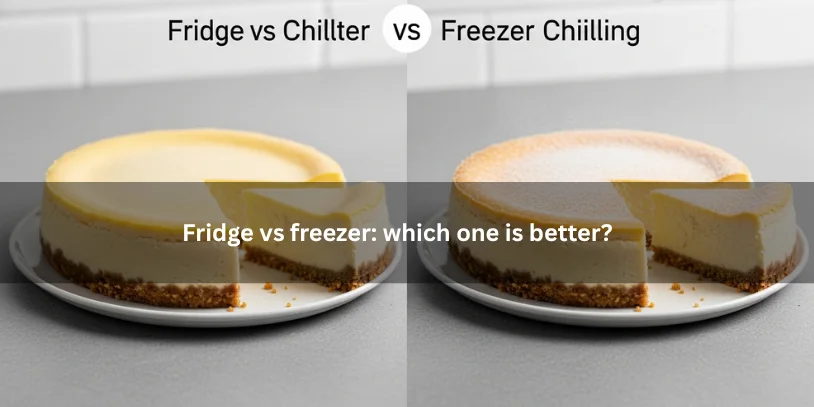
The refrigerator is the main tool. The freezer is the backup tool.
Refrigerator
Best for:
- gradual chilling
- even cooling
- preserving creamy texture
- preventing surface shock
Freezer
Best for:
- a short final burst when you are close to serving
- individual slices
- mini cheesecakes
- emergency situations only
What not to do
Do not put a hot cheesecake straight into the freezer and expect perfect results. That move can cool the outside too fast while the middle lags behind.
Covered or uncovered?
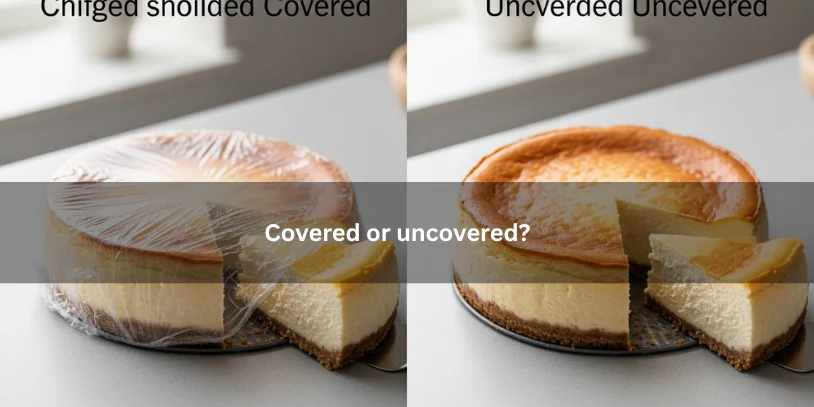
This is one of the most common cheesecake questions.
Uncovered is better at first
When a cheesecake is still warm, leaving it uncovered helps steam escape. That reduces condensation and keeps the surface from becoming wet.
Cover later if needed
Once the cheesecake is fully chilled or nearly there, you can cover it to protect it from absorbing refrigerator odors or drying out.
Quick rule
- warm cheesecake: uncovered
- fully chilled cheesecake: cover for storage
How long should cheesecake cool before the fridge?
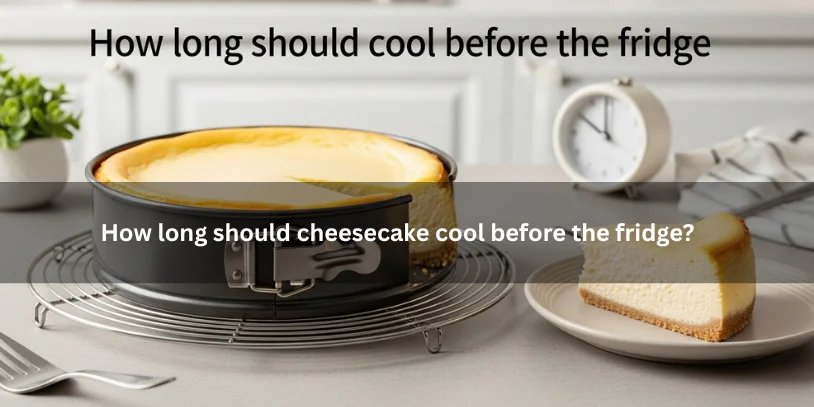
It should not stay out for hours just because you are afraid of cracks.
The better approach is controlled cooling for a short period, then refrigeration. In a normal kitchen, you want to avoid leaving a dairy dessert sitting out too long. In a hot kitchen or hot-weather climate, move even more carefully and get it chilled sooner.
Practical guideline
If your kitchen is very warm, speed matters more. Use both common sense and safe refrigeration habits:
- make sure the refrigerator is cold enough, ideally around 40°F / 4°C or below
- clear space so air can circulate
- do not crowd the cheesecake next to hot leftovers
Time-based decision framework
This is where most competitors stay too vague. If you need a real-world answer, use this:
If you have under 2 hours
A full-size cheesecake may still be too soft. Your best options are:
- chill slices instead of the whole cake
- use mini cheesecakes
- serve a softer dessert style if appearance matters less than taste
If you have 2 to 4 hours
You may get a workable result with:
- mini cheesecakes
- cheesecake bars
- a baked cheesecake that already had some cooling time
A no-bake cheesecake may still be too loose in the center.
If you have 4 hours or more
A baked cheesecake has a much better chance of setting well. Texture, slicing, and stability improve a lot here.
If you have overnight
This is still the gold standard for the cleanest slices and the most stable texture.
Why your cheesecake is still soft after chilling
If your cheesecake is still soft after several hours, one of these is usually the cause:
- it is cold on the outside but not fully set in the center
- the cheesecake is too deep
- the filling ratio is naturally softer
- a no-bake cheesecake needs longer
- it went into the fridge too warm and trapped excess moisture
- your refrigerator is not actually cold enough
A refrigerator thermometer or appliance thermometer can help if this keeps happening. Many home fridges are warmer than people think.
Common mistakes that slow cooling or ruin texture
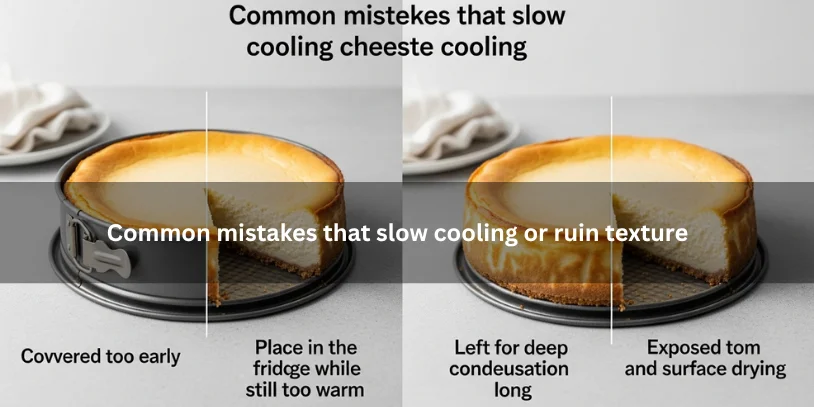
Putting it in the freezer too early
This is the classic panic move. It sounds fast, but it can work against you.
Covering too soon
That traps steam and creates condensation.
Leaving it on the counter too long
Cheesecake is not a dry cake. It contains dairy and often eggs, so it needs proper refrigeration.
Expecting a tall cheesecake to chill like a shallow one
Depth matters. A dense cheesecake in a springform pan takes longer than cheesecake bars or minis.
Ignoring airflow in the fridge
If your refrigerator is crowded, cold air moves poorly and the cheesecake may chill more slowly.
Tools that help cheesecake chill faster
You do not need special equipment, but a few tools help a lot:
- wire rack or cooling rack for airflow
- springform pan for classic baked cheesecake
- offset spatula for smoother release and cleaner serving
- digital thermometer if you want more control over baking and cooling
- refrigerator thermometer to confirm your fridge is cold enough
These are especially helpful if you make cheesecake often and want consistent results.
Real-life scenarios
Scenario 1: You baked a cheesecake in the afternoon for dinner
Use staged cooling. Let it stop steaming, refrigerate uncovered, and only use the freezer briefly near the end if needed.
Scenario 2: Your no-bake cheesecake still looks loose
Do not depend on the freezer to do all the work. Give it more refrigerator time, or serve it in cups instead of trying to force perfect slices.
Scenario 3: You live in a hot climate
Move faster from room temperature to refrigeration. Warm kitchens make cheesecake sit in a risky zone longer and can slow how comfortably it settles.
Scenario 4: You need clean slices for guests
Choose patience over panic. Even when the cheesecake tastes fine earlier, extra chill time often makes the difference between messy and polished slices.
What works best if you need to serve cheesecake today?
If you absolutely need same-day cheesecake, these are the smartest choices:
- make mini cheesecakes instead of one large cake
- choose a thinner cheesecake format
- chill uncovered first
- use the freezer only near the end
- slice only when the center feels properly firm
If the cheesecake is slightly under-set but cold, you can sometimes save the moment by serving smaller slices with fruit topping, whipped cream, or sauce. That does not fix the texture, but it can make a rushed dessert feel intentional.
FAQs
Can I put cheesecake in the freezer for 30 minutes?
Yes, but only as a short finishing step after the cheesecake has already cooled somewhat. It should not be your main setting method.
Should cheesecake be chilled covered or uncovered?
Uncovered at first is better, especially while it is still warm. Once fully chilled, cover it for storage.
How long should cheesecake cool before going in the fridge?
Long enough for the heavy steam to fade and the pan to stop radiating intense heat. After that, refrigeration is the better move.
Why is my cheesecake still soft after 4 hours?
It may be too deep, your fridge may be warmer than expected, or the center may still need more time to set. No-bake cheesecake often needs longer.
Does mini cheesecake chill faster than full cheesecake?
Yes. Mini cheesecakes chill and set faster because the filling layer is smaller and thinner.
Can no-bake cheesecake be rushed?
Only to a point. It is less forgiving than baked cheesecake because chilling is what gives it structure.
Is it safe to leave cheesecake out overnight?
No. Cheesecake is a perishable dairy dessert and should not be left out overnight.
How do I cool cheesecake without cracking?
Avoid sudden temperature changes, let it cool briefly before refrigerating, and do not freeze it while it is still hot.
Is the freezer better than the fridge for quick chilling?
No. The fridge is the main tool. The freezer is only helpful as a short final assist.
Conclusion
The best answer to how to chill a cheesecake quickly is not to rush it blindly. It is to cool it in stages.
Let the cheesecake stop steaming, place it on a wire rack, move it into the refrigerator uncovered, and use the freezer only as a short emergency boost if you must. For the fastest success, choose mini cheesecakes or other shallow formats, keep your refrigerator cold, and remember that a cheesecake needs time to set, not just time to feel cold.
If speed matters, work with the cheesecake type you have. Baked cheesecake can usually handle a controlled shortcut better than no-bake cheesecake, while mini cheesecakes give you the best shot at a same-day result.