
Bundt cakes are famous for their dramatic swirls, fluted edges, and show-stopping silhouettes. They’re also famous for heartbreak: a cake that looks perfect in the pan—then tears apart when you flip it.
The good news is that sticking is almost always preventable. The “secret” isn’t a single product; it’s a reliable pan-release system that matches your pan type (smooth vs intricate mold), your batter (high sugar, chocolate, sour cream), and your timing (cooling matters more than most people think).
Below is a complete, practical guide to greasing a Bundt pan (or Bundt tin/cake tin, if that’s your wording) so cakes release cleanly—center tube and crevices included.
The Best Default Method (Works for Most Bundt Pans)
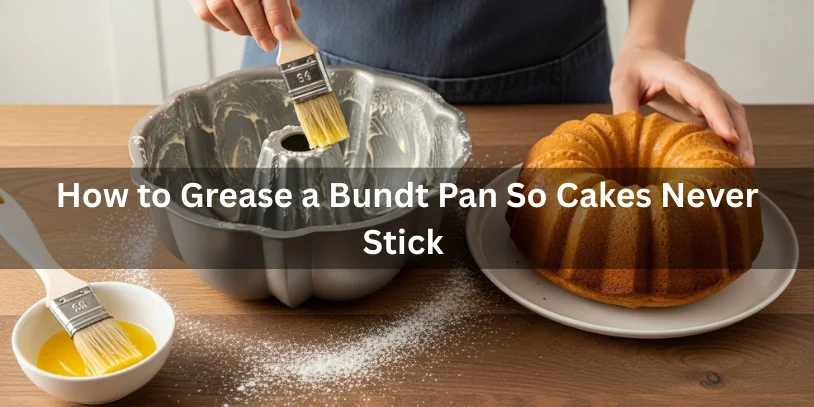
If you want one method that’s consistently dependable for nearly any Bundt pan—especially ornate designs—use softened butter or vegetable shortening + flour (or cocoa for chocolate cakes) applied with a pastry brush.
Quick Answer (for busy bakers)
Coat every ridge and the center tube with softened butter or vegetable shortening using a pastry brush, dust with flour (or cocoa powder for chocolate cakes), tap out excess, add batter immediately, then cool 10–15 minutes before inverting and tapping to release.
Why Bundt Cakes Stick (It’s Not Just “Not Enough Grease”)
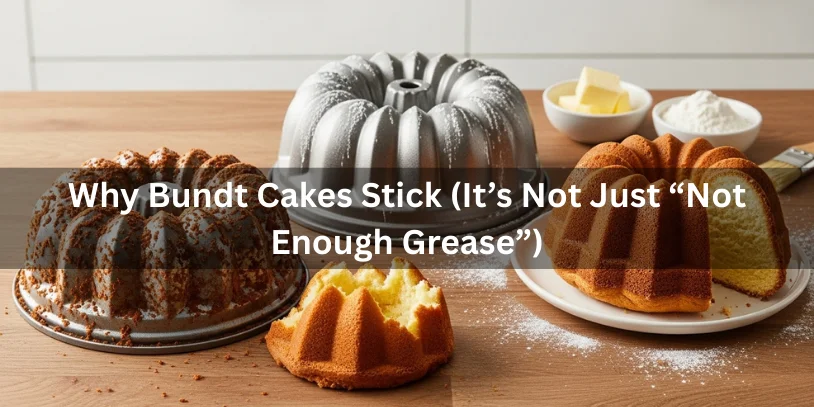
Bundt cakes stick because of a few common forces working together:
- Batter adhesion: Cake batter bonds to dry spots or exposed metal.
- Caramelization: Sugar melts and browns, behaving like glue against the pan.
- Crevices + fluted edges: Intricate molds create tiny pockets where batter can wedge in.
- Residue and film: Dishwasher detergent residue or baked-on fats can interfere with the pan’s nonstick performance.
- Timing errors: Flip too soon and the cake breaks; wait too long and it clings as it cools and contracts.
A clean release is about building a thin, even barrier (fat + optional dry dusting), then using the right release moment.
Step-by-Step: How to Grease a Bundt Pan So It Doesn’t Stick
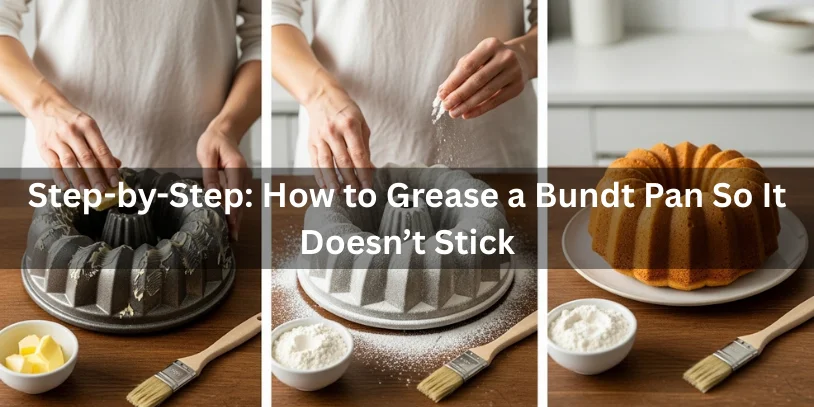
This is the technique that holds up for Nordic Ware-style cast aluminum pans, standard aluminum bakeware, and most nonstick coating surfaces (PTFE nonstick or ceramic coating).
Step 1: Start with a Clean, Completely Dry Pan
Even a “clean-looking” pan can have a film that affects release.
- Wash with warm water and a gentle detergent.
- Rinse thoroughly.
- Dry fully—especially the center tube and seams.
Avoid harsh scouring pads on nonstick coating (PTFE or ceramic). Scratches create micro-grip points where cake can cling.
Step 2: Choose Your Fat Barrier (Butter or Shortening)
Use softened, not melted.
- Butter adds flavor and browning, great for lemon Bundt cake or vanilla cakes.
- Vegetable shortening (often called vegetable fat in some regions) is the most reliable for intricate molds because it coats evenly and doesn’t contain water like butter.
Important warning: Melted butter pools at the bottom and slides off ridges, leaving bare spots—prime sticking zones.
Step 3: Brush Into Every Crevice (Don’t Wipe)
Use a pastry brush (silicone or natural bristle). Brushing is better than rubbing with a paper towel because it pushes fat into tight flutes and corners.
Work methodically:
- Start with the center tube
- Move to the deep grooves
- Finish with the top rim
Aim for full coverage with a thin, even layer—no dry metal showing.
Step 4: Dust With Flour (or Cocoa Powder for Chocolate)
This creates a micro-barrier that helps prevent sugar and batter from bonding directly to the pan.
- Add 1–2 tablespoons of flour
- Rotate and tilt the pan to coat all surfaces
- Tap out excess over the sink
For chocolate Bundt cake, use cocoa powder dusting instead of flour to avoid white streaks on the crust.
Step 5: Fill Immediately After Greasing
Letting a greased pan sit can cause fat to slide down and pool, especially in warm kitchens. Add batter soon after prepping.
Step 6: Bake and Cool the Right Amount (10–15 Minutes)
This step is where many Bundt cakes fail.
- Too hot: the crumb structure is delicate and can tear.
- Too cool: the cake can cling as it contracts and sugar sets.
Cool the cake in the pan for 10–15 minutes on a cooling rack, then invert.
Step 7: Release With Confidence (Inversion + Tapping Technique)
Place a cooling rack over the pan, grip firmly, and flip in one steady motion.
Then:
- Tap the pan with a firm, controlled motion.
- If needed, gently shake side-to-side (small movement).
If it doesn’t release after a few taps, don’t panic—jump to the rescue section below.
Butter vs Shortening vs Baking Spray (With Flour): What’s Best?
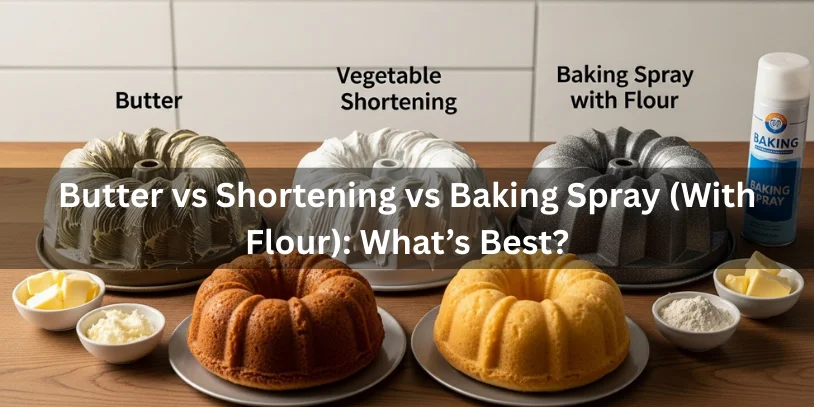
Each method can work, but they’re not equal for every pan and batter. Here’s a simple comparison.
| Method | Best For | Pros | Cons |
|---|---|---|---|
| Softened butter + flour | Classic Bundt cakes | Great flavor, reliable | Needs proper softening; can miss crevices if not brushed well |
| Vegetable shortening + flour | Intricate mold, high-sugar batters | Most dependable release, stable coating | No flavor contribution |
| Baking spray (with flour) | Convenience, quick prep | Fast, even coverage | Some sprays don’t reach deep grooves; aerosol can be messy |
| Oil alone | Emergency substitute | Available in most kitchens | Least reliable; can slide off ridges |
| “Nonstick pan only” | Almost never recommended | No prep time | Highest sticking risk |
About Baking Sprays
If you choose spray, look for baking spray with flour (not plain cooking spray). In some regions you’ll see similar products marketed as “cake release spray.” Brands can vary globally; availability of Baker’s Joy or Pam with flour may differ, so read labels.
Flour vs Cocoa Powder: Which Dusting Should You Use?
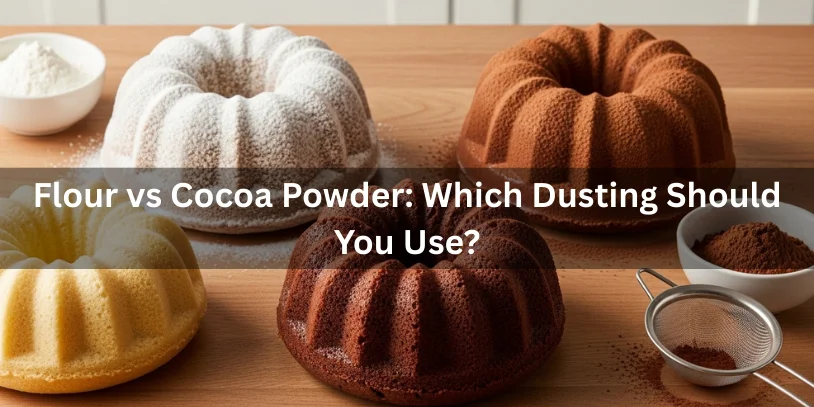
Dusting is optional for some modern pans and batters, but it boosts reliability—especially for detailed designs.
Use Flour When:
- Baking vanilla, lemon, or sour cream Bundt cake
- You want a clean crust and easy release
- Your batter is high sugar (more caramelization risk)
Use Cocoa Powder When:
- Baking chocolate Bundt cake
- You want to avoid pale flour residue
- You’re glazing the cake and want an even dark surface
When to Avoid Dusting
If your cake has a very delicate crust or you dislike the slight coating effect, you can skip dusting—just understand the risk goes up, especially with ornate pans.
The Pro Bakery Method: Pan Release Paste (Works Like Insurance)
Many professional kitchens use a simple pan release paste method for Bundt pans. It’s extremely effective for intricate molds and frequent baking.
Pan Release Paste Recipe
Mix until smooth:
- 1 cup vegetable shortening
- 1 cup neutral vegetable oil
- 1 cup flour
Store in an airtight container at room temperature.
How to Use It
- Brush a thin layer into all crevices with a pastry brush.
- No extra flouring needed for most cakes.
- Fill and bake as usual.
This paste is especially useful for:
- Cathedral and braided Bundt pans
- Holiday baking marathons
- Sticky batters (high sugar, dense pound cake)
Pan Type Matters: Nonstick, Cast Aluminum, Silicone
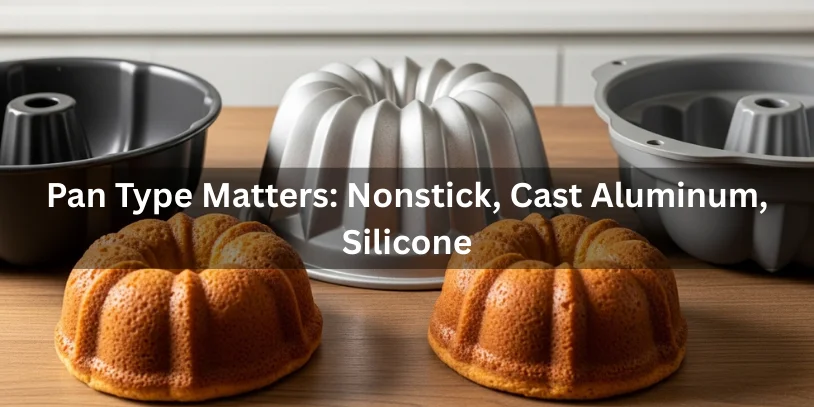
Cast Aluminum (Common in Premium Bundt Pans)
Many Nordic Ware-style pans are cast aluminum, which bakes evenly and holds detail well. They still benefit from greasing—especially in the ridges.
Thin Metal Pans
Thinner aluminum bakeware can heat unevenly, increasing caramelization spots. Be diligent with brushing and dusting.
Nonstick Coating (PTFE Nonstick or Ceramic Coating)
Nonstick reduces adhesion, but it doesn’t eliminate it—especially when sugar caramelizes. Also, nonstick surfaces can degrade if scratched or repeatedly exposed to harsh detergents.
Pan maintenance tip: If you notice more sticking over time, consider hand-washing and avoiding abrasive tools.
Silicone Bakeware
Silicone Bundt molds tend to release more easily, but they can produce less browning and less crisp definition. For the sharpest fluted edges, metal pans usually win.
Why Cooling Time Matters (Steam + Contraction)
Right after baking, the cake is still setting. Steam is trapped between cake and pan; as the cake cools slightly, the structure firms and can release more cleanly.
Wait too long, and:
- sugar sets like glue
- the cake contracts and grips the pan’s details
That’s why 10–15 minutes is the sweet spot for most Bundt cakes.
Common Mistakes That Cause Sticking
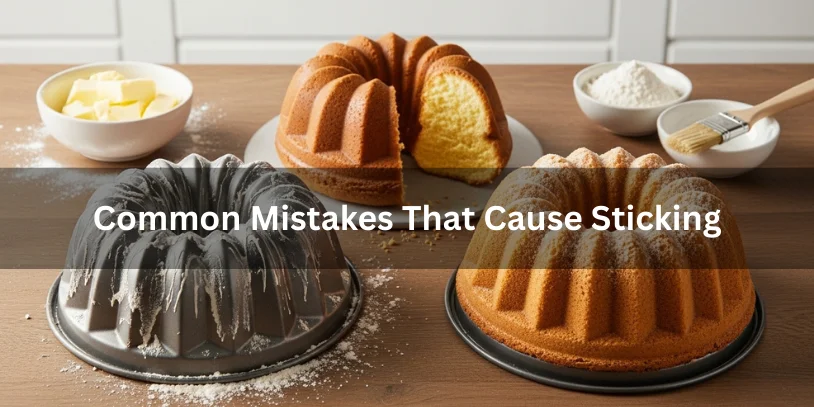
If you’ve ever said, “I greased it and it still stuck,” one of these is usually the reason:
- Using melted butter (pools and leaves bare ridges)
- Missing the center tube or top rim
- Greasing with a paper towel and skipping deep crevices
- Using plain cooking spray (no flour)
- Letting a greased pan sit so fat slides down
- Overcooling before flipping
- Pan has dishwasher residue or built-up film
- Scratched nonstick coating creating grab points
What to Do If Your Bundt Cake Is Stuck (Rescue Steps)
If the cake won’t release after flipping and tapping, don’t pull it apart. Use a gentle rescue plan.
Rescue Method 1: Steam Assist (Fast and Effective)
- Return the cake (still in pan) upright.
- Place a clean kitchen towel under hot water, wring it so it’s damp-hot.
- Wrap the towel around the pan for 5–10 minutes.
The warmth helps loosen caramelized sugar and encourages release.
Rescue Method 2: Loosen the Edges Carefully
Use a thin silicone spatula (avoid metal on nonstick coating):
- Gently run it around the top rim and center tube
- Don’t dig into the cake; you’re separating the edge
Rescue Method 3: Chill Briefly (If Steam Doesn’t Work)
Sometimes a short chill helps contraction:
- Refrigerate the pan for 10–15 minutes
- Flip and tap again
If a Chunk Breaks Off
All is not lost. A glaze or icing sugar/powdered sugar dusting can hide minor flaws, and a thicker glaze can camouflage a missing ridge.
Tools That Make Release Easier
You don’t need a drawer of gadgets, but a few tools help:
- Pastry brush (key for crevices)
- Cooling rack (promotes even cooling)
- Sifter (for flour or cocoa powder dusting)
- Silicone spatula (safe edge-loosening)
- Baking spray with flour (backup convenience option)
If you’re shopping, search for “Bundt pan near me,” “baking spray with flour near me,” or check kitchenware stores, baking supply stores, and supermarket baking aisles. Brand availability varies globally, so compare labels rather than relying on one name.
Quick Decision Guide: Which Method Should You Use?
Choose based on your pan + cake:
- Intricate mold + any cake: shortening + flour, or pan release paste
- Chocolate Bundt cake: shortening + cocoa powder dusting
- Lemon Bundt cake / vanilla: butter + flour for flavor
- High-sugar glazes baked into batter: pan release paste for extra insurance
- Nonstick coating pan: still grease; brush thoroughly; avoid metal tools
FAQs
- Do you grease a Bundt pan even if it’s nonstick?
Yes. A nonstick coating helps, but sugar caramelization and detailed crevices can still cause sticking. A thin fat barrier (plus flour or cocoa) greatly improves release. - Is butter or vegetable shortening better for Bundt pans?
Shortening is usually more reliable for ornate pans because it coats evenly and doesn’t contain water. Butter adds flavor and can work well when softened and brushed into every groove. - Why did my Bundt cake stick even after greasing?
Common causes include melted butter pooling, missed crevices, plain cooking spray without flour, letting the greased pan sit too long, overcooling before flipping, or dishwasher detergent residue affecting the surface. - What’s the best spray for Bundt pans?
Use a baking spray that contains flour (often labeled “baking spray with flour” or “cake release spray”). Plain cooking spray is less reliable for Bundt pans with fluted edges. - How long should a Bundt cake cool before flipping?
Typically 10–15 minutes on a cooling rack. Too soon can tear the crumb; too late can make the cake cling as it sets and contracts. - Should I flour the pan for a chocolate Bundt cake?
Use cocoa powder instead of flour. Cocoa provides the same release benefit without leaving a pale residue on the cake’s crust. - Can you use olive oil to grease a Bundt pan?
You can, but oil alone is less reliable and may slide off ridges. If oil is all you have, brush it thoroughly into crevices and consider dusting with flour or cocoa for better release. - What do bakeries use so cakes don’t stick?
Many use a pan release paste (shortening + oil + flour) brushed into every crevice. It’s especially effective for intricate molds and high-sugar batters. - My Bundt cake is stuck—how do I get it out without breaking it?
Try steam assist: wrap the pan in a hot, damp towel for 5–10 minutes, then invert and tap again. If needed, loosen the rim and center tube gently with a silicone spatula.
Conclusion
A Bundt cake that releases cleanly isn’t luck—it’s preparation, coverage, and timing. Start with a clean, dry Bundt pan, brush softened butter or vegetable shortening into every fluted edge and the center tube, dust with flour (or cocoa powder for chocolate), add batter immediately, and flip after a 10–15 minute cool. If you bake often or use ornate molds, pan release paste is the closest thing to foolproof. And if you’re troubleshooting baking surfaces in general, you may also wonder, Can I Bake Sourdough Without Parchment Paper, especially when sticking and release are common concerns in home baking.