
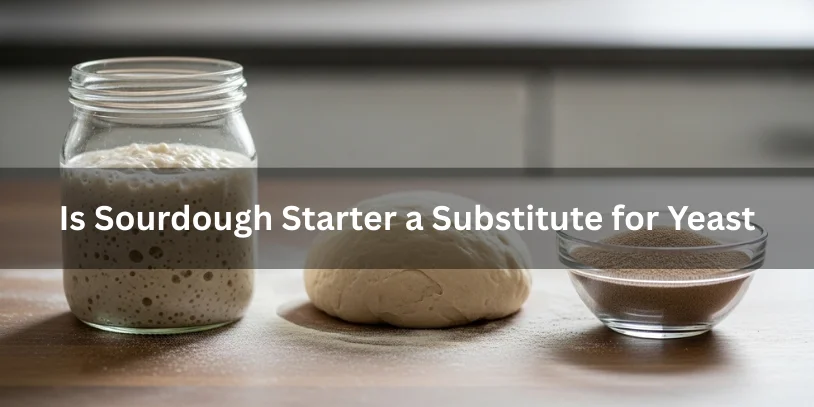
Short answer: yes—but not in every recipe, and never as a direct one-to-one swap. Sourdough starter can replace commercial yeast, but it ferments more slowly, changes flavor and texture, and requires adjustments to hydration, timing, and expectations. This guide explains when sourdough works, when it doesn’t, and how to use it for light, flavorful bread.
What Sourdough Starter and Commercial Yeast Actually Are
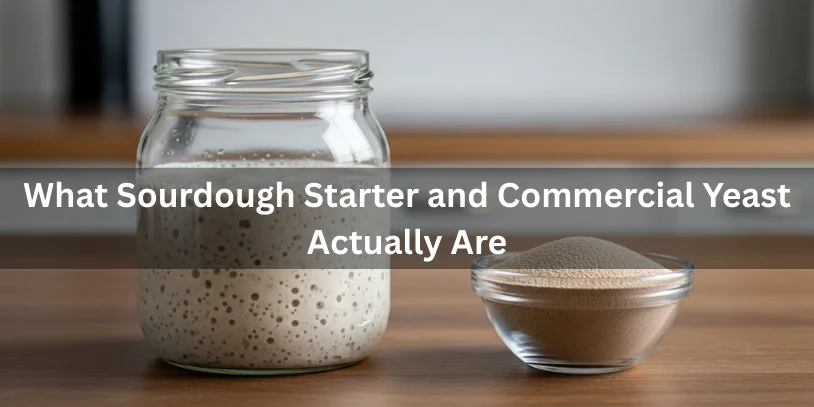
Sourdough Starter
Sourdough starter is a living culture made from flour and water. It contains:
- Wild yeast (naturally occurring strains, not isolated in a lab)
- Lactic acid bacteria (LAB) that produce acidity and flavor
Together, these microbes ferment sugars in flour, releasing carbon dioxide for dough rise and organic acids that strengthen dough and add complexity.
Commercial Yeast
Commercial baker’s yeast is a purified strain, most commonly Saccharomyces cerevisiae. It is bred for:
- Fast, predictable fermentation
- Neutral flavor
- Consistent leavening power
This difference in biology explains almost every practical difference you see in baking.
Can Sourdough Starter Replace Yeast?
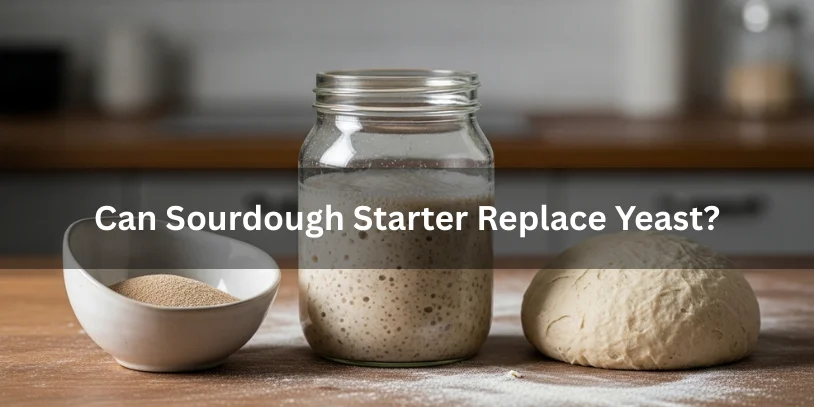
Yes—but only under the right conditions.
Sourdough starter works best as a yeast substitute when:
- You’re baking bread (not cakes or quick breads)
- You can allow longer fermentation time
- You’re comfortable adjusting flour and water
- Flavor complexity is a benefit, not a drawback
It does not work well when speed, precision timing, or a neutral flavor profile is required.
Why Sourdough Behaves Differently Than Yeast
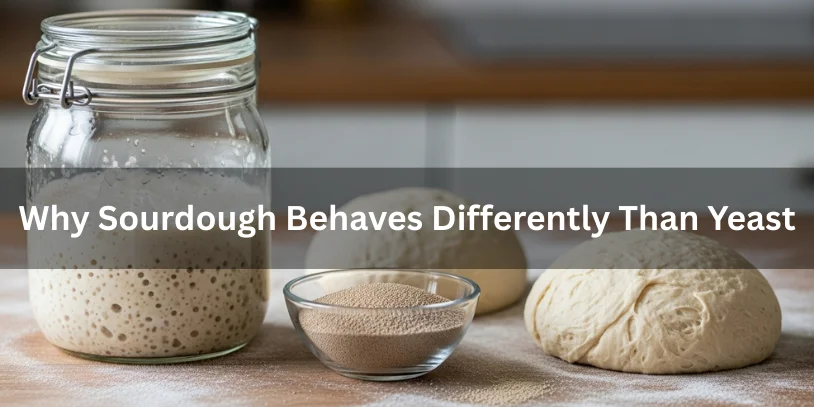
The key differences come down to fermentation dynamics.
| Factor | Sourdough Starter | Commercial Yeast |
|---|---|---|
| Fermentation speed | Slow to moderate | Fast |
| Flavor | Tangy, complex | Neutral |
| Predictability | Variable | Highly predictable |
| Dough strength | Gradual development | Rapid gas production |
| Acidity | Present (LAB) | Minimal |
Sourdough’s acidity affects gluten structure and enzyme activity, which is why it often produces a chewier crumb and longer shelf life—but also why mistakes show up more clearly.
When Using Sourdough Starter Instead of Yeast Works Well
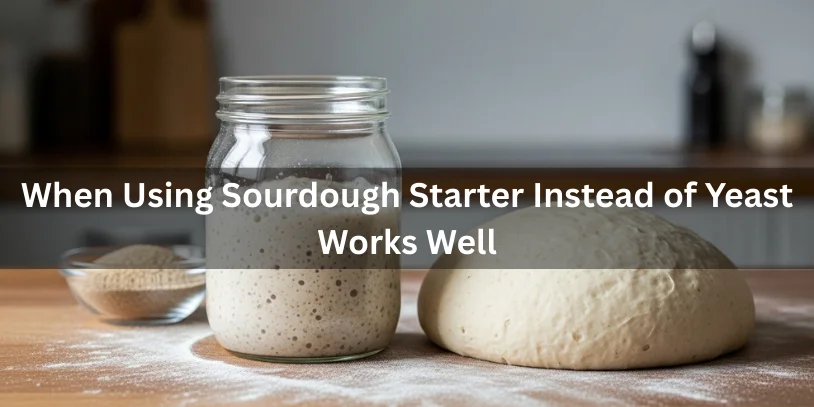
Sourdough starter is an excellent substitute in:
- Rustic loaves (boule, batard)
- Whole wheat or rye bread
- Naturally leavened sandwich bread
- Pizza dough with long fermentation
- Country-style or artisan bread
These recipes already benefit from extended fermentation and flexible timing.
When You Should Not Substitute Sourdough for Yeast
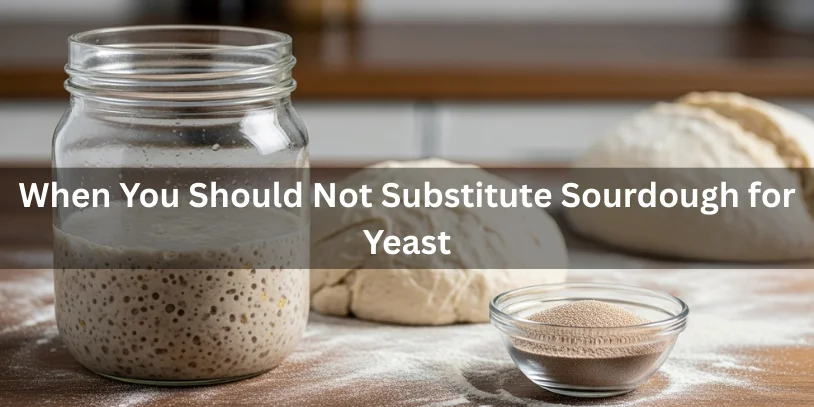
Avoid replacing yeast with sourdough starter when making:
- Quick breads
- Cakes or muffins
- Sweet, enriched doughs (high sugar, butter, milk)
- Same-day dinner rolls
- Commercial-style soft breads
In these cases, yeast’s speed and predictability matter more than flavor development.
How Much Sourdough Starter Replaces Yeast?
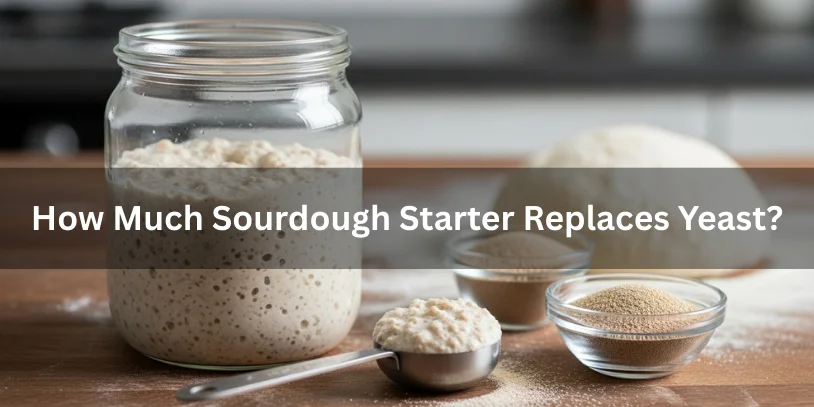
There is no perfect universal ratio, but practical baking uses a reliable range.
General guideline:
- 100 g active sourdough starter ≈ ½–¾ teaspoon instant yeast
Because starter contains both flour and water, adjustments are required.
Hydration Adjustment Rule
If you add 100 g of starter:
- Reduce 50 g flour
- Reduce 50 g water
This keeps dough consistency stable and prevents sticky or slack dough.
Starter Strength Matters More Than Ratios
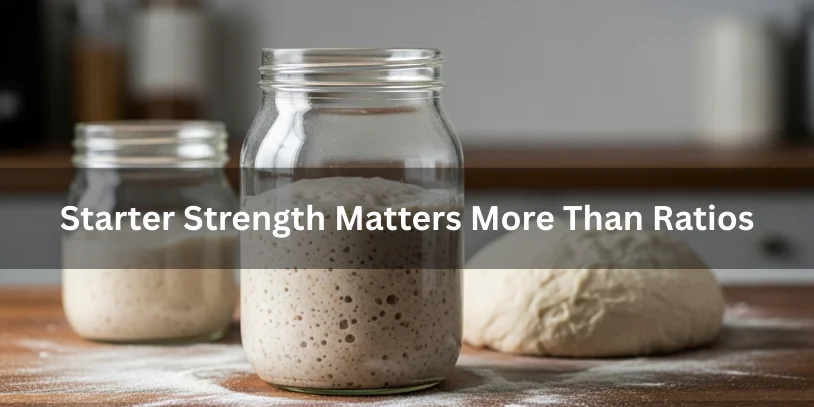
A strong, active starter:
- Doubles in volume within 4–6 hours after feeding
- Shows bubbles throughout, not just on the surface
- Smells pleasantly tangy, not sharp or alcoholic
A weak starter will not replace yeast effectively, regardless of ratio.
This is one of the most common reasons sourdough substitutions fail.
Step-by-Step: How to Substitute Sourdough Starter for Yeast
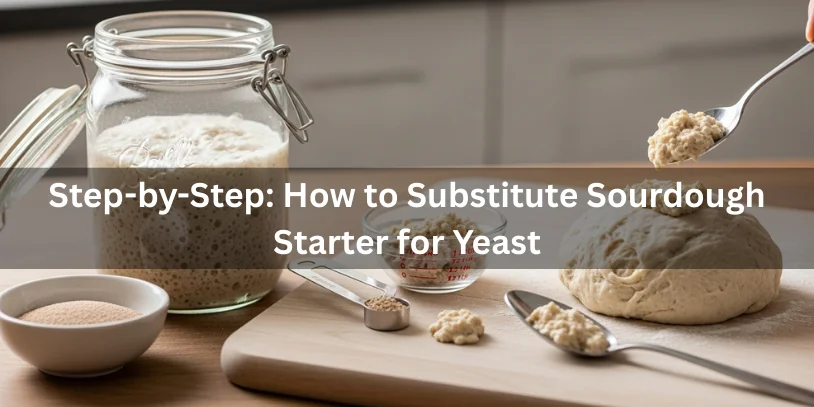
- Remove all commercial yeast from the recipe
- Add active starter at 20–30% of total flour weight
- Reduce flour and water to account for starter hydration
- Extend bulk fermentation (often 2–4× longer)
- Watch the dough, not the clock—volume increase matters more than time
Cold fermentation can help improve structure and control acidity, especially in warm environments.
Fermentation Timing: What to Expect
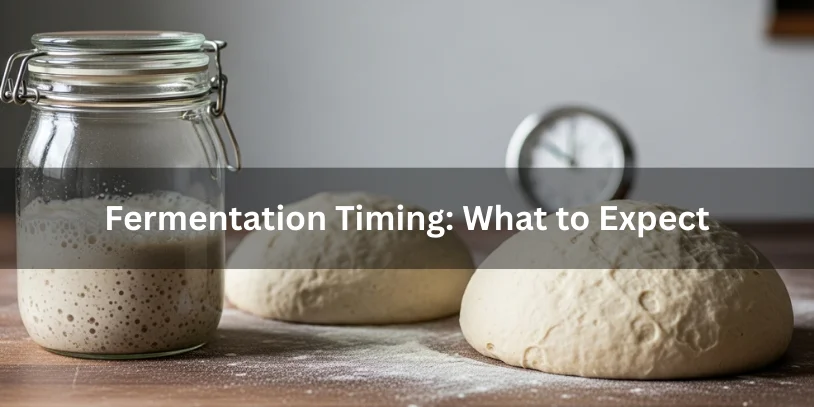
With yeast, bulk fermentation might take 1–2 hours.
With sourdough, it often takes:
- 4–6 hours at warm room temperature
- 8–12 hours in cooler kitchens
- 12–24 hours with cold fermentation
Longer fermentation is not a flaw—it’s the mechanism that builds flavor and structure.
Flavor, Texture, and Crumb Changes
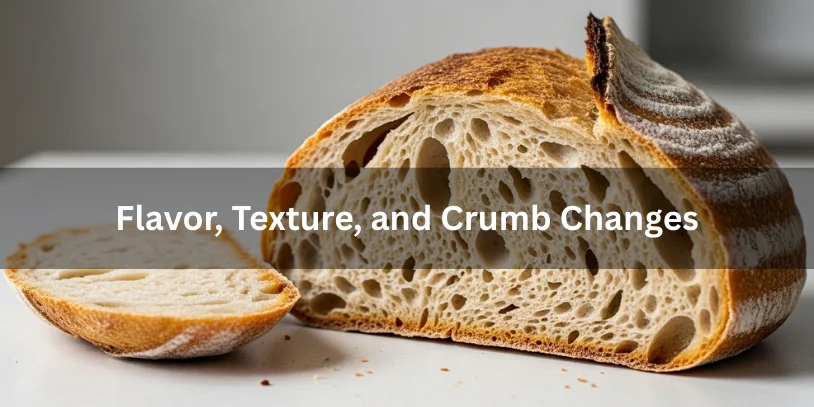
Replacing yeast with sourdough starter will change the final bread.
Flavor:
- Mild tang with short fermentation
- Pronounced sourness with long, warm fermentation
Texture:
- Chewier crumb
- Slightly tighter structure
- Thicker crust development
These traits are desirable in artisan bread but not in every recipe.
Can You Use Both Yeast and Sourdough Starter Together?
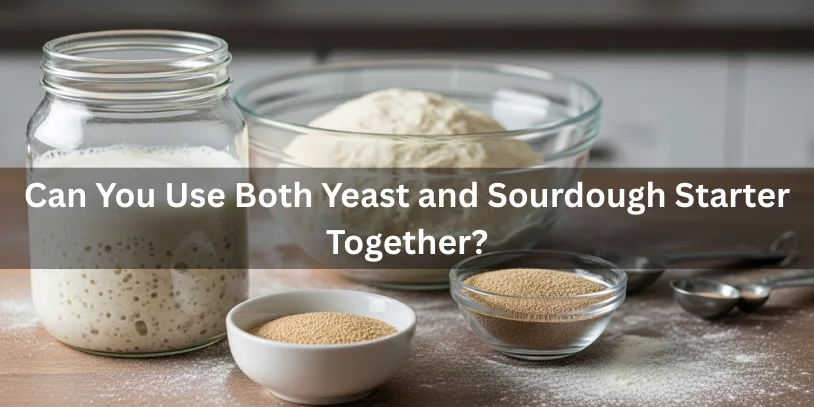
Yes—and many professional bakers do.
This hybrid approach:
- Uses a small amount of yeast for reliability
- Uses starter for flavor and dough strength
- Reduces fermentation time compared to pure sourdough
It’s a practical option for bakeries and busy home bakers.
Why Substitution Sometimes Fails
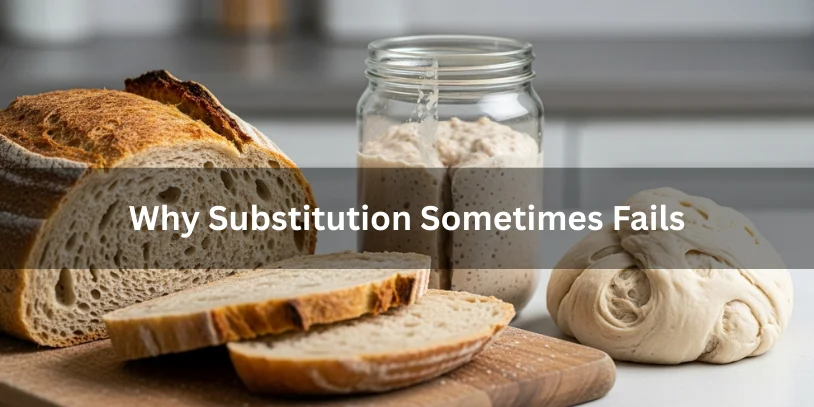
Common failure points include:
- Inactive or underfed starter
- Incorrect hydration adjustment
- Fermenting too cold or too hot
- Expecting yeast-like timing
- Using discard instead of active starter
Dense or flat bread is usually a fermentation issue, not a recipe flaw.
Is Sourdough Healthier Than Yeast Bread?
Sourdough fermentation:
- Breaks down phytic acid, improving mineral absorption
- Partially pre-digests starches
- Often results in lower glycemic response
These benefits come from time and fermentation, not from sourdough alone. A rushed sourdough behaves more like yeast bread nutritionally.
Cost and Practical Considerations
Commercial yeast:
- Low cost
- Long shelf life
- Minimal maintenance
Sourdough starter:
- Essentially free once established
- Requires regular feeding
- Demands attention and experience
The trade-off is time versus flavor and process control.
Food Safety Notes
- Never use moldy starter (pink, green, or black growth)
- Alcohol smell means hunger, not danger—but feed before use
- Discard is not a reliable leavening agent for full substitution
FAQs
Can sourdough starter fully replace yeast in bread?
Yes, in many bread recipes—but not in quick or enriched doughs.
Is sourdough starter stronger than yeast?
No. It is slower and less predictable, but more complex.
Can sourdough rise without any yeast?
Yes. Wild yeast in the starter provides leavening.
Why didn’t my sourdough bread rise?
Most often due to weak starter, short fermentation, or cold dough.
Can I use sourdough discard instead of yeast?
No. Discard lacks sufficient leavening power on its own.
Does sourdough always taste sour?
No. Flavor depends on fermentation length and temperature.
Can I replace instant yeast with sourdough starter directly?
Not directly. Ratios, hydration, and time must be adjusted.
Conclusion
Sourdough starter can be a substitute for yeast—but it’s a different tool, not a drop-in replacement. When you respect its slower fermentation, adjust hydration correctly, and use an active starter, it produces bread with deeper flavor, better keeping quality, and a distinct character yeast alone can’t match.
If you need speed and consistency, yeast is the better choice. If you value flavor, fermentation, and process, sourdough starter is worth the time.
The best results come from choosing the leavening method that fits your recipe, schedule, and expectations—not forcing one to behave like the other.
Pingback: Difference Between Sourdough Starter and Discard: What They Are, How to Use Them, and Why It Matters Best Guide 2026 - DreamWhip Bakers