
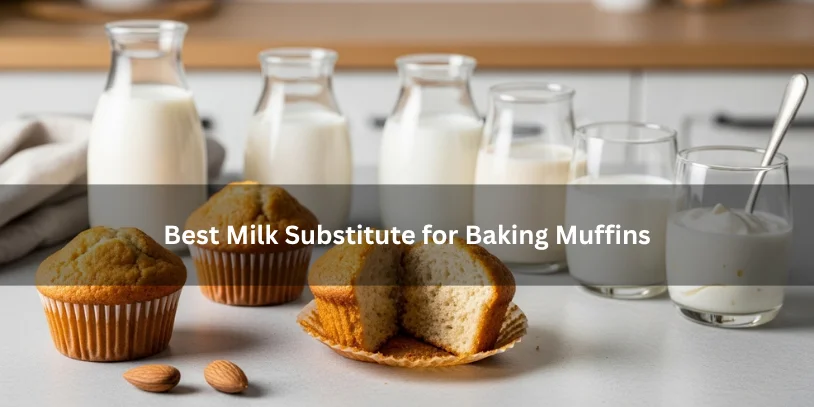
If you ran out of milk halfway through a recipe, don’t panic. Muffins are one of the easiest things to fix with a simple swap.
The best milk substitute for baking muffins is usually soy milk or oat milk. Both are easy to use, both work in most recipes without much adjustment, and both give you soft, moist muffins that still feel like muffins, not a compromise.
But that’s not the whole story.
The best substitute for milk in baking muffins depends on what kind of muffin you’re making and what you care about most. Do you want the closest result to regular milk? A dairy-free option? Something richer? Just a quick fix with whatever is already in the kitchen?
That’s where the right choice matters.
Why Milk Matters in Muffins

Milk doesn’t just add liquid. It affects the whole feel of the muffin.
It helps hydrate the flour, smooth out the batter, soften the crumb, and support even baking. It also plays a role in browning, which is why some milk substitutes leave muffins looking a little paler than usual.
In simple terms, milk helps muffins feel tender instead of dry, and soft instead of flat or rubbery.
That’s why swapping it out carelessly can change the result more than people expect.
The Best Overall Replacements
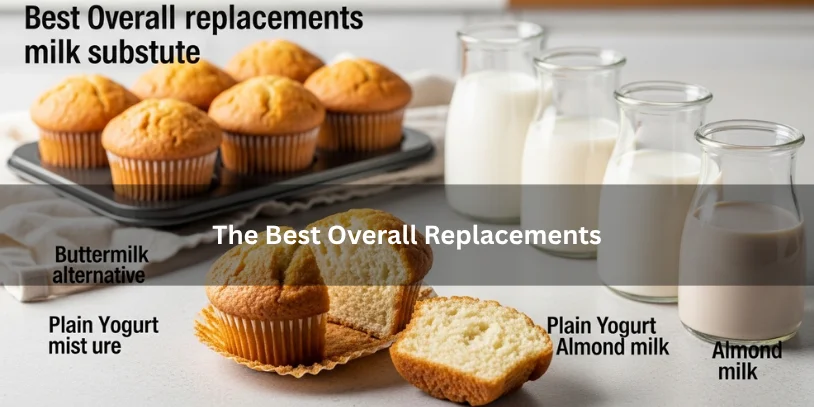
Here are the most reliable options when you need a milk substitute for baking muffins.
| Substitute | How to Use It | Best For | What to Expect |
|---|---|---|---|
| Soy milk | 1:1 | Closest all-purpose swap | Good structure and browning |
| Oat milk | 1:1 | Neutral flavor, soft muffins | Moist, tender crumb |
| Almond milk | 1:1 | Light fruit muffins | Slightly lighter texture |
| Yogurt + water | Thin slightly first | Rich, moist muffins | Soft, bakery-style crumb |
| Sour cream + water | Thin slightly first | Dense but tender muffins | Richer mouthfeel |
| Coconut milk beverage | 1:1 | Chocolate or tropical muffins | Slightly richer flavor |
| Evaporated milk + water | Dilute first | Pantry backup | Fuller texture |
| Water + butter or oil | Use only if needed | Emergency swap | Works, but less flavor |
If you want the shortest possible answer, go with soy milk if you want performance, or oat milk if you want a softer, more neutral result.
Soy Milk vs Oat Milk: Which One Is Better?
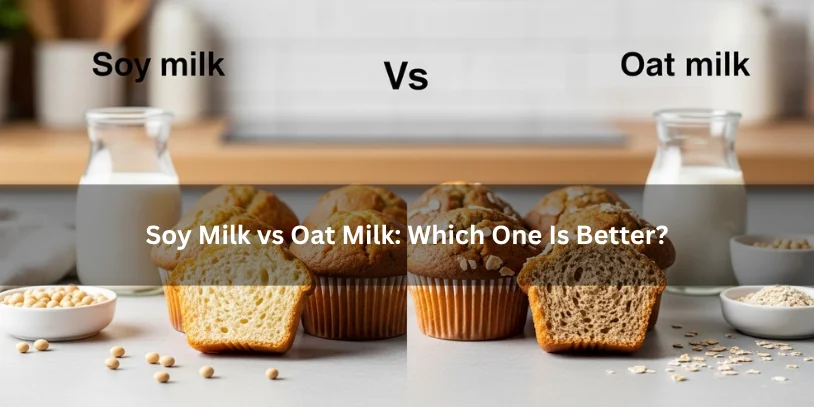
This is the comparison most people actually need.
Soy milk
Soy milk is the stronger baking option. It usually gives better structure, better rise, and better browning than thinner alternatives. If you want the closest result to regular milk, soy milk is usually the safest choice.
Oat milk
Oat milk is a little more forgiving in flavor. It blends in nicely and works especially well in blueberry, banana, and vanilla muffins. It may slightly change the texture depending on the brand, but in most muffin recipes, it works beautifully.
Which should you choose?
Choose soy milk if you want the most dependable result.
Choose oat milk if you want the most natural flavor and a soft crumb.
You really can’t go too wrong with either.
Other Good Milk Substitutes for Muffins
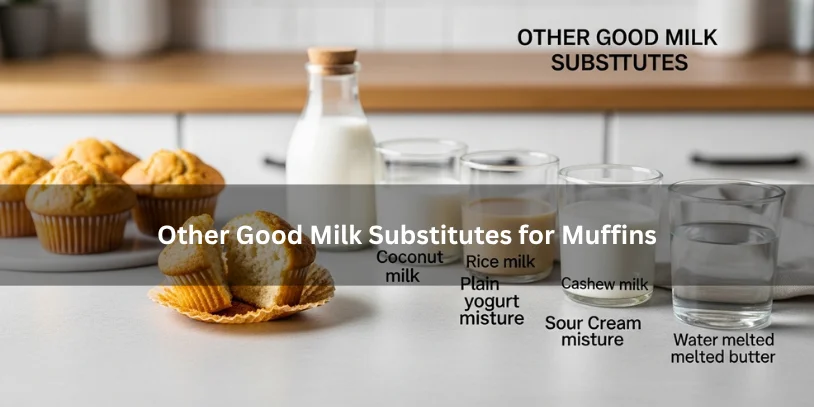
Almond milk
Almond milk works well, especially in lighter muffins. Think blueberry, lemon, vanilla, or simple breakfast muffins.
The main downside is that it can produce slightly paler muffins, and the texture may feel a little less rich than soy or oat.
Yogurt
Plain yogurt is a great substitute, but it should be thinned with a little water first. Once you do that, it works very well in muffins that need extra moisture.
It’s especially good in banana muffins, bran muffins, or bakery-style muffins where you want a tender, almost plush texture.
Sour cream
Sour cream works much like yogurt, but it feels richer. It can make muffins very soft and satisfying, though it may be too heavy for very light or delicate muffin recipes.
Coconut milk beverage
Carton coconut milk can work well in chocolate muffins, coconut muffins, or anything with warm spices. It adds a little richness and a little flavor.
Canned coconut milk is a different ingredient. It is much thicker and heavier, so don’t use it as a straight swap unless you dilute it.
Evaporated milk
If you still use evaporated milk in your kitchen, it can absolutely help in muffins. Just mix it with water first so it is closer to the texture of regular milk.
This is a useful option when you need a substitute for milk in baking muffins and you don’t have plant milk on hand.
Can You Use Water Instead of Milk in Muffins?
Yes, you can. No, it’s not the best option.
Water will keep the batter from being dry, so technically it works. But milk also brings a little richness, body, and support to the recipe. Water does not.
If you need to use water, add a small amount of melted butter or neutral oil. That tiny fix helps bring back some of what plain water is missing.
So if you’re standing in the kitchen wondering whether water is better than starting over, the answer is yes. Use it. Just know the muffins may taste a little less full and bake a little paler.
What If the Recipe Uses Buttermilk?
This is where people often get caught out.
If a muffin recipe calls for buttermilk, it’s not just about moisture. Buttermilk also adds acidity, and that acidity works with baking soda to help the muffins rise properly and stay tender.
A simple fix is this:
- 1 cup soy milk or oat milk
- 1 tablespoon lemon juice or white vinegar
- let it sit for 5 to 10 minutes
That gives you something much closer to buttermilk than plain milk replacement would.
If you skip the acid in a buttermilk recipe, your muffins may still bake, but they often won’t have the same lift or softness.
Best Substitute by Muffin Type
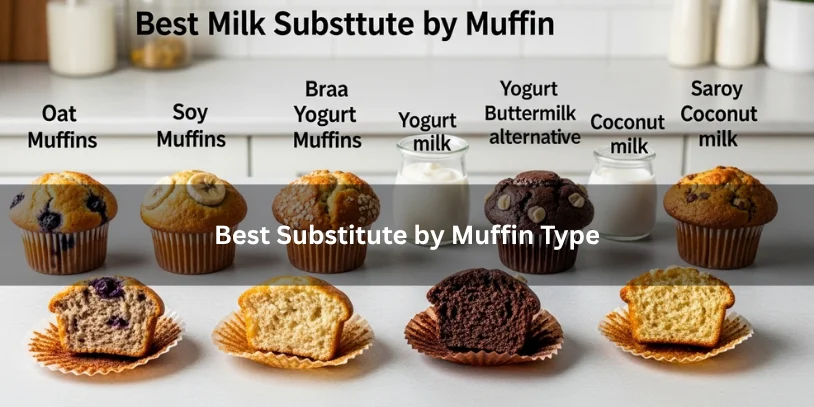
Not every muffin wants the same thing.
Blueberry muffins
Go with oat milk or almond milk.
These keep the flavor clean and light, which suits fruit muffins really well.
Banana muffins
Go with soy milk, oat milk, or thinned yogurt.
Banana already adds weight and moisture, so these swaps fit naturally.
Chocolate muffins
Go with soy milk or coconut milk beverage.
Chocolate is forgiving, so you can use a slightly richer substitute without throwing the flavor off.
Bran muffins
Go with soy milk, yogurt, or diluted evaporated milk.
These muffins need good moisture support because bran absorbs liquid quickly.
Boxed muffin mix
Go with soy milk, oat milk, or even water plus a little oil.
Most mixes are flexible, so this is one of the easiest cases.
How to Make the Swap Without Ruining the Batter

Most of the time, this is easy.
Use a 1:1 swap for:
- soy milk
- oat milk
- almond milk
- coconut milk beverage
Thin before using:
- yogurt
- sour cream
- evaporated milk
Add acid if replacing buttermilk:
- lemon juice
- vinegar
Choose plain, unsweetened versions when possible
This matters more than people think. Sweetened or flavored plant milks can change the taste of the muffins and sometimes affect browning too.
If the recipe is simple, like plain vanilla or blueberry, you’ll notice that extra flavor quickly.
Common Mistakes That Make Muffins Disappointing
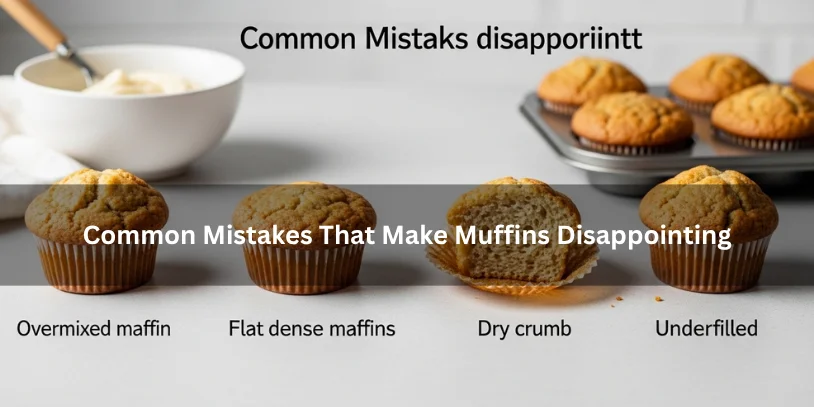
A lot of muffin problems get blamed on the substitute when the real issue is how it was used.
Using a thick substitute straight from the tub
Yogurt and sour cream are great, but they should be loosened with water first. If not, the batter can get too thick.
Using canned coconut milk like carton coconut milk
They are not the same. One is a beverage, the other is much richer and heavier.
Using sweetened almond or vanilla milk
That can make the muffins taste oddly sweet or slightly artificial.
Ignoring the recipe’s leavening
If baking soda is involved, acidity matters. That’s why buttermilk recipes need a thoughtful replacement, not just any liquid.
Overmixing the batter
Even the best milk substitute won’t save a muffin batter that has been overmixed. Tough muffins are often a mixing issue, not a milk issue.
How Different Substitutes Change the Final Muffin
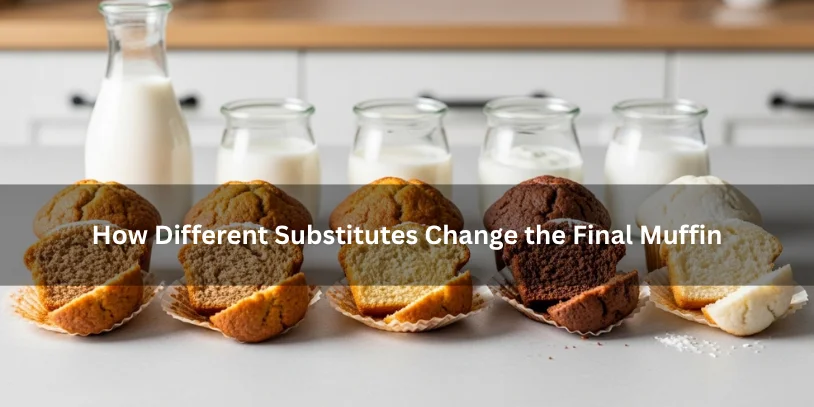
Here’s the honest version.
- Soy milk gives the most balanced result.
- Oat milk gives a soft, pleasant texture.
- Almond milk works, but can feel lighter and look paler.
- Yogurt gives extra tenderness.
- Sour cream gives richness.
- Water works in a pinch, but feels the least satisfying.
That’s why the best substitute for milk in baking muffins is not always the same for everyone. A home baker trying to save breakfast and a small café trying to keep a batch consistent may choose differently.
For Home Bakers and Small Batch Bakers
If you bake muffins at home, you can choose based on what’s in the fridge and what the recipe needs.
If you bake for a café, bake sale, or small menu, consistency matters much more. In that case, it’s smart to settle on one substitute and test it well instead of changing between brands and types every week.
For regular batch baking, soy milk and oat milk are usually the easiest to standardize. They are widely available, easy to measure, and give repeatable results.
Also keep allergens in mind. Soy and tree nut milks may affect what you can safely serve to others.
So, What Should You Actually Use?
Here’s the practical answer.
Use soy milk if:
- you want the closest result to regular milk
- you care about structure and browning
- you want one substitute that works in most muffin recipes
Use oat milk if:
- you want a neutral taste
- you want a softer, more tender crumb
- you need an easy all-purpose dairy-free option
Use yogurt or sour cream if:
- you want richer, moister muffins
- you are baking banana, bran, or bakery-style muffins
Use water plus oil or butter if:
- you only need a last-minute emergency fix
That’s really the whole game. Match the substitute to the result you want.
FAQs
What is the best milk substitute for baking muffins?
Soy milk is usually the best all-purpose option, with oat milk close behind. Both work well in most muffin recipes.
What is the best substitute for milk in baking muffins?
If you want the simplest answer, use unsweetened soy milk or oat milk in the same amount as the milk in the recipe.
Can I use almond milk in muffins?
Yes, absolutely. It works best in lighter muffins like blueberry, lemon, or vanilla.
Can I use oat milk instead of milk in muffins?
Yes. Oat milk is one of the easiest and most reliable substitutes for muffins.
Is soy milk better than oat milk for baking?
Usually, yes for structure. Oat milk is excellent too, but soy milk often gives a slightly stronger baking result.
Can I make muffins without milk?
Yes. You can use plant milk, yogurt, sour cream, evaporated milk, or even water with a little added fat.
Can I use yogurt instead of milk in muffins?
Yes, but thin it with a little water first so the batter stays balanced.
Can I replace milk with water in muffins?
Yes, though the flavor and texture may be a little less rich. Adding a bit of oil or melted butter helps.
What if my recipe calls for buttermilk?
Use plant milk with lemon juice or vinegar so you still get the acidity the recipe needs.
Will milk substitutes change baking time?
Usually not by much. Texture and browning may change more than timing does, so check doneness by sight and a toothpick test.
Conclusion
If you want the most reliable milk substitute for baking muffins, go with soy milk or oat milk. They are the easiest, the most practical, and the most likely to give you muffins that still taste and feel right.
If you want something richer, yogurt or sour cream can work beautifully. If you just need to get the batter into the oven, water with a little butter or oil is still better than giving up on the recipe.
At the end of the day, muffins are forgiving. You don’t need perfection. You just need the right swap for the kind of muffin you’re making.