

Can You Eat Tiramisu While Pregnant?

Traditional tiramisu is usually not the safest choice during pregnancy because classic recipes often contain raw eggs, alcohol, and espresso. Those ingredients are the main reason doctors and pregnant women both treat tiramisu more carefully than other desserts.
Not every tiramisu is made the same way, though. Some versions are made with pasteurized ingredients, no alcohol, and less or no coffee. This guide explains when tiramisu is risky, when it may be safer, and what to do if you already ate some while pregnant.
What Is Tiramisu Made Of?

Tiramisu is a well-known Italian dessert traditionally layered with:
- Savoiardi (ladyfinger biscuits)
- Espresso or strong coffee
- Mascarpone cheese
- Eggs (often raw or lightly whipped)
- Sugar
- Cocoa powder
- Alcohol such as Marsala wine, rum, or coffee liqueur
Each of these ingredients matters during pregnancy, and some are riskier than others.
Why Tiramisu Can Be Risky in Pregnancy

Raw or Lightly Cooked Eggs
Risk level: High
Traditional tiramisu uses raw eggs to create a light, creamy texture. Raw eggs can carry Salmonella, a bacteria that can cause severe foodborne illness.
During pregnancy, Salmonella infection can lead to:
- High fever
- Dehydration
- Hospitalization
- Increased stress on the fetus
Only pasteurized eggs significantly reduce this risk.
Alcohol (Marsala Wine, Rum, Liqueurs)
Risk level: High
There is no established safe level of alcohol during pregnancy. Alcohol exposure has been linked to Fetal Alcohol Spectrum Disorders (FASD).
A common myth is that alcohol “cooks off” in desserts. In tiramisu:
- Alcohol is usually not heated
- It is often added directly to coffee or brushed onto biscuits
This means alcohol content remains.
Espresso and Coffee
Risk level: Moderate
Tiramisu contains espresso or strong coffee. While caffeine isn’t forbidden in pregnancy, most guidelines recommend limiting intake to about 200 mg per day.
One serving of tiramisu may contain:
- Espresso-soaked biscuits
- Coffee-flavored creams
- Additional chocolate or cocoa
It’s easy to underestimate how much caffeine you’re consuming.
Mascarpone Cheese
Risk level: Low (usually)
Mascarpone is typically made from pasteurized milk, which makes it safe during pregnancy. Problems arise only if:
- The cheese is unpasteurized
- The dessert is made in small, artisanal settings without clear labeling
When Is Tiramisu Safe During Pregnancy?
It can be, but only under specific conditions.
A Tiramisu Is Potentially Pregnancy-Safe If:
- Eggs are pasteurized or fully cooked
- No alcohol is used at all
- Coffee is decaffeinated or omitted
- Ingredients are clearly labeled and properly refrigerated
If even one of these conditions isn’t met, it’s best to avoid it.
Traditional vs Pregnancy-Safe Tiramisu
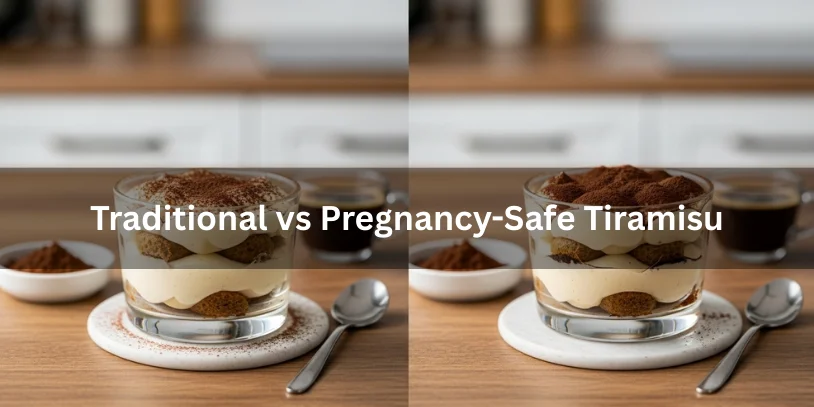
| Feature | Traditional Tiramisu | Pregnancy-Safe Version |
|---|---|---|
| Eggs | Raw or lightly cooked eggs | Pasteurized or egg-free |
| Alcohol | Marsala wine, rum, or coffee liqueur | None |
| Coffee | Espresso | Decaf coffee, cocoa, or none |
| Preparation | Classic Italian method with minimal heating | Modified recipe with safer ingredients |
| Storage | Not always strictly controlled | Must be properly stored and chilled |
| Risk Level | High pregnancy risk | Low risk (when made properly and consumed in moderation) |
Store-Bought vs Restaurant vs Homemade

Restaurant Tiramisu
Restaurant tiramisu is often the riskiest option in pregnancy because many places use traditional recipes with raw eggs or alcohol. Staff may also not know whether the eggs are pasteurized, which makes it harder to judge how safe the dessert really is.
Store-Bought Tiramisu
Store-bought tiramisu can be safer, but only if you read the label carefully. Some commercial versions use pasteurized ingredients and alcohol-free recipes, but not all do. Coffee and cocoa still matter if you are also watching caffeine.
Homemade Tiramisu
Homemade tiramisu is usually the safest option if you make it yourself with pregnancy-friendly swaps. You can skip the alcohol, use pasteurized eggs or an egg-free filling, and choose decaf coffee or cocoa instead.
I Accidentally Ate Tiramisu While Pregnant. What Should I Do?

This is one of the biggest anxieties—and the most common.
If you accidentally ate tiramisu while pregnant, try not to panic. In many cases, one small serving does not automatically mean something is wrong. What matters most is whether it contained raw eggs or alcohol, how much you had, and whether you develop any symptoms afterward.
If you had a small amount once and felt fine afterward, the overall risk is usually low. Still, it makes sense to pay attention to how you feel over the next day or two rather than ignoring it completely.
- Had a small amount
- Didn’t get sick afterward
- Ate it once, not regularly
The risk is generally low. Most healthcare providers advise monitoring for symptoms rather than panicking.
Symptoms to watch for include:
Symptoms to Watch For
- Fever
- Vomiting
- Diarrhea
- Severe stomach cramps
If you develop symptoms, contact your healthcare provider and let them know you may have eaten tiramisu made with raw eggs or alcohol.
Does the Trimester Matter?
Quick reassurance:
If you accidentally ate a small amount of tiramisu once and feel completely fine, the risk is often low. The main concern is not the dessert name itself, but whether it contained raw eggs, alcohol, or poorly stored ingredients.
Trimester-Based Considerations
- First trimester: Extra caution due to early fetal development
- Second trimester: Risks remain, but anxiety is often lower
- Third trimester: Foodborne illness can be more physically taxing
At any stage, the same ingredient risks apply.
Pregnancy-Safe Alternatives to Tiramisu

If you’re craving the flavor and texture, there are safer options:
Good Alternatives
- Eggless tiramisu
- Alcohol-free tiramisu
- Coffee-free mascarpone desserts
- Vanilla or chocolate layered desserts
- Sponge cake with cream and cocoa
Common Ingredient Swaps
- Raw eggs → pasteurized custard or whipped cream
- Espresso → decaf coffee or cocoa
- Alcohol → vanilla extract or coffee syrup
How to Check If a Dessert Is Safe (Quick Guide)
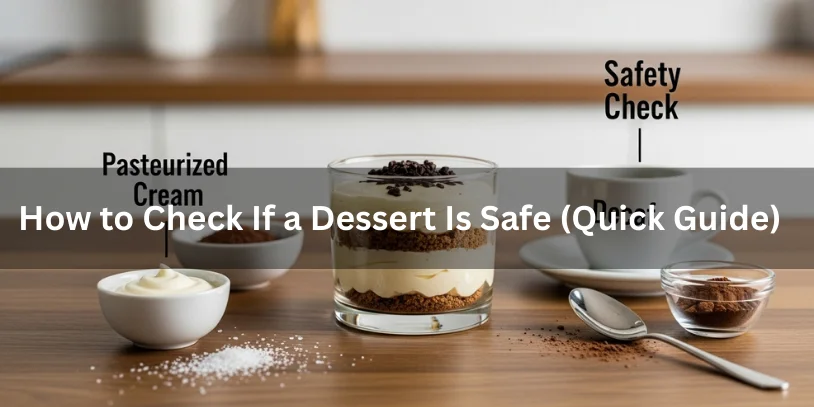
When you are pregnant, the safest dessert is one with clearly known ingredients. If a bakery, restaurant, or label cannot clearly tell you what was used, it is better to choose something else.
Ask these questions before eating tiramisu:
- Are the eggs pasteurized or fully cooked?
- Is there any alcohol added?
- Is coffee used, and is it decaf?
- Is the mascarpone or cream made from pasteurized dairy?
- Has the dessert been kept properly refrigerated?
If the answer to any of these is unclear, it is safer to skip it.
Common Mistakes to Avoid
- Assuming all store-bought tiramisu is safe
- Believing alcohol does not matter in desserts
- Ignoring caffeine from coffee and cocoa
- Panicking after one accidental bite instead of watching for symptoms
FAQs
1. Can pregnant women eat tiramisu without alcohol?
Only if it also uses pasteurized eggs and limits caffeine. Alcohol-free alone isn’t enough.
2. Is store-bought tiramisu safe during pregnancy?
Sometimes. Check labels for pasteurized eggs, no alcohol, and caffeine content.
3. Is mascarpone cheese safe during pregnancy?
Yes, when made from pasteurized milk, which is common.
4. Can one bite of tiramisu harm my baby?
A single bite is unlikely to cause harm, especially if no illness followed.
5. Are Italian desserts generally unsafe in pregnancy?
Not all. The risk depends on ingredients like raw eggs, alcohol, and unpasteurized dairy.
6. Is homemade tiramisu safer during pregnancy?
Yes, if you modify the recipe to remove raw eggs, alcohol, and strong coffee.Traditional vs Pregnancy-Safe Tiramisu6. Is homemade tiramisu safer during pregnancy?
Yes, if you modify the recipe to remove raw eggs, alcohol, and strong coffee.
7. Can I eat tiramisu later in pregnancy?
The same safety rules apply in all trimesters.
8.Can I eat store-bought tiramisu while pregnant?
Sometimes, but only if the label confirms pasteurized ingredients, no alcohol, and proper refrigeration.
9.Does mascarpone make tiramisu unsafe in pregnancy?
Not usually. Mascarpone is often safe if it is made from pasteurized milk. The bigger concerns are raw eggs, alcohol, and how the dessert was prepared.
Conclusion
Traditional tiramisu is usually not the best choice during pregnancy because it often contains raw eggs, alcohol, and coffee. A safer version is only a good option when it is made with pasteurized ingredients, no alcohol, and pregnancy-friendly swaps.
If you already ate some, do not panic. In many cases, a small amount does not lead to any problem. The most helpful thing is to think about what was in it, watch for symptoms, and make a safer choice next time.