

A single serving apple pie is exactly what it sounds like: a warm, cinnamon-scented mini pie made for one person—no leftovers, no huge baking project, and no guesswork.
It’s also one of the easiest desserts to get almost right and still feel disappointed. The small size changes everything: apples release moisture faster, the crust can brown before the filling thickens, and microwaves can turn starch gummy if you rush them.
This guide gives you a simple “choose your path” approach and then goes deep where it matters: apple choice, thickener, crust options (pie crust, shortcrust pastry, puff pastry), bakeware choices (ramekin, 5-inch pie dish, muffin tin, microwave mug), plus storage and freezing.
Quick choose-your-path decision (Bake / Microwave / Buy)

If you want the best pie texture (flaky top + thick filling)
Choose oven-baked in a 5-inch pie dish or ramekin.
If you want the fastest warm dessert
Choose a microwave mug apple pie (more like “pie-adjacent” unless you crisp the topping after).
If you don’t want to bake
Choose a bakery or grocery option near you—then reheat correctly for a crisp top.
What makes a single serving apple pie taste like “real pie”?

“Real pie” comes down to three things:
- Apple texture: tender, not mushy.
- Filling thickness: syrupy but set—not watery.
- Crisp pastry: top browned, not steamed.
The key doneness cue is simple: the filling should bubble and the apples should be tender.
Pasted text
Bubbling isn’t just drama—it signals the thickener has heated enough to do its job.
Ingredients for apple pie for one (with smart swaps)
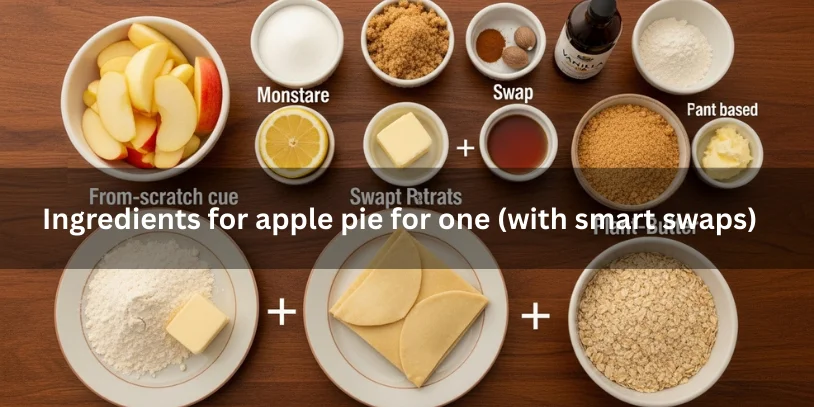
You can scale this up or down, but the structure stays the same.
Core components
- Apples (thinly sliced so they cook through quickly)
- Sweetener (white sugar, brown sugar, maple syrup, or a blend)
- Spices (cinnamon; optional nutmeg or cloves)
- Thickener (cornstarch/cornflour, flour, or tapioca starch)
- Fat + topping (butter plus crust or crumble)
- Salt + acid (a pinch of salt and a little lemon juice to keep flavor bright)
Thickener choice (why it matters more in mini pies)
Small pies are more moisture-sensitive. A thickener that works in a full pie can feel too loose or too gluey when mini.
- Cornstarch/cornflour: clean, glossy thickening; fast-acting.
- Flour: more forgiving, slightly cloudy; can taste “bready” if undercooked.
- Tapioca starch: great set and shine; can feel chewy if overused.
Rule of thumb: start modest, then rely on the “bubbling filling” cue plus a rest time to set.
Dietary and pantry swaps
- Vegan/dairy-free: use plant-based butter or coconut oil; choose vegan pastry.
- Gluten-free: use a gluten-free flour blend for crumble; choose GF pastry.
- Lower sugar: reduce sugar and keep a touch of acid (lemon) so it doesn’t taste flat.
Best apples for mini apple pies (variety matters)

The best apples for pie are firm enough to hold their shape. For a single serving apple pie, that firmness is even more important because the cook time is shorter.
Good options include:
- Granny Smith (tart, firm)
- Honeycrisp (crisp, juicy—use a little extra thickener)
- Bramley (common in UK; very “apple pie” flavored)
- Fuji or Pink Lady (sweet-tart balance)
Best flavor trick: blend apples
If you can, mix a tart apple with a sweeter one. You get bright flavor plus structure without needing extra sugar.
Tools and bakeware (ramekin vs 5-inch dish vs muffin tin vs mug)

You don’t need special equipment, but the vessel changes results.
- 5-inch pie dish: most “true pie” experience; easiest for a proper top crust.
- Ramekin (8–12 oz): great for deep filling; ideal for crumble topping.
- Muffin tin: best if you want multiple individual apple pies (great for parties).
- Microwave mug: fastest, but easiest to overcook.
Why dough temperature matters
Cold fat = flaky layers. Warm dough = greasy, dense pastry. Keep pastry chilled until it hits the oven.
Bake-time guide by vessel (best for quick decisions)

Use this as your starting point. Exact timing varies by oven and how thin you slice the apples.
| Method / Vessel | Oven temp | Typical time | Best topping | What “done” looks like |
| 5-inch pie dish | 375°F / 190°C | 25–35 min | Top crust (vents) | Filling bubbling, crust golden |
| Ramekin (8–12 oz) | 375°F / 190°C | 20–30 min | Crumble or top crust | Apples tender, edges bubbling |
| Muffin tin minis | 375°F / 190°C | 18–25 min | Pastry rounds | Golden tops, bubbling centers |
| Microwave mug | High power | 1–3 min bursts | Crumble/cookie topping | Apples soft; rest thickens |
Fan oven (convection) note for UK/AU/NZ
If you’re using a fan oven, you’ll usually bake at a slightly lower temperature than a conventional oven. Start a little lower and watch browning, especially with puff pastry.
How to make a single serving apple pie in the oven (best texture)

This is the method to use when you want the real deal: crisp top, thick filling, and “pie” aroma.
Step-by-step: 5-inch pie dish or small tart pan
- Preheat the oven to 375°F / 190°C. Place a baking sheet inside to heat (helps crisp the bottom).
- Slice apples thinly (about ⅛ inch / 3–4 mm). Thin slices cook evenly without flooding the filling.
- Mix filling in a bowl:
- apples
- sugar + brown sugar (or your sweetener)
- cinnamon + pinch of salt
- a small amount of thickener
- a little lemon juice
- Prepare pastry:
- If using pie crust or shortcrust pastry, line the dish (optional) and add filling.
- Top with a round of pastry and cut vents.
- Seal and finish:
- Crimp edges if you can.
- Brush with egg wash for shine (optional).
- Bake until the top is golden and the filling is bubbling at the edges.
- Rest 10 minutes before eating. This sets the filling so it isn’t runny.
How to prevent burnt edges
Mini pies brown fast. If the crust is getting too dark before the apples are tender, tent loosely with foil for the last part of baking.
Ramekin apple pie (easiest “for one” option)
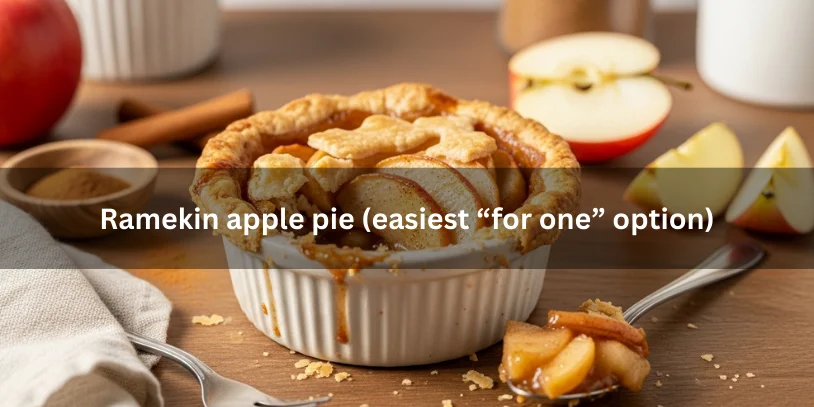
If you want minimal effort with maximum payoff, use a ramekin and a crumble topping.
Step-by-step: ramekin + crumble topping
- Mix apples, sweetener, spices, salt, acid, and thickener.
- Spoon into a buttered ramekin.
- Make a quick crumble:
- flour (or GF blend)
- sugar
- oats (optional)
- butter (or plant butter)
Rub until clumpy.
- Top the apples with crumble.
- Bake until bubbling and deeply golden.
- Rest, then serve with ice cream or custard.
Why crumble works so well here: it stays crisp even without a bottom crust and forgives small measurement differences.
Microwave mug apple pie (fast, but do it carefully)

A mug version can be great for cravings—just avoid two common issues: overflow and rubbery thickener.
Microwave method (best practice)
- Use a large microwave-safe mug or small bowl (give it room to bubble).
- Slice apples thin.
- Microwave in short bursts (30–45 seconds), stirring between.
- Stop once apples are tender.
- Let it rest 3–5 minutes so the filling thickens.
- Add topping after: crumble, crushed biscuits/graham crackers, or a small piece of pastry warmed separately.
If you want it closer to “pie,” finish the topping in a toaster oven or under a grill/broiler for a minute.
Common mistakes and quick fixes (mini pie troubleshooting)

Problem: watery filling
Cause: underbaked, apples too thick, not enough thickener.
Fix: slice thinner, bake until bubbling, and rest longer.
Problem: gummy, gluey texture
Cause: too much thickener or microwaved too long.
Fix: reduce thickener next time; use short microwave bursts; rely on rest time.
Problem: soggy bottom
Cause: too much juice + not enough bottom heat.
Fix: preheat your baking sheet, avoid extra liquid, or skip the bottom crust and do a crumble-top ramekin version.
Problem: burnt crust, undercooked apples
Cause: crust browns faster than filling cooks.
Fix: foil tent early, slice apples thinner, and place the pie slightly lower in the oven.
Problem: bland flavor
Cause: not enough salt/acid or using very sweet apples only.
Fix: add a pinch more salt and a little lemon; blend tart + sweet apples.
Storage, freezing, and reheating (keep it safe and crisp)

A single serving apple pie is best fresh, but you can store it.
How long does it last?
A common baseline for refrigerated leftovers is 3–4 days.
Pasted text
If in doubt, use your senses: off smell, visible mold, or a fermented taste means toss it.
Reheating for best texture
- Oven/toaster oven: best for crisping crust and crumble.
- Microwave: fastest, but softens pastry—use short bursts.
Freezing
You can freeze:
- Unbaked assembled mini pies (often best texture after baking)
- Baked pies (convenient, but crust may soften)
Wrap tightly to prevent freezer burn, and bake/reheat until hot throughout.
Buy vs bake: a simple decision framework (with “near me” guidance)

Sometimes you don’t want to bake. That’s still a win—just buy smart and reheat well.
Bake at home if…
- You want it warm right now and customizable.
- You have apples to use up.
- You want a specific crust style (all-butter, puff pastry, or gluten-free).
Buy if…
- You want flaky pastry without the work.
- You need multiple servings quickly (individual pies for guests).
- You’re relying on delivery.
Where to buy (US/UK/AU/NZ examples)
In the United States, seasonal mini pies show up at stores like Trader Joe’s and frozen dessert brands like Marie Callender’s. In the United Kingdom, supermarkets such as Tesco commonly stock multipacks and bakery-style pies. In Australia and New Zealand, you’ll often see “snack pies” and multipacks at retailers like Woolworths.
“Near me” search phrases that actually work
- “individual apple pie near me”
- “mini apple pies near me”
- “personal apple pie bakery near me”
- “single serve dessert delivery near me”
- “hand pies near me” (close cousin; often available)
Price expectations (keep it realistic)
Prices vary by city, bakery, brand, and whether it’s fresh or frozen. The practical approach: compare single-serve bakery slices vs frozen multipacks and decide based on convenience.
Short answers for common questions (helpful for quick reference)
- How do I know it’s done? Bubbling filling + tender apples + golden crust.
- What’s the easiest version? Ramekin + crumble topping.
- Fastest version? Microwave mug in short bursts + rest time.
- Best apples? Firm varieties; blend tart and sweet when possible.
- Best crust shortcut? Store-bought pastry kept cold until baking.
FAQs
1) What is a single serving apple pie?
It’s a mini “pie for one” baked in a small dish like a ramekin or 5-inch pie pan, using sliced apples, sugar, spices, a thickener, and a crust or crumble topping.
2) Can I make apple pie for one person without a pie dish?
Yes. Use a ramekin, small oven-safe bowl, muffin tin, or even a small skillet. The key is thin apple slices and baking until the filling bubbles.
3) What apples are best for mini apple pies?
Firm apples that hold shape are best. Granny Smith brings tart structure; Honeycrisp and Fuji add sweetness. In the UK, Bramley is a classic pie apple.
4) Why is my mini apple pie watery?
Usually it’s underbaked or the apples are sliced too thick. Bake until you see bubbling at the edges and rest 10 minutes so the filling sets.
5) How do I stop the crust from burning?
Mini pies brown quickly. Tent loosely with foil once the crust is golden, and keep baking until the apples are tender and the filling bubbles.
6) Can I make a microwave mug apple pie?
Yes—slice apples thin, microwave in short bursts, stir between, and rest a few minutes to thicken. Use a large mug to prevent overflow.
7) Can I freeze individual apple pies?
Yes. Freezing unbaked assembled mini pies often gives the best crust later. Bake from frozen/chilled and add extra time until bubbling and hot.
8) How long does apple pie last in the fridge?
A common guideline is 3–4 days refrigerated. Reheat in a toaster oven or oven to restore crispness.
9) What’s the easiest topping: crust or crumble?
Crumble is easiest and very forgiving for single servings. A top crust feels more “classic pie,” but it’s slightly more technique-sensitive.
Conclusion
Single serving apple pie is the fastest way to get true apple pie comfort without committing to a whole dessert. Choose your path: oven for the best texture, ramekin crumble for the easiest win, microwave for speed, or buy near you and reheat like a pro. Slice apples thin, keep pastry cold, bake until bubbling, and let it rest—those four habits turn “pretty good” into “this tastes like real pie.”