
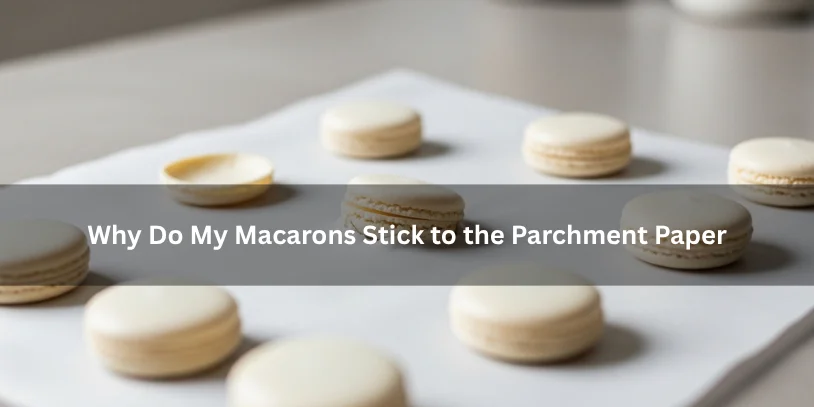
If you keep asking, why do my macarons stick to the parchment paper, the short answer is this: your shells are usually underbaked, not fully cooled, too moist, or baked on a setup that is not giving the bottoms enough heat.
A lot of bakers assume the parchment paper is the problem. Sometimes it is. But more often, the paper only reveals what went wrong during mixing, drying, baking, or cooling.
That is why macarons sticking to parchment paper should be treated like a clue. Once you understand what the clue means, it becomes much easier to fix the current batch and prevent the next one from failing.
Why Do Macarons Stick to Parchment Paper?
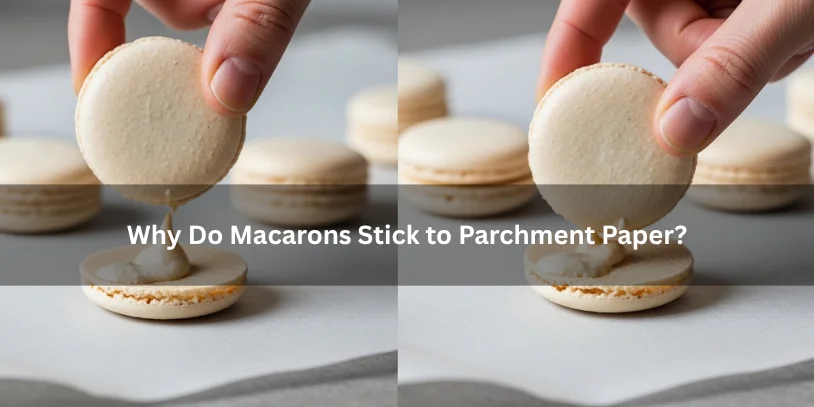
Macarons stick to parchment paper when the bottoms have not set properly. The shell may look smooth on top, the feet may appear, and the color may look right, but the base can still be too soft to release cleanly.
This usually happens because of one or more of these reasons:
- underbaked shells
- removing them while still warm
- low oven temperature
- weak bottom heat
- wet batter
- humidity
- wrinkled or poor-quality parchment paper
- a warped baking sheet or poor rack position
So if my macarons stick to the parchment, I would not blame the paper first. I would first check doneness, cooling, oven accuracy, and batter consistency.
Macarons Sticking to Parchment Paper: The Most Common Causes
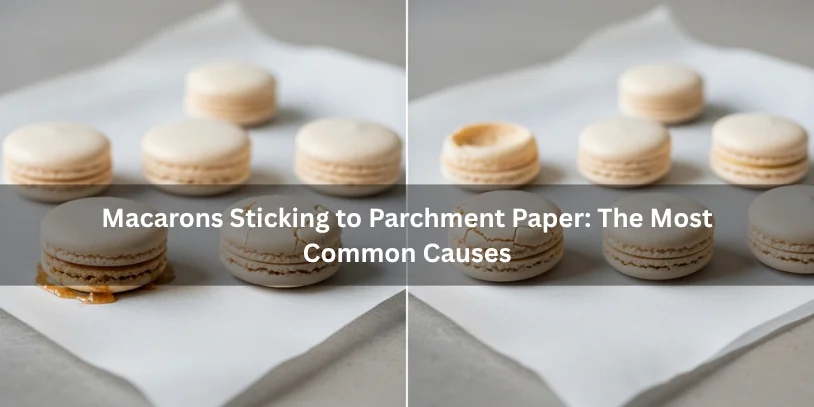
1. Underbaked shells
This is the most common reason macarons stick to parchment.
Macarons can fool you. They often look done before they are actually done. The tops may be set, but the bottoms are still soft. When that happens, the shell clings to the parchment paper and tears when you try to lift it.
Signs of underbaked macarons:
- sticky bottoms
- shells wobble when lightly touched
- centers feel soft or gummy
- bottoms tear away and stay on the paper
- shells seem fragile even after cooling
2. They were not fully cooled
Sometimes macarons sticking to parchment is not a baking problem at all. It is a cooling problem.
Fresh-from-the-oven shells are delicate. Even properly baked macarons can stick if you try to peel them off too early. The bottoms need time to finish setting as the tray cools down.
If your shells release cleanly after extra cooling time, the issue was likely timing, not the recipe.
3. Low oven temperature or weak heat from the bottom
If the oven temperature is too low, or if the bottom heat is weak, the tops can set before the bottoms finish baking.
That is why many bakers wonder, why do macarons stick to parchment paper even when they look done? The answer is often that the visible part looks ready, but the base is still undercooked.
An oven thermometer helps a lot here because many ovens do not match the temperature shown on the dial.
4. Wet batter from improper macaronage
If your batter is too wet, your shells may never develop the structure they need for a clean release.
Wet batter can happen because of:
- overmixed macaronage
- weak meringue
- too much liquid coloring
- too much extract
- oily almond flour
- poor ingredient balance
The batter should flow in a thick ribbon and settle gradually. If it runs too fast, spreads too much, or feels loose, your macarons are more likely to stick.
5. Humidity and weather
Humidity changes everything with macarons.
On rainy days or in humid climates, shells take longer to dry, the surface skin forms more slowly, and the bottoms can remain soft longer. That does not mean you cannot make good macarons in humid weather. It just means your timing, airflow, and drying process matter more.
6. Parchment paper quality or wrinkling
Sometimes macarons sticking to parchment paper really is connected to the paper.
If the parchment wrinkles, curls, or shifts on the tray, the shells may bake unevenly. Flat, high-quality parchment paper or baking paper works much better than cheap paper that buckles under moisture.
My Macarons Stick to the Parchment: What It Usually Means
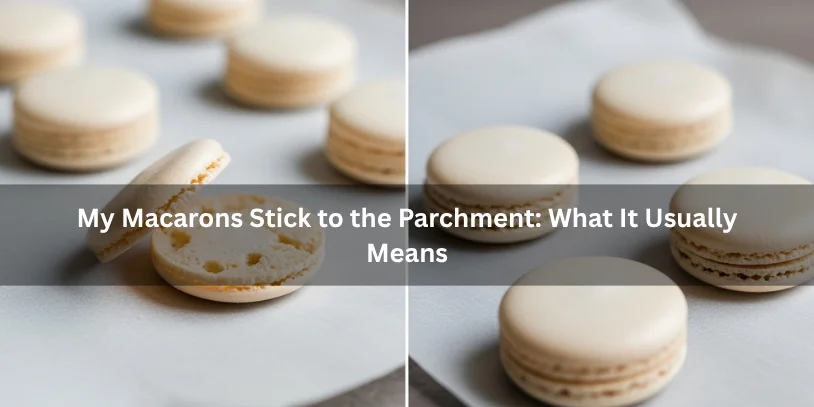
If my macarons stick to the parchment, I would read it like this:
If they stick only while warm
They probably need more cooling time.
If they still stick after cooling
They are likely underbaked, too wet, or baked with poor bottom heat.
If they stick on parchment but not on a silicone mat
The parchment may be wrinkling, shifting, or trapping moisture under the shells.
If they stick on a silicone mat too
The issue is probably not the surface alone. It is more likely your bake time, temperature, humidity, or batter.
If one tray sticks and another does not
Your oven may have hot spots, uneven airflow, or your baking sheet may be warped.
This is why sticky macarons are best diagnosed with an if-and-then approach instead of random guessing.
Macarons Sticking to Parchment After Baking: Underbaked or Not Cooled?
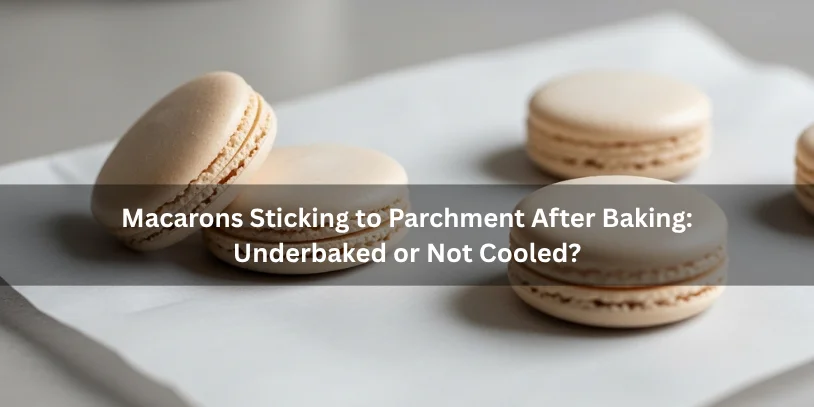
This is one of the biggest questions bakers ask.
How to tell if they are just too warm
- they feel delicate but not gummy
- they release better after extra cooling
- only the first few test shells stick
- the bottoms do not tear badly
How to tell if they are underbaked
- they still stick after cooling
- the bottoms rip badly
- the centers feel too soft
- the shell wobbles when gently touched near the end of baking
- the base looks wet or under-set
If you are deciding between “cool longer” and “bake longer,” always cool longer first. If they still stick after that, underbaking becomes the stronger answer.
How to Know When Macarons Are Done
A lot of sticking problems disappear once you learn how to judge doneness correctly.
Use the wiggle test
Gently touch the top of a shell.
- If it moves or wiggles, it is not done.
- If it feels set and stable, it is much closer.
Check one shell after cooling
Do not try lifting half the tray. Test one shell first.
If it comes off neatly, the batch is ready. If it tears badly, your next batch likely needs slightly more time.
Do not judge only by appearance
A smooth top does not mean a fully baked bottom. This is why why did my macarons stick to the parchment paper is such a common question. They looked ready, but the bottoms were not actually set.
How to Fix Macarons Sticking to Parchment Paper
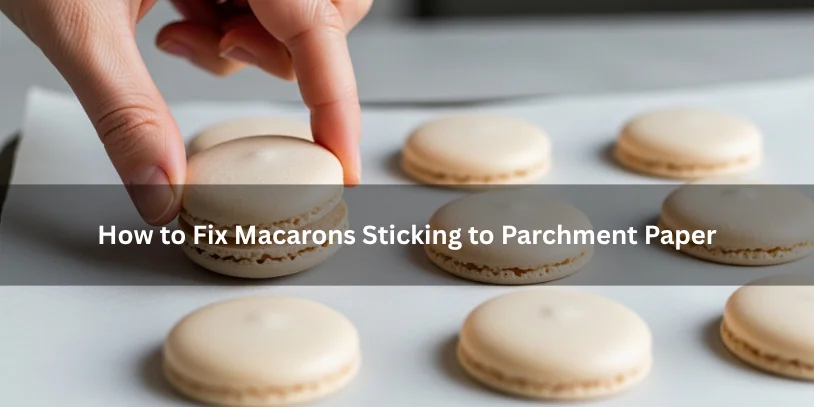
If your current batch is already stuck, do this step by step.
1. Do not force them off
Pulling too hard will rip the bottoms and ruin the shells.
2. Let them cool longer
This is the first fix to try. Sometimes ten extra minutes changes everything.
3. Test one shell only
Lift one carefully with an offset spatula or your fingers. If it still clings badly, leave the rest alone.
4. Use a gentle release method if needed
Some bakers lightly dampen the underside of the parchment paper. This creates a little steam that can help loosen stuck shells. Be careful though. Too much water can make them soggy.
5. Chill briefly if necessary
A short freezer rest can sometimes help the shells firm up and release more easily. This is a rescue method, not the main solution.
Parchment Paper vs Silicone Mat for Macarons
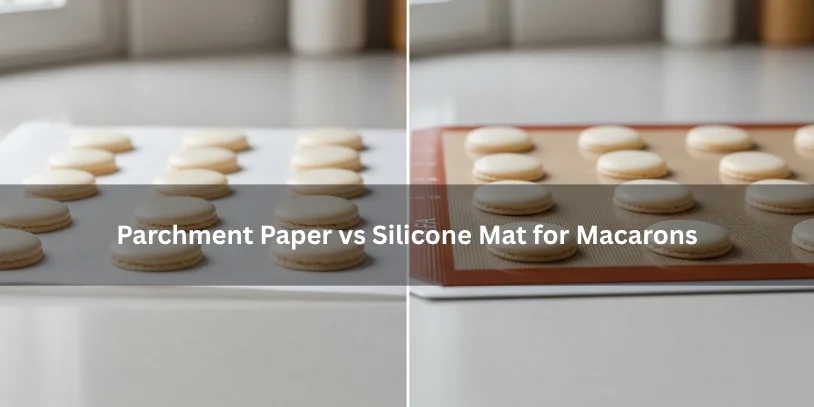
This is one of the most common comparison questions because macarons sticking to parchment paper often makes bakers want to switch surfaces immediately.
Here is the simple breakdown:
| Surface | Pros | Cons |
|---|---|---|
| Parchment paper / baking paper | Thin, affordable, easy cleanup, good heat transfer | Can wrinkle, shift, or curl |
| Silicone mat / Silpat | Reusable, stable, flat, good shape control | May slightly reduce bottom heat in some ovens |
Choose parchment paper if:
- your shells usually bake well
- your paper lies flat
- you want stronger bottom heat
- you prefer a disposable liner
Choose a silicone baking mat if:
- your parchment wrinkles
- your shells become lopsided on paper
- you want a reusable setup
- you want a more stable piping surface
There is no universal winner. Some bakers get better release from parchment paper. Others do better with a silicone mat or Silpat. The right answer depends on your oven, tray, and technique.
How to Prevent Macarons From Sticking to Parchment
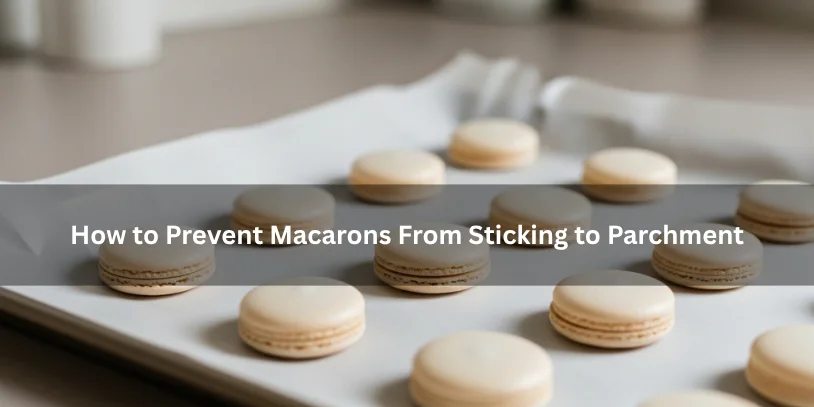
If you want clean release on future batches, follow this checklist.
Get the batter right
- whip the egg whites to stiff peaks
- avoid overmixing during macaronage
- aim for proper ribbon stage
- use gel color instead of liquid color when possible
- make sure your almond flour is not oily
Improve the drying stage
- rest the shells until the tops are not sticky
- in humid weather, allow more drying time
- use AC, a dehumidifier, or gentle airflow if needed
- avoid over-resting in very dry conditions
Improve the bake
- preheat the oven properly
- use an oven thermometer
- try one tray at a time
- test middle rack first
- if bottoms stay weak, test a slightly lower rack position
- use a heavy flat baking sheet, not a warped tray
Improve the release stage
- cool shells on the tray before touching them
- test one shell first
- do not assume they are done just because they have feet
Extra Clues From Related Problems
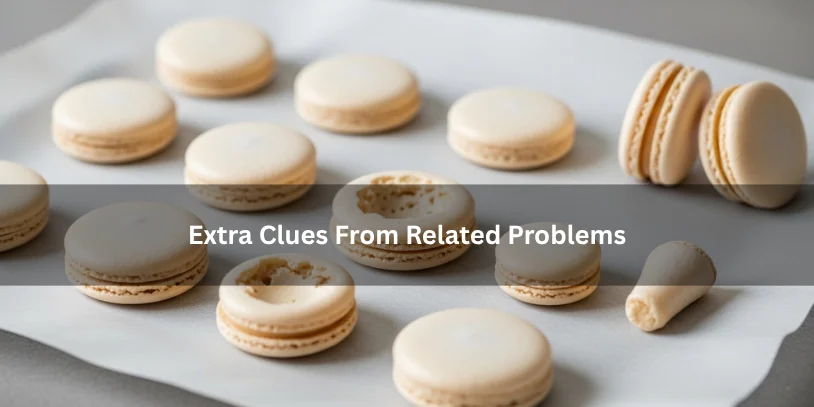
Sometimes why do my macarons stick to the parchment paper is easier to answer when you look at the other symptoms too.
Sticky bottoms + hollow shells
Often points to structure or baking issues, especially unstable meringue or oven imbalance.
Sticky bottoms + lopsided shells
Often points to wrinkled parchment, oven airflow problems, or uneven heat.
Sticky bottoms + concave bottoms
Usually suggests underbaking, weak bottom heat, or wet batter.
Sticky bottoms + poor feet
This can point to humidity, poor drying, weak meringue, or improper macaronage.
Best Tools to Solve This Problem
You do not need a professional pastry kitchen, but a few tools make a real difference.
- oven thermometer
- heavy flat baking sheet or sheet pan
- high-quality parchment paper
- silicone baking mat or Silpat
- food scale
- fine-mesh sieve
- dehumidifier for humid climates
If you can only buy one thing, start with the oven thermometer. It solves more mystery macaron issues than almost any other tool.
Common Mistakes That Make Macarons Stick
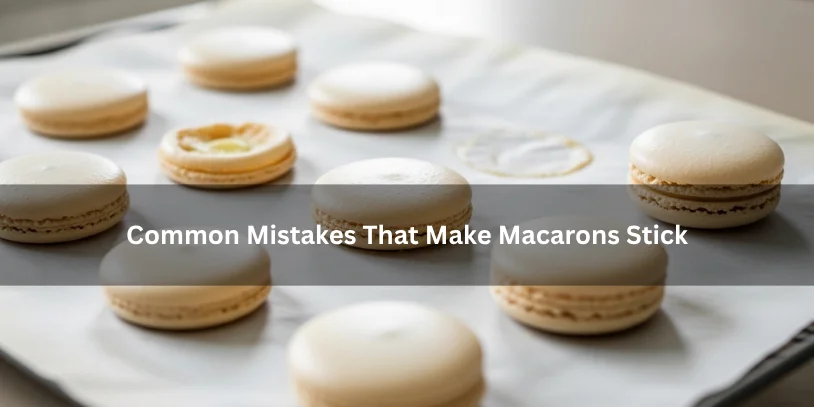
Avoid these if you want better results:
- lifting shells too soon
- skipping the wiggle test
- trusting the oven dial blindly
- baking on cheap wrinkled parchment paper
- using a warped tray
- overmixing the batter
- adding too much liquid color
- ignoring humidity
- baking multiple trays in an inconsistent oven
- using dirty silicone mats with residue buildup
The Best Order to Troubleshoot
If you want a clear way to diagnose sticky shells, use this order:
- check cooling time
- check the wiggle test
- verify oven temperature
- check rack position and tray quality
- compare parchment paper with silicone mat
- review macaronage and ribbon stage
- look at humidity and airflow
This helps you solve the issue faster without changing too many variables at once.
FAQs
Why do my macarons stick to the parchment paper even though they look done?
Because the tops can finish before the bottoms are fully set. They may look ready, but the base is still underbaked or too soft to release.
Are sticky macarons always underbaked?
Not always. If they only stick while warm, they may just need more cooling time. If they still stick after cooling, underbaking is much more likely.
Why did my macarons stick to the parchment paper after cooling?
If they are fully cool and still tearing, the most likely causes are underbaking, wet batter, weak bottom heat, or poor parchment setup.
My macarons got stick to the parchment. Can I save them?
Yes, sometimes. Let them cool fully first. If needed, lightly dampen the underside of the parchment paper or chill the tray briefly to help release them.
Why do macarons stick to parchment paper more in humid weather?
Humidity slows drying and affects shell structure. In a humid kitchen, the shells may take longer to dry and the bottoms may remain softer after baking.
Should I use parchment paper or silicone mats for macarons?
Both can work. Parchment paper gives stronger heat transfer, while silicone mats offer a flatter reusable surface. Test both and keep the one that works best in your oven.
How long should I wait before removing macarons from parchment?
Wait until they are properly cooled and test one shell first. The exact timing depends on your oven, tray, and room conditions.
Can bad parchment paper cause sticking?
Yes. Low-quality paper can wrinkle, curl, or trap moisture, which can affect baking and release.
Why do my macarons stick to the parchment on one tray but not another?
That usually means oven hot spots, airflow issues, or a warped baking sheet rather than a recipe issue.
What should macaron batter look like before piping?
It should flow in a thick ribbon, not run like liquid. Proper macaronage and ribbon stage are important for shells that dry and bake correctly.
Conclusion
If your macarons are sticking to parchment paper, the problem is usually not the paper alone. In most cases, the real cause is underbaked shells, not fully cooled macarons, weak bottom heat, wet batter, or humidity.
Start with the basics: cool longer, use the wiggle test, check your oven with a thermometer, and compare parchment paper with a silicone mat only after you rule out doneness and moisture issues. Once you stop treating sticky shells like a random failure and start reading them like a baking signal, the fix becomes much more obvious.