
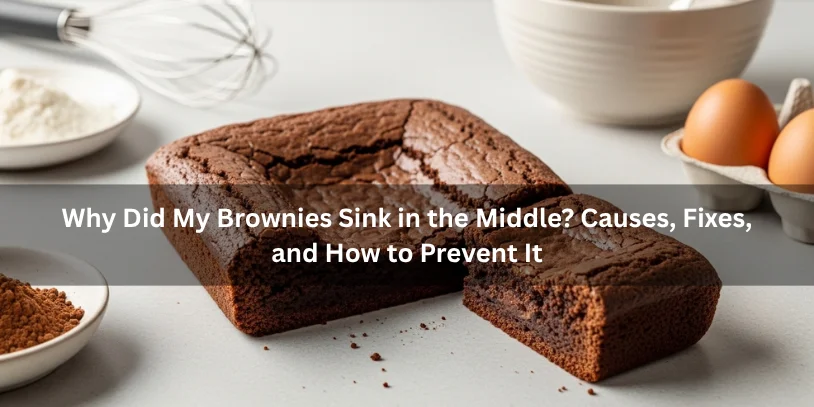
Brownies usually sink in the middle because the center sets more slowly than the edges. If that center is underbaked, over-aerated, or too soft from the ingredient balance, it collapses as steam escapes during cooling.
That is the short answer. But in real baking, the reason is often more specific than that.
Sometimes the brownies were simply pulled out too soon. Sometimes the batter was overmixed and filled with too much air. Sometimes the oven was hotter than the dial said, so the edges baked fast while the center lagged behind. And sometimes the middle sinks a little because fudgy brownies naturally settle more than cakey ones.
The good news is that a sunken middle does not always mean the batch is ruined.
A slight dip vs a real collapse
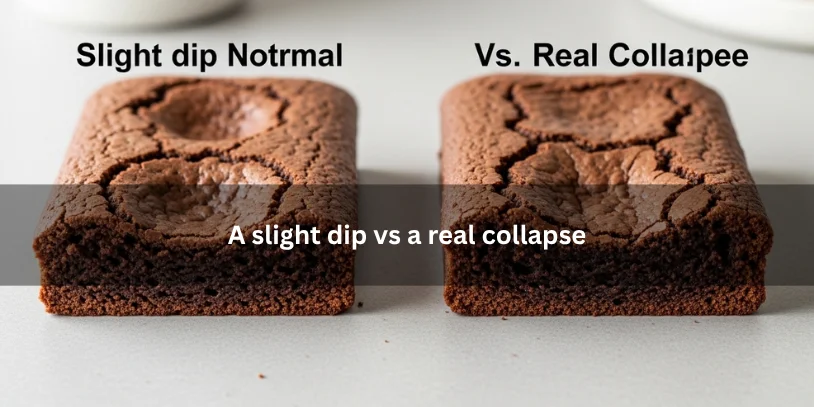
Before blaming the recipe, start here. Not every dip is a failure.
A slight dip is usually normal when:
- the brownies are meant to be fudgy
- the top is set and shiny
- the center is soft but not wet
- a tester shows moist crumbs, not raw batter
- the brownies hold together after cooling
A real collapse looks more like this:
- the center caves in deeply
- the middle stays visibly wet or gummy
- the edges are firm but the center seems undercooked
- the brownies sink dramatically as soon as they leave the oven
- the middle smears like batter when sliced
If your brownies only settled a little, that may be normal. If the center formed a crater, one or more baking variables likely failed.
What physically happens when brownies sink
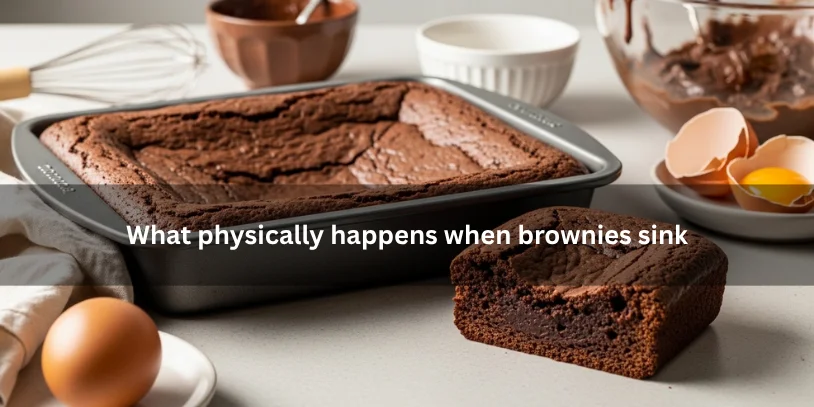
Brownies sink when the structure in the center is too weak to hold itself up after baking.
The edges set first because they are closer to the hot metal or glass pan. The center takes longer to heat through. While baking, air expands, steam builds, and the batter puffs slightly. As the brownies cool, that steam escapes and the structure starts to firm up.
If the center did not set enough, it falls.
That structure depends on a few key things:
- eggs help create stability as their proteins coagulate
- flour and starch absorb moisture and thicken the crumb
- sugar adds tenderness but also softens structure
- butter and chocolate add richness, but too much can make the center too soft
- mixing controls how much air gets trapped in the batter
In other words, a collapsed center is usually a structure problem, not just a timing problem.
The most common reasons brownies sink in the middle
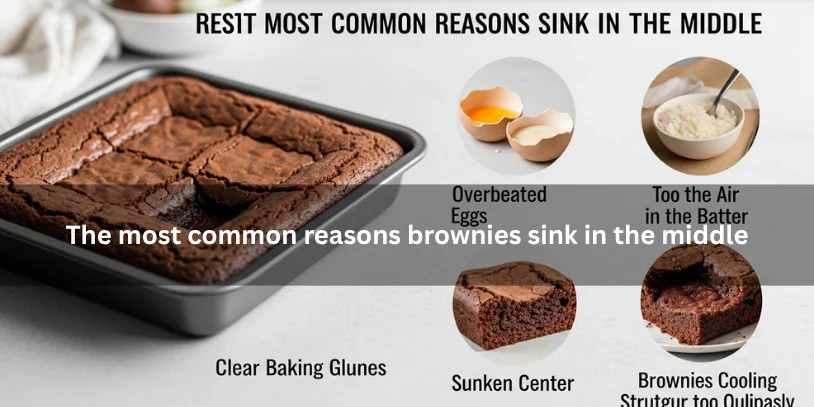
1. They were underbaked
This is the most common cause.
Brownies often look done before they actually are, especially when the top is crackly and the edges look firm. But if the center still contains wet batter, it will not have enough support once the pan starts cooling.
Signs of underbaking
- the center jiggles noticeably
- a toothpick comes out with wet batter instead of moist crumbs
- the edges are done far earlier than the middle
- the center looks glossy in a raw way, not just fudgy
Fudgy brownies should be moist, but they should not be liquid in the middle.
2. The batter was overmixed
Overmixed batter traps too much air. That air expands during baking, making the brownies rise more than they should. Then, once the brownies come out of the oven, the inflated center falls.
Brownies are not cakes. They do not need a lot of aeration.
This often happens when:
- eggs and sugar are beaten too aggressively
- flour is stirred in for too long
- a mixer is used when gentle folding would do
Too much batter aeration gives temporary lift, but weak final stability.
3. Your oven temperature was off
An oven that runs too hot can set the edges quickly while leaving the center behind. An oven that runs cool can delay structure formation and leave the middle underdone even after the expected baking time.
This is why two people can follow the same recipe and get different results.
If your oven runs hot:
- edges overbake
- center stays soft
- brownies look done too early
If your oven runs cool:
- bake time stretches out
- center stays unset for longer
- texture may turn dense and gummy
An oven thermometer is one of the most useful tools for solving repeat brownie problems.
4. The ingredient ratio was too soft
If the batter contains too much butter, chocolate, sugar, or liquid relative to the flour and eggs, the center may never develop enough structure to stay level.
This can happen because:
- ingredients were mismeasured
- cup measurements were packed inconsistently
- substitutions changed the recipe balance
- too much chocolate spread, syrup, or extra fat was added
Fat-heavy brownies are naturally more prone to settling, especially extra-fudgy versions.
5. The pan size or pan material was wrong
Pan size affects batter depth. A smaller pan makes the batter thicker, which means the center needs longer to bake. A larger pan spreads the batter thinner, which changes baking speed and texture.
Pan material matters too.
Metal pans
- heat faster and more evenly
- usually give better edge-to-center balance
- are often the safer choice for brownies
Glass pans
- heat more slowly, then hold heat longer
- can change the timing of center setting
- may contribute to edges baking differently than expected
If a recipe was developed for a metal pan and you used glass, the result can shift.
6. Cooling made the problem more obvious
Cooling does not usually cause the problem by itself, but it reveals it.
As brownies cool, steam escapes and the crumb settles. If the center was only barely holding on, that is the moment it drops. This is why some brownies look fine in the oven and then sink on the counter.
A rapid temperature change can make that settling more dramatic, especially in brownies that were already slightly underbaked.
Fudgy vs underbaked: how to tell the difference
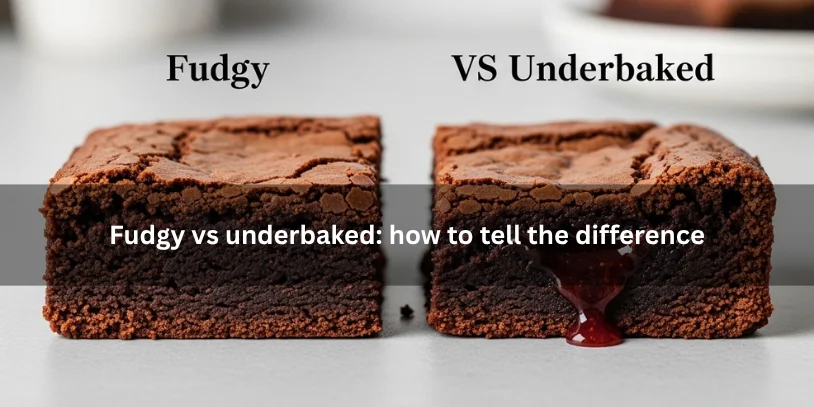
This is where many home bakers get stuck. Fudgy brownies are supposed to be soft. Undercooked brownies are not.
| Texture clue | Fudgy brownies | Undercooked brownies |
|---|---|---|
| Center | Soft, dense, rich | Wet, loose, pasty |
| Toothpick | Moist crumbs | Wet batter |
| Slicing after cooling | Holds together | Smears badly |
| Taste | Rich and dense | Raw-flour or raw-batter feel |
| Top | Set, sometimes shiny | May look set, but center lacks structure |
If the brownies cool fully and slice cleanly enough, they are probably fudgy. If the middle remains paste-like or visibly raw, they were underbaked.
Symptom → likely cause → best fix
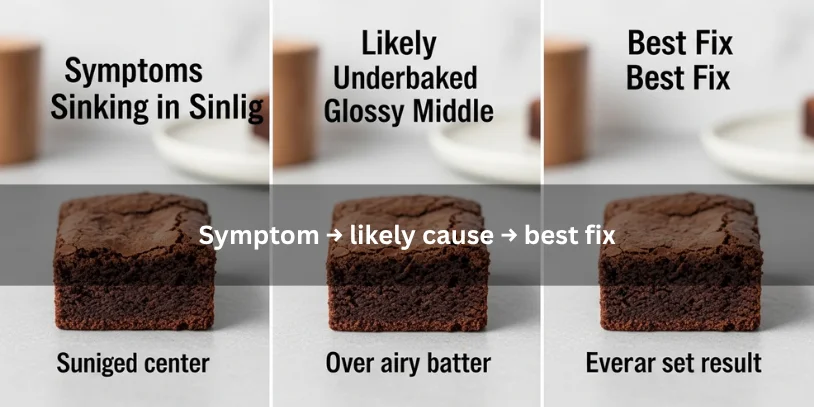
This is the quickest way to diagnose what happened.
| What you see | Most likely cause | What to do next time |
|---|---|---|
| Slight dip only | Normal settling in fudgy brownies | Bake as usual, just cool fully before judging |
| Deep crater in the center | Underbaked middle | Extend bake time and test center better |
| Edges hard, center collapsed | Oven too hot or wrong pan | Verify oven temp and use correct pan |
| Brownies rose high then fell | Overmixed batter or too much air | Mix more gently |
| Center dense and greasy | Too much fat or sugar | Recheck ingredient balance |
| Center wet after full cooling | Truly undercooked | Rebake if caught early or adjust recipe next time |
How to stop brownies from sinking next time
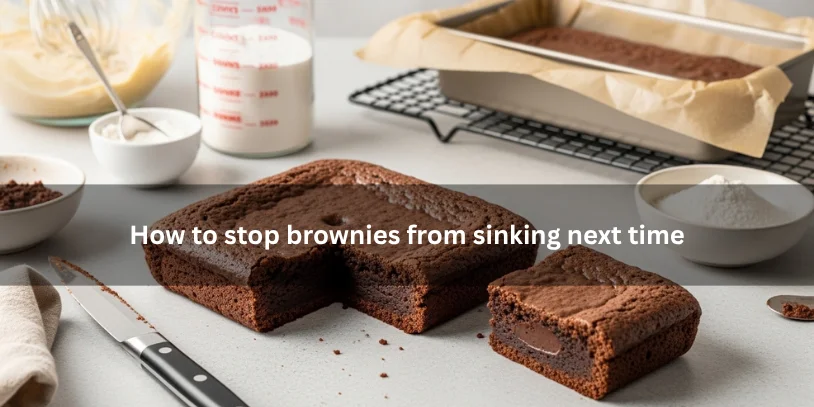
Check doneness the right way
Do not rely only on the timer or the look of the edges.
A better test is:
- look for a set top
- gently shake the pan
- test the center with a toothpick or cake tester
- look for moist crumbs, not wet batter
That one distinction solves a lot of brownie problems.
Mix less, not more
Once the dry ingredients go in, mix only until combined. You want a smooth batter, not a whipped one.
Use the correct pan
Match the pan size in the recipe. If possible, use a light-colored metal pan for more predictable results.
Measure carefully
If you bake often, a digital kitchen scale is worth it. Brownie recipes are sensitive to balance, especially when the goal is dense, fudgy texture.
Check your oven
If your brownies repeatedly fail in the same way, the recipe may not be the problem. The oven might be.
Cool fully before judging
Fresh-from-the-oven brownies can seem underdone even when they are not. Give them time to settle.
Fan oven vs conventional oven
This matters more than many people realize.
Fan ovens move hot air around the oven cavity, which can change how quickly the edges and top set. If a recipe was written for a conventional oven and you use a fan oven without adjustment, your bake may behave differently.
That can show up as:
- faster top and edge setting
- misleading surface appearance
- a center that is not as done as it looks
If you use a fan oven regularly, keep notes. Your best brownie timing may not match the recipe exactly.
Can you still eat brownies that sank in the middle?
Usually, yes, if the center is baked enough and not raw.
A slightly sunken center is often fine, especially in rich brownies with a soft crumb. But if the middle is still true batter, it needs more baking or should not be served as-is.
Still fine to eat:
- slightly dipped center
- soft but sliceable brownies
- dense, moist interior
Not ready yet:
- liquid center
- raw-batter texture
- strong smear even after cooling
- obviously undercooked eggy or pasty middle
Can you put sunken brownies back in the oven?
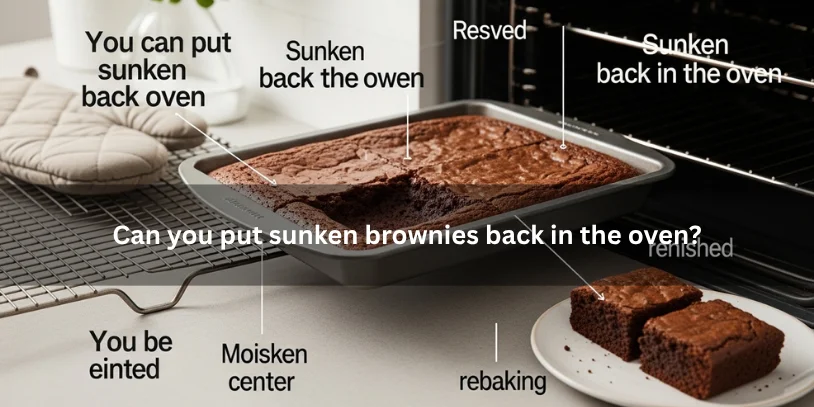
Yes, sometimes.
If you catch the problem early and the brownies are still warm, you can return them to the oven for a few more minutes. This works best when the issue is simple underbaking.
It works less well when the real problem is overmixing or poor ingredient ratio, because the structure issue is already built in.
A quick decision guide
Keep them as they are if:
- the dip is mild
- the center is fudgy, not raw
- they cool and slice reasonably well
Rebake them if:
- the middle is clearly wet
- the pan is still warm
- the edges are not yet overbaked beyond rescue
Chill them if:
- they are very soft but mostly baked
- you want cleaner slices
- you need to judge texture after full setting
Discard or repurpose them if:
- the center stays raw
- texture is unpleasantly pasty
- food safety is a concern
If appearance is the problem but the flavor is fine, sunken brownies still make great brownie trifles, sundae layers, crumbs, or dessert bites.
Common mistakes that lead to sinking
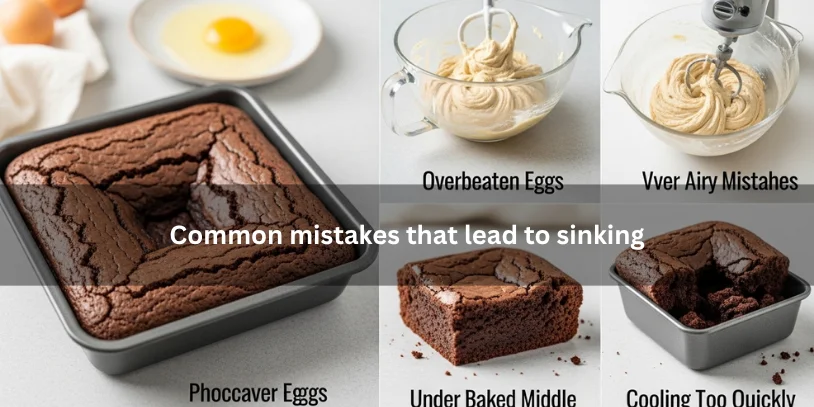
- pulling brownies out as soon as the top looks done
- assuming a crackly crust means the center is ready
- using a different pan without adjusting timing
- overbeating the eggs
- making several substitutions at once
- cutting brownies before they have cooled enough to set
The tools that help most
You do not need a fancy setup, but a few basics can make brownie results more consistent.
- oven thermometer for temperature accuracy
- digital kitchen scale for consistent measurements
- light-colored metal pan for predictable baking
- toothpick or cake tester for center checks
- cooling rack for gradual cooling
These tools matter because brownie texture depends on small differences.
FAQs
Are brownies supposed to sink in the middle?
A slight dip can be normal, especially for fudgy brownies. A deep collapse usually means the center did not set properly.
Why are my brownies raw in the middle but cooked on the edges?
The edges heat first because they touch the pan. If the oven is too hot, the batter is too thick, or the brownies come out too soon, the middle can stay underbaked.
Can underbaked brownies sink after cooling?
Yes. This is one of the most common reasons brownies sink. They may look fine at first, then collapse as steam escapes and the weak center settles.
Why did my brownies rise and then fall?
That usually points to too much air in the batter from overmixing, or a structure problem that could not support the rise after baking.
Do fudgy brownies sink more than cakey brownies?
Yes. Fudgy brownies contain more fat and moisture, so they are naturally more likely to settle a little than cakey brownies.
Does a glass pan make brownies sink?
Not by itself, but it can affect how heat moves through the batter. That can change timing and sometimes make the center less predictable than in a metal pan.
Can I put sunken brownies back in the oven?
Yes, if they are still warm and the problem is underbaking. Bake a little longer and check the center carefully.
How do I know if the center is fudgy or actually undercooked?
Fudgy brownies are dense and moist with moist crumbs on the tester. Undercooked brownies have wet batter, smear badly, and often stay raw-feeling even after cooling.
Is a crackly top proof that brownies are done?
No. A crackly or shiny crust can appear before the center is fully baked, so always test the middle too.
Conclusion
If your brownies sank in the middle, the most likely reason is that the center never fully set before cooling. Underbaking is the biggest cause, but overmixing, oven temperature issues, pan choice, and soft ingredient ratios can all contribute.
The easiest way to prevent it next time is to read the center more carefully. Look for moist crumbs instead of wet batter, use the right pan, mix gently, and let the brownies cool fully before deciding whether they worked. Once you know the difference between a normal fudgy dip and a true collapse, brownie troubleshooting gets much easier.