
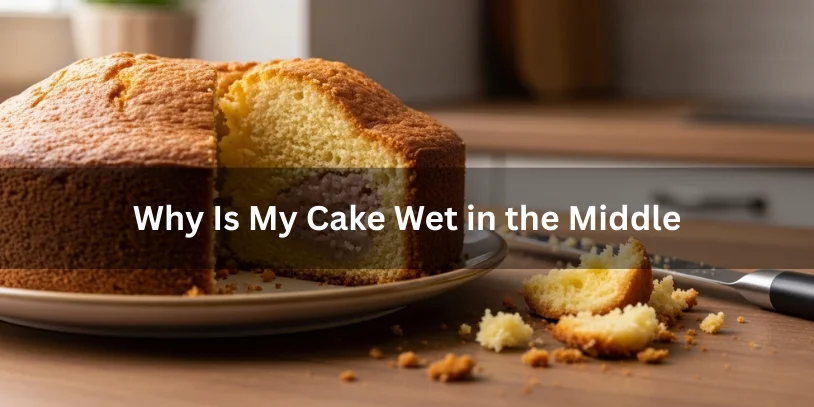
If your cake looks wet in the middle, it does not always mean it is raw, but it usually means the center has not baked or set properly yet. The most common causes are underbaking, too much moisture, the wrong pan size, or an oven that is not heating the cake evenly.
This guide explains how to tell the difference between a moist cake and an undercooked one, what causes a wet center, and what to do if your cake still looks wet after baking or even after cooling.
Cake Wet in the Middle: Quick Answer
A cake is usually wet in the middle because the center has not finished setting before the outside finished baking. This often happens because of underbaking, low or uneven oven heat, too much moisture in the batter, or a pan that is too deep for the recipe.
If the center looks shiny, dense, gummy, or batter-like, it is more likely undercooked than simply moist.
Yeh section bohat important hai kyun ke user ko upfront direct answer mil jayega.
Is My Cake Moist or Undercooked?
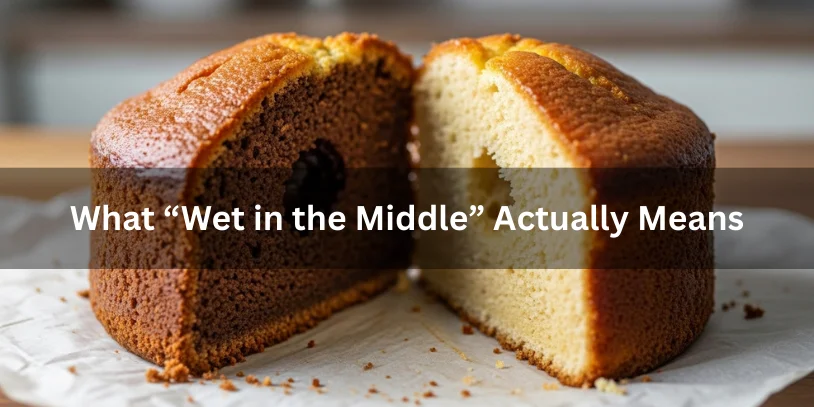
A wet cake center is different from a moist crumb.
- Moist cake: Soft, tender, fully cooked, springs back when pressed
- Wet or gummy cake: Shiny interior, dense texture, sticks to the knife
- Raw cake: Liquid batter, eggy smell, unstable structure
Most home bakers are dealing with the second category: a cake that looks baked outside but still has an under-set, wet center.
Is a Gooey Cake Always Undercooked?
Not always, but a gooey center is often a warning sign. Some cakes are designed to stay moist, soft, or slightly dense, but they should not look shiny, sticky, or batter-like in the middle.
If the center looks wet and also feels unstable, gummy, or heavy, the cake is more likely undercooked than simply moist.
What Causes a Cake to Stay Wet in the Middle?
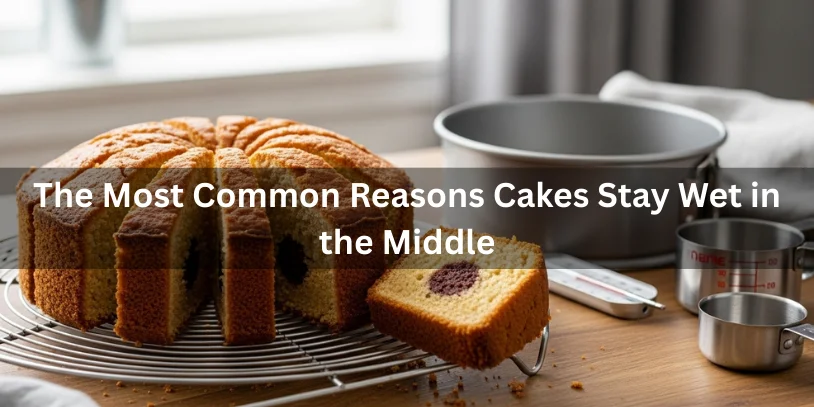
Underbaking or Oven Temperature Problems
This is the number one cause.
Most domestic ovens are off by 10–25°C (20–45°F). If your oven runs cooler than the dial indicates, the cake exterior cooks while the center lags behind.
Common temperature-related issues:
- Oven not fully preheated
- Opening the oven door early
- Using convection mode incorrectly
- Trusting the oven dial without calibration
An oven thermometer is one of the most effective tools for preventing underbaked cakes.
Pan Size or Pan Material Issues
Pan choice directly affects heat transfer.
| Pan Type | Heat Behavior | Common Result |
|---|---|---|
| Light aluminum pan | Even heat | Most reliable |
| Dark nonstick pan | Absorbs more heat | Brown edges, raw center |
| Glass bakeware | Slow heat transfer | Undercooked middle |
| Too-small pan | Batter too deep | Wet, sunken center |
A pan size mismatch—especially using a smaller or deeper pan than the recipe specifies—almost guarantees a cake that’s cooked on top and wet inside.
Too Much Moisture in the Batter
Cakes rely on a balance between liquid, fat, sugar, and flour. Too much moisture delays starch gelatinization and protein coagulation.
High-moisture contributors include:
- Extra oil or butter
- Too much sugar (especially brown sugar or liquid sweeteners)
- Large eggs or extra eggs
- Dairy additions like yogurt or sour cream
- Fresh fruit or fruit purée
This is why fruit cakes, chocolate cakes, and oil-based cakes are especially prone to soggy centers.
Mixing Errors and Batter Density
Overmixing develops excess gluten, creating a dense batter that traps moisture and resists even heat penetration.
This often leads to:
- Dense crumb
- Wet streaks in the center
- Sinking after removal from the oven
Mix just until ingredients are combined, especially once flour is added.
Thick or Tall Cakes
The thicker the batter layer, the longer it takes heat to reach the center.
Situations where this matters:
- Single-layer cakes baked in deep pans
- Bundt cakes
- Cheesecake-style batters
- Recipes scaled up without time adjustments
In these cases, baking longer at a stable temperature works better than increasing heat.
Cake Still Wet in the Middle After 1 Hour: What It Means
If your cake is still wet in the middle after an hour, the center probably has not baked through properly. In most cases, this points to underbaking, a low oven temperature, a pan that is too deep, or a batter that contains too much moisture.
At that point, the outside may already look done, which is why the problem feels confusing. The center often needs more time at a steady temperature, not more heat.
Cake Wet in the Middle After Cooling
If a cake still looks wet in the middle after cooling, that usually means the center never fully set during baking. Cooling does not normally fix a truly underbaked center. It only makes the texture easier to judge.
A properly baked cake may feel moist after cooling, but it should not look shiny, gummy, or batter-like in the middle. If it does, the issue is usually underbaking rather than normal moisture.
How to Diagnose the Exact Cause
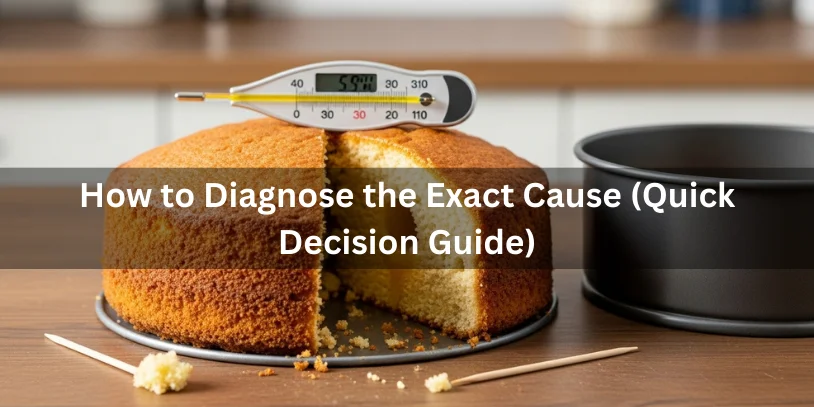
Ask yourself these questions in order:
- Was the oven fully preheated and verified with a thermometer?
- Did I use the exact pan size and material specified?
- Did the cake pass a center doneness test?
- Did the center sink or collapse after cooling?
- Did I alter ingredients or add high-moisture extras?
If the cake looks done but fails the toothpick or internal temperature test, underbaking or oven inaccuracy is almost always the culprit.
How to Tell If a Cake Is Fully Baked
Relying on one test alone can be misleading.
Best doneness checks:
- Toothpick inserted in the center comes out clean or with dry crumbs
- Cake springs back lightly when pressed
- Edges pull slightly away from the pan
- Internal temperature is consistent throughout the center
A cake that only looks golden on top may still be wet inside.
How to Fix a Cake That Is Wet in the Middle
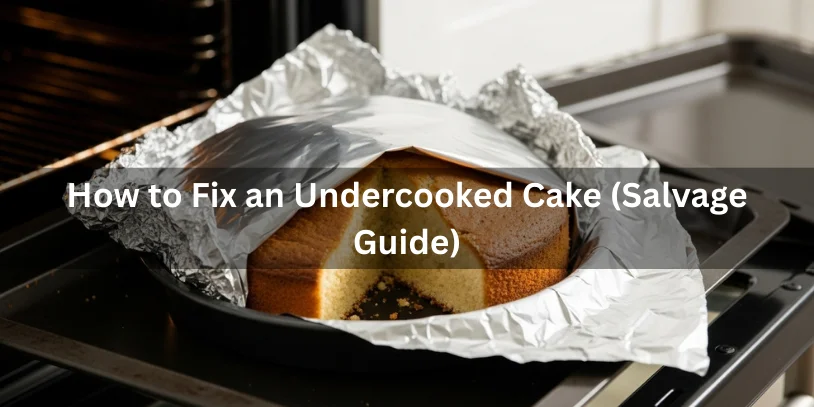
If the Cake Is Still Warm
- Preheat oven to a moderate temperature
- Cover the cake loosely with foil
- Return to oven for 10–15 minutes
- Re-test the center
This works best before the cake fully cools.
If the Cake Has Cooled
Options depend on severity:
- Slice and rebake portions
- Turn into cake pops or trifles
- Serve as a plated dessert with sauce if texture allows
Once fully cooled, structural fixes are limited—but waste isn’t inevitable.
Bake Longer or Bake Hotter?
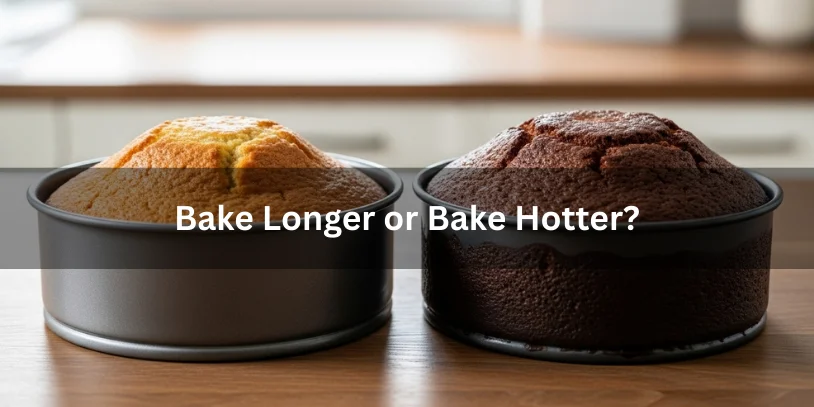
Always bake longer, not hotter.
Increasing temperature:
- Sets the outside too fast
- Traps moisture inside
- Increases sinking risk
Lower, steady heat allows even starch gelatinization and protein setting throughout the cake.
How to Prevent a Wet Cake Center
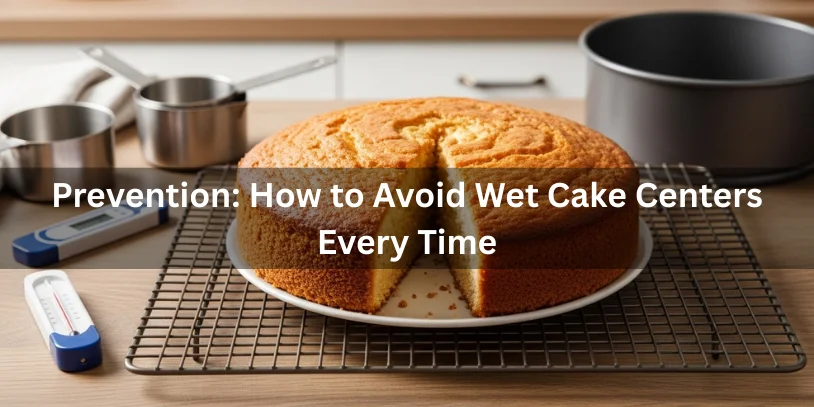
Use the Right Tools
- Oven thermometer
- Light-colored aluminum pans
- Digital food thermometer (optional but helpful)
Follow Proven Techniques
- Measure ingredients by weight when possible
- Match pan size exactly
- Bake thinner layers instead of one deep layer
- Rotate pans only if necessary
Adjust for Climate and Region
In high-humidity regions:
- Flour absorbs less moisture
- Batter may need slightly longer bake times
At high altitude:
- Cakes rise faster and set later
- Minor recipe adjustments help prevent collapse and wet centers
Professional bakeries routinely adapt recipes to local conditions—home bakers can too.
Why Pound Cake Can Look Wet in the Middle
Pound cake can look wet in the middle more easily than lighter cakes because it is denser and usually bakes in a deeper shape. That means the center takes longer to set, even when the outside already looks golden and finished.
This is why pound cakes often need careful timing, accurate oven temperature, and patience before slicing. A dense crumb is normal, but a shiny, gummy, or batter-like center is not.
Glass Pan vs Metal Pan: Which Is Better?
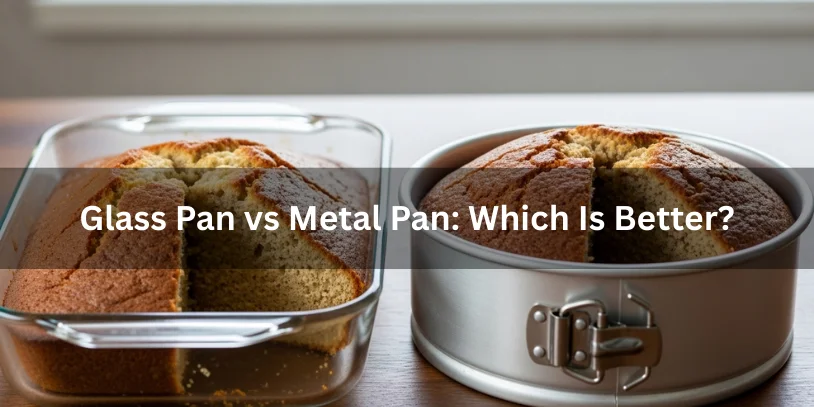
Metal pans conduct heat more efficiently, leading to faster and more even baking. Glass pans heat slowly and retain heat longer, often causing underbaked centers unless baking time is increased.
If you must use glass, expect to bake longer and monitor doneness carefully.
Common Mistakes That Lead to Wet Centers
- Trusting oven dials blindly
- Substituting ingredients without adjustment
- Cutting cake before full cooling
- Baking multiple cakes too close together
- Rushing bake time
Frequently Asked Questions
1. Why is my cake wet in the middle?
A cake is usually wet in the middle because the center has not fully baked or set before the outside finished baking. Common causes include underbaking, too much moisture, the wrong pan size, or uneven oven heat.
2. Is my cake moist or undercooked?
A moist cake is fully baked and tender, while an undercooked cake usually looks shiny, gummy, or batter-like in the center.
3. Can I eat a cake that is wet in the middle?
If the center is only slightly under-set, it may not be dangerous, but the texture will usually suffer. If the middle still looks like raw batter, it is better not to serve it that way.
4. Why is my cake cooked on top but wet inside?
The top gets direct heat first. If the oven runs cool, the pan is too deep, or the batter is very moist, the center may not have enough time to set properly.
5. Why is my cake still wet in the middle after cooling?
If the cake still looks shiny, gummy, or batter-like after cooling, the center probably never fully baked in the first place.
6. Can I put a cake back in the oven if the middle is still wet?
Yes, if the cake is still warm. Cover it loosely with foil and bake it a little longer at a steady temperature, then test the center again.
7. Why does my pound cake look wet in the middle?
Pound cake is denser and usually bakes in a deeper shape, so the center takes longer to set than lighter cakes.
8. Is a gooey cake always undercooked?
Not always, but a shiny, dense, sticky center usually suggests the cake is underbaked rather than simply moist.
9. Does pan material affect whether cake stays wet in the middle?
Yes. Glass pans usually heat more slowly than metal pans, which can make the center take longer to bake through.
10. What is the easiest way to prevent a wet cake center?
The easiest prevention is to bake at the correct temperature, use the right pan size, and test the center properly before removing the cake.
Conclusion
A cake that is wet in the middle usually means the center did not finish setting before the outside finished baking. In most cases, the cause comes down to underbaking, too much moisture, the wrong pan, or uneven oven heat.
The fix is usually simple: check the center properly, bake longer instead of hotter, and adjust one factor at a time. Once you know how to tell the difference between a moist cake and an undercooked one, wet centers become much easier to prevent.