
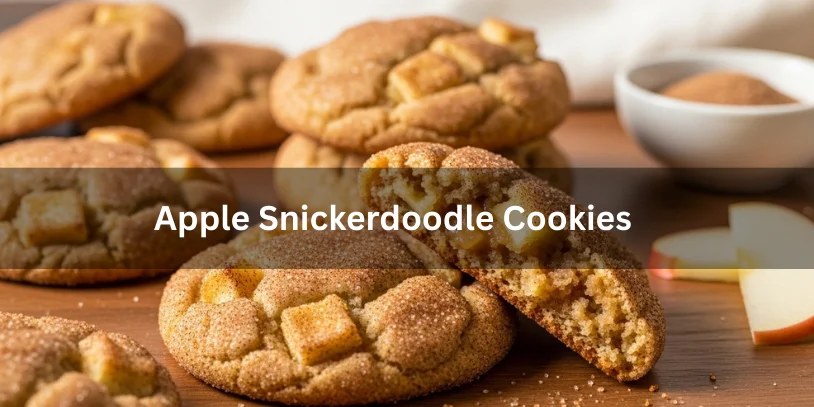
Apple snickerdoodle cookies—sometimes called apple snickerdoodles or appledoodles—are classic snickerdoodles coated in cinnamon sugar, upgraded with apple flavor and texture. The key to success is managing apple moisture and chilling the dough so you get thick, soft centers instead of flat or soggy cookies.
The most common failure (and the fix)
If your apple cookies turn mushy, crumbly, or soggy, it’s almost always because apples add water to the dough. The fix is simple: dry the apples, choose the right apple form, and chill the dough before baking.
Snickerdoodles vs sugar cookies (why cream of tartar matters)
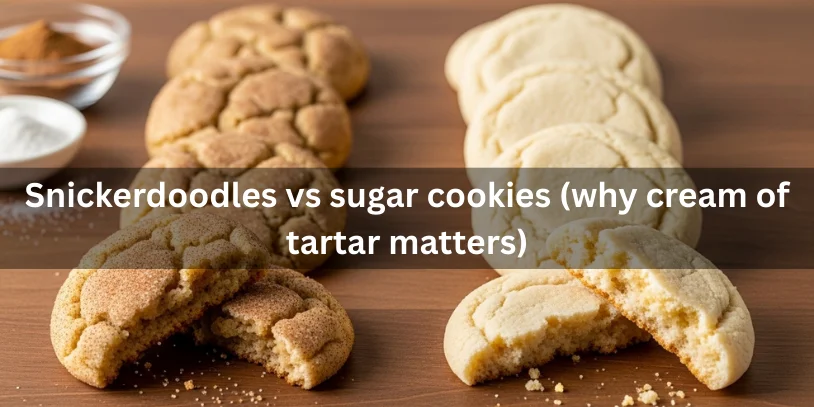
A snickerdoodle isn’t just a sugar cookie rolled in cinnamon. Traditional snickerdoodles use cream of tartar plus baking soda. That pairing:
- Adds the subtle tang people associate with “snickerdoodle flavor”
- Influences texture and spread
- Helps create the tender chew that works so well with apples and warming spices
You can make a cinnamon-sugar apple cookie without cream of tartar, but it won’t taste quite like a snickerdoodle.
Choosing your apple: the decision tree (fresh vs shredded vs caramelized vs apple butter vs dried)
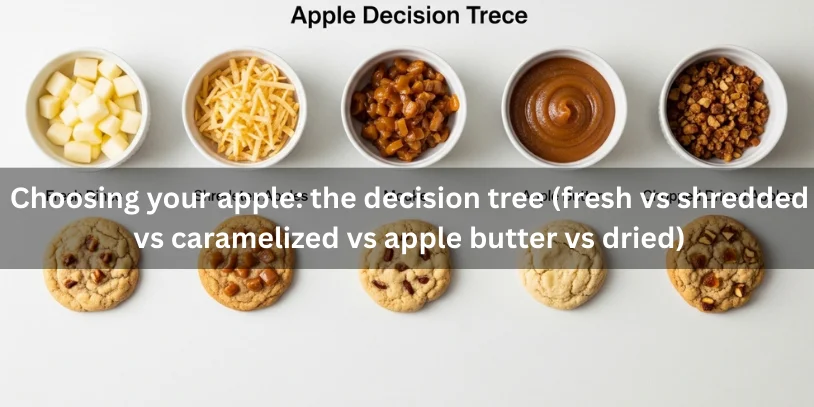
Not all “apple snickerdoodle cookies” are the same. Pick the apple form based on your goal:
Quick decision guide
- Want juicy apple bites? Choose fresh diced apples (best flavor pop, highest moisture risk).
- Want a smooth apple flavor with reliable texture? Choose apple butter (concentrated, low water).
- Want maximum consistency with strong apple taste? Choose dried apples (most moisture-proof).
- Want big apple-caramel notes and less water? Choose caramelized apples (extra step, amazing payoff).
- Want a softer cookie with apple throughout? Choose shredded apples (can add too much water unless you squeeze them well).
Best apples for cookies
For fresh apples, pick firm varieties that hold structure:
- Granny Smith (tart, crisp)
- Honeycrisp (sweet-tart, sturdy)
- Pink Lady (balanced, firm)
Soft apples can melt into wet pockets and push cookies toward gumminess.
Tools that make these cookies consistent
You can bake without special equipment, but these tools prevent “one tray perfect, one tray flat” outcomes:
- Cookie scoop: consistent size = consistent bake time and texture
- Parchment paper: even browning and less spread than greased pans
- Stand mixer or hand mixer: proper creaming without overheating the butter
- Wire rack: stops carryover steam from softening bottoms
The base recipe: soft, chewy apple snickerdoodle cookies (fresh apple chunk method)
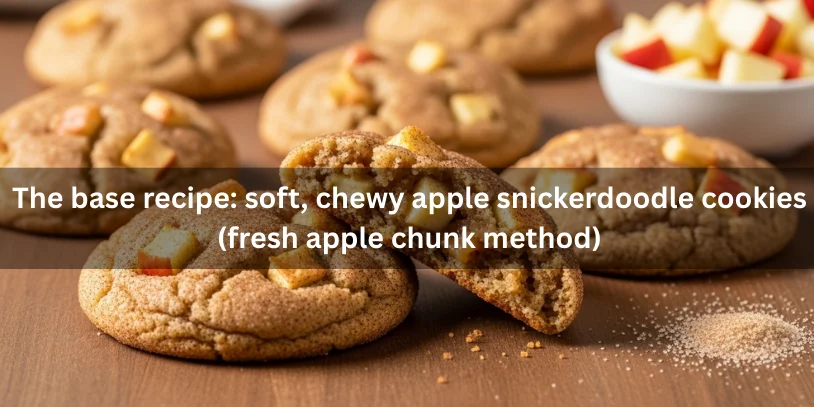
This is the classic “apple in the dough” approach with built-in moisture control.
Ingredients (makes ~18–24 cookies)
Dough
- 227 g (1 cup) unsalted butter, softened (not melted)
- 250 g (1 1/4 cups) granulated sugar
- 1 large egg + 1 egg yolk (helps chew)
- 2 tsp vanilla extract
- 330–345 g (2 3/4 cups) all-purpose flour
- 2 tsp cream of tartar
- 1 tsp baking soda
- 3/4 tsp fine salt
- 1 1/2 tsp ground cinnamon
- Optional: 1/4 tsp nutmeg or 1 tsp apple pie spice
Apples (choose one)
- Fresh diced apple: 120–160 g (about 3/4–1 cup small dice)
or - Shredded apple: 120–150 g, squeezed very dry
or - Dried apples: 90–110 g, chopped
or - Apple butter: 120–160 g (about 1/2–2/3 cup, thick)
Cinnamon sugar coating
- 65–70 g (1/3 cup) granulated sugar
- 1 1/2 tbsp ground cinnamon
Practical measuring note: apples vary wildly by size and water content. Using grams is the easiest way to stay consistent batch to batch.
Step-by-step: how to make apple snickerdoodle cookies (no soggy centers)
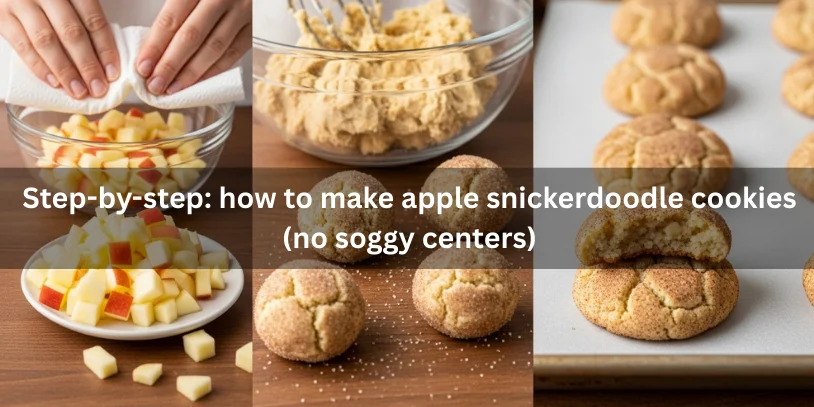
1) Prep the apples (the moisture-proof step)
Pick your method:
Fresh diced apples
- Dice small (about 6 mm / 1/4 inch).
- Spread on paper towels and press gently to remove surface moisture.
- Optional but powerful: toss with 1–2 tsp flour.
Shredded apples
- Shred on a box grater.
- Wrap in a clean towel and squeeze hard until noticeably dry.
- This step is non-negotiable for shredded apples.
Caramelized apples (optional upgrade)
- Cook diced apples in a skillet over medium heat until most liquid evaporates and apples look glossy.
- Cool completely before adding to dough.
Dried apples
- Chop into small pieces.
- If very leathery, briefly soak in warm water, then pat dry thoroughly.
Apple butter
- Use thick apple butter (not runny applesauce).
- Stir in as part of wet ingredients.
2) Make the dough
- Cream butter and sugar until lighter and fluffy, 2–3 minutes.
- Beat in egg, yolk, and vanilla until combined.
- In another bowl, whisk flour, cream of tartar, baking soda, salt, cinnamon (plus nutmeg or apple pie spice if using).
- Add dry to wet in two additions; mix just until no dry streaks remain.
- Fold in your apples gently.
3) Chill the dough (how long to chill snickerdoodle dough?)
Chill at least 45–90 minutes.
If your kitchen is warm or apples are very juicy, chill 2 hours or overnight.
4) Shape and coat
- Scoop 1.5–2 tbsp dough.
- Roll into balls.
- Roll each ball generously in the cinnamon-sugar mixture.
5) Bake with doneness cues
Bake at 350°F / 175°C for 10–12 minutes.
Pull cookies when:
- Edges look set
- Centers look slightly underdone and puffy
Leave cookies on the tray for 8–10 minutes, then move to a wire rack.
Texture tuning: thick vs chewy vs crisp-edge
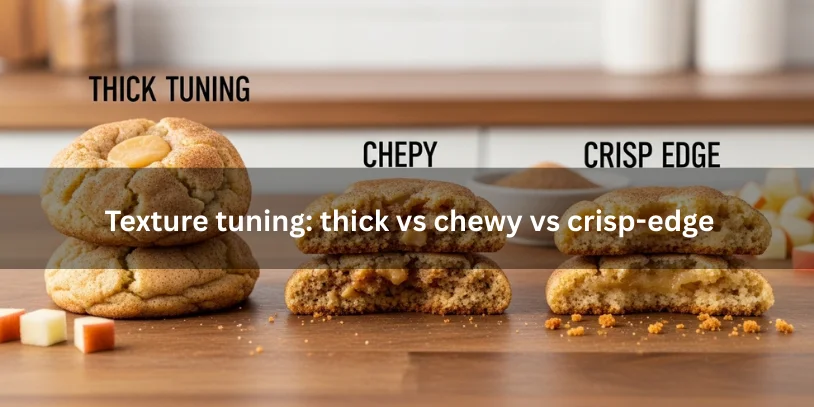
If you’ve ever wondered why one recipe turns out thick and another turns flat, it’s usually moisture + fat temperature + bake time.
Quick adjustments
- Thicker cookies: chill longer, use slightly more flour (10–20 g), use diced apples or dried apples
- Chewier cookies: keep bake time on the lower end, add yolk (already included), don’t over-cream
- Crisp edges: bake 1–2 minutes longer and use a slightly smaller scoop
Apple form comparison table (fast choosing, easy wins)
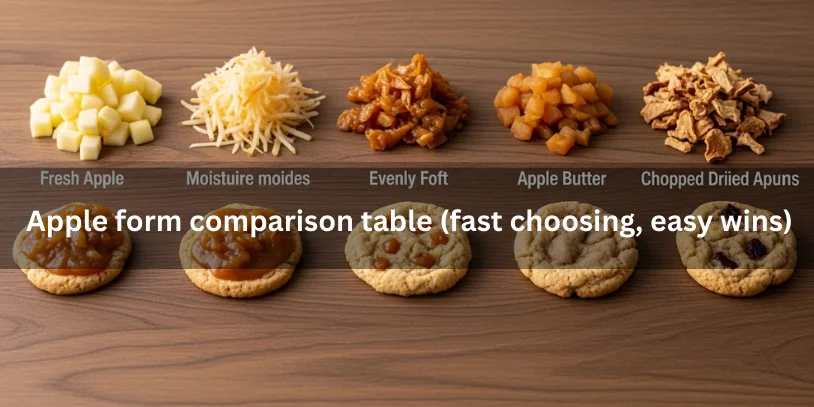
| Apple form | Flavor strength | Moisture risk | Best for | Pro tip |
|---|---|---|---|---|
| Fresh diced | High (bright) | Medium–High | Apple bites, classic fall cookies | Pat dry + small dice + chill |
| Shredded | Medium | High | Apple throughout, softer bite | Squeeze very dry |
| Caramelized | Very high (deep) | Low–Medium | Big flavor, sturdy dough | Cool completely first |
| Apple butter | High (concentrated) | Low | Reliable texture, strong apple | Use thick apple butter |
| Dried apples | High (concentrated) | Low | Most consistent results | Chop small for even bites |
Troubleshooting: symptom → cause → fix
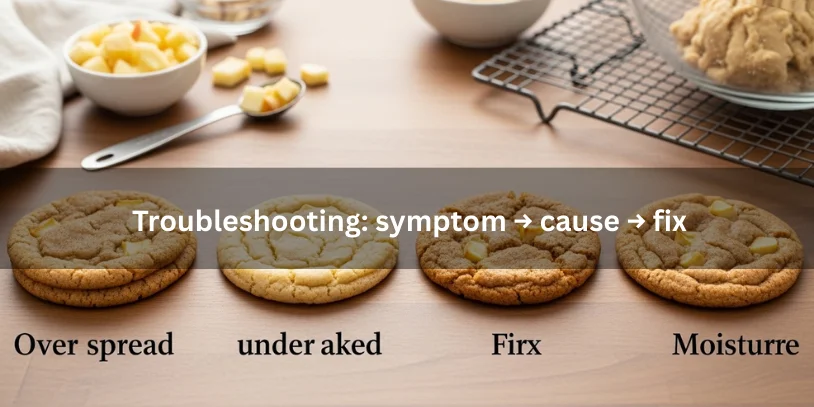
| Problem | Likely cause | Fix |
|---|---|---|
| Cookies spread too much | Dough too warm, butter too soft, not chilled | Chill longer; freeze scoops 10–15 min before baking |
| Soggy or gummy centers | Apples too wet or too large; underbaked | Pat/squeeze apples dry; smaller pieces; bake until edges set |
| Crumbly/mushy texture | Too much apple or moisture migration | Reduce apple grams; use dried or caramelized apples |
| Cakey cookies | Too much flour or too much apple butter/applesauce | Weigh flour; use thick apple butter; don’t overmix |
| Bland apple flavor | Fresh apples too mild or too little | Add dried apples; add apple pie spice; use apple butter |
| Cinnamon sugar disappears | Coating too light or dough too moist | Roll twice; chill after coating; ensure apples are dry |
Variations worth making (with pros/cons)
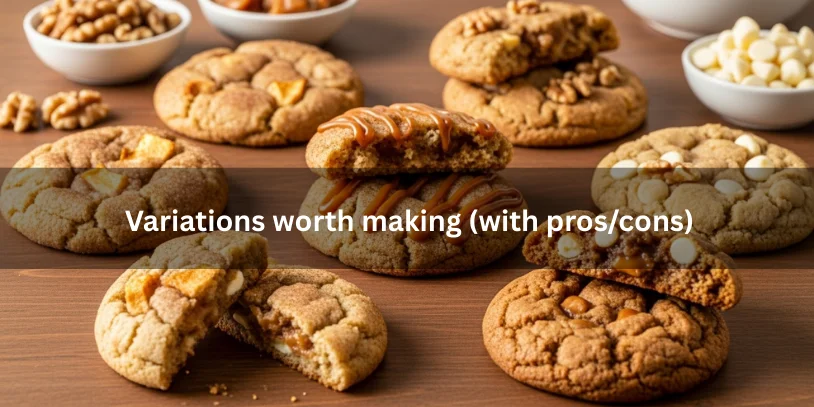
Brown butter apple snickerdoodles
Brown butter adds a nutty, caramel aroma that pairs beautifully with apples.
Pros
- Deeper flavor and “bakery” vibe
Cons - Slightly more effort; butter must cool so dough doesn’t melt
How: brown the butter, cool until soft but not liquid, then proceed normally. This is especially good with caramelized apples.
Apple butter snickerdoodles
This is the reliability winner: strong apple flavor without watery dough.
Pros
- Consistent texture
- Excellent for make-ahead and cookie boxes
Cons - Needs good-quality apple butter (thick, not runny)
“Appledoodles” with dried apples
A great way to get apple flavor in every bite without fighting moisture.
Pros
- Lowest soggy risk
- Holds up well for shipping and gifting
Cons - Chewier apple pieces (chop small)
Vegan apple snickerdoodles
Swap:
- Butter → vegan baking sticks
- Egg + yolk → flax egg (1 tbsp ground flax + 3 tbsp water) plus 1 tbsp neutral oil for richness
Choose apple butter or dried apples for stability.
Gluten-free apple snickerdoodles
Use a 1:1 gluten-free flour blend. Chill longer and avoid extra-wet apples. Dried apples or caramelized apples make GF batches more consistent.
Make-ahead, freezing, and storage (so they stay soft)
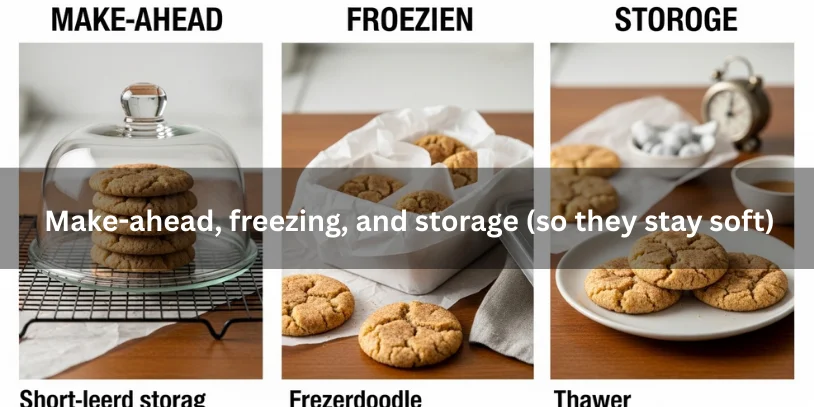
Can I freeze apple snickerdoodle cookie dough?
Yes—and it’s one of the best ways to guarantee fresh cookies anytime.
Best method
- Scoop dough balls.
- Roll in cinnamon sugar.
- Freeze on a tray until firm.
- Store in a freezer bag.
Bake from frozen at 350°F / 175°C, adding 1–2 minutes.
How to store baked cookies
- Cool completely, then store airtight.
- Fresh-apple versions can soften faster due to moisture. Keep them sealed.
- For best texture, enjoy within 2–4 days (varies by climate and apple type).
Cookie box and shipping tip
For gifting or cookie box packing, the most stable options are:
- apple butter snickerdoodles
- dried apple appledoodles
- caramelized apple versions
They hold structure and resist sogginess better than raw fresh-apple dough.
Buying guide (global, optional): “apple snickerdoodle cookies near me”
If you’re not baking, you can still get great apple snickerdoodles from local shops or delivery.
Where to look
- Independent bakeries
- Cafés with rotating cookie menus
- farmers markets
- cookie delivery services
What to ask before you order
- Are they made with fresh apples, apple butter, or dried apples?
- Are they soft-baked or crisp?
- Were they baked today?
- Any allergen cross-contact risks (nuts, dairy, egg, gluten)?
Pricing framework (without guessing numbers)
What you pay is usually driven by:
- ingredient quality (real butter, spice blends, apple butter quality)
- cookie size (standard vs jumbo)
- packaging (gift boxes, heat sealing)
- delivery distance and speed
FAQs
1) What are apple snickerdoodle cookies?
They’re snickerdoodles—cinnamon-sugar–coated cookies made with cream of tartar and baking soda—enhanced with apples (fresh, shredded, caramelized, apple butter, or dried) for a warm, fall-inspired flavor and softer texture.
2) Why are my apple snickerdoodles soggy?
Apples add moisture that can make dough wet and centers gummy. Pat fresh apples dry, squeeze shredded apples, or switch to caramelized or dried apples. Also chill the dough and bake until edges set.
3) Should apples be shredded or diced in cookies?
Diced apples give little “apple bites” and tend to be easier to control. Shredded apples spread moisture through the dough and can turn cookies mushy unless you squeeze them very dry.
4) How much apple should I add to snickerdoodle dough?
A reliable range is 120–160 g for fresh diced apple (or 90–110 g dried apples). Start lower if your apples are juicy. Weight-based measuring keeps results consistent even when apple sizes vary.
5) Do I have to use cream of tartar?
For true snickerdoodle flavor and texture, it helps a lot. You can bake cinnamon-sugar apple cookies without it, but they’ll taste more like a soft sugar cookie than a classic snickerdoodle.
6) Can I freeze apple snickerdoodle cookie dough?
Yes. Scoop and coat dough balls, freeze until firm, then store in a bag. Bake from frozen, adding 1–2 minutes. This works especially well for apple butter or dried apple versions.
7) What are the best apples for cookies?
Firm apples like Granny Smith, Honeycrisp, and Pink Lady hold up best. Softer apples can break down and release more liquid, increasing the risk of soggy pockets.
8) How do I keep snickerdoodles thick and chewy?
Chill the dough 45–90 minutes (longer if needed), avoid melted butter, use parchment paper, and pull cookies when edges set but centers look slightly underdone. Carryover heat finishes them without drying out.
Conclution
Apple snickerdoodle cookies are the cozy intersection of cinnamon-sugar snickerdoodles and apple-season comfort—whether you make them with fresh apple chunks, smooth apple butter, caramelized apples, or moisture-proof dried apples. If you remember one thing, make it this: control apple moisture and chill the dough. Do that, and you’ll get soft, chewy “appledoodles” that bake up thick, fragrant, and reliably delicious—batch after batch.