
If you are asking can I leave buttercream out overnight, the honest answer is not a simple yes or no.
In many cases, classic American buttercream can stay out overnight if it is covered and kept in a cool room. But that does not mean every buttercream frosting, buttercream cake, or buttercream filling should sit on the counter until morning. The final answer depends on the buttercream type, the ingredients used, the room temperature, and whether you are storing frosting in a bowl, on cupcakes, or on a filled cake.
That is why this topic causes so much confusion.
One baker says buttercream is shelf-stable. Another says everything must be refrigerated. Both can be right depending on the recipe. The key is knowing when buttercream is reasonably room-temperature stable and when it becomes a perishable frosting that needs the fridge.
Can you leave buttercream out overnight?
Yes, some buttercream can be left out overnight.
A typical high-sugar American buttercream made with butter, powdered sugar, and flavoring is often fine overnight in a cool room. Sugar helps reduce available moisture, which is one reason some frostings hold up better than people expect.
However, you should not leave buttercream out overnight if it includes:
- cream cheese
- whipped cream
- custard-style ingredients
- mousse-like fillings
- fresh fruit filling
- highly perishable dairy-heavy components
So the safest practical rule is this: plain buttercream is often okay overnight, but perishable frostings and fillings are not.
Why buttercream type matters so much
Not every frosting called “buttercream” behaves the same way.
Some versions are high in sugar and more stable at room temperature. Others are softer, richer, or more delicate. Some are mainly about texture and appearance, while others raise more direct food-safety concerns.
This is where terms like water activity, pH, TCS food, and non-TCS food come into the bigger storage conversation. You do not need a pH meter or water activity meter in your kitchen to make a smart decision, but it helps to understand the basic idea: frostings with less available moisture and more sugar are often safer at room temperature than frostings made with more perishable ingredients.
Buttercream types and overnight storage
Here is the simplest way to think about it.
| Buttercream Type | Can It Stay Out Overnight? | Best Practical Advice |
|---|---|---|
| American buttercream | Usually yes | Cover it well and keep it in a cool room |
| All-butter buttercream | Often yes | Safer in cool conditions, but softer in heat |
| Butter-and-shortening buttercream | Usually yes | More heat-stable and better for warm kitchens |
| Swiss meringue buttercream | Sometimes | Use more caution and refrigerate if unsure |
| Italian buttercream | Sometimes | Often stable, but depends on handling and conditions |
| French buttercream | Less ideal | Richer and more delicate, so refrigeration is often better |
| Cream cheese frosting | No | Refrigerate |
| Whipped cream frosting | No | Refrigerate |
American buttercream vs cream cheese frosting
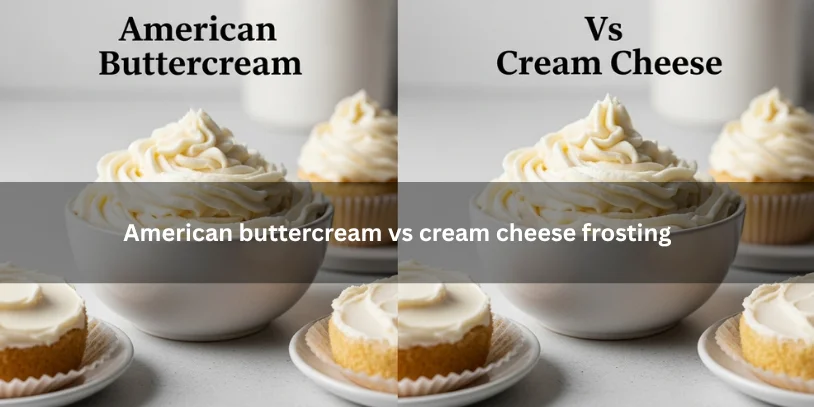
This is the distinction most people need to understand first.
American buttercream
American buttercream usually contains:
- butter
- powdered sugar
- vanilla
- a small amount of milk or cream
Because it is high-sugar, it is often considered room-temperature stable enough for overnight storage in a cool room.
Cream cheese frosting
Cream cheese frosting is not the same thing. It may look thick and sturdy, but it is more perishable and should not be treated like standard buttercream for overnight counter storage.
If your cake or cupcakes have cream cheese frosting, refrigerate them.
Can I leave a buttercream cake out overnight?
If the cake is frosted with standard American buttercream and has no perishable filling, then yes, you can often leave a buttercream cake out overnight.
But the filling matters just as much as the frosting. A buttercream-covered cake should still be refrigerated if it contains:
- pastry cream
- whipped cream
- custard
- mousse
- cream cheese filling
- fruit filling
That means the better question is sometimes not just “can I leave a buttercream cake out overnight,” but also “what is inside the cake?”
Can I leave buttercream cake out overnight?
Yes, you often can leave buttercream cake out overnight when it is a simple cake with a stable buttercream frosting and no perishable layers. Store it in a cake carrier or under a cake dome and keep it in the coolest area of the kitchen.
If your kitchen runs warm, the frosting may become too soft even if the cake is still technically okay. That is where people confuse safe with best quality.
Safe overnight vs best overnight quality
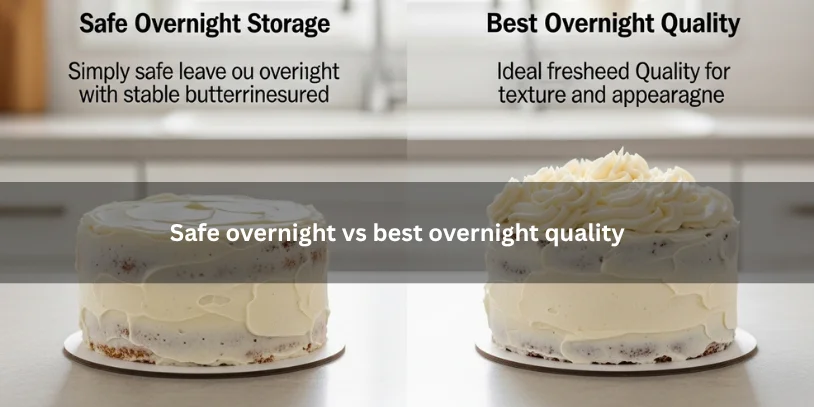
A frosting can be safe and still not look its best the next day.
That is one of the biggest missing points in many baking articles.
Safe storage is about:
- spoilage risk
- perishable ingredients
- how long the frosting sits out
- room temperature
Best quality is about:
- how smooth the frosting looks
- whether the piping keeps its shape
- crusting
- melting
- re-whipping later
- how well the cake slices and serves
For example, all-butter buttercream may be fine overnight in a cool room, but it can become soft, greasy, or lose its pipeable finish in warmer conditions. Butter-and-shortening frostings usually hold shape better.
Can I leave buttercream frosted cupcakes out overnight?
Yes, in many cases you can leave buttercream frosted cupcakes out overnight if the frosting is a stable buttercream and the cupcakes are stored in a covered container in a cool room.
Cupcakes are often easier to leave out than filled cakes because they usually do not contain perishable centers. But the same warning still applies: if the frosting is cream cheese frosting or whipped cream frosting, do not leave them out overnight.
For best results:
- store cupcakes in a covered cupcake container
- keep them away from sun or kitchen heat
- avoid stacking them
- protect detailed piping from warm air
Can I leave buttercream icing out overnight?
Yes, you can often leave buttercream icing out overnight if it is classic buttercream made mostly from butter and sugar.
If the buttercream icing is sitting in a bowl instead of on a cake, use an airtight container. This prevents crusting, drying, and odor absorption. The next day, re-whip it if needed with a stand mixer or hand mixer to bring back a fluffy texture.
This works especially well for American buttercream and many stable decorating frostings.
Can I leave my buttercream out overnight?
If you are asking, can I leave my buttercream out overnight, think through these five checkpoints:
- What type of buttercream did I make?
- Does it contain cream cheese, whipped cream, or another perishable ingredient?
- Is the room cool or warm?
- Is it covered in an airtight container?
- Am I using it tomorrow, or storing it longer?
If it is standard buttercream, well covered, and kept in a cool room, it is often fine overnight. If any part of the answer feels uncertain, refrigerate it.
Can I leave Swiss meringue buttercream out overnight?
Swiss meringue buttercream needs more caution than American buttercream.
It can sometimes sit out overnight, especially in a cool environment, but it is not the kind of frosting most bakers should leave out casually without thinking through the recipe, ingredients, and conditions. If the kitchen is warm or you are unsure how stable the batch is, refrigeration is the safer choice.
The same careful thinking also applies to Italian buttercream and French buttercream, though French buttercream is usually one of the less ideal options for overnight counter storage because it is richer and more delicate.
When you should refrigerate immediately
Put the cake, cupcakes, or buttercream in the refrigerator right away if:
- the frosting contains cream cheese
- the frosting contains whipped cream
- the cake has a perishable filling
- the room is warm or humid
- the dessert will sit near the stove or sunlight
- you do not know exactly what is in the frosting
- you need perfect texture and appearance for an event
- the frosting includes dairy-heavy or egg-based additions that make you uneasy
When in doubt, refrigeration is the safest default.
How to store buttercream overnight the right way
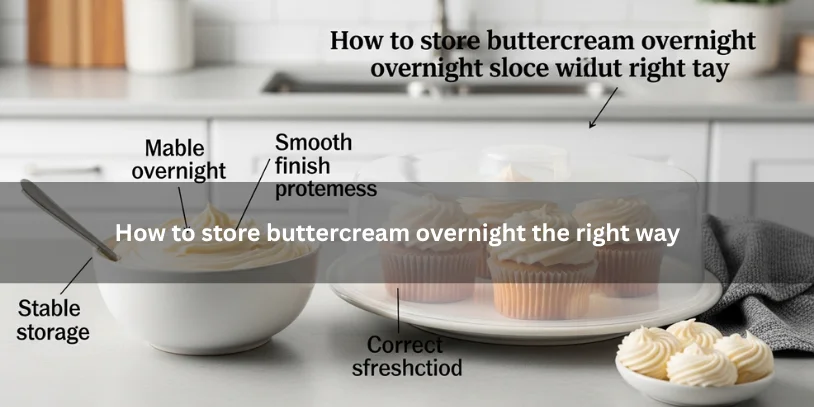
In a bowl
If you are storing buttercream frosting by itself:
- transfer it to an airtight container
- press plastic wrap against the surface if needed
- keep it away from heat
- re-whip before using
On a cake
If you are storing a frosted cake:
- use a cake carrier, cake dome, or covered stand
- keep it in a cool room
- avoid leaving it next to the oven
- protect it from sunlight and humidity
On cupcakes
If you are storing buttercream frosted cupcakes:
- place them in a covered cupcake box or container
- keep them level
- do not stack them
- avoid warm countertops
What about hot weather and humidity?
Heat changes the answer fast.
Even a shelf-stable frosting can lose structure in hot or humid conditions. Buttercream may:
- melt
- sag
- look greasy
- lose piping detail
- slide off the cake
- soften too much to transport well
That matters even more for:
- party cakes
- wedding cakes
- outdoor events
- cottage bakery orders
- make-ahead cakes prepared in summer
So even if the frosting itself may be safe, warm conditions can still make refrigeration the better choice.
Fridge vs freezer vs room temperature
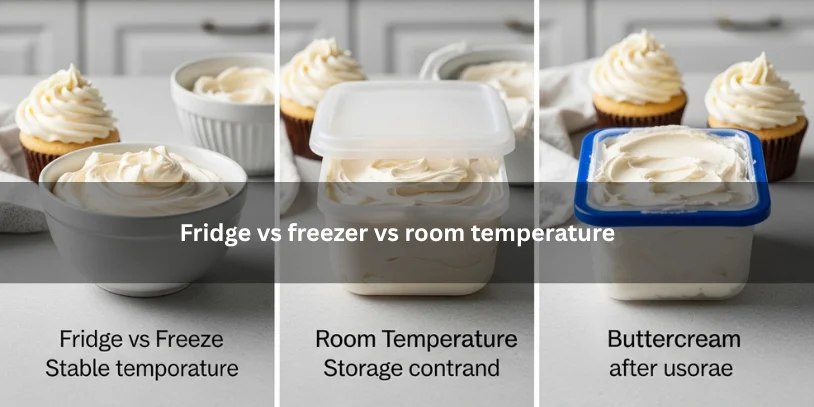
Here is a practical comparison.
| Storage Method | Best For | What to Expect |
|---|---|---|
| Room temperature | Overnight use of stable buttercream | Easy access, but affected by heat |
| Refrigerator | Short-term storage beyond overnight or uncertain recipes | Safer for delicate frostings, may need re-whipping |
| Freezer | Long-term storage | Great for make-ahead baking, thaw and re-whip before use |
If you refrigerate buttercream, let it soften before using it again. Then beat it until fluffy and smooth. A paddle attachment often works well if you want a cleaner finish with fewer air bubbles.
What if it already sat out overnight?
This is one of the most important real-life scenarios.
If the dessert was covered, stayed in a cool room, and used plain high-sugar buttercream, it is often still fine.
If it had cream cheese frosting, whipped cream frosting, mousse, custard, or another clearly perishable filling, it is safer not to risk it.
Use this quick rescue check:
Usually okay
- classic American buttercream
- covered overnight
- cool room
- no perishable filling
Better not to risk
- cream cheese frosting
- whipped cream frosting
- fruit, mousse, or custard filling
- hot kitchen
- uncertain ingredients
Make-ahead advice for home bakers and cake decorators
Buttercream is one of the easiest frostings to make ahead, which is why this question comes up so often for parties and baking schedules.
If you are decorating the next day:
- make the buttercream ahead
- decide whether room temperature or refrigeration makes more sense
- cover it well
- re-whip chilled buttercream before piping
If you are frosting a cake the night before:
- confirm the filling is non-perishable
- store the finished cake properly
- avoid warm kitchen conditions
- plan around how the frosting should look the next day, not just whether it is edible
FAQs
1. Can I leave buttercream out overnight?
Yes, standard high-sugar buttercream can often stay out overnight in a cool room if covered properly. Perishable frostings should be refrigerated.
2. Does buttercream need to be refrigerated?
Not always. American buttercream usually does not need refrigeration overnight, but cream cheese frosting and whipped cream frosting do.
3. How long can buttercream sit out?
Stable buttercream often sits out well overnight, but longer storage is usually better in the refrigerator or freezer.
4. Can I leave a buttercream cake out overnight?
Yes, if the buttercream is stable and the cake does not contain a perishable filling.
5. Can I leave buttercream frosted cupcakes out overnight?
Yes, if they are frosted with classic buttercream and kept in a covered container in a cool room.
6. Can I leave buttercream icing out overnight?
Yes, classic buttercream icing can often stay out overnight when stored in an airtight container away from heat.
7. Can I leave my buttercream out overnight?
If it is standard buttercream and the room is cool, usually yes. If you are unsure about ingredients, refrigerate it.
8. Can I leave Swiss meringue buttercream out overnight?
Sometimes, but it needs more caution than American buttercream. Refrigerate it if the kitchen is warm or the recipe is uncertain.
9. Can a frosted cake stay out overnight?
Yes, but only if both the frosting and the filling are non-perishable.
10. Can you freeze buttercream?
Yes. Freeze it in a sealed freezer-safe container, thaw it later, and re-whip before using.
Conclusion
If you are asking can I leave buttercream out overnight, the best answer is this: plain, high-sugar buttercream is often fine overnight in a cool room, but cream cheese frosting, whipped cream frosting, and cakes with perishable fillings should be refrigerated.
To make the right call, check the buttercream type, the filling, and the room temperature. A buttercream cake, buttercream icing, or buttercream frosted cupcakes may all be fine until morning in the right conditions, but when anything feels uncertain, the safer choice is always the fridge.