
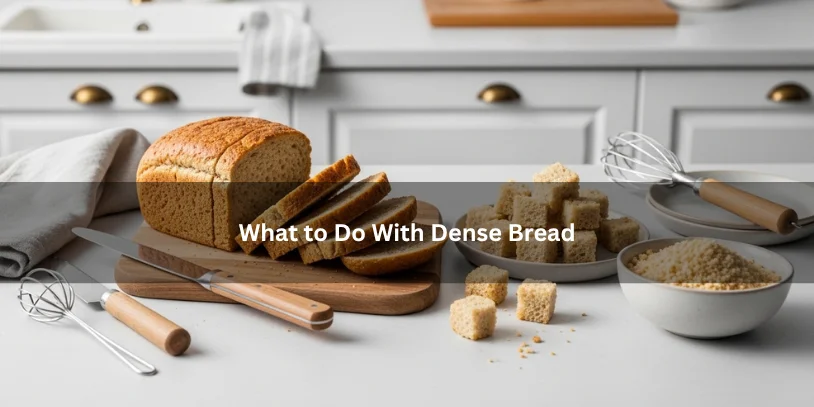
Dense bread is bread with a tight, heavy crumb that did not rise or bake the way you expected. The good news is that dense bread is often still useful. If it tastes normal, smells fine, and shows no mold, you can usually refresh it, toast it, grind it into breadcrumbs, or turn it into dishes like bread pudding, French toast, strata, croutons, or panzanella.
That is the first thing most people want to know. Not the science yet. Not the baking lesson. Just this: is my loaf ruined or can I still do something with it?
In many cases, you can absolutely do something with it. The real trick is matching the loaf’s condition to the right fix.
First, Decide What Kind of Dense Bread You Have
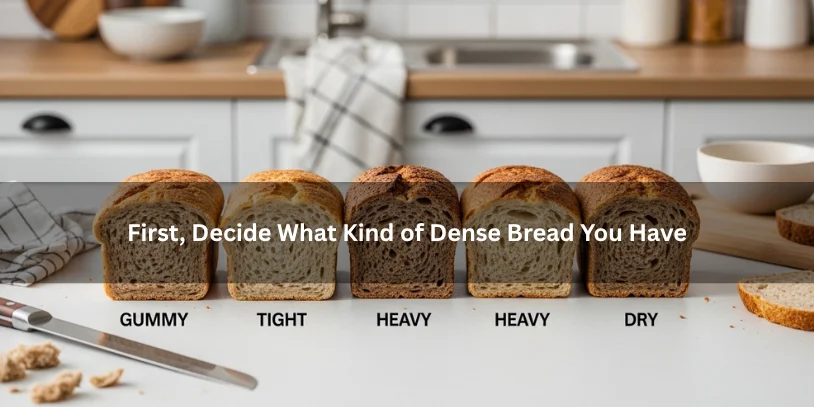
Not every heavy loaf is the same. Some are just a little compact. Others are stale, chewy, gummy, or actually unsafe.
Use this quick decision guide:
If your bread is dense but tastes good
Keep it. This is the easiest kind to save. It may be perfect for toast, grilled sandwiches, French toast, or bread pudding.
If your bread is dense and dry
Try refreshing it in the oven or repurpose it into breadcrumbs and croutons.
If your bread is dense and chewy
Use it in recipes that soften the crumb, like strata, casserole, bread pudding, or a soaked salad like panzanella.
If your bread is dense and gummy inside
That is different. A gummy interior can point to underbaking, under-proofing, or slicing too early. If the center feels wet and unpleasant even after cooling fully, it is usually not worth treating as normal bread.
If your bread has mold or smells off
Throw it away. Do not try to cut off mold and save the rest.
Can You Eat Dense Bread?
Yes, often you can.
Dense bread is not automatically bad bread. A loaf can be heavy, compact, or under-risen and still be safe to eat. The real red flags are mold, a strange smell, obvious spoilage, or a wet, raw interior that never properly baked through.
A lot of people confuse these situations:
- Dense means heavy and compact
- Stale means dry from age
- Gummy means tacky or wet inside
- Moldy means unsafe
That distinction matters because each one needs a different response.
How to Soften Dense Bread Quickly
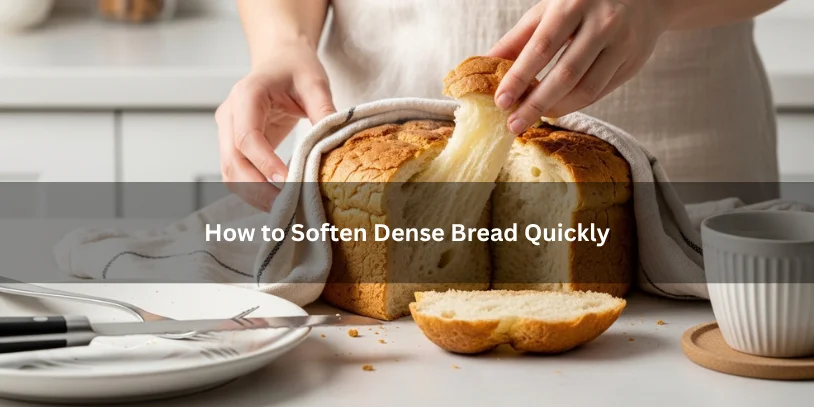
If your loaf is dense and a little dry, the easiest rescue method is heat plus moisture.
Simple oven refresh method
- Lightly dampen the crust with water. Do not soak it.
- Wrap the loaf in foil.
- Place it in a low oven at about 300°F / 150°C.
- Warm it for 10 to 15 minutes.
- Unwrap it for the last few minutes if you want the crust to crisp again.
This will not turn a failed loaf into an airy bakery loaf. But it can make dry dense bread much more pleasant to eat.
Best for
- sandwich bread
- rustic homemade loaves
- sourdough that turned firm
- bread that is dense but not gummy
Not ideal for
- moldy bread
- bread with a raw center
- bread that is extremely hard all the way through
Best Things to Make With Dense Bread
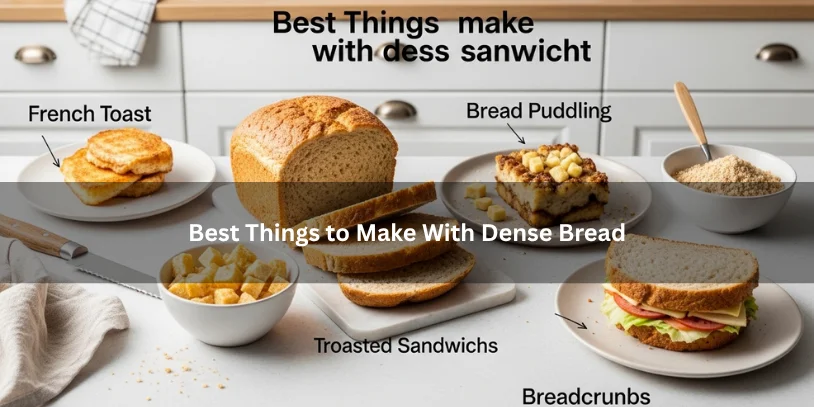
If the loaf is edible but disappointing, repurposing is usually the smartest move.
1. Breadcrumbs
This is one of the best uses for very dense bread.
Dense bread dries well and grinds into excellent breadcrumbs. You can use them for:
- coating chicken, fish, or vegetables
- topping baked pasta or casseroles
- mixing into meatballs or meatloaf
- adding crunch to mac and cheese
- thickening soups or fillings
How to do it
Cut the bread into chunks, dry it in the oven if needed, then pulse it in a food processor. Store the crumbs in the freezer if you are not using them right away.
If your loaf is extra heavy or flat, breadcrumbs are often the safest and least frustrating option.
2. Croutons
Croutons work best when the bread is firm but not rock-hard.
Cube the bread, toss it with olive oil, salt, and whatever seasonings you like, then bake until crisp. Dense bread can make fantastic croutons because it holds shape well and gives a satisfying bite.
Great seasoning options
- garlic powder
- rosemary
- oregano
- black pepper
- parmesan
- smoked paprika
Use croutons on salads, soups, creamy tomato soup, or roasted vegetable bowls.
3. Bread Pudding
Bread pudding is one of the best ways to hide a bad bread texture.
If the loaf tastes good but the crumb is too tight or chewy, soaking it in a custard solves the problem. Dense bread holds up especially well here because it does not dissolve too fast.
Good breads for pudding
- sandwich loaf
- brioche-style loaf
- challah-style loaf
- dense sourdough with a mild flavor
Why it works
The bread absorbs liquid, softens, and turns the texture flaw into part of the dish.
4. French Toast
French toast is another easy win.
Thicker slices of dense bread can soak up the egg and milk mixture without collapsing. That makes them ideal for pan-fried French toast or baked French toast casseroles.
If your loaf is a little dry and heavy, French toast may actually give you a better result than using fresh soft bread.
5. Strata or Savory Breakfast Casserole
When your bread is dense and you do not want a sweet recipe, go savory.
Strata is basically a baked dish made with bread, eggs, milk, cheese, and add-ins like mushrooms, spinach, onions, herbs, or cooked meat. Dense bread is great here because it gives structure and absorbs flavor.
This is one of the best solutions for:
- whole-wheat bread that came out heavy
- sandwich loaves that feel too chewy
- bread-machine bread with a compact crumb
6. Panzanella
Panzanella is a bread salad that works beautifully with dense or stale bread.
The bread soaks up dressing and tomato juices while still keeping some bite. If you have a rustic loaf, sourdough, or a failed artisan loaf that still tastes good, this is a smart way to use it.
Add tomatoes, cucumber, olive oil, vinegar, red onion, basil, and a little salt. Let it sit briefly so the bread softens without turning mushy.
7. Soup Thickener or Bread-Based Soup Add-In
Dense bread can also be used in soups.
Some soups use bread for body and texture, especially tomato-based soups or rustic vegetable soups. You can tear small pieces into the pot, stir in dried breadcrumbs, or use toasted cubes as a garnish.
If the loaf is too dry to enjoy on its own, this is a good low-waste solution.
Best Use by Bread Condition
Here is the easiest way to choose what to do next:
| If your bread is… | Best move |
|---|---|
| Slightly dense but still pleasant | Toast it or make sandwiches |
| Dense and dry | Refresh it in the oven |
| Dense and flavorful | Make croutons or panzanella |
| Dense and chewy | Use it for bread pudding, French toast, or strata |
| Very dense and tough | Turn it into breadcrumbs |
| Dense with a gummy center | Usually not ideal to keep as-is |
| Moldy or off-smelling | Discard it |
This one decision table solves what many pages miss: not all dense bread should be treated the same way.
Dense Bread vs Stale Bread vs Undercooked Bread
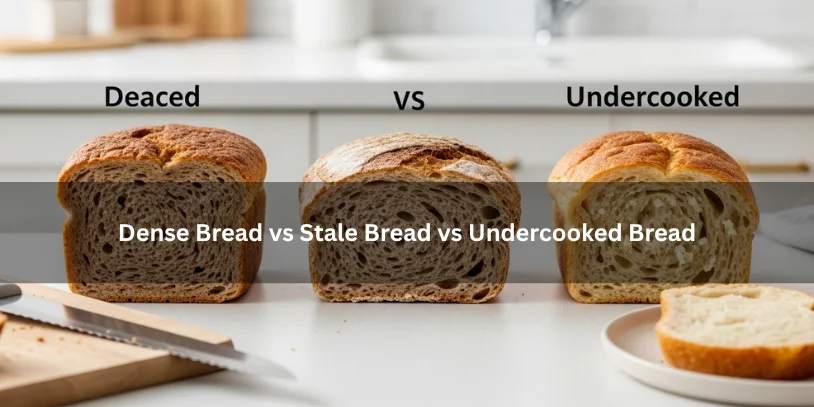
A lot of confusion starts here.
Dense bread
Heavy, compact, and not airy enough. Usually caused by proofing, hydration, gluten development, or flour issues.
Stale bread
Dry because it has aged. It may still have been baked perfectly the first time.
Undercooked bread
Looks baked outside but stays wet or gummy inside.
Moldy bread
Unsafe. This is not a texture issue. It is a spoilage issue.
A stale loaf can often be refreshed.
A dense loaf can often be repurposed.
An undercooked loaf may not be worth saving.
A moldy loaf should be thrown out.
Why Bread Turns Dense in the First Place
If this keeps happening, you need to look at the process.
1. Under-proofing
This is one of the most common reasons. If the dough does not rise enough before baking, the loaf ends up heavy and compact.
2. Weak gluten development
Bread needs enough gluten structure to trap gas. Without that, the loaf cannot build a light crumb.
3. Too much flour or not enough hydration
A dry dough struggles to expand. Measuring flour loosely by cup can easily throw things off.
4. Yeast problems
Old yeast, weak yeast, or poor fermentation can all lead to a loaf that never gets enough rise.
5. Whole-wheat flour or heavy add-ins
Whole-wheat flour, seeds, oats, nuts, and other add-ins can make bread heavier. That does not mean you cannot use them, but you usually need better hydration and a stronger dough.
6. Bread machine issues
Bread machine bread often turns dense when the dough ratio is off, the cycle is wrong, or the machine handles the dough poorly for that recipe. A mid-cycle dough check helps because the machine cannot judge consistency for you.
How to Prevent Dense Bread Next Time
Once you have dealt with the current loaf, fix the pattern.
Use a digital scale
This is one of the simplest upgrades. It helps you measure flour and water accurately.
Check yeast freshness
Do not assume your yeast is fine just because it is in the jar. Old yeast can quietly wreck a loaf.
Watch the dough, not just the clock
Proofing times are affected by room temperature, humidity, and even altitude. Dough should look ready, not just hit a timer.
Do not keep adding flour too soon
Sticky dough often tempts people into dumping in more flour. That can push hydration too low and make the bread dense.
Build enough structure
Kneading, stretch-and-folds, and proper shaping all help build strength and gas retention.
Be careful with whole-wheat bread
Whole-wheat flour absorbs more water and can create a heavier loaf if the recipe is not adjusted well.
Let bread cool before slicing
Cutting too early can make a loaf seem gummy even when it is still setting inside.
Common Mistakes People Make With Dense Bread
- forcing it to work as sandwich bread when it is better as crumbs or pudding
- making croutons from bread that is already too hard
- assuming dense means unsafe
- assuming all heavy bread is undercooked
- slicing too soon and misjudging the crumb
- ignoring flour measurement problems
- forgetting that humidity and room temperature affect proofing
Dense Sourdough, Bread Machine Bread, and Whole-Wheat Bread
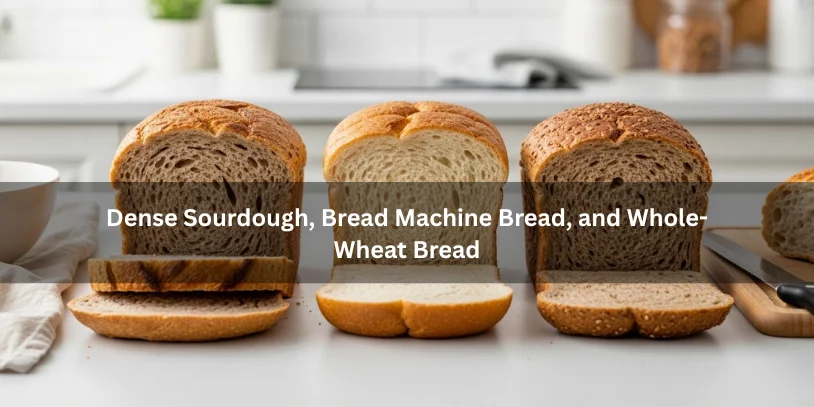
Dense sourdough bread
Dense sourdough often works best in panzanella, toast, croutons, or savory bread pudding. It usually still has strong flavor, even when the texture disappoints.
Dense bread machine bread
Check your flour, yeast, liquid ratio, and dough cycle. For the current loaf, breadcrumbs, toast, and strata are usually the easiest recovery options.
Dense whole-wheat bread
Whole-wheat loaves naturally feel heavier than white bread, but they should not feel like bricks. Slightly dense whole-wheat bread works especially well as toast, breadcrumbs, or casserole bread.
When You Should Throw Dense Bread Away
Dense bread should be discarded if:
- it has visible mold
- it smells off or fermented in a bad way
- the inside stays wet and raw-looking
- it tastes unpleasant after cooling
- it has clearly spoiled in storage
Trust texture, smell, and common sense together. A bad loaf is frustrating. Getting sick from it is worse.
FAQs
1. Can you eat dense bread?
Yes, as long as it tastes normal, smells fine, and has no mold or spoilage. Dense texture alone does not make bread unsafe.
2. What can I make with very dense bread?
The best options are breadcrumbs, croutons, bread pudding, French toast, strata, casseroles, panzanella, and soup add-ins.
3. How do I soften a dense loaf of bread?
Lightly dampen the crust, wrap the loaf in foil, and warm it in a low oven for 10 to 15 minutes.
4. Is dense bread undercooked?
Not always. Dense bread can come from under-proofing, weak gluten development, low hydration, or yeast problems. Undercooked bread usually feels gummy or wet inside.
5. Can I make breadcrumbs from dense bread?
Yes. Dense bread is actually excellent for breadcrumbs because it dries and grinds well.
6. What should I do with dense sourdough bread?
Try toast, croutons, panzanella, breadcrumbs, or a savory casserole. Dense sourdough often still has great flavor.
7. Why is my bread machine bread so dense?
Common reasons include too much flour, not enough liquid, weak yeast, the wrong cycle, or dough that never developed enough structure.
8. Should I throw away dense bread?
Only if it is moldy, smells off, tastes bad, or has an unpleasant raw center that never baked properly. Otherwise, it can often be saved or repurposed.
9. What recipes hide a bad bread texture best?
Bread pudding, French toast, strata, and casseroles are usually the best because they soften the bread and add moisture.
Conclusion
Dense bread does not have to go straight to the bin. If the loaf is safe and still tastes good, the best move is to stop treating it like failed sandwich bread and start using it where structure and flavor still matter. Refresh it if it is dry, soak it if it is chewy, grind it if it is too heavy, and discard it only when spoilage is the real problem.
For future loaves, focus on proofing, hydration, yeast freshness, flour measurement, and dough development. That way you solve both problems at once: you save the bread in front of you, and you make sure the next loaf comes out lighter, softer, and closer to what you wanted.