
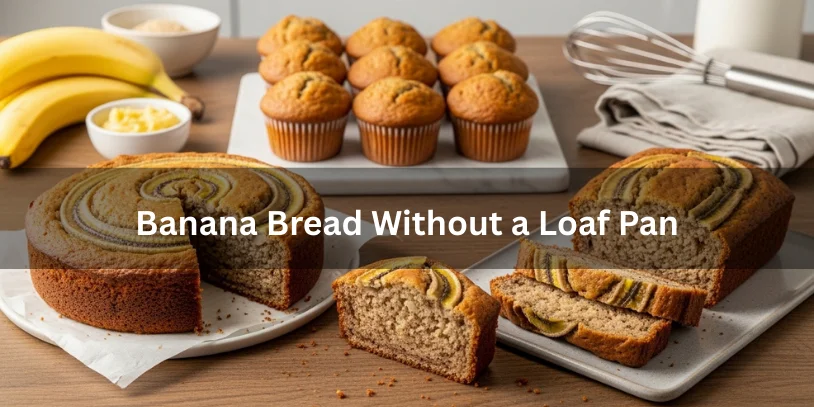
Running out of a loaf pan doesn’t mean skipping banana bread. This classic quick bread can be baked in many oven-safe containers—from muffin tins to cake pans and cast-iron skillets—while keeping the same flavor, moisture, and soft crumb texture.
What changes isn’t the recipe.
What changes is the shape, baking time, and surface heat distribution.
This guide explains exactly how to bake banana bread without a loaf pan, which tools work best, how texture differs, and how to avoid common baking mistakes.
What Banana Bread Without a Loaf Pan Really Means
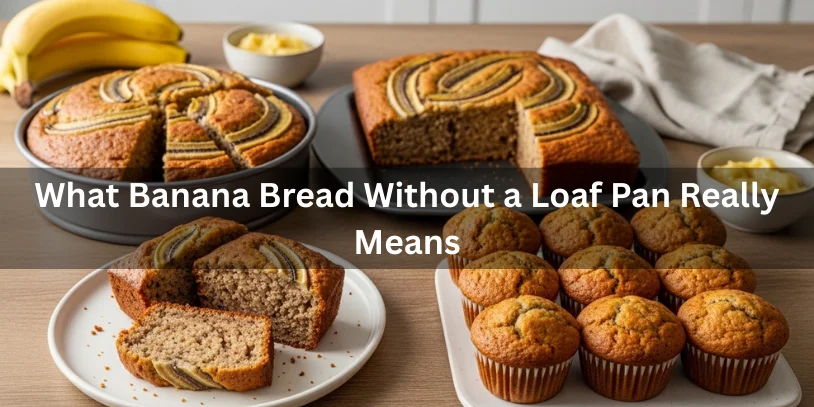
Banana bread belongs to the “quick bread” category, meaning it uses baking soda instead of yeast. The batter is flexible and can adapt to different baking containers as long as:
- The container is oven-safe
- Batter thickness is controlled
- Bake time is adjusted
You can use:
- Muffin tin
- Round cake pan
- Square baking dish
- Cast-iron skillet
- Glass dish
- Aluminum tray
- Sheet pan
Each affects heat distribution, moisture retention, and browning.
When You Might Need This Method
- No loaf pan available
- Small kitchen or student setup
- Baking quickly for snacks
- Trying portion-sized servings
- Testing new baking formats
- Using tools already at home
This is especially useful for beginner home baking because many substitutes cook faster and reduce the risk of an undercooked center.
Best Pan Alternatives for Banana Bread
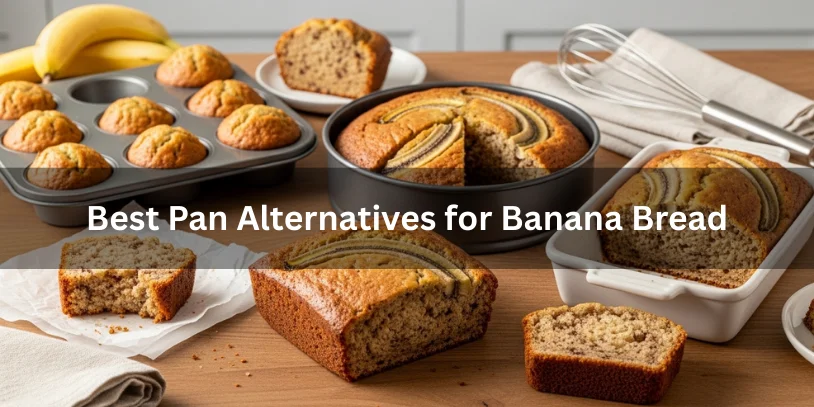
Muffin Tin
Best for beginners and fastest baking.
- Even heat distribution
- Crispy edges, soft center
- Ready in 18–25 minutes
Cake Pan
Closest to traditional loaf texture.
- Even crumb structure
- Good slicing
- Bake time: 30–40 minutes
Cast-Iron Skillet
Popular for rustic baking.
- Excellent heat retention
- Crisp crust with moist interior
- Bake time: 25–35 minutes
Glass Baking Dish
Good moisture retention.
- Soft texture
- Slightly longer baking time
Sheet Pan
Best for speed and batch baking.
- Thin batter layer
- Faster cooking
- Great for slicing squares
Step-by-Step: How to Bake Banana Bread Without a Loaf Pan
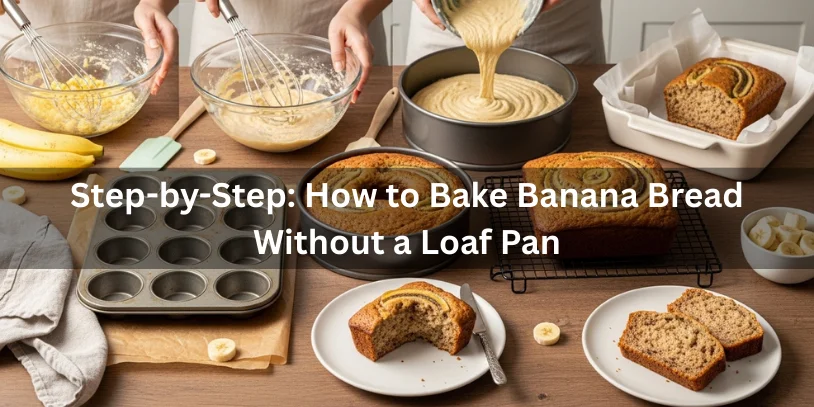
1. Prepare the batter
Use a standard banana bread recipe with ripe bananas, flour, sugar, eggs, butter or oil, and baking soda.
2. Choose your baking container
Pick based on:
- Speed needed
- Portion size
- Texture preference
3. Grease properly
Use oil, butter, or parchment paper to prevent sticking.
4. Control batter thickness
- Muffin tin: fill ¾ full
- Skillet or cake pan: spread evenly
- Sheet pan: keep layer thin
5. Bake at 350°F (175°C)
Adjust time based on pan depth.
6. Check doneness early
Insert toothpick:
- Clean = done
- Wet batter = continue baking
7. Cool before cutting
Cooling prevents crumbling and improves crumb structure.
Pan Comparison: Texture and Bake Time
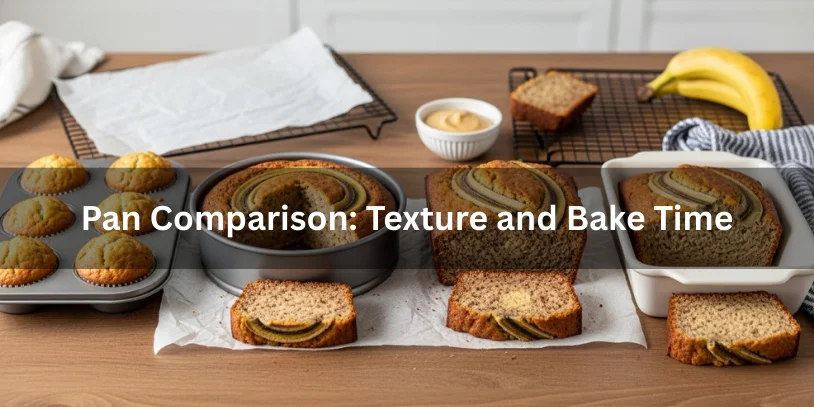
| Pan Type | Bake Time | Texture Result | Difficulty |
|---|---|---|---|
| Muffin tin | 18–25 min | Moist center, crisp edges | Easy |
| Cake pan | 30–40 min | Balanced crumb | Easy |
| Skillet | 25–35 min | Crispy crust, soft inside | Medium |
| Glass dish | 35–45 min | Soft and moist | Easy |
| Sheet pan | 15–20 min | Thin, slightly crisp | Easy |
Baking Science: Why Container Choice Matters
The same batter behaves differently depending on:
Heat distribution
Metal pans conduct heat faster than glass.
Surface area
More surface exposure leads to quicker baking.
Moisture evaporation
Thicker batter layers trap moisture longer.
Maillard browning
Edges brown more in shallow containers.
These factors affect crumb texture, moisture level, and crust formation.
Common Mistakes and How to Fix Them
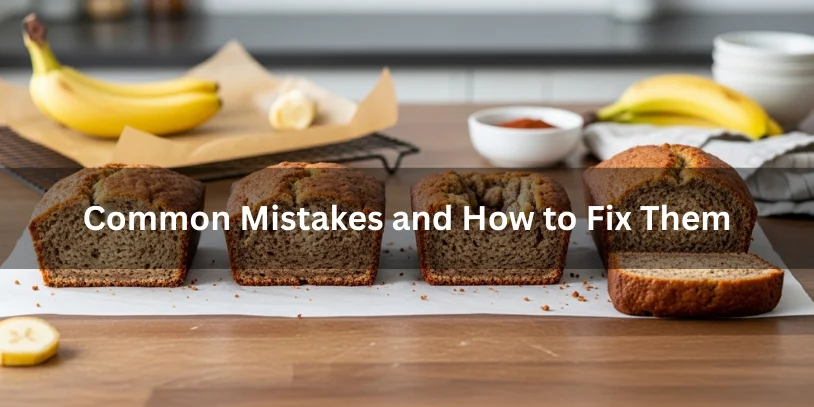
Undercooked center
Cause: batter too thick
Fix: reduce depth or extend bake time
Burnt edges
Cause: thin metal pan + long baking
Fix: reduce temperature slightly
Batter overflow
Cause: overfilling
Fix: fill only ¾ capacity
Dense texture
Cause: overmixing batter
Fix: mix until just combined
Sticking to pan
Cause: no greasing
Fix: line with parchment or grease thoroughly.
Which Method Should You Choose? (Decision Guide)
Choose based on your priority:
Speed:
- Muffin tin
- Sheet pan
Best presentation:
- Cake pan
- Skillet
Moistest texture:
- Glass dish
- Baking dish
Beginner-friendly:
- Muffin tin
Small batch:
- Skillet or muffin pan
Tools and Equipment That Improve Results
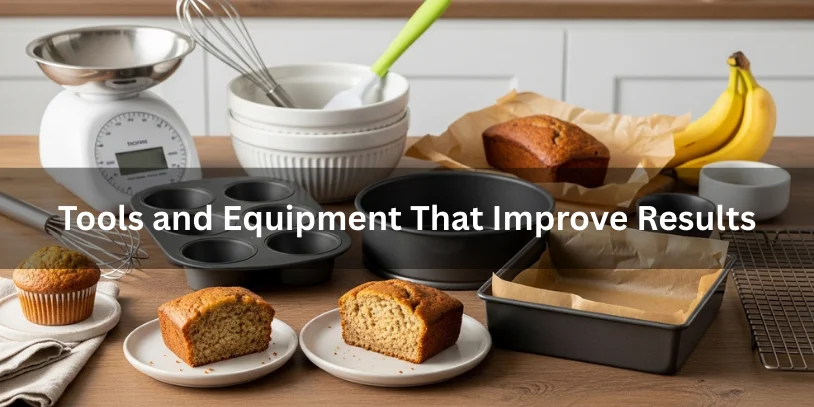
Essential:
- Mixing bowl
- Whisk or spatula
- Oven thermometer
- Oven-safe pan
Optional upgrades:
- Silicone molds
- Non-stick coatings
- Cooling rack
Budget baking tools are widely available in kitchenware stores and online marketplaces. Even basic aluminum trays work as long as they are oven-safe.
Professional Tips for Better Banana Bread
- Use overripe bananas for sweetness and moisture
- Preheat oven fully before baking
- Rotate pan halfway for even cooking
- Avoid overmixing to preserve soft crumb
- Measure ingredients accurately
- Let bread rest before slicing
Texture Differences: Muffin vs Loaf vs Skillet
Muffin
- Slightly crisp outer layer
- Soft interior
- Individual portions
Traditional loaf
- Uniform crumb
- Even slicing
- Longer baking
Skillet
- Rustic crust
- Moist center
- Café-style presentation
Safety and Container Guidelines
Use only:
- Oven-safe pans
- Food-safe materials
- Heat-resistant glass
Avoid:
- Plastic containers
- Unknown coatings
- Containers not labeled oven-safe
Storage and Shelf Life
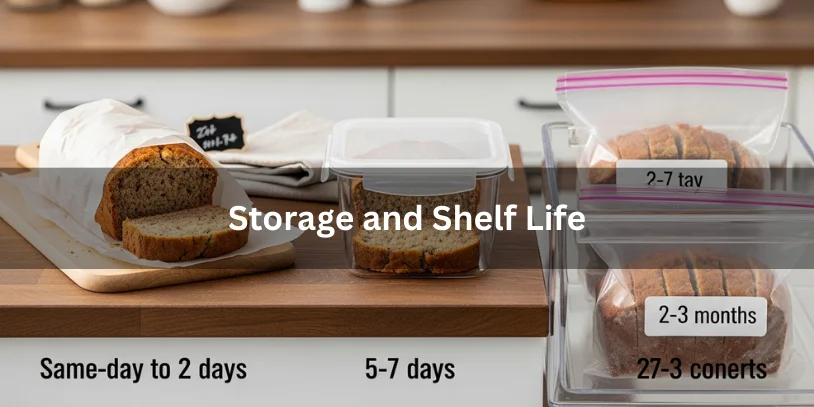
Room temperature:
- 2–3 days in airtight container
Refrigerated:
- Up to 1 week
Frozen:
- 2–3 months
Wrap tightly to maintain moisture.
Can You Buy a Pan Instead?
If you bake frequently, investing in baking pans helps consistency.
Common options:
- Metal loaf pan
- Silicone mold
- Non-stick baking dish
They are available in budget to mid-range pricing from kitchenware stores and online baking suppliers.
Alternative Ways to Make Banana Bread
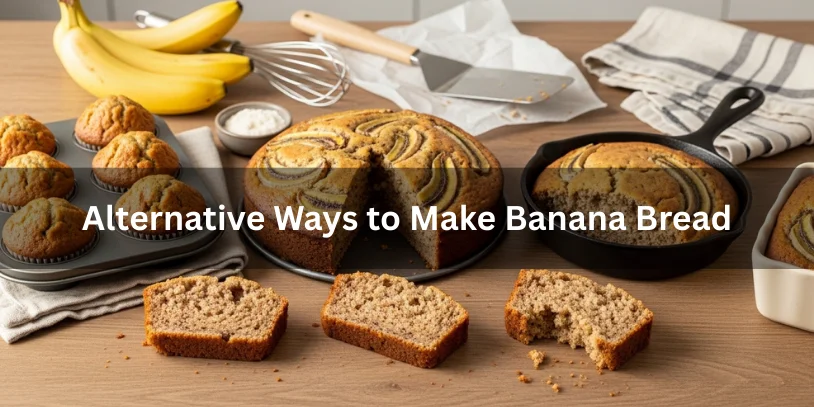
- Banana muffins
- Banana cake
- Air fryer banana bread
- Vegan banana bread
- Gluten-free banana bread
Each variation uses the same base principle: adaptable quick bread batter.
Frequently Asked Questions
Can you bake banana bread in a cake pan?
Yes. Reduce thickness and monitor bake time. It produces a texture close to a loaf.
Does banana bread require a loaf pan?
No. Any oven-safe baking container works with adjusted bake time.
What pan size replaces a loaf pan?
A round 8–9 inch cake pan or muffin tin is the closest alternative.
Can banana bread be baked in a glass dish?
Yes, but it may take slightly longer due to slower heat transfer.
Is skillet banana bread better?
It creates crisp edges and a moist interior, popular in rustic baking.
Can I use an aluminum tray?
Yes, as long as it is oven-safe and greased properly.
Why is banana bread dense in a muffin pan?
Usually from overmixing or filling too much batter.
What’s the fastest way to bake banana bread?
Use a muffin tin or sheet pan for reduced bake time.
What is the easiest method for beginners?
Muffin tins are the most reliable and forgiving.
Conclusion
You don’t need a loaf pan to bake excellent banana bread. The batter stays the same—the container simply changes shape, baking time, and texture.
Muffin tins offer speed and simplicity. Cake pans provide balanced texture. Skillets add crisp edges and visual appeal. Glass dishes retain moisture for softer results.
Focus on three things:
- Use an oven-safe container
- Adjust thickness and bake time
- Avoid overmixing
With these principles, banana bread becomes one of the most flexible baked goods you can make anywhere, with any kitchen setup.
Pingback: Why Is My Banana Bread Not Cooking in the Middle? Causes & Fixes In 2026 - DreamWhip Bakers
Pingback: Espresso Bread: Complete Guide to Flavor, Recipes, Baking Science & Where to Buy - DreamWhip Bakers