
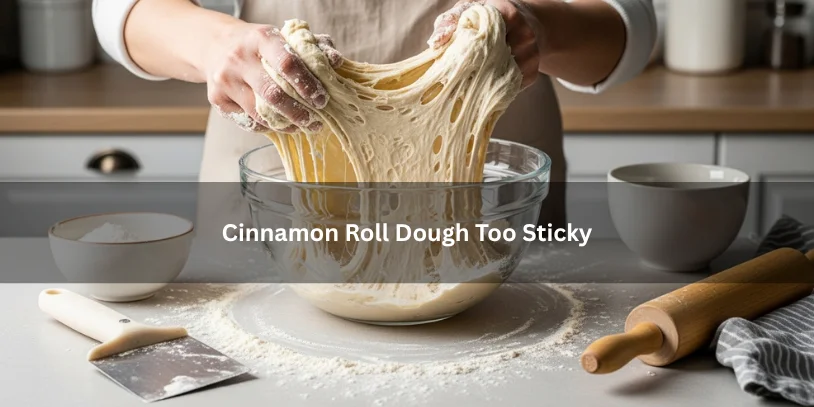
If your cinnamon roll dough is too sticky, the batch is usually still salvageable. Most of the time, the dough needs one of four things: a short rest, more kneading, cooler temperature, or a very small flour adjustment.
Cinnamon roll dough is an enriched dough, which means it contains ingredients like butter, milk, eggs, and sugar. Because of that, it naturally feels softer than lean bread dough. It should be soft, supple, and slightly tacky. It should not feel dry and firm like pizza dough.
That difference matters. Many bakers think sticky dough means the recipe failed, then add too much flour. The result is often dense cinnamon rolls instead of light, fluffy ones.
What Cinnamon Roll Dough Should Feel Like
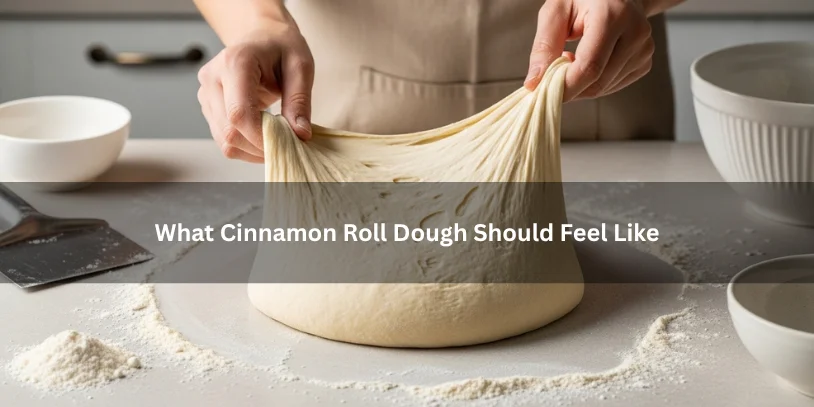
The right texture is not completely dry.
A good cinnamon bun or sweet roll dough should feel:
- soft
- smooth
- elastic
- slightly tacky
- easy to stretch without tearing
- not paste-like
- not overly wet or runny
A simple rule helps here:
- Soft + tacky = usually good
- Paste-like + smeary = too sticky
If the dough clings lightly to your hands but pulls away with a little help, that can still be perfectly normal.
Why Cinnamon Roll Dough Gets Too Sticky
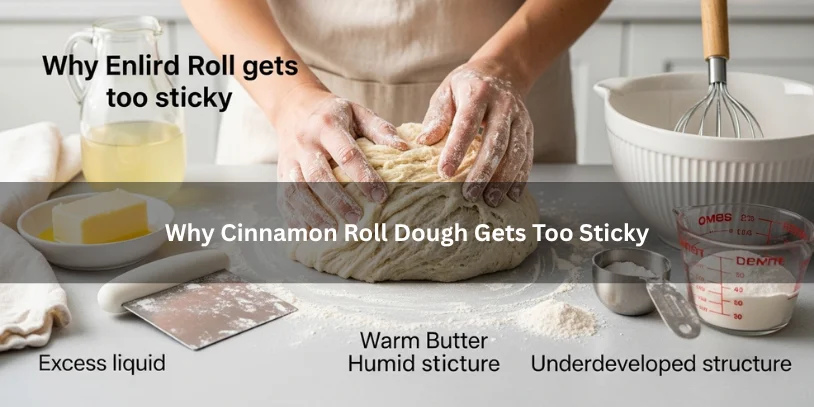
1. The dough needs more gluten development
One of the most common reasons is under-kneading. When gluten has not developed enough, the dough stays messy, weak, and sticky.
This is especially common when kneading by hand. A stand mixer with a dough hook can speed up gluten development, but hand-kneaded dough can get there too with enough time.
2. The hydration is a little high
Dough hydration refers to how much liquid is in the dough compared with flour. Cinnamon roll dough uses milk, eggs, and butter, so it starts softer than many other doughs. If the flour was measured lightly or the eggs were large, the dough may feel wetter than expected.
3. The dough is too warm
Dough temperature changes texture fast. Warm milk is fine, but hot liquid can weaken yeast performance and overly warm dough can feel greasy, loose, and hard to handle. Softened butter is good. Melted or overly warm butter is not.
4. Flour absorption varies
Not all flour behaves the same way. Bread flour, all-purpose flour, protein content, brand differences, and storage conditions all affect flour absorption. A flour that absorbs less liquid can leave your dough stickier than expected.
5. Humidity is affecting the dough
If you are baking in a humid climate, the dough can feel looser even when the recipe is correct. That is why a batch made in a cool, dry kitchen may behave differently from one made in warm, humid weather.
Sticky vs Tacky Dough: The Difference That Saves the Batch

This is where many home bakers go wrong.
| Dough Texture | What It Usually Means | What To Do |
|---|---|---|
| Soft and lightly sticky | Normal for enriched dough | Keep working with it |
| Smooth and elastic, slight cling | Well-developed dough | Ready to proof or shape |
| Smears onto hands like paste | Too sticky | Rest, knead, then reassess |
| Tears easily and feels wet | Underdeveloped gluten | Knead longer |
| Dry, stiff, resistant | Too much flour | Stop adding flour |
A dough that is slightly tacky can still pass the windowpane test. Stretch a small piece gently. If it stretches thin instead of tearing right away, your gluten development is improving.
How to Fix Sticky Cinnamon Roll Dough
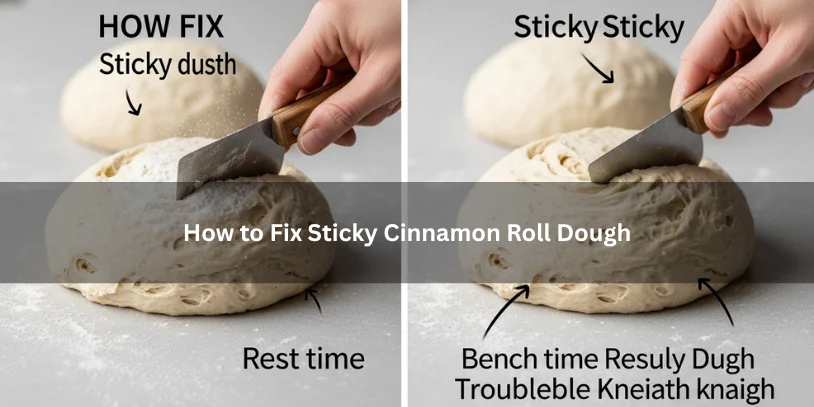
Step 1: Stop adding flour immediately
If you have already started panic-dusting the counter or bowl, pause. Extra flour added too fast is the fastest way to turn soft cinnamon rolls into heavy ones.
Step 2: Let the dough rest for 10 to 20 minutes
Resting gives the flour time to absorb moisture. It also relaxes the dough and makes it easier to judge correctly.
This one step fixes more “sticky dough” problems than most people expect.
Step 3: Knead longer before changing the recipe
After the rest, knead again.
If using a stand mixer:
- mix on low or medium-low
- use the dough hook
- give it several more minutes before deciding it needs more flour
If kneading by hand:
- use a bench scraper or dough scraper
- resist coating the surface with too much flour
- use a fold-and-press motion
- keep going until the dough looks smoother and more elastic
Under-kneaded dough often feels wetter than it really is.
Step 4: Check dough temperature
If the dough feels very warm, overly soft, or greasy, chill it for 15 to 20 minutes. This is especially useful if the issue shows up after kneading or while rolling.
Warm dough can be hard to shape even if the ingredient ratio is fine.
Step 5: Add flour only in very small amounts
If the dough is still clearly too sticky after resting and kneading, add flour gradually.
Use this method:
- add 1 tablespoon at a time
- knead fully after each addition
- stop as soon as the dough becomes manageable
Do not keep adding flour until the dough feels dry. Cinnamon roll dough should stay soft.
If Your Dough Is Sticky at Different Stages
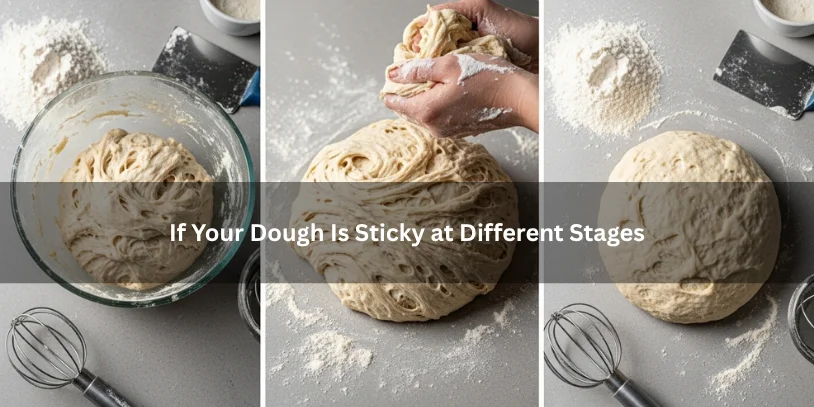
Right after mixing
This is often normal. Enriched dough can look rough and sticky before the gluten develops.
What to do:
- rest it
- knead it
- do not judge it too early
Sticky after kneading
This usually points to one of three issues:
- it still needs more kneading
- the dough is too warm
- hydration is slightly higher than your flour can handle
What to do:
- knead a little longer
- chill briefly if warm
- add flour only if it still behaves like paste
Sticky after the first rise
After proofing, dough often feels softer. Fermentation and warmth can make it seem wetter than before.
What to do:
- lightly flour the surface
- chill for 20 to 30 minutes before rolling if needed
- use a rolling pin with minimal extra flour
Too sticky while rolling
This is common with sweet roll dough, especially in warm kitchens.
What to do:
- chill the dough briefly
- flour the surface lightly, not heavily
- work quickly
- use a bench scraper to lift the dough cleanly
How Much Flour Should You Add?
There is no smart fix that involves dumping in a large amount at once.
Use this decision path:
- Just mixed? Rest first.
- Still sticky? Knead longer.
- Feels warm or greasy? Chill it.
- Still sticky after that? Add 1 tablespoon flour.
- Repeat only as needed.
If you have added several tablespoons and it is still a mess, the problem may not be “not enough flour.” It may be:
- wrong measuring method
- very warm dough
- weak gluten development
- too much liquid from large eggs or warm butter
Bread Flour vs All-Purpose Flour
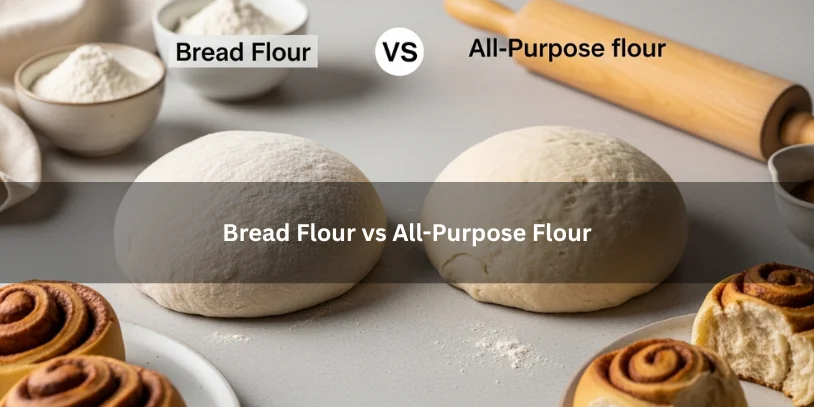
Both can work, but they behave differently.
| Flour Type | What It Can Do in Cinnamon Roll Dough |
|---|---|
| All-purpose flour | Softer texture, slightly less structure |
| Bread flour | Stronger gluten, more chew, often easier handling |
| Mixed use | Balanced texture and handling |
Bread flour can make sticky dough easier to manage because of its higher protein content. But flour type is not a cure-all. Even bread flour dough can get sticky if it is warm, under-kneaded, or too wet.
Active Dry Yeast vs Instant Yeast
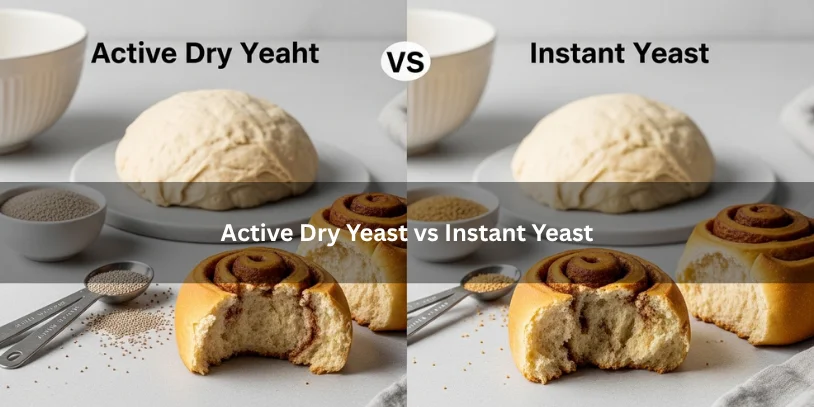
The yeast type is usually not the main reason dough feels sticky, but it can affect how the dough develops and rises.
- Active dry yeast usually needs to be dissolved first
- Instant yeast mixes in more easily and often starts working faster
If the milk was too hot, either yeast type can suffer. If the dough is rising poorly and feels oddly slack, temperature may have caused part of the problem.
Tools That Help With Sticky Dough
These make a real difference:
- Bench scraper: lifts dough cleanly and reduces the urge to over-flour
- Stand mixer with dough hook: helpful for gluten development
- Digital scale: improves flour accuracy and consistency
- Instant-read thermometer: useful for checking liquid and dough temperature
- Rolling pin: easier handling after chilling
- Lightly oiled hands: sometimes better than flour for handling sticky dough
Common Mistakes That Make It Worse
Adding too much flour too early
This is the big one. A dough that would have become soft and fluffy turns dry and heavy.
Judging the dough too soon
Freshly mixed dough often looks worse than it really is.
Using too much flour on the counter
Even if you do not add it in the bowl, that flour still gets worked into the dough while rolling and kneading.
Overheating the dough
Warm kitchens, warm butter, over-mixed dough, or hot milk can all leave you with a softer, sticker dough than expected.
Ignoring dough feel
A recipe number matters, but sensory cues matter too. Dough texture, elasticity, and surface feel tell you a lot.
How to Prevent Sticky Dough Next Time
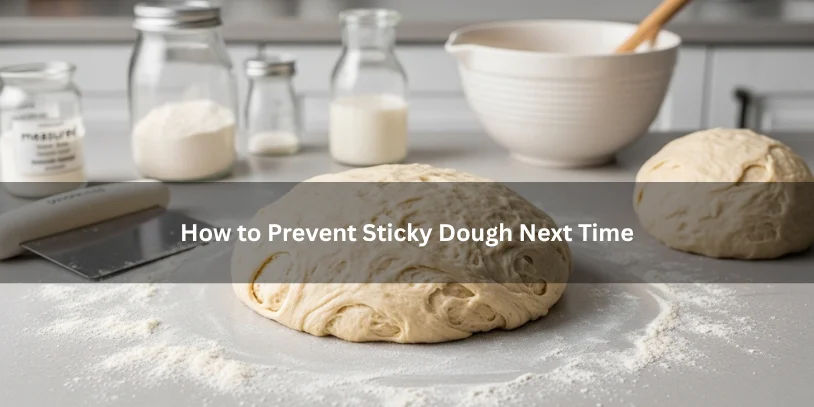
Measure flour by weight
This is the easiest upgrade you can make. Volume measurements vary too much. A digital scale gives better consistency.
Use softened butter, not melted butter
Softened butter should bend easily, not pour like liquid.
Keep milk warm, not hot
Warm milk supports yeast. Hot milk can create problems.
Watch the dough, not just the timer
Kneading time can vary depending on flour, mixer, room temperature, and humidity.
Learn the correct endpoint
The dough should be:
- smooth
- elastic
- soft
- slightly tacky
- not tearing easily
Adjust for climate and region
If your kitchen is humid, you may need a small flour adjustment. If your region is dry, the same dough may feel more balanced without any changes.
Can You Still Bake Sticky Dough?
Usually, yes.
If the dough is soft and tacky but still holds shape, you can often continue. Slightly sticky dough often bakes into better cinnamon rolls than dough that was over-corrected with too much flour.
If the dough is so wet that it cannot be rolled, sliced, or transferred, then it needs a short rescue first:
- rest
- knead
- chill
- tiny flour corrections
That sequence works better than aggressive flour dumping.
FAQs
Is cinnamon roll dough supposed to be sticky?
Yes, slightly. Cinnamon roll dough should be soft and a little tacky because it is an enriched dough. It should not feel dry or stiff.
Why is my cinnamon roll dough sticky after kneading?
It may still need more gluten development, or the dough may be too warm. Sometimes the dough also has slightly high hydration for your flour.
Why is my dough sticky after the first rise?
That can happen because proofed dough becomes softer and warmer. Chilling it briefly before rolling often helps.
How much flour should I add if my cinnamon roll dough is too sticky?
Add only 1 tablespoon at a time after resting and kneading first. Stop as soon as the dough becomes manageable.
Should I chill sticky cinnamon roll dough?
Yes, if the dough feels warm, greasy, or too soft to roll. A short chill can make shaping much easier.
Is bread flour better than all-purpose flour for sticky dough?
Bread flour can help with structure and handling because of its protein content, but it does not fix every sticky dough problem on its own.
Can active dry yeast make dough feel different from instant yeast?
Sometimes slightly, but yeast type is usually not the main reason dough is sticky. Temperature, flour absorption, and kneading matter more.
Did I use too much butter or milk?
Possibly. Too much liquid or overly warm butter can make the dough looser and harder to handle.
Can I add more flour after the first rise?
Yes, but do it carefully. It is better to use a light surface dusting or a short chill first, then add only a little flour if truly needed.
Can I still bake cinnamon rolls if the dough is sticky?
Yes, if it is soft and tacky rather than runny. Slight stickiness is often normal and can still produce tender, fluffy rolls.
Conclusion
Sticky cinnamon roll dough does not usually mean failure. In most cases, it means the dough needs patience, not a full rescue. Let it rest, knead it properly, check the dough temperature, and only add flour in very small amounts if the dough is still truly too sticky.
The goal is not dry dough. The goal is soft, elastic, slightly tacky dough that rolls well and bakes into tender cinnamon buns. If you remember that one difference between sticky and tacky, you will make better cinnamon rolls every time.