
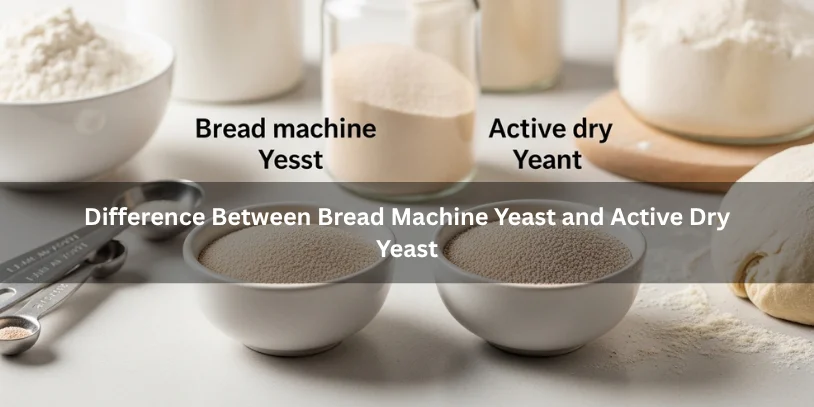
The short answer is simple: bread machine yeast is usually a form of instant yeast made for direct mixing and fast, reliable rising, while active dry yeast has larger granules and often benefits from proofing first.
That sounds minor, but in baking, small details change everything.
If you use the wrong yeast the wrong way, your bread may rise too slowly, over-rise, collapse, or come out dense. If you understand how each one behaves, you can make better bread whether you use a bread machine, a stand mixer, or hand kneading.
Quick comparison table
| Feature | Bread Machine Yeast | Active Dry Yeast |
|---|---|---|
| Type | Instant-style yeast | Dry yeast with larger granules |
| Texture | Fine | Coarser |
| How it is used | Mixes directly with dry ingredients | Often dissolved in warm water first |
| Speed | Faster | Slightly slower |
| Best for | Bread machines, quick recipes, direct-mix doughs | Traditional doughs, hand baking, recipes that include proofing |
| Proofing needed | Usually no | Often helpful or recommended |
| Delay timer use | Better suited | More risky if used dry in long delayed cycles |
| Substitution | Often possible with adjustments | Often possible with adjustments |
What is bread machine yeast?
Bread machine yeast is usually an instant or rapid-rise yeast designed to work well in automatic bread makers. Its finer granules dissolve quickly into the dough and start fermenting faster once moisture is available.
Because it is made for direct mixing, you normally add it straight into the flour instead of blooming it in warm water first.
This is why many bread machine recipes call for it specifically. Bread machines follow fixed mixing and proofing cycles, so a fast-acting yeast helps the machine stay on schedule.
What is active dry yeast?
Active dry yeast is also baker’s yeast, usually Saccharomyces cerevisiae, but it is processed differently. The granules are larger, and the yeast cells are a bit slower to wake up.
That is why many bakers dissolve active dry yeast in warm water first. This step is called proofing or blooming. It helps confirm the yeast is alive and gives it a head start before it meets the flour, salt, sugar, and fat in the dough.
Active dry yeast still works very well. It is just a little less plug-and-play than bread machine yeast.
So what is the real difference?
The real difference comes down to four things:
1. Granule size
Bread machine yeast is finer.
Active dry yeast is coarser.
That affects how fast each one absorbs liquid and starts fermenting.
2. Activation method
Bread machine yeast is made for direct mixing.
Active dry yeast is often proofed first in warm water.
3. Rise speed
Bread machine yeast usually works faster.
Active dry yeast tends to be slightly slower and more gradual.
4. Best use case
Bread machine yeast is better for:
- bread makers
- timed or delayed machine cycles
- fast same-day loaves
- beginner-friendly direct-mix recipes
Active dry yeast is better for:
- traditional bread recipes
- hand-kneaded dough
- bakers who want to test yeast activity first
- slower, more controlled mixing routines
Is bread machine yeast the same as instant yeast?
Usually, yes or very close.
In many kitchens, bread machine yeast is basically instant yeast sold for bread machine use. Some labels may call it instant, rapid-rise, quick-rise, or bread machine yeast depending on the brand.
That is where confusion starts.
A lot of people compare bread machine yeast only to active dry yeast, but the more accurate comparison is often:
- bread machine yeast = instant-style yeast
- active dry yeast = slower dry yeast that often benefits from proofing
That is why bread machine yeast and active dry yeast are not exactly the same, even though both can make good bread.
Can you substitute one for the other?
Yes, most of the time.
But this is where many articles oversimplify things. There is no single magic rule that works perfectly for every dough and every method.
When a 1:1 swap is usually fine
A one-to-one swap often works in:
- simple sandwich bread
- white bread
- pizza dough
- hand-shaped rolls
- flexible recipes where you can watch the dough and adjust time
When reducing bread machine yeast is safer
Using slightly less bread machine yeast than active dry yeast is often safer in:
- bread machine recipes
- quick cycles
- delayed timer cycles
- enriched dough with butter, eggs, or milk
- sweet dough
- recipes where over-rising can make the loaf collapse
Practical rule
If a recipe calls for 2 1/4 teaspoons active dry yeast, many bakers can use:
- 2 1/4 teaspoons for a simple hand-mixed dough, or
- about 1 3/4 to 2 teaspoons bread machine yeast if the dough is going into a bread machine and timing is tight
That difference explains why some sources say 1:1 works, while others recommend reducing instant-style yeast by around 25%.
Both can be right. It depends on the method.
Why advice on substitution sounds contradictory
This is the part most people actually need explained.
When you read baking advice from different brands or bakers, you may see two common recommendations:
- use the same amount
- use about 25% less instant-style yeast
These are not always conflicting. They are often answering different situations.
Use 1:1 when:
- the dough is mixed by hand or stand mixer
- you can watch the rise instead of following a machine timer
- the recipe is forgiving
- you have experience adjusting proof times
Reduce bread machine yeast when:
- the dough is going in a bread machine
- the loaf uses a quick cycle
- the recipe already rises aggressively
- the dough contains sugar and can ferment faster
- you want to reduce the risk of over-proofing
The main lesson is this: watch the dough, not just the clock.
A faster yeast in a tightly controlled machine cycle can behave very differently from the same yeast in a hand-shaped loaf where you can simply stop the rise when the dough looks ready.
How each yeast affects bread in a machine
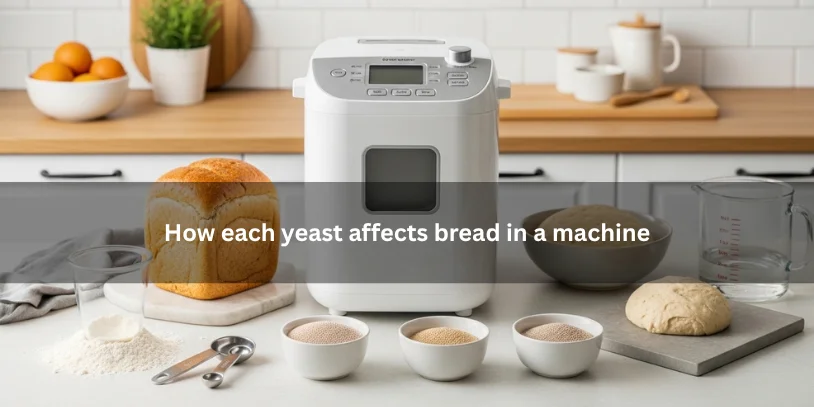
Bread machines are convenient, but they are less forgiving than hand baking because the timing is fixed.
With bread machine yeast:
- the dough rises quickly
- the machine’s cycle is usually better matched
- delayed functions tend to work more reliably
- the yeast stays dry until mixing begins
With active dry yeast:
- the rise may start a bit slower
- the machine may not fully compensate
- a delayed timer can be trickier
- if the yeast is old, the loaf may underperform
If you only have active dry yeast, you can still use it in a bread machine. Just understand that the result may vary more, especially on quick or delayed cycles.
What about proofing?
Do you need to proof active dry yeast?
Not always, but it often helps.
Proofing active dry yeast in warm water is useful because it:
- confirms the yeast is alive
- helps wake it up faster
- reduces the risk of wasting flour and other ingredients
Do you need to proof bread machine yeast?
Usually no.
Because it is designed for direct mixing, proofing is normally unnecessary.
Warm water matters
If you proof yeast, the liquid should be warm, not hot. Very hot water can kill yeast and leave you with a flat loaf.
Which one is better for different situations?
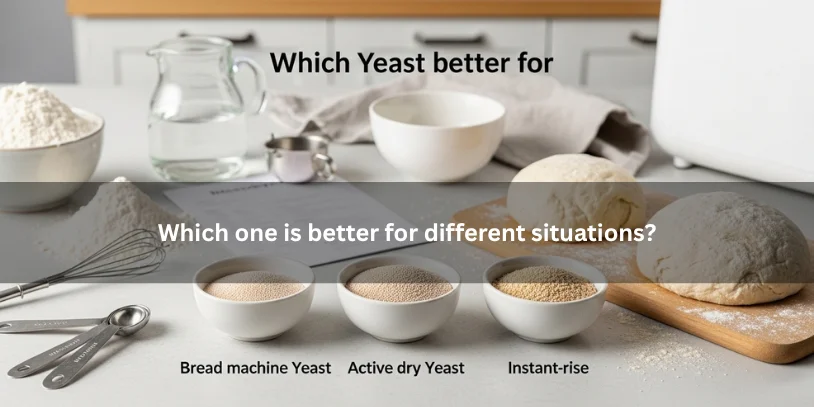
Best for beginners
Bread machine yeast
It skips a step and usually behaves more predictably in simple recipes.
Best for bread machines
Bread machine yeast
That is what it is designed for.
Best for hand-kneaded dough
Either can work
Active dry yeast is fine here because you control the timing. Bread machine yeast also works well if you want convenience.
Best for delayed cycles
Bread machine yeast
It is generally the safer choice because it is meant to sit dry with the flour until the machine begins mixing.
Best for sweet or enriched dough
Depends on the recipe
Sweet dough, enriched dough, and high-sugar dough can be more sensitive. Sugar competes for moisture and can slow fermentation, while rich ingredients like butter and eggs change dough behavior. In these recipes, using the amount the recipe specifically calls for is smarter than guessing.
Bread machine yeast vs active dry yeast by scenario
| Scenario | Better Choice | Why |
|---|---|---|
| Simple white bread in bread machine | Bread machine yeast | Matches fixed cycle better |
| Hand-kneaded sandwich loaf | Either | Easy to adjust proof time |
| Pizza dough | Either | Flexible fermentation |
| Sweet rolls or brioche | Recipe-specific | Rich dough changes yeast behavior |
| Delay timer bread machine loaf | Bread machine yeast | Safer in dry delayed setup |
| Old yeast in pantry | Active dry, proofed first | Easy to test viability |
| Beginner baking first loaf | Bread machine yeast | Fewer steps, less guesswork |
What happens if you use the wrong one?
Sometimes nothing dramatic happens. The loaf still works.
But other times you get one of these problems:
- dough rises too slowly
- loaf does not rise enough
- bread over-rises and collapses
- texture becomes dense or uneven
- loaf shape turns out odd in the machine pan
- crust and crumb quality suffer
This is not because one yeast is bad. It is because rise speed, dough structure, fermentation timing, and machine cycles all work together.
Yeast produces gas. Gluten traps that gas. If the timing goes off, the dough structure suffers.
Troubleshooting chart
| Problem | Likely Cause | Fix |
|---|---|---|
| Bread did not rise | Expired yeast, too-cool environment, old active dry yeast | Proof active dry first, check freshness, give more time |
| Bread collapsed in machine | Too much instant-style yeast, fast cycle, over-proofing | Reduce yeast slightly, avoid aggressive quick settings |
| Dense crumb | Weak fermentation or dead yeast | Check storage, test yeast activity, use fresh yeast |
| Yeast foamed poorly | Old yeast or water too hot/cold | Use fresh yeast and warm water |
| Loaf rose unevenly | Mismatch between recipe and yeast type | Use recipe-specific yeast or adjust method |
Storage and shelf life matter more than people think
Even the right yeast can fail if it has been stored badly.
Keep yeast:
- tightly sealed
- away from heat and humidity
- in a cool, dry place before opening
- in the refrigerator or freezer after opening, if the package allows it
If your yeast is old, active dry has one advantage: you can test it first with a simple yeast activity test in warm water.
Packet conversion basics
A standard packet of yeast is usually:
- 2 1/4 teaspoons
- about 7 grams
That makes substitution easier when a recipe uses packets and your jar uses teaspoons.
Which yeast should you buy?
If you bake mostly with a bread machine, buy bread machine yeast or instant yeast.
If you bake mostly by hand and like traditional methods, active dry yeast is perfectly fine.
If you want one practical option for general baking, instant-style yeast is often the most versatile because it works in many recipes and is easy to use.
Simple decision guide
Choose bread machine yeast if:
- you use a bread maker often
- you want direct mixing
- you want fewer steps
- you use delay or quick settings
Choose active dry yeast if:
- you like proofing first
- you bake manually
- you want to test yeast activity
- you follow older recipes written for active dry yeast
Final takeaway inside the article
The difference between bread machine yeast and active dry yeast is not just packaging.
Bread machine yeast is finer, faster, and built for direct mixing and machine timing. Active dry yeast is coarser, often proofed first, and better suited to traditional dough handling.
Both work. The better choice depends on how you bake.
If you remember only one thing, remember this: substitution is possible, but the safest rule depends on the method, not just the ingredient list.
FAQs
1. Is bread machine yeast the same as active dry yeast?
No. Bread machine yeast is usually an instant-style yeast with finer granules and faster action, while active dry yeast is coarser and often proofed first.
2. Can I use active dry yeast in my bread machine?
Yes, you can. It often works, but the loaf may rise differently than it would with bread machine yeast, especially on quick or delayed settings.
3. Do I need to proof active dry yeast first?
It is often a good idea, especially if the yeast is older or you want to confirm it is still alive. Many bakers still do this even when recipes allow direct mixing.
4. Can I substitute bread machine yeast 1:1 for active dry yeast?
Sometimes, yes. A 1:1 swap often works in simple hand-mixed doughs. In bread machines, using a little less bread machine yeast is often safer.
5. Why did my bread collapse after switching yeast?
The most common reasons are over-proofing, too much instant-style yeast, or a machine cycle that was too aggressive for the new yeast speed.
6. Which yeast is better for a delay timer?
Bread machine yeast is usually better for delayed machine cycles because it is designed to stay dry until mixing starts.
7. Which yeast is better for sweet dough?
Sweet dough and enriched dough are more sensitive, so the best choice depends on the recipe. Follow the recipe closely and avoid casual substitutions.
8. How much yeast is in one packet?
One standard packet is usually 2 1/4 teaspoons, or about 7 grams.
9. Can expired yeast still work?
Sometimes, but results are less reliable. Active dry yeast can be tested in warm water first to see if it still foams and becomes active.
10. What water temperature should I use for proofing?
Use warm water, not hot water. If the water is too hot, it can damage or kill the yeast.
Conclusion
Bread machine yeast and active dry yeast both belong in a home baker’s kitchen, but they are not interchangeable in exactly the same way in every recipe.
Bread machine yeast is faster, finer, and better matched to automatic bread makers and direct-mix doughs. Active dry yeast is slower, often proofed first, and more familiar in traditional bread recipes. If you are baking by hand, you have more flexibility. If you are baking in a bread machine, the timing matters more, so small yeast changes can have bigger effects.
For the best results, match the yeast to your method, test older yeast before using it, and adjust by how the dough behaves rather than trusting a fixed rule every time.