
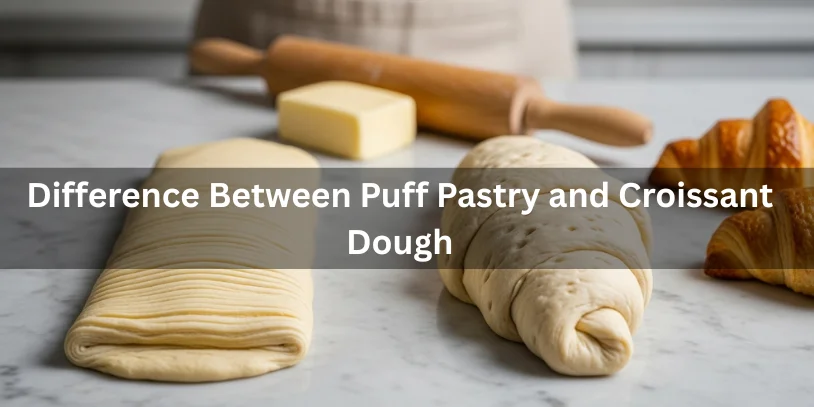
When it comes to laminated pastries, puff pastry and croissant dough are often confused by both beginners and experienced bakers. Though they may look similar while being prepared, their ingredients, handling, and baking results are very different. Knowing these key differences is essential for following recipes correctly, achieving the right texture, and avoiding common baking mistakes.
What Is Puff Pastry?
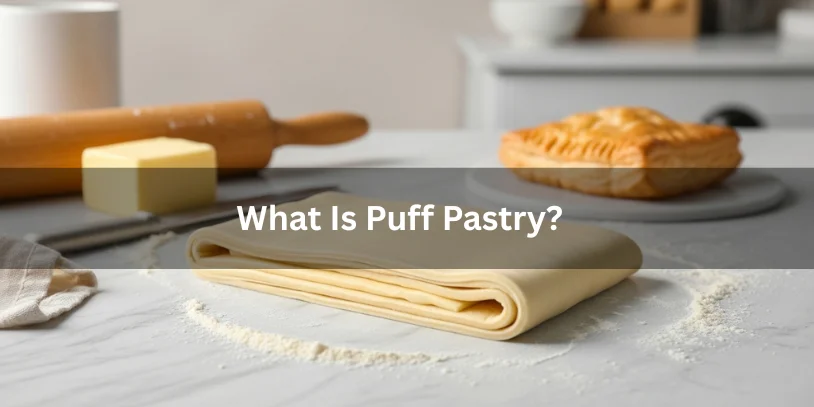
Puff pastry, known in French as pâte feuilletée, is an unleavened laminated dough. Its rise comes purely from steam expansion rather than yeast fermentation, which gives it a crisp, flaky texture ideal for layered pastries.
Core Ingredients
- Flour: Typically all-purpose or pastry flour
- Butter: European-style butter is preferred for richer flavor
- Water: Cold to maintain dough temperature
- Salt: Enhances flavor
Key Characteristics
- Flaky and crisp layers
- Neutral taste, versatile for sweet and savory dishes
- No yeast; therefore, no fermentation step
- Reliant on cold lamination techniques
Common Uses
- Mille-feuille
- Savory tarts and vol-au-vents
- Beef Wellington
- Turnovers and hand pies
Scenario: A home baker can quickly make a quick dessert tart using pre-rolled puff pastry without waiting for fermentation, making it ideal for same-day baking.
What Is Croissant Dough?
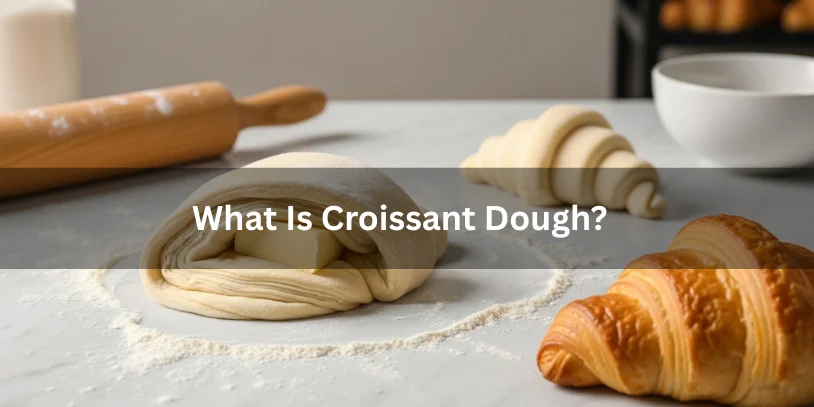
Croissant dough, or pâte levée feuilletée, is a yeast-based laminated dough. Unlike puff pastry, croissant dough undergoes fermentation, which produces a soft, airy interior with a slightly bread-like structure.
Core Ingredients
- Flour: Bread or all-purpose flour
- Butter: Laminated in layers
- Milk: Adds tenderness and flavor
- Sugar: Enhances yeast activity and browning
- Yeast: Leavening agent
- Salt: Balances flavor
Key Characteristics
- Soft, honeycomb-like interior
- Crisp exterior with buttery aroma
- Fermentation develops flavor complexity
- Requires proofing and careful temperature control
Common Uses
- Classic croissants
- Pain au chocolat
- Almond croissants
- Savory breakfast pastries
Scenario: A professional bakery produces croissants early in the morning by preparing dough the previous day, allowing fermentation to create light, airy layers.
Puff Pastry vs Croissant Dough: A Side-by-Side Comparison
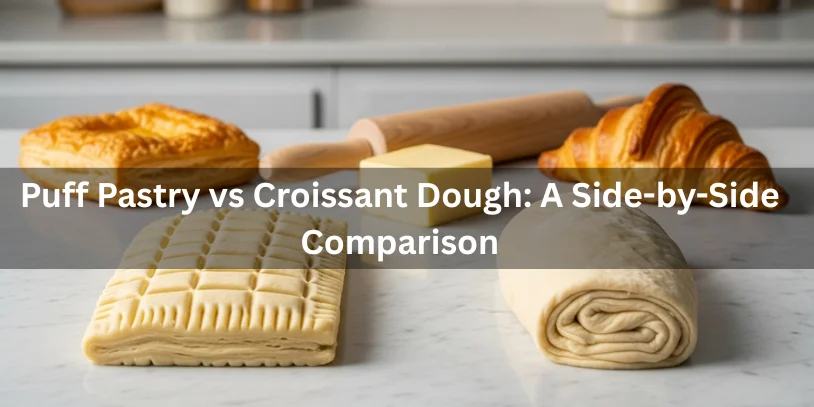
| Feature | Puff Pastry | Croissant Dough |
|---|---|---|
| Yeast | No | Yes |
| Fermentation | None | Required |
| Texture | Crisp, flaky | Soft, layered, airy |
| Flavor | Neutral | Buttery, rich |
| Rise Method | Steam | Yeast + steam |
| Sugar | None | Small amount |
| Difficulty | Moderate | Advanced |
| Common Uses | Savory & sweet tarts, turnovers | Croissants, pain au chocolat, breakfast pastries |
| Preparation Time | Short | Longer due to proofing |
Why it matters: Choosing the wrong dough for a recipe can result in flat pastries, dense interiors, or poor flavor development.
Lamination and Fermentation Explained
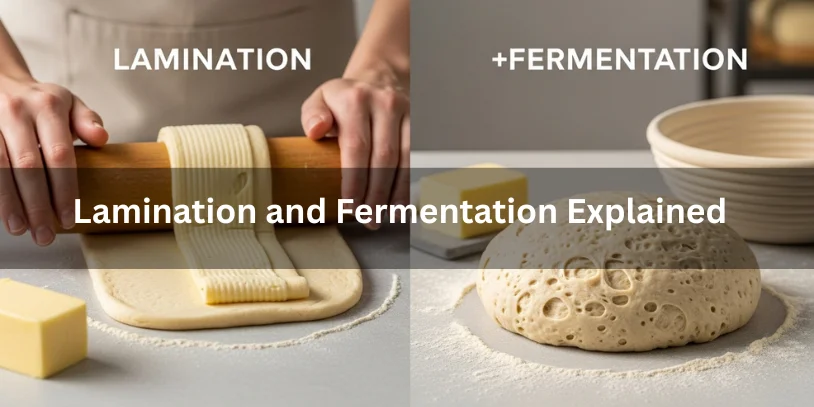
Lamination (Both Doughs)
Lamination involves folding butter into the dough repeatedly, creating hundreds of alternating layers of butter and dough. The layers are responsible for puff and flakiness during baking.
Key Points:
- Butter must remain cold to prevent melting
- Dough should be rested between folds
- Overhandling can compromise layer separation
Fermentation (Croissant Dough Only)
Yeast fermentation produces carbon dioxide, which expands during proofing and baking, creating soft, airy layers. Fermentation also contributes complex, buttery flavors that puff pastry cannot achieve.
Expert Tip: Proper temperature control is critical—too warm, and butter melts; too cold, and yeast activity slows.
When to Use Puff Pastry vs Croissant Dough
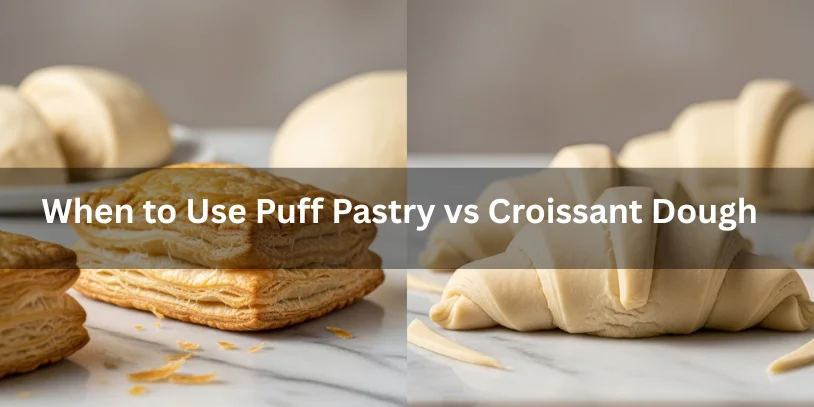
Puff Pastry Ideal Uses
- Crisp tarts or savory appetizers
- Quick desserts with minimal preparation
- Situations where neutral flavor complements fillings
Croissant Dough Ideal Uses
- Breakfast pastries needing a soft, airy crumb
- Recipes where buttery flavor is a focal point
- Professional bakeries aiming for classic viennoiserie results
Example: For an almond tart, puff pastry works best due to crispness, while for an almond croissant, croissant dough provides the desired soft, layered interior.
Can You Substitute One for the Other?
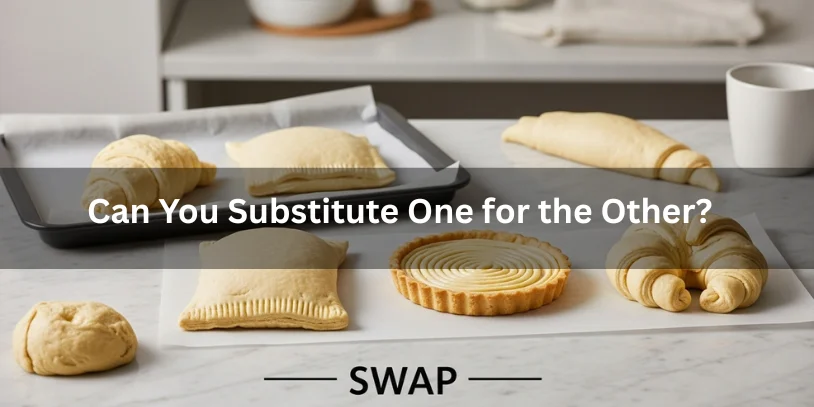
Substituting puff pastry for croissant dough or vice versa is generally not recommended.
- Puff pastry lacks yeast; using it for croissants yields flat, crisp but dense pastries
- Croissant dough lacks snap; using it for tarts results in a softer, less structured product
Tip: Some Danish pastry recipes layer croissant dough for flavor but not vice versa.
Common Mistakes and How to Avoid Them
- Over-proofing croissant dough – leads to collapse during baking
- Using warm butter – destroys lamination layers
- Skipping rest periods – layers won’t develop fully
- Expecting puff pastry to taste buttery – flavor is neutral, not rich
- Incorrect rolling technique – uneven puff or layers
croissant dough vs puff pastry
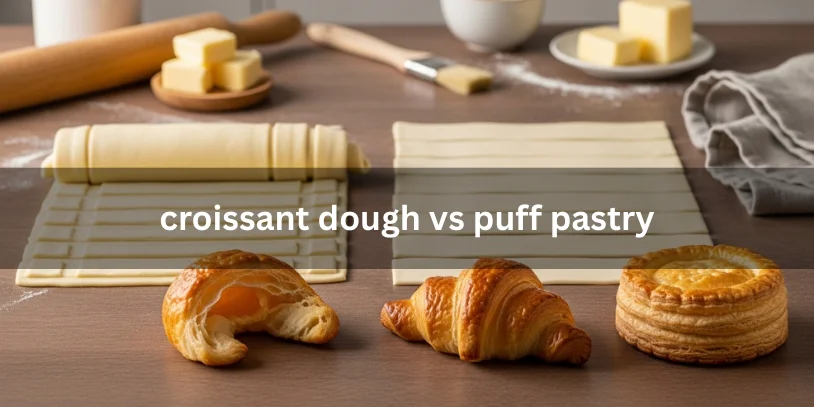
| Feature | Croissant Dough | Puff Pastry |
|---|---|---|
| Leavening | Yeast (plus steam from butter layers) | Steam only (no yeast) |
| Texture | Soft, airy interior with flaky layers | Crisp, crunchy, fully flaky |
| Ingredients | Flour, butter, milk, sugar, salt, yeast | Flour, butter, water, salt |
| Flavor | Slightly sweet, rich, buttery | Neutral, buttery |
| Rise Method | Yeast fermentation + butter lamination | Butter lamination (steam expansion) |
| Best Uses | Croissants, pain au chocolat, breakfast pastries | Tarts, turnovers, savory pies, appetizers |
| Substitution | Not ideal; won’t give the same airy interior | Not ideal; won’t give soft bread-like center |
| Key Tip | Requires proofing and multiple folds | Ready to use; no proofing needed |
Tools and Techniques for Success
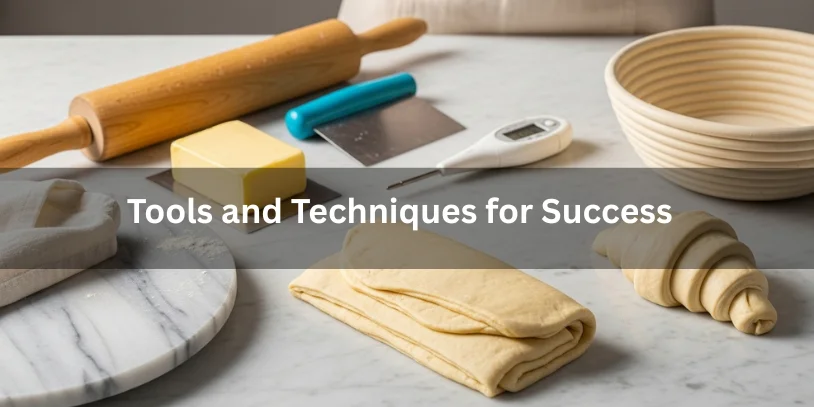
- Rolling pin and pastry board for even lamination
- Dough scraper for folding layers without tearing
- Pastry brush for egg wash
- Proofing box to control temperature for yeast dough
- Butter block technique for even layering
Pro Tip: European-style butter contains higher fat content, which improves layer separation and flavor in laminated doughs.
is puff pastry the same as croissant dough
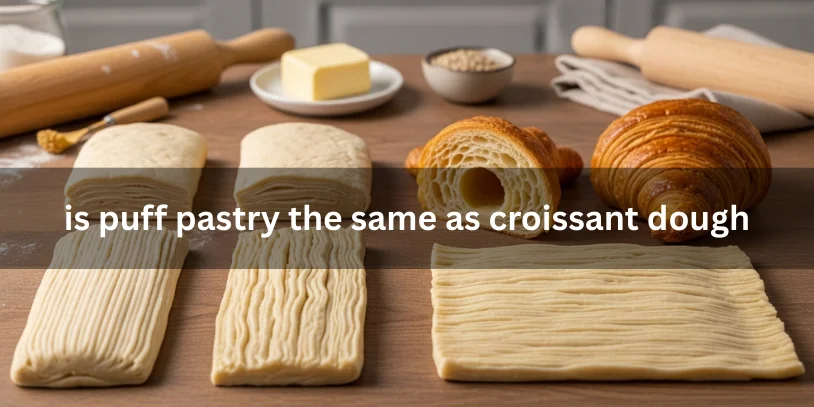
| Feature | Puff Pastry | Croissant Dough |
|---|---|---|
| Yeast | No yeast | Contains yeast |
| Leavening Method | Steam from butter layers | Yeast fermentation + steam from butter |
| Texture | Crisp, flaky, and crunchy | Soft, airy, and flaky |
| Interior Structure | Layered and hollow | Honeycomb-like, bread-style interior |
| Flavor | Neutral and buttery | Slightly sweet and rich |
| Preparation Time | No proofing required | Requires proofing time |
| Common Uses | Tarts, turnovers, savory pies | Croissants, pain au chocolat |
| Best For | Crisp pastries and structured desserts | Soft, bakery-style breakfast pastries |
Baking Use Cases: Home vs Professional
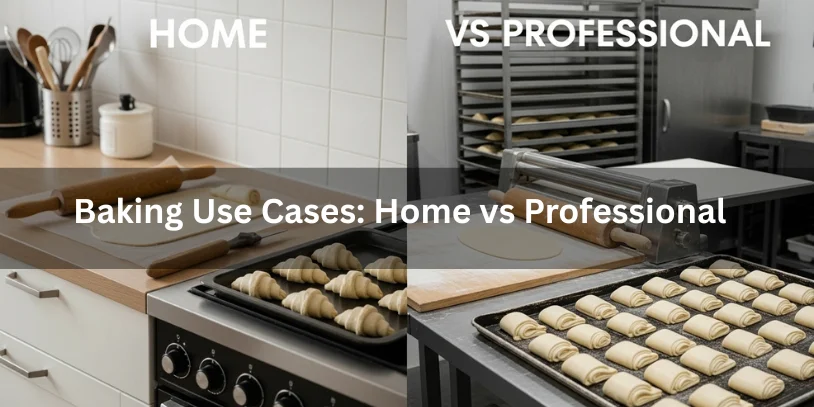
Home Bakers
- Puff pastry: Quick tarts, turnovers, savory appetizers
- Croissant dough: Weekend projects, beginner-friendly with pre-made dough
Professional Bakers
- Puff pastry: Plated desserts, specialty savory dishes
- Croissant dough: Daily viennoiserie production, signature croissants, pain au chocolat
Scenario: Artisan bakeries in Paris, Vienna, and New York produce croissants using in-house croissant dough, while pre-rolled puff pastry is used for vol-au-vents and mille-feuille.
Buying and Pricing Guidance

Puff Pastry: Widely available frozen in grocery chains worldwide; prices range $3–$7 per sheet depending on brand.
Croissant Dough: Less common pre-made; typically found in bakery supply stores or prepared in-house; professional bakery suppliers may charge $4–$10 per portion depending on quality.
Local Variation Examples:
- “Frozen puff pastry near me” searches are common in U.S. and UK
- “Bakery croissant dough supplier [city]” queries show in professional B2B searches
Global Ingredient Considerations

- Flour: Bread flour in croissant dough vs pastry flour in puff pastry
- Butter: European-style for lamination; water content affects texture
- Milk & Sugar: Croissant dough includes both for fermentation and browning
- Regional Availability: French butter or specialty flour may differ in US, UK, EU, or Asia
Short-Step Procedural Breakdown
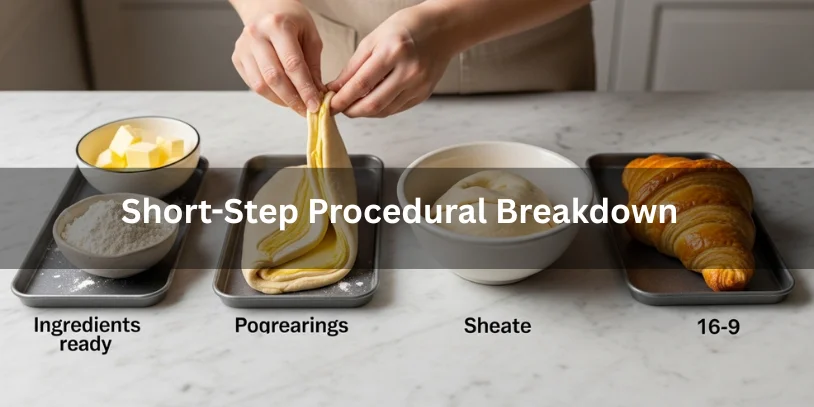
How to Laminate Dough (Both Types)
- Roll dough into rectangle
- Place butter block in center
- Fold dough over butter
- Roll and fold 3–4 times
- Rest in refrigerator between folds
How to Proof Croissant Dough
- Shape dough into desired forms
- Place on parchment-lined trays
- Cover and rest at 24–26°C (75–78°F)
- Bake when dough has doubled in size
Common FAQs
- Which dough rises faster?
Croissant dough rises faster due to yeast fermentation, while puff pastry relies on steam, not yeast. - Can I freeze croissant dough?
Yes, freezing after initial lamination is possible. Thaw in refrigerator before final proofing. - Why does puff pastry puff unevenly?
Uneven rolling, warm butter, or skipping rest periods can cause irregular puffing. - What is the best butter for laminated dough?
European-style butter with 82–85% fat content provides optimal layers and flavor. - Can puff pastry substitute croissant dough?
Not effectively; puff pastry lacks yeast, leading to flat, dense results if used for croissants. - What is the difference between viennoiserie and puff pastry?
Viennoiserie refers to yeast-leavened laminated doughs like croissants; puff pastry is unleavened laminated dough. - Is croissant dough harder to make than puff pastry?
Yes, due to fermentation control, proofing, and yeast handling.
Conclusion
Choosing croissant dough vs puff pastry comes down to texture, flavor, and recipe goals. Puff pastry is crisp, flaky, and quick, perfect for tarts and turnovers. Croissant dough is soft, airy, and buttery, ideal for breakfast pastries and viennoiserie. Understanding lamination, fermentation, and ingredient quality ensures consistent results for home bakers and professionals alike. When in doubt, follow recipe-specific guidance, respect dough temperature and handling, and choose the dough that aligns with your desired outcome.
By mastering these differences, you can confidently bake everything from crisp mille-feuille to delicate almond croissants without compromising texture or flavor.