
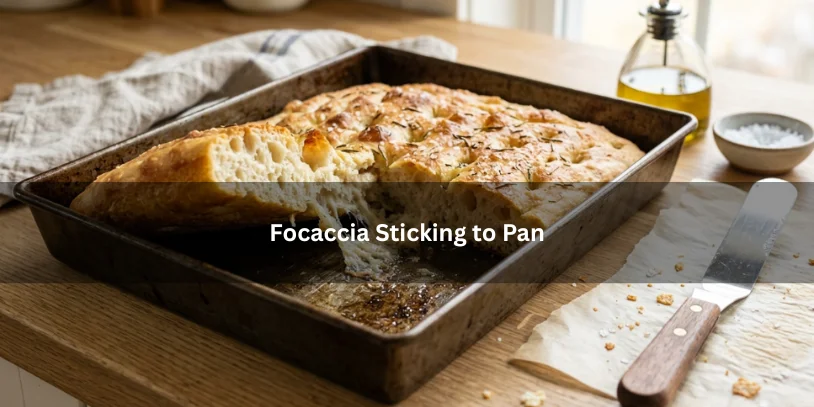
Focaccia sticks to the pan when the dough bonds to a dry, poorly greased, slow-heating, or underbaked surface. The fix is usually simple: use enough olive oil, line the pan with parchment when needed, bake until the bottom crust is fully set, and remove the focaccia while it is still warm.
This problem is common because focaccia is a high-hydration dough. It is wetter, softer, and stickier than many basic bread doughs. That wet texture is what gives focaccia its airy crumb, open bubbles, and soft center, but it also means the dough can grip the pan if the release layer fails.
The issue is not always your recipe. Sometimes the problem is the pan, the oil amount, the dough proofing, the oven rack position, or the timing of removal. A focaccia that looks golden on top can still be pale, gummy, and stuck underneath.
Quick Fix: What to Do If Focaccia Is Already Stuck
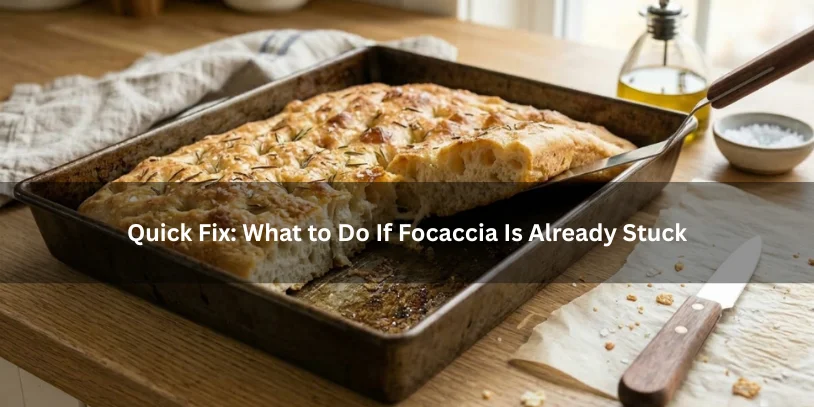
If your focaccia is already baked and stuck, do not rip it out of the pan. That usually tears the bottom crust and leaves the best crispy part behind.
Try this instead:
- Let the focaccia cool for 5 to 10 minutes.
- Run a thin offset spatula or butter knife around the edges.
- Lift one corner gently.
- Slide a flexible spatula under the bottom crust.
- Work slowly in sections instead of pulling from one side.
- If one area is badly stuck, add a few drops of olive oil near the edge and let it seep underneath.
- Transfer the focaccia to a wire rack once released.
The key is patience. Hot focaccia is fragile, but fully cold focaccia can stick harder because trapped steam softens the bottom. Warm removal is the sweet spot.
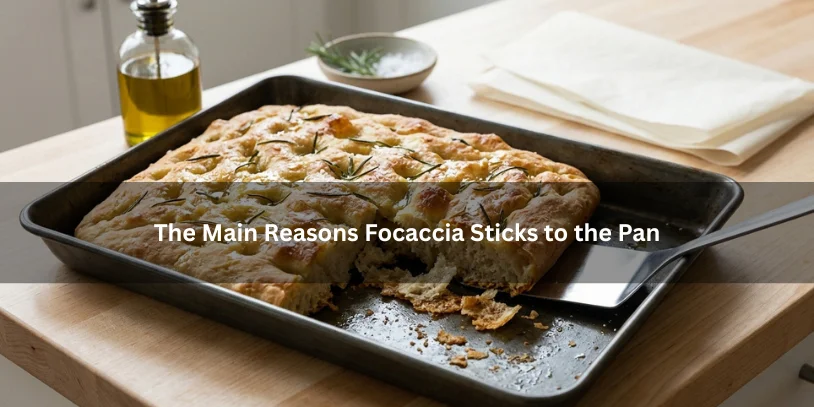
The Main Reasons Focaccia Sticks to the Pan
1. Not Enough Olive Oil
Focaccia needs more oil than most bread. A light brush of oil is often not enough.
Olive oil does three jobs:
- Creates a release barrier between dough and pan
- Helps the bottom crust crisp
- Adds the rich flavor focaccia is known for
For a standard 9 x 13 inch pan, many bakers use around 2 to 3 tablespoons of olive oil in the pan. If your dough is very wet or your pan is not naturally nonstick, you may need parchment as well.
2. The Oil Was Uneven
Sometimes people use enough oil, but the dough still sticks because the oil moved away from part of the pan.
This happens when:
- The pan is slightly warped
- The oil pools in one corner
- Dough is dragged across the pan
- The dough proofs for a long time and absorbs oil
- The pan sides are not coated
Before adding dough, tilt the pan so the bottom and sides are fully coated. After adding the dough, gently turn or move it so the surface picks up oil.
3. The Pan Material Is Working Against You
Pan material makes a big difference.
Metal pans, especially dark aluminum pans, heat faster and help the bottom crust set. Glass and ceramic baking dishes heat more slowly, which can leave the bottom pale, soft, or slightly gummy. A soft bottom is more likely to stick.
Here is a simple pan comparison:
| Pan Type | Sticking Risk | Bottom Crust | Best Use |
|---|---|---|---|
| Dark aluminum pan | Low | Very crispy | Best overall |
| Heavy nonstick metal pan | Low | Good | Beginner-friendly |
| Cast iron skillet | Low-medium | Very crispy | Round focaccia |
| Light sheet pan | Medium | Good | Thin focaccia |
| Glass baking dish | High | Softer | Use parchment |
| Ceramic baking dish | High | Softer | Serving-style focaccia |
| Scratched nonstick pan | High | Uneven | Avoid if possible |
If focaccia keeps sticking in your glass dish, the easiest fix is to line it with parchment and use extra olive oil.
4. The Bottom Crust Is Underbaked
A fully baked bottom crust releases better. A pale or gummy bottom clings to the pan.
Your focaccia may be underbaked underneath if:
- The top is brown but the bottom is pale
- The center feels wet or heavy
- The bottom tears like soft dough
- The bread sticks more in the middle than the edges
To fix this, bake on the lower-middle rack, use a metal pan, and give the bread enough time for the bottom crust to firm up. If your oven runs cool, an oven thermometer can help.
5. The Dough Is Very Wet
Focaccia dough is supposed to be sticky. That is normal. But very high-hydration dough needs better pan preparation.
If the dough feels loose, slack, and hard to handle, use:
- Parchment paper
- Olive oil on top of the parchment
- Oiled fingers for dimpling
- A metal pan for better bottom heat
- A wire rack after baking
Sourdough focaccia can be even more prone to sticking because it often has a long fermentation and wet dough structure.
6. The Focaccia Cooled Too Long in the Pan
Leaving focaccia in the pan until it is fully cold can trap steam underneath. That steam softens the crust and makes it harder to remove cleanly.
Let it rest briefly, then move it to a wire rack. This keeps the bottom crisp and prevents moisture from building up.
Best Way to Prevent Focaccia From Sticking
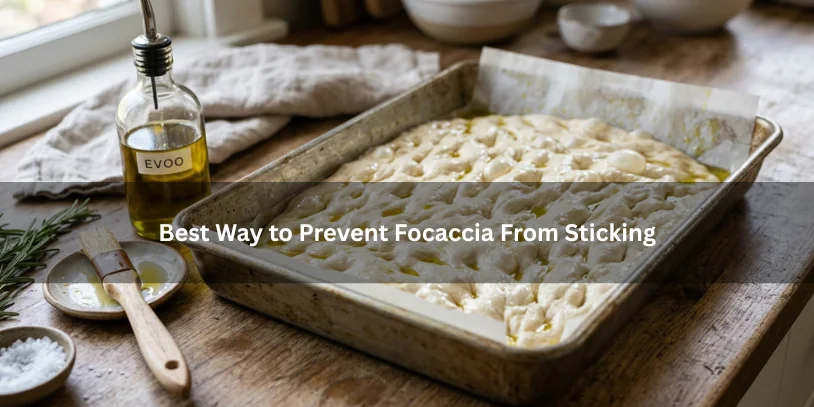
The safest method is simple:
Line the pan with parchment, grease the parchment, add olive oil, coat the dough, bake until the bottom is golden, and remove the focaccia while warm.
Use this setup if you are a beginner or if your focaccia has stuck before.
Step-by-Step Pan Prep
- Choose a metal pan if possible.
- Add parchment paper with extra length on two sides.
- Lightly spray or grease under the parchment so it stays flat.
- Add olive oil on top of the parchment.
- Brush oil up the sides of the pan.
- Place the dough gently into the pan.
- Coat the dough surface with oil.
- Let it proof until airy and bubbly.
- Dimple with oiled fingers.
- Bake until the top is golden and the bottom is firm.
- Cool for 5 to 10 minutes.
- Lift out using the parchment edges and transfer to a wire rack.
This method gives you both safety and texture. The parchment prevents tearing, while olive oil still helps create the classic focaccia crust.
Parchment Paper vs Olive Oil: Which Is Better?
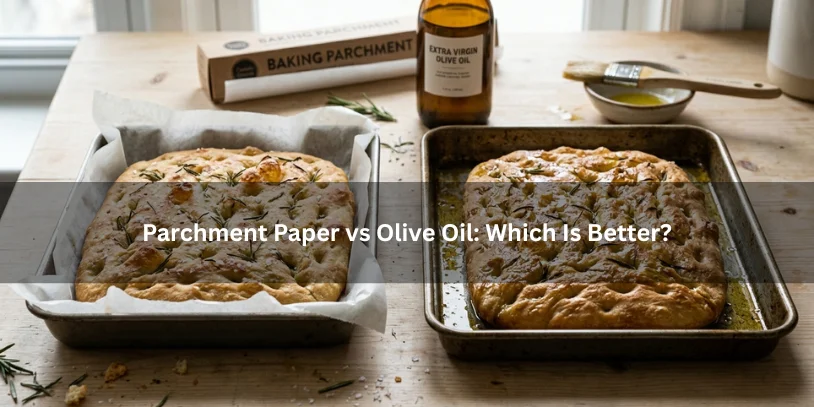
Parchment paper is better for preventing sticking. Olive oil is better for traditional flavor and crust texture. For most home bakers, the best option is to use both.
| Method | Best For | Pros | Cons |
|---|---|---|---|
| Olive oil only | Experienced bakers, good metal pans | Crispy bottom, traditional flavor | Higher sticking risk |
| Parchment only | Emergency release help | Easy lift | Less flavor, less crisping |
| Parchment + olive oil | Most home bakers | Best balance | Slightly less direct pan contact |
| Butter + olive oil | Glass/ceramic pans | Better side release | Less traditional |
| Nonstick spray + oil | Extra insurance | Easy and reliable | Less artisan-style |
| Semolina or cornmeal + oil | Rustic crust | Adds texture | Can burn if overused |
If your goal is the crispiest possible bottom, direct contact with an oiled dark metal pan works well. If your goal is zero tearing, parchment plus oil is the safer choice.
Should You Use Butter for Focaccia?
Butter is not the classic choice for focaccia, but it can help when the bread sticks to the sides of the pan. Butter clings better to vertical surfaces than oil, which tends to slide down.
A practical method is:
- Rub a thin layer of butter on the pan sides
- Add parchment to the bottom
- Pour olive oil over the parchment
- Add the dough
This gives you the side-release benefit of butter and the flavor of olive oil.
Can You Use Nonstick Spray?
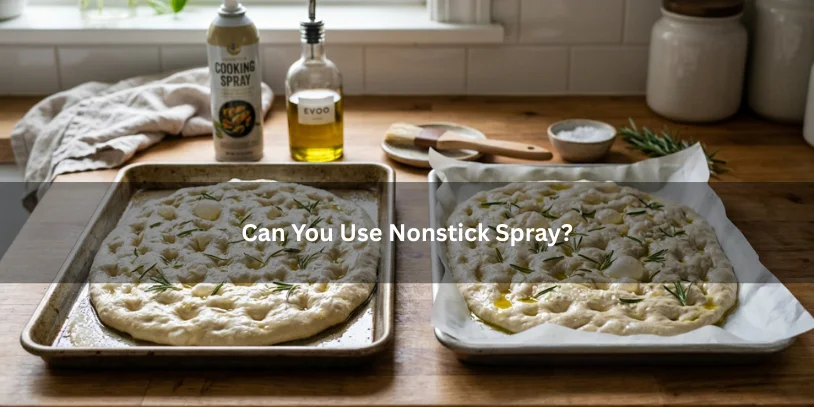
Yes, baking spray can help, especially under parchment or on the pan sides. It should not replace olive oil entirely because olive oil is part of focaccia’s flavor and crust.
Use nonstick spray as backup, not as the main character.
Should You Use Semolina or Cornmeal?
Semolina and cornmeal can help create a textured release layer, but they are not always enough on their own.
Use them lightly with olive oil if you want:
- A rustic bottom crust
- Extra crunch
- More separation between dough and pan
Do not use a heavy layer. Too much can burn or make the bottom gritty.
Best Pan for Focaccia That Does Not Stick
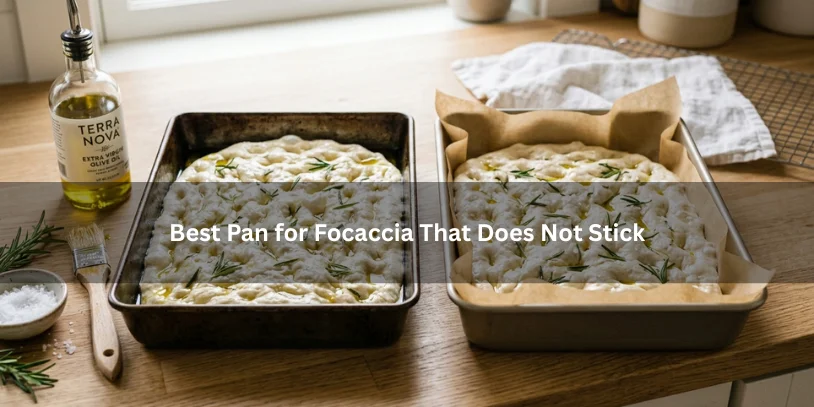
The best pan for focaccia is usually a dark metal pan, heavy aluminum pan, or well-seasoned cast iron skillet. These pans heat strongly enough to help the bottom crust set and release.
Best Choice by Situation
| Situation | Best Pan Choice |
|---|---|
| Beginner focaccia | Heavy nonstick metal pan with parchment |
| Crispiest bottom | Dark aluminum pan |
| Round focaccia | Cast iron skillet |
| Thin sheet-pan focaccia | Light or dark metal sheet pan |
| Loaded focaccia with toppings | Metal pan with parchment |
| Only have glass | Use parchment, extra oil, and bake longer |
| Small bakery or café | Commercial aluminum or seasoned steel pans |
Premium commercial-style pans, including Detroit-style pizza pans, can be useful if you bake focaccia often. For occasional home baking, parchment plus a decent metal pan is usually enough.
Why Focaccia Sticks to Glass or Ceramic Pans
Glass and ceramic dishes can work, but they are less forgiving. They heat slowly, hold moisture differently, and often create a softer bottom crust.
Use this method if glass or ceramic is your only option:
- Grease the dish lightly.
- Add parchment.
- Oil the parchment generously.
- Coat the sides well.
- Bake until the bottom is fully set.
- Remove while warm.
If the top browns before the bottom is done, move the pan lower in the oven next time.
Why Focaccia Sticks to Parchment Paper
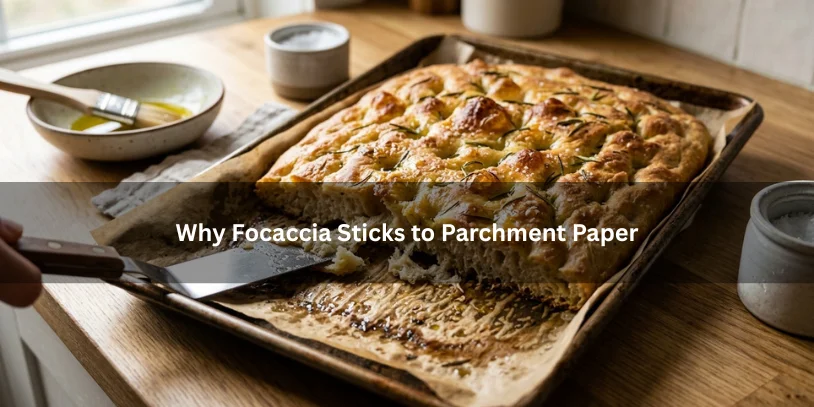
Parchment can stick when the dough is very wet, the bottom is underbaked, or the parchment quality is poor.
This is common with high-hydration focaccia and sourdough focaccia.
To avoid it:
- Use oven-safe parchment, not wax paper
- Oil the parchment before adding dough
- Bake until the bottom crust is firm
- Avoid too many wet toppings
- Let the bread cool for a few minutes before lifting
- Do not peel parchment from a steaming-hot bottom crust
If parchment keeps sticking, try a better parchment brand or use a lightly greased dark metal pan with enough oil.
Troubleshooting: Cause and Fix Table
| Problem | Likely Cause | Best Fix |
|---|---|---|
| Bottom crust tears | Underbaked or not enough oil | Bake longer, use parchment |
| Edges stick | Pan sides not greased | Oil or butter the sides |
| Stuck in glass pan | Slow bottom browning | Use parchment and bake lower |
| Stuck even with oil | Oil moved or pan is poor | Use parchment plus oil |
| Parchment sticks | Bottom too wet or underbaked | Oil parchment, bake longer |
| Bottom is pale | Weak bottom heat | Use metal pan, lower rack |
| Bottom is soggy | Steam trapped in pan | Move to wire rack sooner |
| Nonstick pan sticks | Coating damaged | Replace pan or use parchment |
| Sourdough focaccia sticks | Wet dough, long proof | Use parchment and generous oil |
Common Mistakes to Avoid
Using Flour as the Only Release Layer
Flour is not a great choice for focaccia pan prep. It can turn dry, pasty, or bitter on the bottom. Olive oil and parchment work much better.
Forgetting the Pan Sides
Focaccia rises and spreads. If the sides are dry, the edges can glue themselves to the pan even when the bottom releases.
Cutting in a Nonstick Pan
Cutting focaccia directly in a nonstick pan can scratch the coating. Once the coating is damaged, future bakes may stick more.
Using Wax Paper
Wax paper is not the same as parchment paper. Do not use wax paper for baking focaccia in the oven.
Overloading Wet Toppings
Tomatoes, onions, mushrooms, olives, and cheese can release moisture. Too much moisture on top can slow down baking and leave the bottom softer.
Removing It Too Late
If your focaccia often sticks, do not let it cool completely in the pan. Remove it while warm and finish cooling on a rack.
Tools That Make Focaccia Easier to Release
You do not need fancy equipment, but a few tools help:
- Metal baking pan
- Oven-safe parchment paper
- Extra virgin olive oil
- Pastry brush
- Flexible spatula
- Offset spatula
- Wire cooling rack
- Oven thermometer
- Bench scraper
- Baking steel or stone, optional
For bakeries, cafés, and commercial kitchens, consistency matters more. Food-safe pan release spray, seasoned trays, and repeated pan maintenance can make batch production more reliable.
Regional Baking Conditions That Can Affect Sticking
This problem happens everywhere, but climate can change how dough behaves.
In hot and humid places, focaccia dough may proof faster and feel stickier. In colder kitchens, dough may proof slowly, and bakers may rush the bake before the structure is ready. In small apartment kitchens or countertop ovens, uneven heat can leave the bottom pale.
If your area has limited baking supplies, do not overthink it. A basic metal pan, parchment paper, and enough olive oil can still solve most sticking problems.
FAQs
Why did my focaccia stick even though I used oil?
Your focaccia may have stuck because the oil was uneven, the dough absorbed it during proofing, the pan sides were dry, or the bottom crust was underbaked. Use parchment plus olive oil if this keeps happening.
Should I use parchment paper for focaccia?
Yes, parchment paper is the safest way to prevent focaccia from sticking. For best results, oil the parchment before adding the dough so you still get flavor and crust development.
How much olive oil should I use in the pan for focaccia?
For a 9 x 13 inch pan, 2 to 3 tablespoons of olive oil is a practical starting point. Use enough to coat the bottom and sides fully, especially with wet dough.
Can I bake focaccia in a glass pan?
Yes, but glass is more likely to create a softer bottom crust. Use parchment, extra oil, and bake until the bottom is fully set. A metal pan is usually better.
Why is my focaccia bottom gummy and stuck?
A gummy, stuck bottom usually means the focaccia was underbaked, baked in a slow-heating pan, overloaded with wet toppings, or cooled too long in the pan.
Should focaccia cool in the pan?
Let focaccia cool in the pan for 5 to 10 minutes, then remove it to a wire rack. Leaving it in the pan until fully cold can trap steam and soften the bottom.
Can butter stop focaccia from sticking?
Butter can help, especially on the sides of the pan, because it clings better than oil. For best results, use butter as a backup and still use olive oil for flavor.
Why does sourdough focaccia stick more?
Sourdough focaccia often uses wetter dough and longer fermentation. That gives the dough more time to settle into the pan, so parchment and generous oil are helpful.
Is a dark pan better for focaccia?
A dark metal pan usually gives better bottom browning and a crispier crust. It can also help the focaccia release more cleanly because the bottom sets faster.
How do I get a crispy bottom without sticking?
Use a metal pan, enough olive oil, strong bottom heat, and proper baking time. For extra safety, use parchment with oil. Remove the bread while warm and cool it on a wire rack.
Conclusion
Focaccia sticking to the pan is usually caused by weak pan prep, not enough oil, uneven oil coverage, poor pan material, underbaking, or cooling the bread too long in the pan.
The most reliable fix is to use a metal pan, line it with parchment, oil the parchment and sides, bake until the bottom crust is golden and firm, then remove the focaccia while it is still warm.
For beginners, parchment plus olive oil is the safest method. For the crispiest bakery-style bottom, a dark aluminum pan or well-seasoned cast iron skillet gives better heat and browning. Once you understand how oil, heat, dough hydration, and pan material work together, focaccia becomes much easier to release cleanly without tearing.