
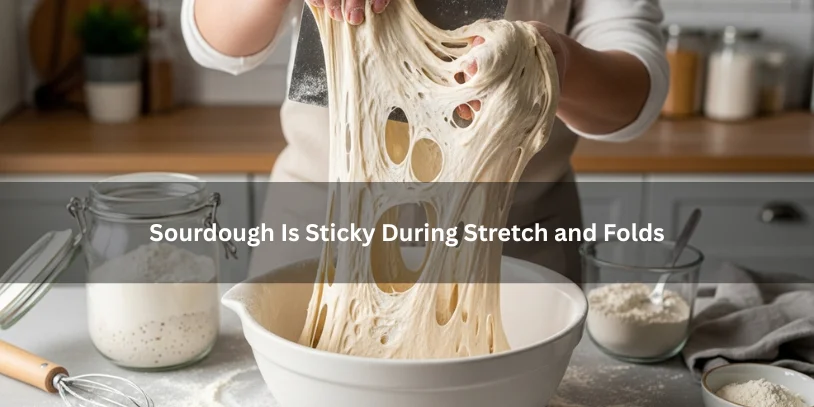
If your sourdough is sticky during stretch and folds, it does not automatically mean your dough is ruined. Sourdough often feels sticky early in bulk fermentation because the flour is still absorbing water, gluten development is still happening, and the dough has not built enough strength yet.
A little stickiness is normal.
The problem starts when the dough feels wet, soupy, shapeless, or impossible to lift. If it tears every time you stretch it, spreads flat after each fold, or smells strongly sour and alcoholic, you may be dealing with overhydration, weak gluten, warm fermentation, or overproofing.
The goal is not to make sourdough feel dry. Good sourdough often feels slightly tacky. The goal is to build enough dough strength so it stretches, folds, and holds shape without falling apart.
Is Sticky Sourdough Normal During Stretch and Folds?
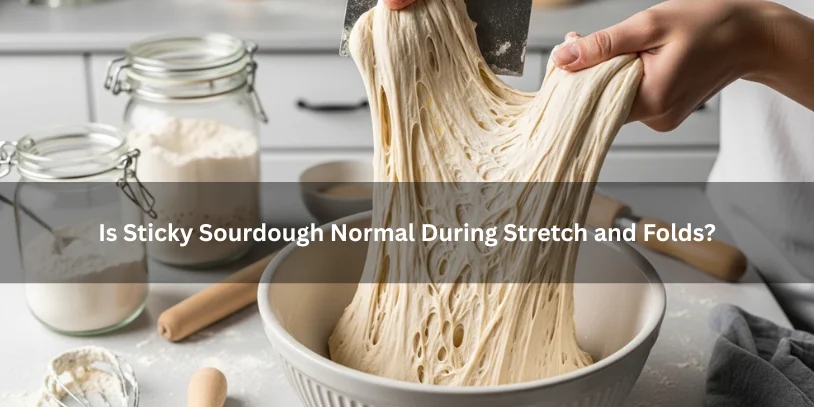
Yes, sourdough can be sticky during stretch and folds, especially in the first one or two rounds. At that stage, the dough is still loose, the gluten network is forming, and the water has not fully bonded with the flour.
Sticky dough is usually normal when:
- It stretches without tearing badly
- It becomes smoother after each fold
- It holds shape a little longer over time
- It feels tacky rather than soupy
- It has mild fermentation bubbles but still has structure
Sticky dough may be a problem when:
- It feels like batter
- It tears immediately when stretched
- It spreads flat after every fold
- It becomes stickier as bulk fermentation continues
- It smells sharply sour or alcoholic
- It cannot be shaped at all
Think of stickiness as a clue, not a final verdict. Your dough is telling you something about hydration, flour strength, gluten development, starter activity, temperature, or fermentation timing.
Sticky vs Tacky vs Wet Dough
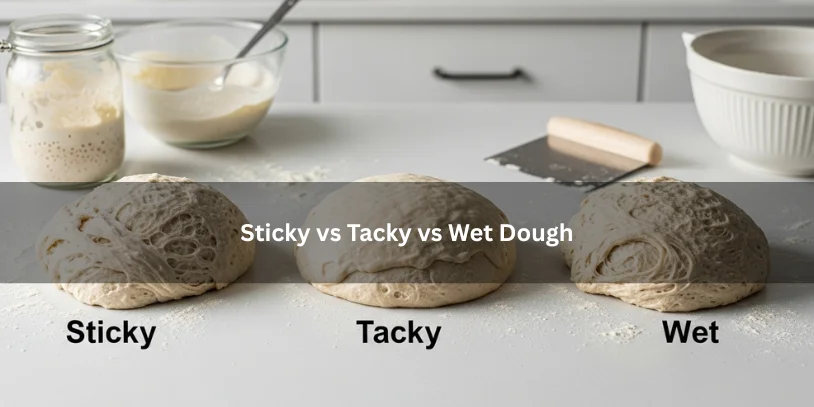
Many beginners call all sticky dough “too wet,” but these textures are not the same.
| Dough Feel | What It Means | What To Do |
|---|---|---|
| Tacky | Slightly sticky but pulls away cleanly | Continue normally |
| Sticky but stretchy | Gluten is still developing | Use wet hands and gentle folds |
| Wet and soupy | Too much water or weak flour | Diagnose hydration and flour strength |
| Sticky and tearing | Underdeveloped gluten or rough handling | Rest longer before folding |
| Sticky and sour-smelling | Possible overfermentation | Shape or bake sooner |
| Sticky and slack | Weak structure or overproofing | Use coil folds or switch to pan/focaccia |
Tacky dough is usually fine. Wet, shapeless dough needs attention.
Why Your Sourdough Is Sticky During Stretch and Folds
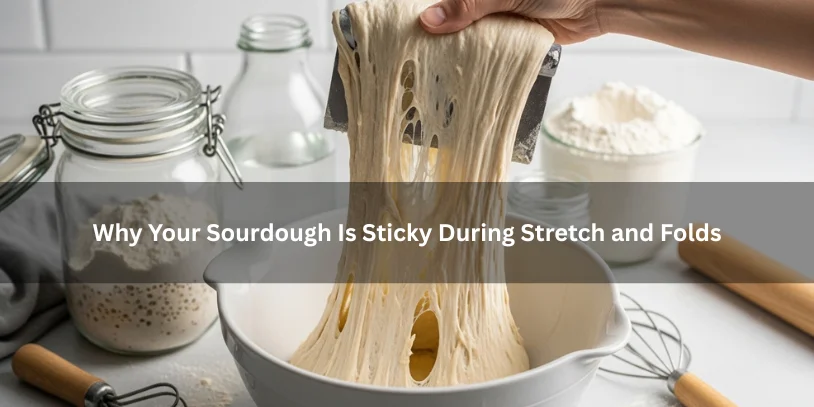
1. The Hydration Is High
Hydration percentage is one of the biggest reasons sourdough feels sticky. Hydration means the amount of water compared to flour.
For example:
- 500g flour + 325g water = 65% hydration
- 500g flour + 350g water = 70% hydration
- 500g flour + 400g water = 80% hydration
A 65–70% dough is usually easier for beginners. A 75–80% dough can give a more open crumb, but it is also looser, stickier, and harder to control.
| Hydration | Dough Feel | Skill Level |
|---|---|---|
| 60–65% | Firmer, easier to handle | Beginner |
| 66–70% | Soft but manageable | Beginner-friendly |
| 71–75% | Stickier, more extensible | Intermediate |
| 76–80% | Very loose and sticky | Advanced |
| 80%+ | Difficult to shape | Advanced |
High hydration is not automatically better. A well-handled 68% sourdough loaf is better than an 82% dough that collapses before baking.
2. Your Flour Cannot Handle the Water
Different flours absorb water differently. Strong bread flour usually handles more water because it has higher protein content and can build a stronger gluten network.
All-purpose flour may work well at lower hydration, but it can struggle with wet dough. Whole wheat flour absorbs more water, yet the bran can interfere with gluten development. Rye flour behaves differently from wheat and often feels naturally sticky or paste-like.
| Flour Type | How It Affects Stickiness |
|---|---|
| Bread flour | Builds stronger dough structure |
| All-purpose flour | Can become sticky at higher hydration |
| Whole wheat flour | Absorbs water but can weaken gluten |
| Rye flour | Naturally sticky and less elastic |
| Fresh milled flour | Ferments faster and absorbs water differently |
Global flour differences matter too. US bread flour, UK strong white bread flour, European flours, Australian bread flour, and local all-purpose flour may not behave the same in one recipe.
If a recipe was written for strong bread flour and you used weaker flour, your sourdough may feel stickier than expected.
3. Gluten Has Not Developed Yet
Stretch and folds exist to strengthen the dough. During bulk fermentation, wheat proteins such as glutenin and gliadin hydrate and form a gluten network. This network traps carbon dioxide from wild yeast and lactic acid bacteria in your sourdough starter.
Early dough can feel rough, sticky, and weak. After a few folds and rest periods, it should become smoother, more elastic, and more extensible.
Signs gluten is improving:
- The dough stretches farther before tearing
- The surface looks smoother
- The dough resists slightly when pulled
- It holds shape longer after folding
- It becomes less sticky over time
If your dough tears during stretch and folds, do not force it. Rest it for 20–30 minutes and try again gently.
4. Your Starter Is Weak or Overripe
A weak starter can make dough slow, sticky, and underdeveloped. An overripe starter can bring too much acidity into the dough, which may weaken gluten over time.
Use your starter or levain when it is active, bubbly, and near peak. If it has collapsed, smells very sharp, or has been sitting too long, it may still ferment the dough, but it may not give the best structure.
A strong starter helps the dough rise predictably and develop better strength during bulk fermentation.
5. The Dough Is Too Warm
Warm dough ferments faster. In a hot kitchen, humid climate, or summer baking environment, sourdough can move quickly from sticky-but-normal to sticky-and-slack.
Signs temperature is the issue:
- Dough becomes loose too early
- Fermentation bubbles appear quickly
- Dough smells sour earlier than usual
- It gets harder to handle after each fold
- It spreads instead of holding shape
In warm conditions, use cooler water, reduce starter amount slightly, shorten bulk fermentation, or move the dough to a cooler spot.
In cold kitchens or winter baking, the opposite happens. Dough may stay sticky longer because fermentation and gluten development are moving slowly.
What To Do Right Now If Your Sourdough Is Sticky
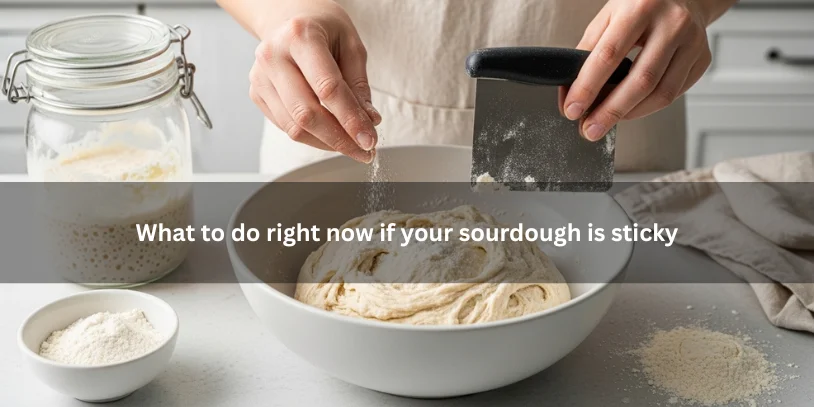
If your dough is sticky during stretch and folds, do not panic and do not dump in flour immediately.
Try this:
- Wet your hands lightly
Damp hands prevent sticking without changing the recipe balance. - Stop adding dry flour
Too much flour during bulk fermentation can create dry streaks and dense texture. - Let the dough rest
If it tears, rest it for 20–30 minutes before the next fold. - Switch to coil folds
Coil folds are gentler and work well for wet, high-hydration dough. - Check dough temperature
If the dough feels warm and slack, fermentation may be moving too fast. - End bulk earlier if needed
If the dough is bubbly, sticky, and losing strength, shape it sooner. - Change the bake format if necessary
If it cannot hold shape, bake it as focaccia, pan bread, pizza base, flatbread, or ciabatta-style bread.
Sticky dough can still become good bread. It just may need a different handling plan.
Should You Add Flour to Sticky Sourdough?
Usually, no.
Adding flour during stretch and folds is not the best fix unless you clearly mismeasured the water. Extra flour can sit on the surface, create dry patches, and throw off the dough’s hydration balance.
Better options include:
- Wet hands
- A dough scraper
- Longer rest periods
- Coil folds
- Cooler fermentation
- Lower hydration next time
- Stronger flour next time
A small dusting of flour during final shaping is fine. But during bulk fermentation, water on your hands usually works better than flour on the dough.
Stretch and Fold vs Coil Fold for Sticky Dough
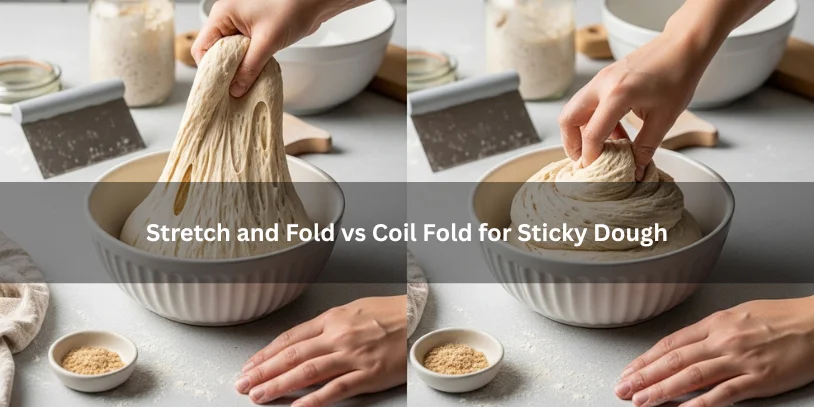
Both methods strengthen sourdough, but they do not feel the same.
| Method | Best For | Main Benefit |
|---|---|---|
| Stretch and fold | Medium hydration dough | Builds strength with simple handling |
| Coil fold | Wet or delicate dough | Strengthens without tearing |
| Slap and fold | Early mixing stage | Builds gluten faster |
| Lamination | Extensible dough | Spreads and layers dough gently |
| Rubaud mixing | Wet dough in bowl | Develops dough without heavy kneading |
If your sourdough is sticky and tearing during stretch and folds, coil folds may be the better choice.
To do a coil fold:
- Wet both hands.
- Lift the dough gently from the center.
- Let both ends fold under themselves.
- Turn the bowl and repeat.
- Cover and rest.
This method builds dough strength without rough handling.
What Your Sticky Dough Is Telling You
| What You See | Likely Cause | Best Fix |
|---|---|---|
| Sticky during first fold only | Normal early gluten stage | Continue |
| Sticky but improving | Gluten developing | Keep folding gently |
| Sticky and tearing | Dough needs rest | Wait 20–30 minutes |
| Sticky and soupy | Too much water or weak flour | Lower hydration next time |
| Sticky and flat | Weak structure | Use coil folds |
| Sticky and very sour | Overfermentation | Shape or bake soon |
| Sticky in a hot kitchen | Fermenting too fast | Cool dough, shorten bulk |
| Sticky with rye flour | Normal rye behavior | Use pan loaf style |
| Sticky after many hours | Possible overproofing | Bake sooner |
This table is your quick decision guide. The best fix depends on how the dough behaves, not just how it feels on your hands.
Is Sticky Sourdough Underproofed or Overproofed?
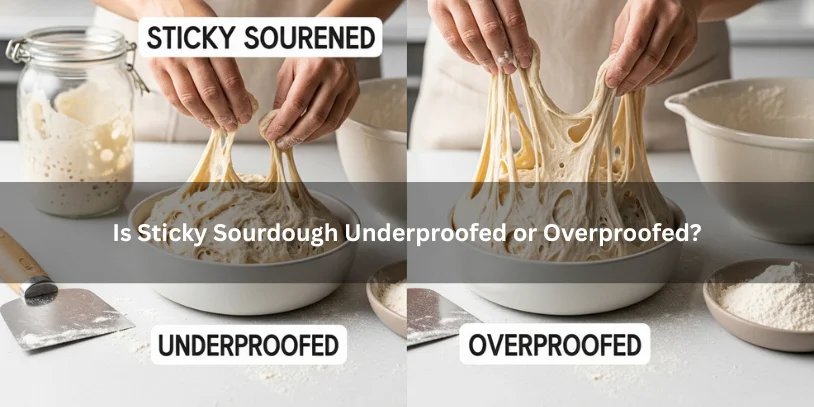
Sticky dough can happen in both cases, but the signs are different.
| Dough State | Signs | What It Means |
|---|---|---|
| Underdeveloped | Sticky, rough, tears easily, few bubbles | Needs rest and strength |
| Overhydrated | Wet, loose, hard to lift, feels like batter | Too much water for the flour |
| Overproofed | Sticky, slack, sour-smelling, bubbly, collapses | Fermented too long |
| Warm-fermented | Sticky, fast-rising, weak earlier than expected | Temperature is speeding things up |
If the dough is sticky but still gaining strength, keep going. If it is sticky and losing strength, bulk fermentation may have gone too far.
How To Prevent Sticky Sourdough Next Time
Prevention starts before the first fold.
Use this checklist:
- Start with 65–70% hydration if you are a beginner
- Use strong bread flour or strong white bread flour
- Measure flour and water with a digital scale
- Use starter near peak activity
- Give the dough a 20–30 minute rest after mixing
- Avoid overly long autolyse if using whole wheat or warm conditions
- Keep dough temperature moderate
- Use a clear bulk container to track rise
- Wet your hands before every fold
- Stop folding if the dough starts tearing
- Watch the dough, not only the clock
A simple beginner dough with 500g flour and 325–350g water is easier to manage than jumping straight into high-hydration sourdough.
Tools That Make Sticky Sourdough Easier
You do not need fancy equipment, but a few tools help a lot:
- Digital scale: prevents hydration mistakes
- Dough scraper: helps release sticky dough from the bowl
- Bench scraper: helps with shaping
- Clear bulk container: makes rise easier to track
- Thermometer: helps monitor dough temperature
- Banneton: supports shaped dough during proofing
- Rice flour: helps prevent sticking in the basket
- Dutch oven: supports better oven spring
These tools do not fix a bad dough on their own, but they make handling much easier.
Can You Still Bake Sticky Sourdough?
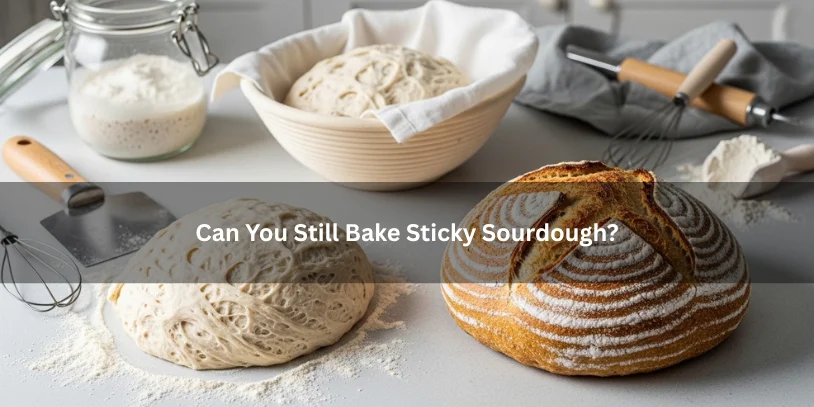
Yes, you can still bake sticky sourdough.
If the dough has some strength, shape it gently and continue. If it is too slack to hold a round or batard shape, change the format instead of throwing it away.
Good rescue options include:
- Focaccia
- Pan loaf
- Pizza dough
- Flatbread
- Ciabatta-style bread
- Discard-style savory bake
If the dough has mold, strange discoloration, or a spoiled smell that is not normal sourdough fermentation, discard it. Otherwise, sticky dough is often still bakeable.
FAQs
Why is my sourdough sticky during stretch and folds?
Your sourdough is sticky during stretch and folds because gluten is still developing, hydration may be high, flour absorption may be weak, or fermentation may be too warm. Slight stickiness is normal, but soupy or tearing dough needs adjustment.
Is sourdough supposed to be sticky during stretch and folds?
Yes, sourdough can be sticky during early stretch and folds. It should become smoother and stronger after rest and folding. If it stays wet, slack, and shapeless, the dough may be overhydrated, overfermented, or made with weak flour.
Should I add flour if my sourdough is too sticky?
Usually, do not add flour during stretch and folds. Use wet hands, rest the dough, and switch to coil folds. Add flour only if you clearly added too much water or the dough is completely unworkable.
Why is my sourdough still sticky after 4 or 5 stretch and folds?
If your dough is still sticky after several folds, it may have high hydration, weak flour, poor gluten development, too much warmth, or overfermentation. If it is improving slowly, continue gently. If it is getting weaker, shorten bulk fermentation.
Why does my sourdough tear during stretch and folds?
Sourdough tears when the gluten is tight, weak, or underdeveloped. It can also tear if you pull too aggressively. Let the dough rest longer, stretch only until you feel resistance, and use gentler folds.
Are coil folds better for sticky sourdough?
Coil folds are often better for sticky or high-hydration sourdough because they strengthen the dough without tearing it. They are especially useful when regular stretch and folds feel too rough.
How do I know if sticky sourdough is overproofed?
Sticky sourdough may be overproofed if it is very slack, bubbly, sour-smelling, hard to shape, and collapses easily. Overproofed dough often spreads flat and does not regain strength after folding.
What hydration is best for beginner sourdough?
A hydration range of 65–70% is usually best for beginners. It is soft enough for good bread but not so wet that it becomes difficult to stretch, fold, and shape.
Does whole wheat make sourdough sticky?
Whole wheat can make sourdough feel sticky or fragile because bran affects gluten development. It also absorbs water differently, so whole wheat dough may need more rest and gentler handling.
Does rye flour make sourdough sticky?
Yes, rye flour naturally makes dough stickier. Rye does not build gluten like wheat flour, so rye-heavy sourdough often feels more like paste and works better in pan loaves.
Can I save sourdough that is too sticky to shape?
Yes. If it cannot hold shape, bake it as focaccia, pan bread, pizza base, flatbread, or ciabatta-style bread. Sticky dough may not make a tall loaf, but it can still taste good.
Conclusion
When your sourdough is sticky during stretch and folds, the first step is to decide whether it is normal stickiness or a real dough problem.
Sticky but stretchy dough is usually fine. Sticky, wet, tearing, sour-smelling, or shapeless dough needs a different approach.
Use wet hands, give the dough enough rest, fold gently, try coil folds, and avoid adding flour unless there was a clear measuring mistake. If your kitchen is warm, shorten bulk fermentation. If your recipe uses high hydration or weak flour, lower the water next time.
Most sticky sourdough is not ruined. With the right handling, it can still become a good loaf, focaccia, pan bread, pizza base, or flatbread. The more you learn to read dough texture, temperature, hydration, and fermentation signs, the easier sourdough becomes.