

If your cheesecake batter is lumpy, the most likely cause is cold cream cheese or a base that was not mixed smooth enough before the eggs and other dairy were added. In many cases, the batter can still be fixed before baking.
Small lumps do not always ruin the cheesecake, but large cream cheese lumps usually do not disappear in the oven. This guide explains why cheesecake batter turns lumpy, how to fix it at different stages, and when it is still okay to keep going.
Cheesecake Batter Lumpy: Quick Answer
Cheesecake batter is usually lumpy because the cream cheese was too cold, the bowl was not scraped well, or the eggs and other dairy were added before the base was fully smooth. In many cases, you can still fix it by warming the batter slightly, scraping well, and mixing again gently.
Why Is My Cheesecake Batter Lumpy?
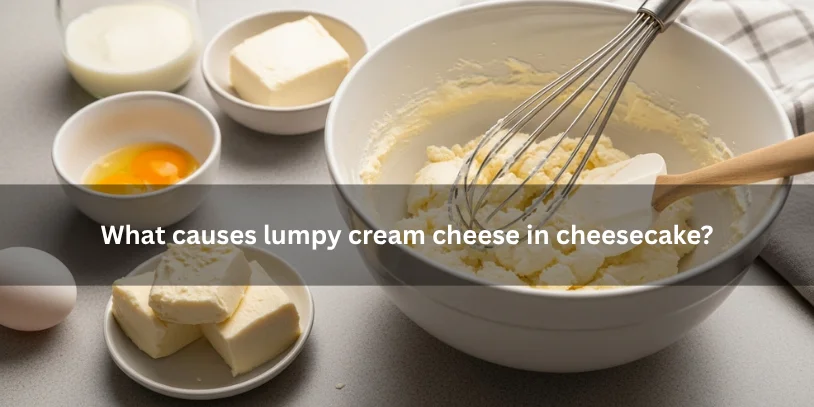
Cream Cheese Was Too Cold
The most common reason is simple: the cream cheese was not softened enough. Cheesecake batter needs cream cheese that is truly room temperature, not just slightly soft around the edges. If the center is still cool and firm, mixing breaks it into little chunks instead of turning it into a smooth, glossy base.
The Bowl Was Not Scraped Well
Another common problem is not scraping the sides and bottom of the bowl properly. Small unmixed bits of cream cheese can stay hidden there, then show up later as lumps in the batter.
Eggs or Dairy Went In Too Early
The problem often gets worse when cold sour cream, mascarpone, or eggs are added before the cream cheese base is fully smooth. Eggs should usually go in only after the cream cheese mixture is already lump-free.
The Wrong Type of Cream Cheese Was Used
Using low-fat, whipped, or spreadable cream cheese instead of full-fat block cream cheese can make smooth mixing harder. For baked cheesecake, full-fat block cream cheese gives the most predictable dense and creamy texture. Tub or whipped products are usually softer, looser, and less stable.
The Batter Was Mixed Too Fast
Mixing too fast can incorporate too much air and make the batter harder to control. A lot of bakers also try to fix lumps by beating harder, but that usually makes the texture worse instead of better.
How to Fix Lumpy Cheesecake Batter
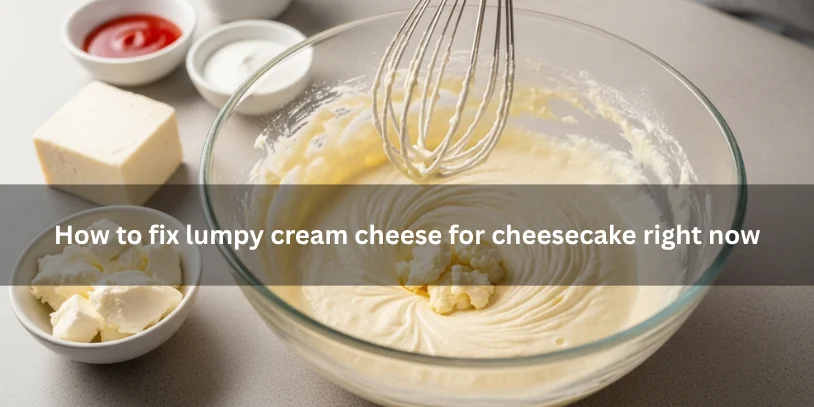
If you need the fastest answer, do this:
- Stop mixing aggressively.
- Scrape the bowl, bottom, and paddle attachment well.
- Let the batter warm slightly if it still feels cool.
- Mix again on low or medium-low speed.
- If lumps remain, use a food processor, immersion blender, or fine-mesh sieve for rescue.
That is the core solution. The rest depends on what stage you are in.
Fix Lumpy Cheesecake Batter Based on the Stage
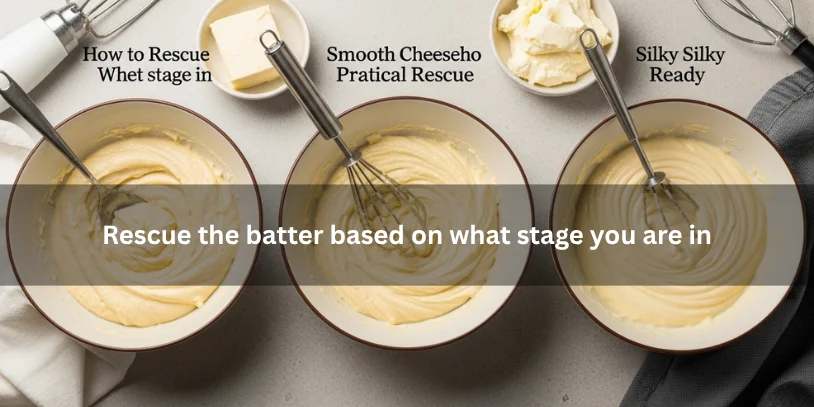
Before the eggs are added
This is the easiest stage to fix.
If you only have cream cheese, sugar, and maybe a little sour cream in the bowl, you still have plenty of control. Let the cream cheese soften more if needed, then beat it with the paddle attachment on low or medium-low until smooth. Scrape the sides and bottom often.
At this stage, a food processor is a strong option if the mixer is not getting you to a silky texture. It smooths stubborn cream cheese bits quickly and helps create a lump-free batter before the eggs go in.
After the eggs are added
You can still fix the batter, but now you need to be more careful.
Eggs should usually go in one at a time after the cream cheese base is already smooth. Once they are in, overmixing becomes more risky because it can incorporate too much air. That extra air can lead to a cheesecake that rises too much, cracks, or bakes up less dense than you want.
If your batter is lumpy after adding eggs:
- scrape the bowl thoroughly
- mix on low just until smooth
- use an immersion blender briefly if needed
- strain through a fine-mesh sieve or tamis if the lumps are small and stubborn
The goal now is not to whip. It is to smooth the texture with the least extra handling possible.
After the batter is already in the pan
If you already poured the batter into the springform pan and just noticed tiny specks, do not panic. Small lumps may not ruin the cheesecake, especially if the topping or crust is the main visual focus.
If the lumps are clearly large and frequent, pour the batter back into a bowl and fix it properly before baking. This is annoying, but it is better than hoping the oven will solve a texture problem it usually does not solve.
After the cheesecake is already baked
At this point, you cannot truly fix the internal texture.
You can improve the appearance with:
- sour cream topping
- whipped cream
- fruit compote
- chocolate ganache
- caramel sauce
- berry glaze
If the lumps are tiny, the cheesecake may still taste perfectly fine. If the lumps are large and frequent, the dessert may still be edible, but it will not have that classic smooth, silky slice most people expect.
This is the line between texture rescue and appearance rescue. Before baking, you can fix texture. After baking, you can mostly only improve appearance.
Is It Okay If My Cheesecake Batter Is Lumpy?
Not ideally. Cheesecake batter is usually supposed to be smooth, thick, glossy, and mostly lump-free before it goes into the pan. That said, tiny specks do not always ruin the cheesecake.
The real concern is large or frequent cream cheese lumps. Small specks may be mostly visual, but bigger lumps usually stay in the finished cheesecake and affect the texture.
Small Lumps vs Big Lumps: Does It Matter?
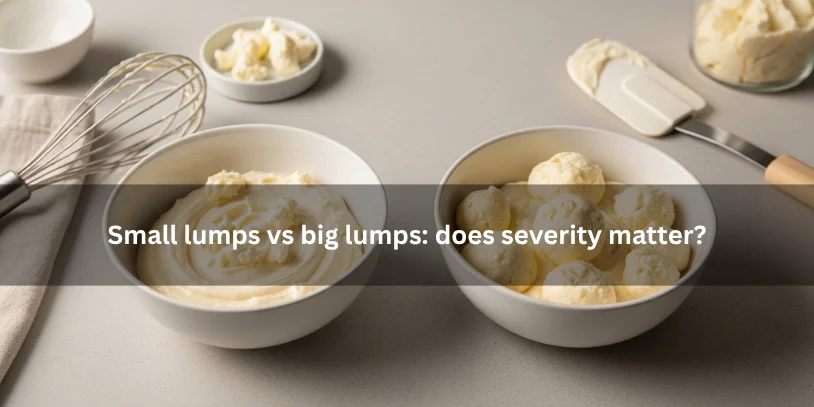
Yes, it matters a lot.
| Type of lump | What it usually means | Best next step |
|---|---|---|
| Tiny specks | Slightly cool cream cheese or incomplete scraping | Mix briefly on low or strain |
| Small soft lumps | Cream cheese not fully softened | Let batter warm slightly, then remix |
| Large cream cheese chunks | Cold center or poor incorporation | Use food processor or immersion blender |
| Grainy overall texture | Overmixing, wrong cream cheese type, or poor emulsification | Assess ingredient type and smooth gently |
Tiny white specks are often manageable. Large chunks are a bigger warning sign and usually need active rescue.
Best tools for smoothing cheesecake batter
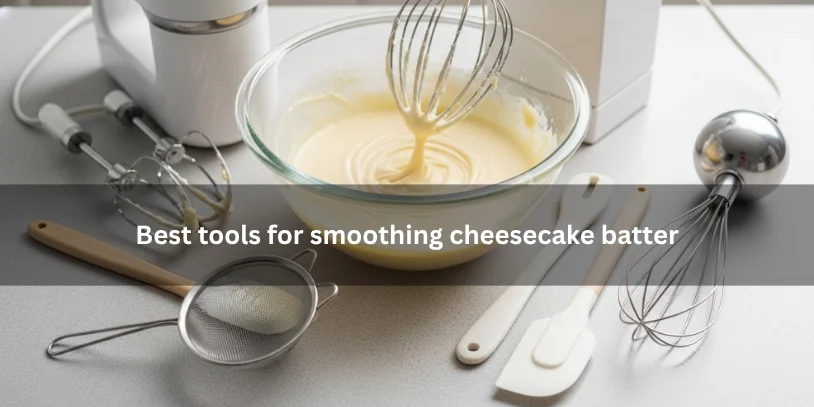
Different tools solve different problems. The best one depends on how bad the lumps are and what stage your batter is in.
Stand mixer with paddle attachment
Best for normal cheesecake mixing and for mild lumps.
A paddle attachment is better than a whisk for cheesecake because it smooths the batter without whipping in as much air. Use low or medium-low speed and scrape often.
Food processor
Best for stubborn lumps before or early in mixing.
If your cream cheese is fighting you, a food processor can create a very smooth batter fast. It is one of the most reliable rescue options when the texture is still uneven.
Immersion blender
Best for quick rescue in a bowl.
An immersion blender can help if you already have the batter mixed and need a short texture correction. Use it briefly. Too much blending can still overwork the batter.
Fine-mesh sieve or tamis
Best for removing tiny remaining lumps.
If the batter is mostly smooth but still has some small cream cheese bits, pushing it through a fine-mesh sieve can be an excellent cleanup step. It takes time, but it works well for polished results.
Can you microwave cream cheese to fix lumps?
Yes, but carefully.
If the cream cheese is still too cold, short microwave bursts at reduced power can help soften it. The key is to soften, not melt. Once cream cheese gets too warm or partially melts, the texture can turn uneven and harder to control.
A safe approach is:
- use short bursts
- keep power low if possible
- stir between intervals
- stop once the cream cheese feels soft, not hot
This is especially helpful in colder kitchens or when you forgot to take the dairy out in advance.
Why room temperature matters so much
This is one of the biggest differences between a smooth cheesecake batter and a frustrating one.
Room-temperature cream cheese blends more easily with sugar, eggs, sour cream, and mascarpone. It emulsifies better, which means the fat and moisture combine into a smooth, dense, creamy texture instead of staying in separate bits.
When the dairy is cold, the batter fights back. You mix longer, you scrape more, and then you risk overmixing just to chase a smooth texture. That is why so many cheesecake problems start with one simple mistake: ingredients that were not truly softened.
How long can cream cheese sit out safely?
Cream cheese is perishable, so you do need to think about food safety.
As a practical rule, keep softening time reasonable and do not leave cream cheese sitting out for hours and hours. If your kitchen is very warm, move even more carefully. If the room is hot, work faster and avoid extended counter time.
For most home bakers, the smarter approach is to:
- soften only what you need
- cut blocks into smaller pieces for faster softening
- use short low-power microwave help when necessary
- avoid letting dairy sit out too long just because you are waiting for “perfect softness”
Block vs tub vs whipped cream cheese for cheesecake
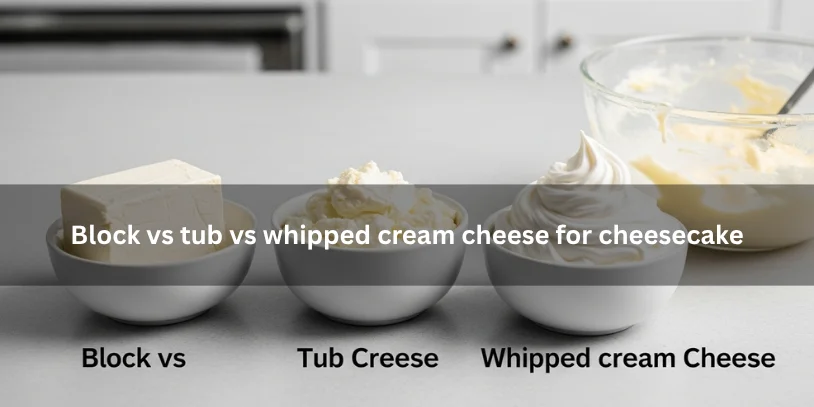
Not all cream cheese behaves the same way.
Block cream cheese
Best option for baked cheesecake. It is firmer, richer, and more reliable for smooth mixing and structure.
Tub or spreadable cream cheese
Can work differently because it is often softer and formulated for spreading, not baking. Texture and moisture can vary by market and brand.
Whipped cream cheese
Usually the least ideal for baked cheesecake. It contains more air and may behave unpredictably in a batter where smooth density matters.
If you want the most consistent result, use full-fat block cream cheese.
How to prevent lumpy cheesecake batter next time
The best fix is not needing a rescue in the first place.
Use this prevention checklist
- Use full-fat block cream cheese.
- Let the cream cheese reach room temperature.
- Bring eggs and sour cream closer to room temperature too.
- Beat the cream cheese base until smooth before adding eggs.
- Add eggs one at a time.
- Mix on low or medium-low speed.
- Scrape the sides and bottom of the bowl often.
- Stop mixing once the batter is smooth.
- Do not chase fluffiness. Cheesecake should be smooth, not airy.
This matters for all kinds of cheesecake, including baked cheesecake, no-bake cheesecake, Basque cheesecake, and mini cheesecakes. The look may change from style to style, but the batter still needs proper texture control.
Can you still bake a lumpy cheesecake?
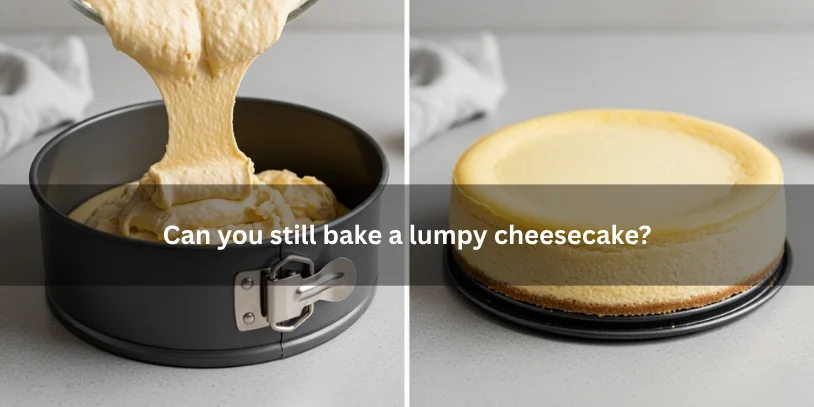
Sometimes yes, but it depends on the degree of lumpiness.
You can usually keep going if:
- the lumps are tiny
- the batter is mostly smooth
- the cheesecake is casual and appearance is not critical
- the flavor is the main priority
You should fix it first if:
- there are visible cream cheese chunks
- the batter feels grainy or uneven
- the cheesecake is for guests, sales, or an event
- you are already noticing overmixed, airy batter and still seeing lumps
If the texture is badly off, rescue it before baking. If it is just a few tiny specks, you may still end up with a perfectly enjoyable dessert.
Should Cheesecake Batter Be Lumpy?
No. Cheesecake batter is usually supposed to be smooth and mostly lump-free before baking. A few tiny specks may not matter much, but visible cream cheese lumps usually mean the base was not mixed properly and the final texture may not be as silky as it should be.
Will Lumpy Cheesecake Taste Bad?
Not always. Tiny lumps may affect appearance more than flavor, and many people will still enjoy the cheesecake if the overall taste is good. But larger cream cheese lumps can affect both texture and mouthfeel, which makes the cheesecake feel less smooth and less polished.
So the answer depends on the size and number of lumps. Small specks are often tolerable. Bigger lumps are more noticeable.
What not to do
When bakers panic, they usually make one of these mistakes:
- turning the mixer to high speed
- adding warm water to the batter
- assuming the lumps will melt away in the oven
- pouring the batter into the pan without checking texture
- adding eggs too early
- using whipped or spreadable cream cheese without realizing it changes the batter
The biggest issue here is overmixing. Smooth batter is good. Over-aerated batter is not. You want glossy, thick, and creamy, not fluffy and foamy.
Special cases: no-bake, Basque, and mini cheesecakes
No-bake cheesecake
Because there is no oven setting the structure, visible lumps can stand out even more. Smooth the filling fully before chilling.
Basque cheesecake
A Basque cheesecake is meant to have a darker, rustic top, but the batter still should not be lumpy. Rustic top does not mean chunky interior.
Mini cheesecakes
Mini cheesecakes can hide small flaws better than a full slice, but large lumps will still affect texture. The same rules apply: soften, scrape, mix gently, and stop once smooth.
FAQs
1. Why is my cheesecake batter lumpy?
The most common reason is cold cream cheese. Lumps also happen when the bowl is not scraped well or when eggs and other dairy are added before the base is fully smooth.
2. How do I fix lumpy cheesecake batter?
Stop mixing aggressively, scrape the bowl well, let the batter warm slightly if needed, and mix again on low. If lumps remain, a food processor, immersion blender, or fine-mesh sieve can help.
3. Is it okay if my cheesecake batter is lumpy?
Small specks do not always ruin the cheesecake, but large cream cheese lumps usually stay in the finished dessert and affect the texture.
4. Will lumpy cheesecake taste bad?
Not always. Tiny lumps may affect appearance more than flavor, but larger lumps can make the cheesecake feel less smooth and less creamy.
5. Is cheesecake batter supposed to be lumpy?
No. Cheesecake batter is usually supposed to be smooth, thick, glossy, and mostly lump-free before it goes into the pan.
6. Can I fix lumpy cheesecake batter after adding eggs?
Yes, but be gentle. Mix on low, scrape the bowl well, and use an immersion blender or sieve only as much as needed.
7. Do cream cheese lumps bake out?
Usually no. Small specks may become less noticeable, but real cream cheese lumps usually stay in the finished cheesecake.
8. Can I strain cheesecake batter?
Yes. A fine-mesh sieve or tamis works well when the batter is mostly smooth but still has a few stubborn small lumps.
9. Can I still bake a lumpy cheesecake?
Sometimes yes. If the batter has only tiny specks and is otherwise smooth, the cheesecake may still turn out fine. Large chunks should usually be fixed before baking.
10. What type of cream cheese works best for smooth cheesecake batter?
Full-fat block cream cheese is usually the best choice because it gives the most reliable texture and structure for baked cheesecake.
Conclusion
Lumpy cheesecake batter is usually fixable as long as you catch it before baking. In most cases, the real problem is not bad luck. It is cold cream cheese, uneven mixing, or ingredients that were added before the base was fully smooth.
The best fix is usually simple: soften properly, scrape well, mix gently, and stop once the batter is smooth. If you remember just one thing, make it this: smooth the cream cheese base before the eggs go in. That one habit prevents most cheesecake texture problems before they start.