
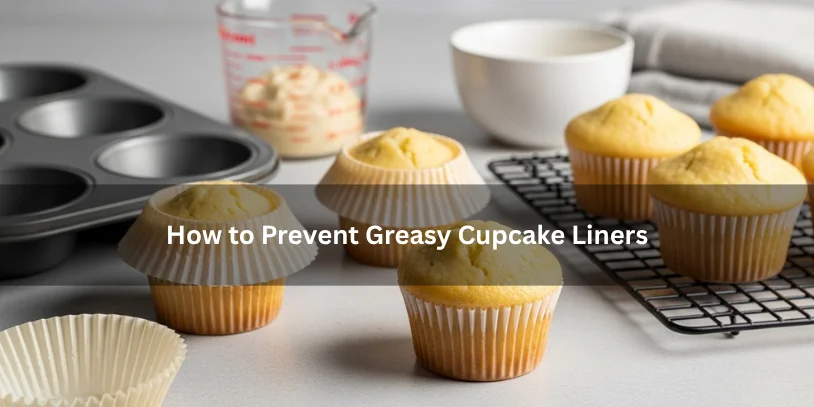
Greasy cupcake liners usually happen because of fat seepage, trapped steam, or low-quality paper liners. The best way to fix the problem is to use better baking cups, cool cupcakes properly, and only change the recipe if the issue keeps happening.
If your cupcake papers come out oily, damp, stained, or start peeling away from the cake, you are not alone. This is one of the most common cupcake problems for home bakers, cottage bakers, party bakers, and anyone who wants cupcakes to look clean and professional.
The good news is that the problem is usually easy to fix once you know what is causing it.
What greasy cupcake liners actually mean
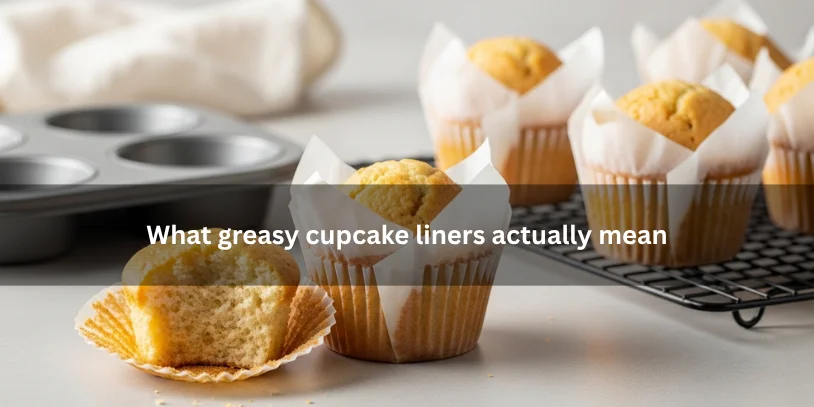
The phrase greasy cupcake liners can describe a few different issues:
- the bottom of the liner looks oily
- the paper feels damp or wet after baking
- decorative liners lose their bright look
- cupcake wrappers start peeling away
- paper liners stick instead of releasing cleanly
The first thing to understand is that not every greasy-looking liner is actually caused by too much grease. Sometimes the problem is real fat. Sometimes it is condensation, moisture, or trapped steam during cooling.
That matters because the right solution depends on the real cause.
Grease vs condensation: know what you are dealing with
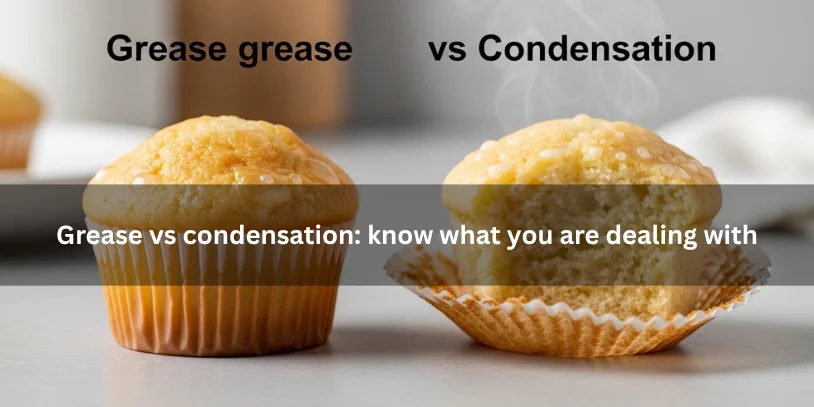
Before changing your batter, ingredients, or pan, look at the signs.
Signs the issue is grease
- liners look oily or translucent
- the bottoms feel slick
- rich butter or oil-based cupcakes cause it more often
- cheap paper liners stain quickly
Signs the issue is moisture or steam
- liners feel damp instead of oily
- the bottom looks wet after baking
- the issue gets worse when cupcakes cool inside the muffin tin
- wrappers soften and peel away later
If your liners look wet, trapped steam is often the bigger issue. If they look oily and stained, then the liner type, recipe richness, or batter method may be the problem.
How to Prevent Greasy Cupcake Liners
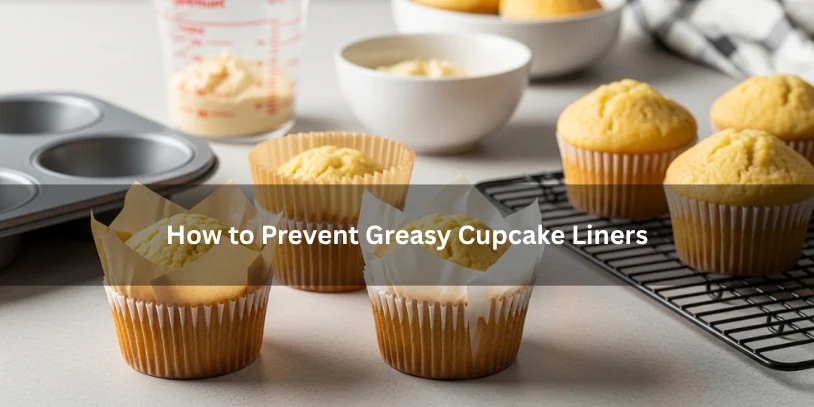
If you want the simplest method that works in most kitchens, start here.
1. Use better-quality cupcake liners
Standard paper liners are often the weakest option. They absorb more oil, stain more quickly, and can stick badly.
Better choices include:
- grease-proof liners
- grease-resistant paper liners
- parchment paper liners
- foil liners
- silicone baking cups
For most bakers, grease-proof or parchment liners offer the best balance of appearance and performance.
2. Remove cupcakes from the muffin tin promptly
After baking, cupcakes continue releasing heat and steam. If they stay in the cupcake pan too long, that steam gets trapped around the bottom of the wrappers.
That can make the papers look damp, oily, or soft.
Let them rest briefly, then move them to a cooling rack.
3. Cool them on a wire rack
A wire rack lets air move around the entire cupcake, especially underneath. That helps prevent moisture build-up and improves liner appearance.
Cooling cupcakes fully in the pan is one of the most common reasons wrappers end up looking wet or greasy.
4. Check your fat level
A rich batter with a lot of butter, oil, or melted chocolate can make liners look greasy faster, especially when you use thin paper cups.
That does not always mean the recipe is wrong. It just means some recipes need stronger liners to handle the extra fat properly.
5. Avoid overmixing
Overmixing or overprocessing affects more than texture. It can also change how the batter bakes and how moisture behaves inside the cupcake wrapper.
Mix until combined. Do not keep beating the batter longer than needed.
6. Use the rice trick only as a support fix
Putting a little dry rice under each liner in the muffin tin can help with moisture at the base. It can improve the look of the liners, especially if steam is part of the problem.
But it is not a magic fix. Rice helps appearance more than it improves the cupcake itself.
How to Keep Cupcake Liners from Getting Greasy
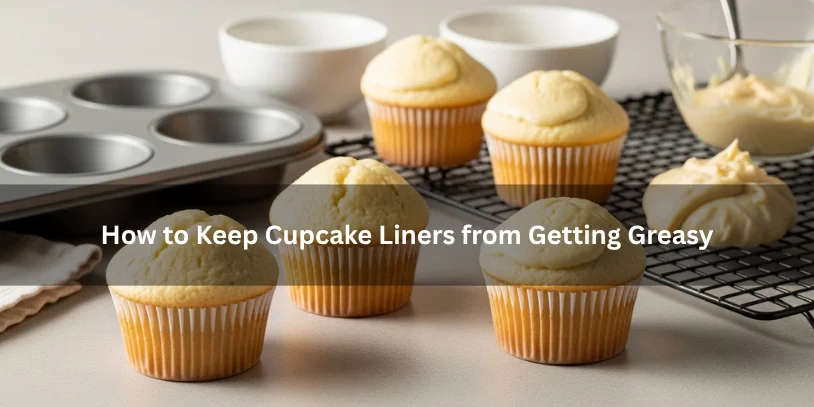
If you are wondering how to keep cupcake liners from getting greasy, the answer is usually a combination of better materials and better cooling habits.
The most effective combination is:
- use grease-proof or parchment liners
- do not leave cupcakes in the hot pan too long
- cool on a wire rack
- avoid storing cupcakes while still warm
- check rich recipes for excess butter or oil
This works because it covers both main causes: actual fat seepage and trapped steam.
Many bakers focus only on the recipe and ignore the liner. In reality, the liner is often the first thing that needs to change.
Why cupcake liners get greasy in the first place
There is usually more than one reason.
Cheap paper liners
Low-quality liners absorb grease quickly and often stick more. They may look nice before baking but perform badly in the oven.
This is especially common with decorative liners that are made more for appearance than for baking performance.
High butter or oil content
Rich batters can cause more oil staining, especially at the bottom of the cupcake. This becomes more visible in standard paper liners.
If a recipe is extra rich, a stronger liner is often a better fix than changing the recipe immediately.
Trapped steam
Cupcakes continue releasing moisture after baking. If they sit in a hot muffin tin, that steam gets trapped under the liner.
The result can look greasy even when the real issue is condensation.
Overfilled cupcake cases
If cupcake cases are filled too high, the batter spreads differently and can create more contact with the paper. That can increase staining, sticking, and uneven baking around the wrapper.
Measuring issues
If there is too much liquid or fat and not enough flour, the batter may bake up wetter and richer than intended.
That can make liners look oily and reduce clean release.
Poor storage habits
If cupcakes are packed or covered before they are fully cool, trapped moisture softens the wrappers and makes them look damp later.
How to Make Cupcake Liners Not Greasy
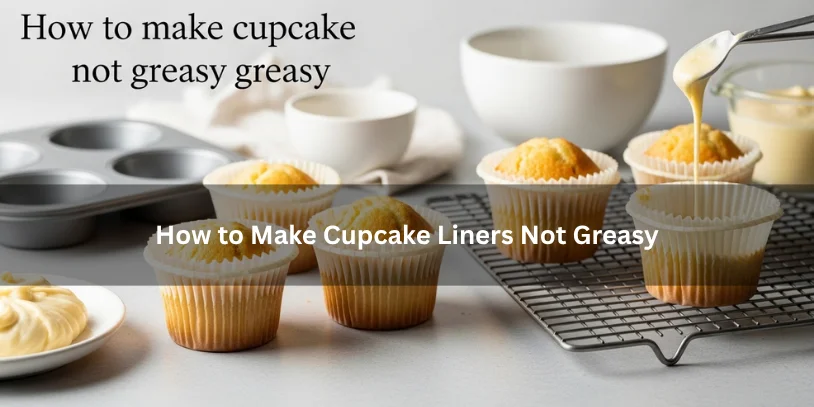
If you specifically want to know how to make cupcake liners not greasy, think of it as a simple decision path instead of one single trick.
Start with the liner
Try grease-proof, parchment, or foil liners first.
Then fix the cooling method
Move cupcakes to a cooling rack after a short rest.
Then check the recipe
If all liners still stain, look at butter content, oil content, and measuring accuracy.
Then use appearance boosters if needed
Rice under the liners or foil liners can help the cupcakes look cleaner from the outside.
This step-by-step approach saves time and helps you avoid changing a good recipe unnecessarily.
Best liner options if appearance matters
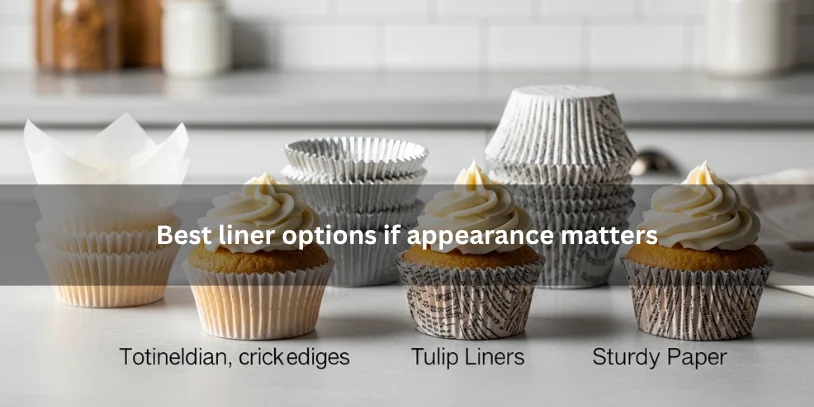
If your cupcakes are for guests, parties, or sales, liner choice matters a lot.
| Liner Type | Best For | Pros | Cons |
|---|---|---|---|
| Standard paper liners | Casual baking | Cheap and easy to find | Stain easily, may stick |
| Grease-proof liners | Everyday baking | Better appearance, better resistance | Slightly higher cost |
| Parchment paper liners | Cleaner release | Stronger, less sticking | Fewer decorative styles |
| Foil liners | Rich batters, polished look | Hide grease well, keep shape | Different visual style |
| Silicone baking cups | Reusable option | Low waste, easy release | Need washing, less classic look |
If your main goal is presentation, foil liners can be a fast solution. If your goal is both appearance and performance, grease-proof or parchment liners are usually better.
How to Prevent Cupcake Liners from Getting Greasy for display or sale
If you bake for events, customers, or gifting, you need more than just a good taste. You also need neat-looking wrappers.
Here is how to prevent cupcake liners from getting greasy when presentation matters:
- avoid ultra-thin decorative liners for direct baking
- use a functional liner inside and a decorative wrapper outside if needed
- test one batch before a large order
- use a cooling rack every time
- box cupcakes only after they are completely cool
- pick liners based on release and stain resistance, not just color
This is especially important for bakers who want a consistent, professional finish.
The truth about non greasy cupcake liners
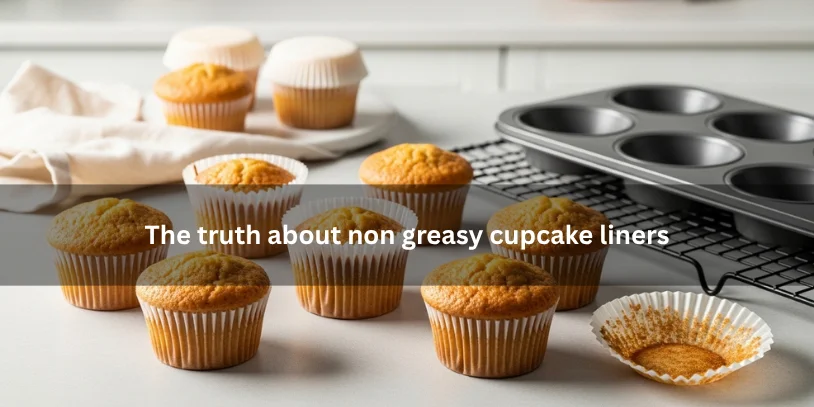
Many bakers search for non greasy cupcake liners, but no liner can completely break the laws of baking. Very rich batter will always contain fat and moisture.
What you are really looking for is a liner that is:
- grease-proof
- grease-resistant
- oven-safe
- food-safe
- thick enough to hold shape
- able to release cleanly
So instead of looking for a perfect liner that never shows anything, look for the best liner for your recipe and baking style.
Should you spray cupcake liners?
A very light amount of nonstick spray can help if the main issue is sticking. But spraying liners too much can add more grease and make the papers look worse.
If the goal is cleaner-looking wrappers, it is usually better to upgrade the liner than to add more oil.
When to change the liner and when to change the recipe
This is where many people get stuck.
Change the liner first if:
- the cupcakes taste great
- texture is fine
- only the wrapper looks bad
- you are using standard paper liners
- decorative liners keep staining
Look at the recipe if:
- every type of liner turns oily
- the crumb feels greasy too
- cupcakes are unusually heavy
- you may be using too much butter or oil
- the batter may be inaccurately measured
Very often, the paper is the weak point, not the cupcake recipe.
Common mistakes that cause oily cupcake papers
Leaving cupcakes in the pan too long
This traps steam and makes the liners soft or damp.
Using thin decorative papers
Some pretty wrappers are not made to handle real baking conditions.
Depending only on the rice trick
Rice can help, but it does not solve every cause.
Overmixing the batter
This can affect how the structure holds moisture and fat.
Storing before fully cooled
This creates condensation inside the container and damages liner appearance.
A simple test you can do at home
If you want a clear answer, bake a small side-by-side test.
Use the same batter in:
- standard paper liners
- grease-proof liners
- foil liners
Then cool half in the pan and half on a wire rack.
This quick test will tell you whether your problem is mainly:
- liner quality
- cooling method
- recipe richness
It is one of the easiest ways to stop guessing.
Practical advice for home bakers and small baking businesses
For home bakers
- use grease-proof or parchment liners
- fill liners evenly
- cool on a wire rack
- do not cover cupcakes while warm
- use rice only if needed
For cottage bakers or sellers
- test wrappers before big batches
- choose performance over looks
- use decorative outer wraps after baking if needed
- keep a consistent cooling process
- avoid cheap liners for customer-facing products
This gives you better-looking cupcakes and fewer wrapper problems.
FAQs
Why are my cupcake liners greasy after baking?
They are usually greasy because of fat seepage, trapped steam, or poor-quality paper liners. Sometimes the issue is moisture rather than actual grease.
How to keep cupcake liners from getting greasy?
Use grease-proof or parchment liners, remove cupcakes from the pan promptly, cool them on a wire rack, and avoid storing them while still warm.
How to make cupcake liners not greasy?
Start with better liners, improve the cooling method, and check your batter only if the problem continues. In many cases, the liner is the main issue.
How to prevent greasy cupcake liners with rich batter?
Use grease-resistant, parchment, or foil liners for rich recipes. Rich butter or oil-based cupcakes often need stronger wrappers than standard paper cups.
Does rice under cupcake liners work?
Yes, it can help absorb some moisture under the liners and improve appearance. But it is not a complete fix for bad liners or an overly rich recipe.
Are non greasy cupcake liners real?
Not in a perfect sense. But grease-proof and grease-resistant liners come much closer than standard paper liners and usually give much better results.
Should I cool cupcakes in the pan or on a rack?
Let them rest briefly, then move them to a cooling rack. Cooling fully in the pan often traps steam and makes wrappers look damp.
Do foil cupcake liners prevent greasy bottoms?
They can help hide grease and hold their shape well, especially for rich batters. They are a strong choice when presentation matters.
Can too much butter cause greasy cupcake liners?
Yes. High butter or oil content can make wrappers look more oily, especially if the liners are thin and absorbent.
Should I spray cupcake liners?
Only lightly if sticking is the issue. Too much spray can make liners look greasier.
Conclusion
If you want cleaner cupcakes, focus on the real cause of the problem. The best way to prevent greasy cupcake liners is to use stronger liners, cool cupcakes properly, and only adjust the recipe if the issue keeps happening.
For most bakers, the winning method is simple: switch to grease-proof, parchment, or foil liners, move cupcakes out of the muffin tin after a short rest, cool them fully on a wire rack, and avoid trapping steam during storage. Follow that process, and your cupcakes will look far neater, drier, and more professional.