

If you want the best short answer, here it is: store ciabatta bread at room temperature in a paper bag, bread box, or loosely wrapped tea towel for short-term use, and freeze it if you will not eat it within a couple of days. Avoid the fridge unless heat, humidity, or food safety make refrigeration necessary.
Ciabatta is not like soft packaged sandwich bread. It is a high-hydration artisan loaf with a thin crisp crust, a chewy interior, and an open crumb full of irregular air pockets. That texture is exactly why people love it, and exactly why it can disappoint so fast when stored the wrong way.
One bad storage choice and the crust turns soft. Another bad choice and the crumb goes dry, leathery, or stale by the next day. So if you have been wondering how to store ciabatta bread overnight, how to keep it fresh after slicing, or whether you should refrigerate it, this guide covers all of it in a practical way.
Why ciabatta needs different storage than regular bread
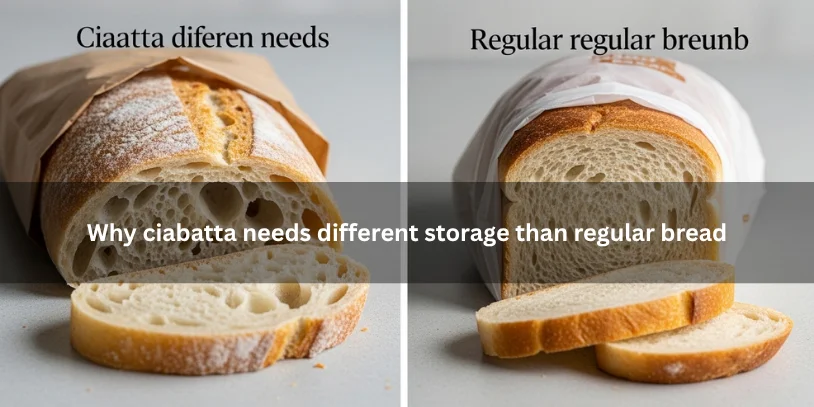
Ciabatta behaves differently because of its structure.
It has:
- a thin crust that loses crispness easily
- an airy, open crumb that dries out faster once exposed
- more moisture in the dough than many standard loaves
- less protection from preservatives than packaged commercial bread
That means ciabatta is always a balancing act between two goals:
- keeping the crumb from drying out
- keeping the crust from turning soft and rubbery
You usually cannot maximize both at the same time. Breathable storage helps the crust. More sealed storage helps the crumb. The best method depends on how soon you plan to eat it.
Best way to store ciabatta bread at room temperature
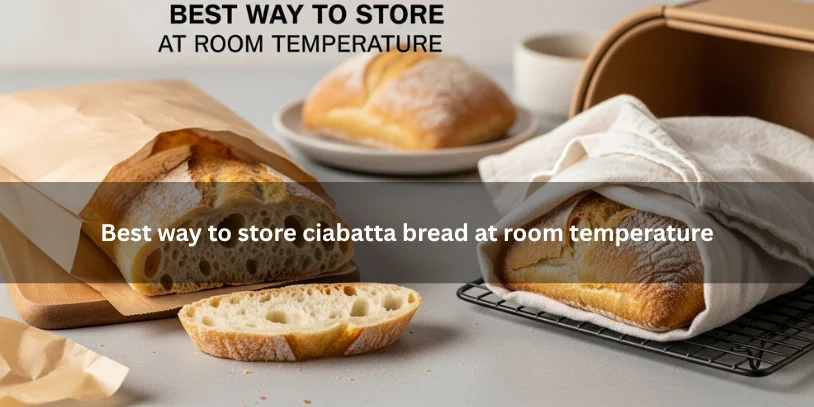
For most people, room temperature storage is the best choice for fresh ciabatta.
Use this method if:
- you will eat the bread the same day
- you plan to finish it within 1 to 2 days
- you want to preserve the crust as much as possible
Step-by-step method
- Let the bread cool completely
Never store warm ciabatta. Trapped steam makes the crust soggy. - Choose breathable storage
The best options are:- paper bag
- bread box
- clean tea towel
- cloth bread bag
- Keep it in a cool, dry place
Store it on the counter, away from direct sunlight, heat, and excess humidity. - Eat it within 1 to 2 days
Ciabatta is best fresh. After that, quality drops fast even if it is still safe to eat.
Paper bag vs bread box vs tea towel
| Storage Method | Best For | Main Benefit | Main Tradeoff |
|---|---|---|---|
| Paper bag | Fresh bakery loaf | Good airflow, decent crust | Can dry faster |
| Bread box | Daily bread storage | Protects loaf from open air | Crust may soften slightly |
| Tea towel | Same-day use | Simple and breathable | Less protection over time |
If your goal is a crisp crust, breathable storage wins.
Should you store ciabatta in plastic?
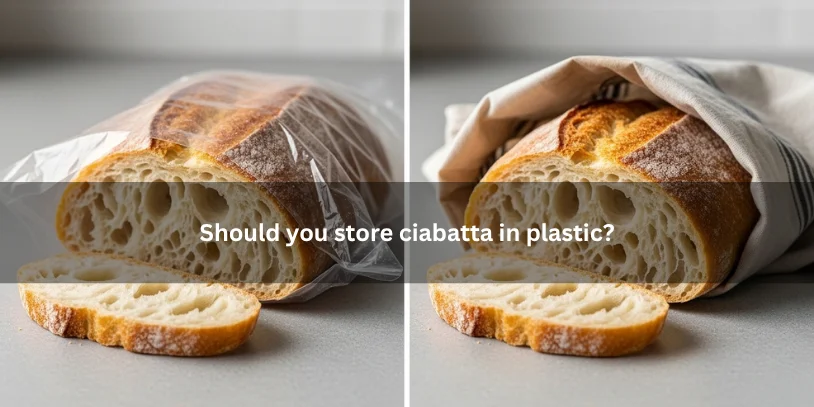
Usually, no.
A plastic bag traps moisture. That moisture softens the crust quickly and can make the outside feel gummy. The crumb may stay softer a little longer, but the loaf loses what makes ciabatta special.
That said, plastic is not always useless.
Plastic can make sense when:
- your kitchen is very dry and bread hardens fast
- you care more about crumb softness than crust texture
- you are storing partially stale bread you plan to toast later
So the real answer is this: plastic helps moisture retention, but it sacrifices crust quality.
How to store ciabatta bread overnight
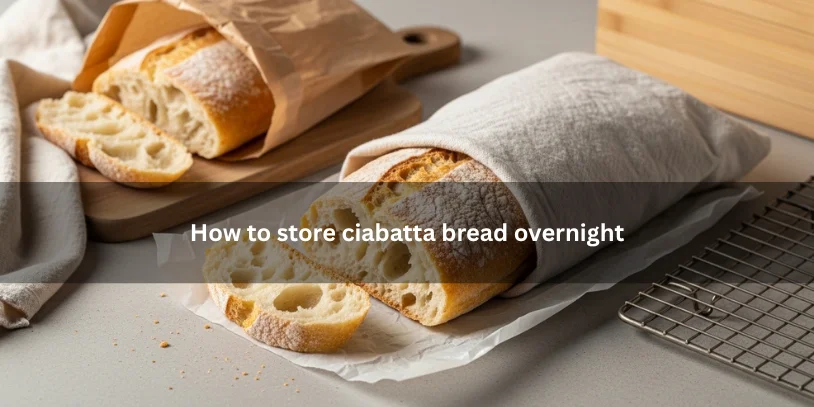
If you bought or baked ciabatta today and want it for tomorrow, keep it simple.
Best overnight method
- let it cool completely
- place it in a paper bag or bread box
- if already cut, place the cut side down on a board or plate first, then cover loosely
This keeps the exposed crumb from drying too fast while still protecting the crust better than airtight wrapping.
If the loaf feels a little less crisp in the morning, do not panic. Five minutes in a warm oven usually brings it back.
How to store cut ciabatta bread
Once you slice ciabatta, the inside becomes the weak spot.
The crust already protects the outside of the loaf. The cut surface does not have that protection, so it dries fast.
Best method for cut ciabatta
- place the cut side down on a cutting board or plate
- loosely cover the loaf with a clean towel, beeswax wrap, or paper
- keep it at room temperature if using within 24 hours
- freeze it if you will not use it soon
Avoid this common mistake
Do not leave sliced ciabatta fully exposed on the counter. The airy crumb loses moisture quickly, and the bread gets hard much faster than a whole loaf.
Should you refrigerate ciabatta bread?
Most of the time, no.
The fridge is usually a bad place for ciabatta because it speeds up staling. The science behind that is starch retrogradation. In plain English, the bread’s starches reorganize more quickly at refrigerator temperatures, which makes the crumb seem dry and firm sooner.
Why the fridge is usually bad
- the crumb goes stale faster
- the crust loses its pleasant texture
- the loaf tastes older sooner
When refrigeration may be acceptable
There are a few exceptions:
- your kitchen is extremely hot or humid
- mold develops quickly in your home
- the ciabatta is part of a sandwich with perishable fillings
- food safety matters more than ideal texture
If your ciabatta has meat, egg, or other perishable sandwich fillings, refrigerate it for safety. Bread quality may suffer, but safety comes first.
How to freeze ciabatta bread for longer storage
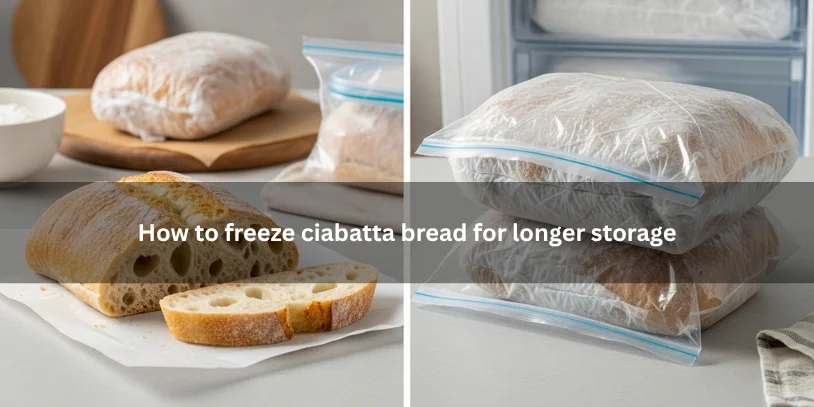
If you are not eating ciabatta within a day or two, freezing is the smartest move.
Freezing preserves ciabatta far better than refrigeration when done correctly.
Best for:
- extra bakery loaves
- homemade ciabatta
- meal prep
- sandwich portions
- ciabatta rolls you want to use later
How to freeze ciabatta properly
- Cool it fully
Never freeze warm bread. - Decide whether to freeze whole or sliced
- whole loaf: better overall texture
- sliced or portioned: more convenient
- Wrap tightly
Use plastic wrap, freezer bag, or foil. For best protection, double-wrap it. - Label and date it
This helps you use it while quality is still good. - Freeze early
Do not wait until the bread is already stale.
How long does frozen ciabatta last?
For best quality, use it within 1 to 3 months.
That is long enough for most home kitchens, and it gives much better results than leaving a loaf out too long and hoping for the best.
Should you slice ciabatta before freezing?
That depends on how you use it.
Freeze whole if:
- you want the best texture later
- you plan to serve the loaf as bread, not toast
- you usually eat larger portions at once
Freeze sliced if:
- you want quick sandwich access
- you only need one or two pieces at a time
- you meal prep lunches or breakfasts
This is one of those decision points most articles skip, but it matters a lot in real life.
How to reheat ciabatta and refresh stale bread
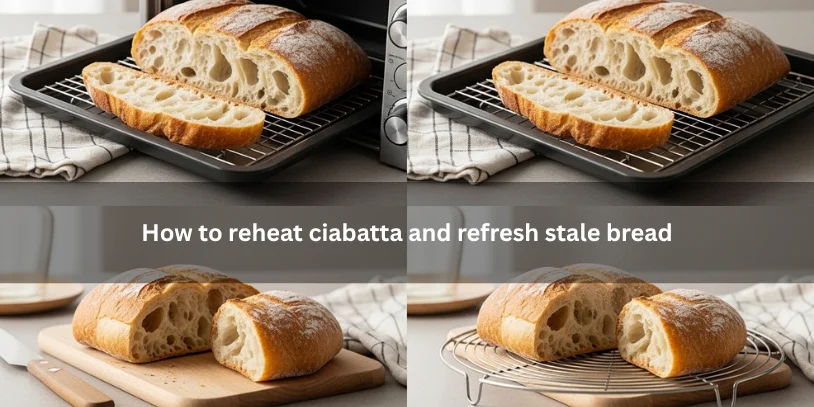
Ciabatta often improves dramatically with reheating.
If the loaf is a little stale, the oven refresh method works better than the microwave.
Oven refresh method
- preheat oven to 175–190°C
- lightly mist the loaf with water if it is very dry
- heat for 5 to 10 minutes
- let it sit for a couple of minutes before cutting
This helps revive the crust and soften the crumb.
For frozen ciabatta
- thaw at room temperature, then reheat
- or warm from frozen a little longer in the oven
Avoid the microwave if possible
Microwaving can make ciabatta oddly chewy or rubbery. It is fast, but it rarely gives the best texture.
Best storage method by situation
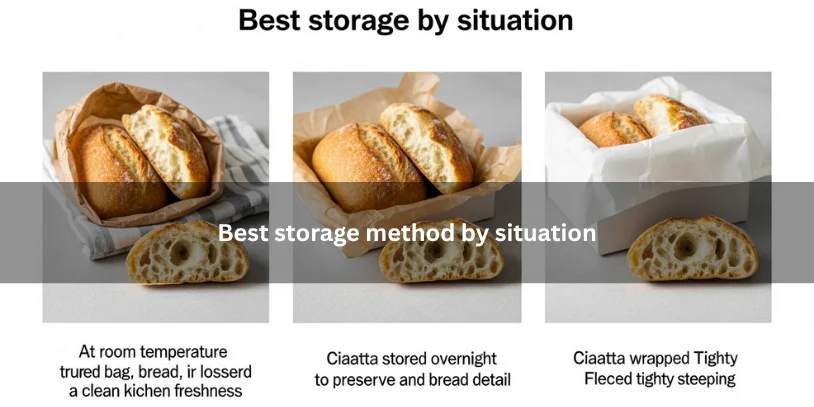
Here is the easiest way to decide what to do.
If you will eat it today
Use a paper bag, bread box, or tea towel at room temperature.
If you will eat it tomorrow
Store it the same way, then refresh it briefly in the oven before serving.
If you will eat it in 2 to 3 days
Room temperature may still work, but quality will decline. Freeze if you care about texture.
If you will eat it later in the week
Freeze it now.
If it is already sliced
Protect the cut side and use it quickly, or freeze portions.
If your kitchen is hot or humid
Freeze sooner. Humid weather increases mold risk, while summer kitchens make bread trickier to manage.
Common mistakes that ruin ciabatta
1. Wrapping warm bread
This traps steam and softens the crust fast.
2. Using airtight storage too soon
Airtight containers help retain moisture, but fresh ciabatta often ends up with a disappointing crust.
3. Refrigerating by default
The fridge solves less than people think. For most loaves, it causes faster staling.
4. Leaving cut surfaces exposed
The open crumb dries out first.
5. Waiting too long to freeze
Freezing is most useful while the bread is still fresh.
How long does ciabatta bread last?
There is no one perfect number because storage method and climate both matter.
General guideline
- Room temperature: best within 1 to 2 days
- Fridge: not ideal, but usable for a short period if necessary
- Freezer: best quality for 1 to 3 months
Signs ciabatta has gone bad
Throw it out if you notice:
- visible mold
- off smell
- strange damp patches
- unusual discoloration
Hard bread is not always unsafe. Sometimes it is just stale. But mold is a different story. If mold appears, discard the loaf.
What to do with stale ciabatta
Even stale ciabatta still has value.
You can use it for:
- croutons
- breadcrumbs
- bread pudding
- stuffing
- crostini
- garlic toast
- panzanella
- baked sandwiches
This is another reason ciabatta is such a useful artisan bread. Even when it is past peak freshness, it can still turn into something great.
Ciabatta vs sourdough vs sandwich bread for storage
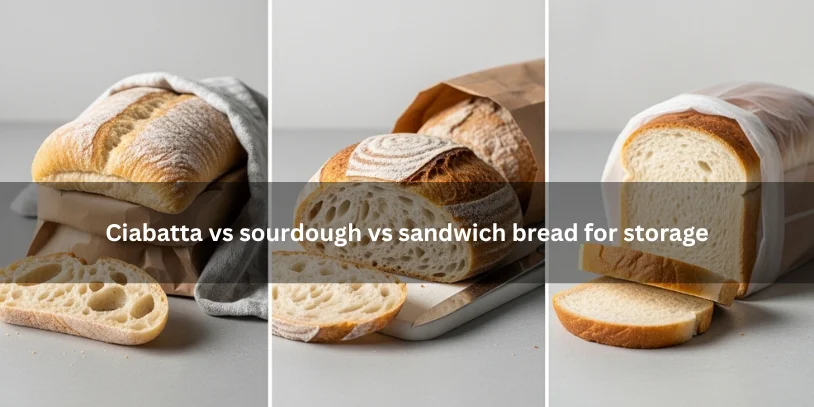
A quick comparison helps.
| Bread Type | Best Short-Term Storage | Fridge? | Best Long-Term Storage |
|---|---|---|---|
| Ciabatta | Paper bag or bread box | Usually no | Freezer |
| Sourdough | Bread box or cut side down | Usually no | Freezer |
| Sandwich loaf | Bag at room temp | Sometimes tolerable | Freezer |
Ciabatta and sourdough both prefer breathable storage more than soft packaged sandwich bread does. That is why generic bread advice often feels incomplete for ciabatta.
Best tools and options for storing ciabatta
You do not need fancy gear, but a few options can help.
Practical storage tools
- paper bag
- bread box
- tea towel
- beeswax wrap
- freezer bag
- plastic wrap for freezer use
- oven or toaster for reheating
Are bread boxes worth it?
If you regularly buy bakery bread or homemade loaves, a bread box can be useful. It gives more protection than a towel and better airflow than airtight containers.
It is not essential, though. A simple paper bag works surprisingly well.
Quick answers people often ask
How do you keep ciabatta bread fresh overnight?
Store it at room temperature in a paper bag, bread box, or tea towel. If it is cut, protect the open side.
Can you store ciabatta cut-side down?
Yes. That is one of the best ways to slow moisture loss from the crumb.
What is the best bag for storing ciabatta?
A paper bag is usually best for short-term storage because it protects the loaf without trapping too much moisture.
Can I store ciabatta in hot weather?
Yes, but you need to watch humidity and mold risk. In very hot or humid conditions, freezing sooner is often the better move.
FAQs
1. What is the best way to store ciabatta bread?
Store ciabatta at room temperature in a paper bag, bread box, or loosely wrapped tea towel for short-term freshness. Freeze it if you will not eat it within a couple of days.
2. Should ciabatta bread go in the fridge?
Usually no. The fridge makes ciabatta stale faster by drying and firming the crumb. Only refrigerate it when heat, humidity, or perishable fillings make it necessary.
3. Can you freeze ciabatta bread?
Yes. Freezing is the best long-term storage method. Wrap the bread tightly, freeze it while still fresh, and reheat it in the oven for the best texture.
4. How long does ciabatta bread last on the counter?
It is usually best the same day and still good for about 1 to 2 days when stored properly at room temperature.
5. Is a bread box better than a paper bag?
Both work well. A bread box offers more protection, while a paper bag is simple and breathable. For most people, either is a good short-term option.
6. Can ciabatta be stored in plastic?
It can, but it is not ideal for fresh ciabatta. Plastic keeps in moisture and softens the crust. It is more useful for freezer storage than room-temperature storage.
7. How do I refresh stale ciabatta?
Warm it in the oven for 5 to 10 minutes. A light mist of water can help restore the crust and soften the crumb.
8. Should I slice ciabatta before freezing?
Slice it first if you want convenience. Freeze it whole if you want the best texture later.
9. What should I do with stale ciabatta?
Use it for croutons, breadcrumbs, stuffing, bread pudding, crostini, or toasted sandwiches.
Conclusion
The best way to store ciabatta bread depends on when you plan to eat it and what texture matters most to you. For short-term storage, keep it at room temperature in a paper bag, bread box, or tea towel. For longer storage, freeze it early while it is still fresh. Skip the fridge unless food safety or climate conditions leave you no better option.
If you remember one thing, make it this: ciabatta is at its best when you protect the crumb without trapping too much moisture around the crust. Get that balance right, and your loaf stays far closer to the fresh bakery version people actually want to eat.