

If you are wondering how to store croissants overnight, the short answer is simple: store plain croissants at room temperature in an airtight container or sealed bag once they are fully cool, and refrigerate only croissants with perishable fillings.
That one distinction changes everything.
A croissant is not just bread. It is a laminated pastry with delicate buttery layers, a crisp exterior, and a soft interior. That structure is exactly why croissants taste amazing fresh, and exactly why they can go wrong fast if you store them the wrong way. Too much air makes them stale. Too much trapped moisture makes them soggy. The fridge can help in some cases, but it can also ruin texture faster than people expect.
So the real goal is not just “keeping croissants overnight.” It is keeping them as flaky, fresh, and enjoyable as possible by morning.
Plain vs Filled Croissants: Start Here
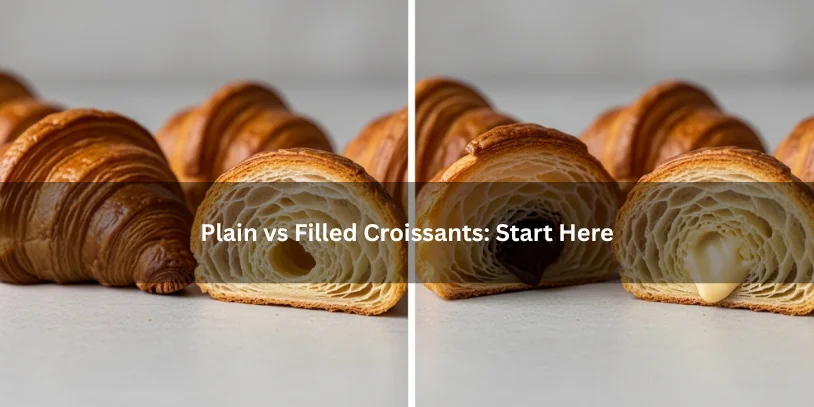
Before you do anything, ask one question:
Is your croissant plain or does it contain a perishable filling?
This is the most important decision in the whole process.
Plain croissants
These are usually safe to keep overnight at room temperature if stored properly:
- butter croissants
- plain bakery croissants
- most chocolate croissants with baked-in filling
- some almond croissants, depending on filling and topping
Filled croissants
These usually need refrigeration:
- cream-filled croissants
- custard-filled pastries
- cream cheese croissants
- ham and cheese croissants
- pastries with fresh dairy, egg-based, or meat fillings
If a filling is perishable, food safety matters more than texture.
The Best Way to Store Croissants Overnight
For plain croissants, the best method is:
- Let them cool completely
- Place them in an airtight container or zip-top bag
- Store them at room temperature overnight
- Reheat briefly in the oven the next morning
That is the sweet spot between freshness and texture.
If you put a warm croissant into a sealed container, condensation builds up. That trapped moisture softens the crust and weakens the flaky layers. If you leave it uncovered, the croissant dries out and turns stale. Proper storage is about controlling air and moisture at the same time.
Step-by-Step: How to Keep Croissants Fresh Overnight
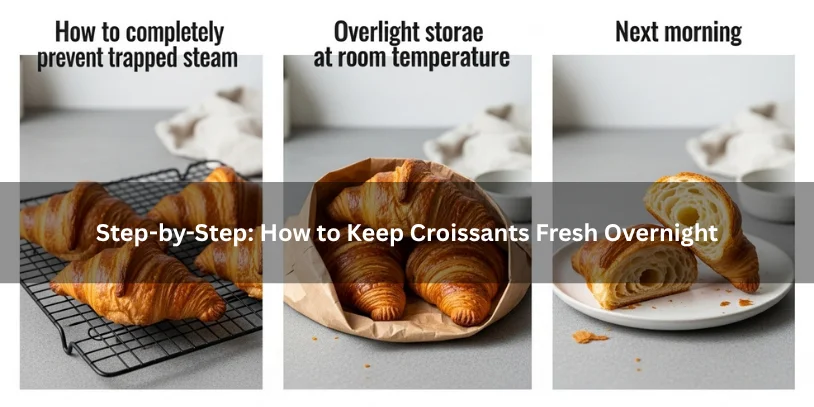
1. Cool them fully first
This step gets skipped all the time, and it is one of the biggest reasons croissants lose their texture.
Warm pastry gives off steam. If you trap that steam, the crisp outer shell turns soft.
Place the croissants on a rack or tray and let them cool until they are no longer warm to the touch.
2. Choose the right packaging
The best options are:
- airtight container
- zip-top bag
- reusable food-safe storage bag
- well-sealed bakery box for short overnight storage
A paper bag is fine for carrying croissants home, but it is usually not the best choice for overnight storage because it lets too much air in. That means faster staling.
Plastic wrap can work, but it is not always ideal for preserving shape. Foil can help for short-term wrapping, but a sealed container or bag is usually easier and more reliable.
3. Store them at room temperature
For plain croissants, keep them:
- on a cool kitchen counter
- away from direct sunlight
- away from heat and humidity
- away from the stove or dishwasher steam
If your kitchen is very hot or humid, the croissants may soften more quickly. In that case, it becomes even more important to seal them well and plan to reheat them in the morning.
4. Refresh them before serving
Croissants stored overnight almost always taste better after a quick oven refresh.
Use:
- 300°F / 150°C
- 5 to 8 minutes
This helps bring back crispness without drying the pastry out too much.
Counter vs Fridge vs Freezer
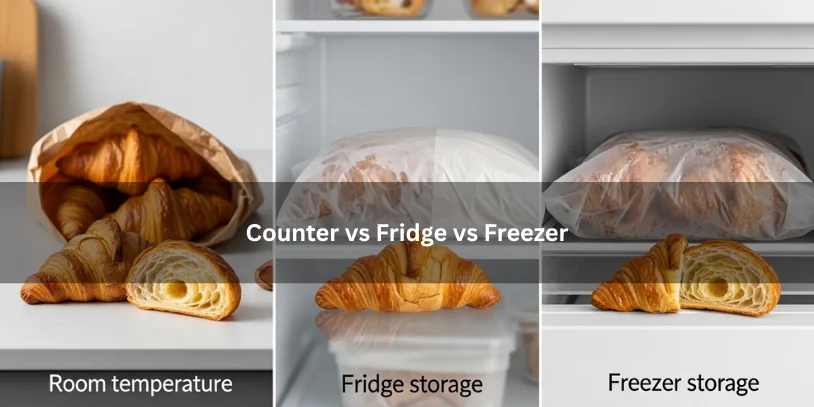
A lot of confusion comes from treating all storage methods as equal. They are not.
| Storage Method | Best For | Pros | Cons |
|---|---|---|---|
| Room temperature | Plain croissants for one night | Best next-day texture, easy, fast | Not suitable for perishable fillings |
| Refrigerator | Cream, custard, cheese, or meat-filled croissants | Safer for perishable fillings | Can dry pastry and reduce flakiness |
| Freezer | Longer storage beyond 1 day | Best for preserving quality long-term | Requires thawing and reheating |
When room temperature is best
If you are eating plain croissants the next morning, this is usually the best method.
When the fridge is necessary
If the filling contains dairy, egg, cream cheese, pastry cream, or meat, refrigerate it. That is the safer move.
When the freezer wins
If you already know you will not eat the croissants tomorrow, freezing is usually better than refrigerating plain croissants for multiple days.
Why Croissants Go Soggy or Stale Overnight
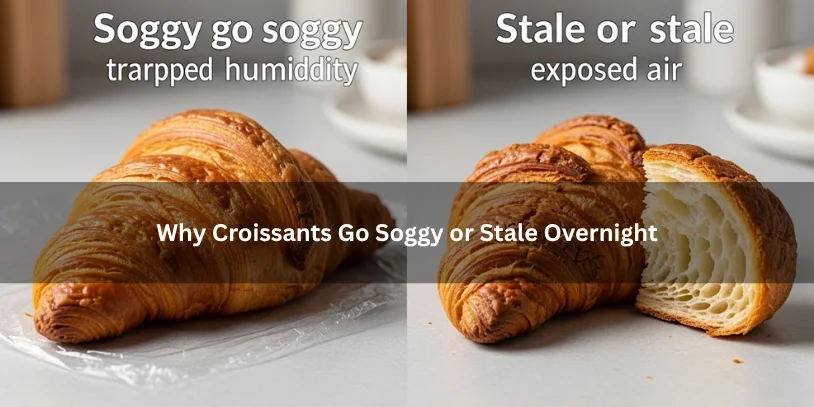
Croissants are moisture-sensitive. Their crumb and crust react quickly to the storage environment.
They go soggy when:
- stored while still warm
- sealed with trapped steam
- kept in a humid environment
- reheated incorrectly and then sealed again
They go stale when:
- left uncovered
- stored in packaging that allows too much airflow
- kept too long without reheating
- refrigerated unnecessarily
This is why croissant storage always feels like a balancing act. You want enough protection from air, but not so much trapped moisture that you kill the crispness.
What About Bakery Croissants?
Bakery croissants often feel “fresh enough” when you bring them home, but the same rules apply.
If they are still slightly warm from the bakery:
- take them out of the paper bag
- let them cool first
- then move them into better storage
A bakery paper bag is great for transport, not always for overnight freshness.
If you bought expensive croissants from an artisan bakery, the wrong storage method can flatten the whole experience. It only takes one night of bad storage to turn buttery layers into soft, tired pastry.
How to Store Filled Croissants Overnight Safely

Filled croissants are where people make the biggest mistake.
They assume the rules are the same for all pastries. They are not.
Refrigerate filled croissants if they contain:
- custard
- whipped cream
- pastry cream
- cream cheese
- fresh dairy filling
- meat or cheese filling
Put them in a sealed container and refrigerate promptly.
Important note
The fridge protects safety, but it does not always protect texture. A refrigerated croissant may taste less flaky the next day, but that tradeoff is worth it when the filling is perishable.
If you are unsure whether the filling is stable or perishable, play it safe and refrigerate.
How to Reheat Croissants the Next Day
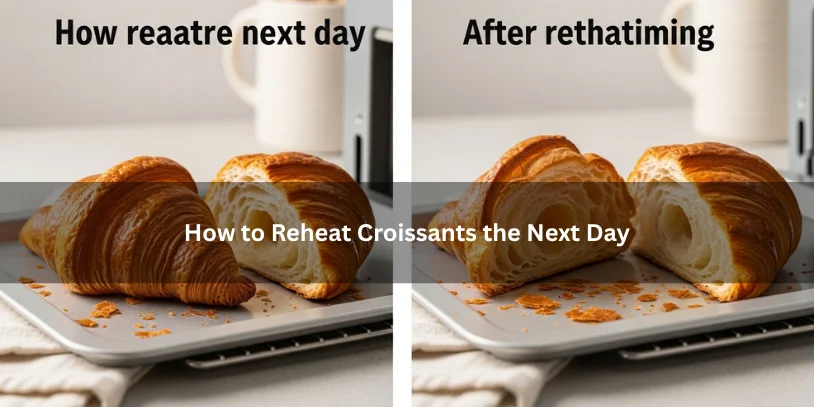
This is the part that saves the experience.
A quick reheat can bring a day-old croissant back to life. Not exactly like fresh-baked, but much closer.
Best method: oven or toaster oven
For plain croissants:
- preheat oven to 300°F / 150°C
- heat for 5 to 8 minutes
- let sit for 1 minute before eating
This works because the low oven refreshes the crust and gently warms the buttery layers.
Can you use a microwave?
You can, but it is rarely the best option.
The microwave tends to:
- soften the crust
- make the texture chewy
- heat unevenly
If you care about flakiness, use the oven.
What about refrigerated filled croissants?
For filled pastries, be more careful. Some are best eaten cool or only lightly warmed. Too much heat can damage the filling, cause leaking, or create an odd texture.
Can You Freeze Croissants Instead?
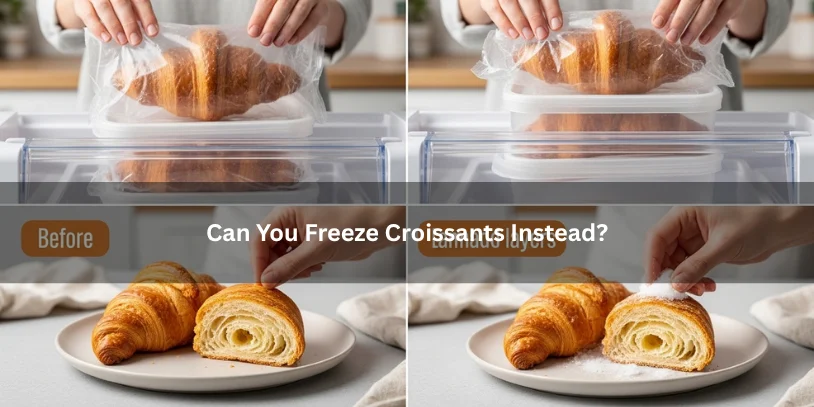
Yes, and for longer storage it is often the smartest move.
If you are not eating the croissants the next morning, freeze them instead of letting them sit around losing quality.
How to freeze croissants
- Let them cool fully
- Wrap individually in foil, plastic wrap, or freezer-safe wrapping
- Place them in a freezer bag or airtight container
- Freeze
To use later
- thaw at room temperature
- then reheat in the oven for a few minutes
Freezing is especially useful for:
- homemade croissants
- extra bakery croissants
- meal prep
- protecting quality beyond overnight storage
Common Mistakes to Avoid
These are the mistakes that ruin croissants fast.
1. Sealing them while warm
This causes condensation and makes the pastry soft.
2. Leaving them in a paper bag overnight
Paper bags are convenient, but they usually do not protect freshness well enough for delicate viennoiserie.
3. Refrigerating all croissants by default
This is one of the most common bad habits. For plain croissants, the fridge can hurt texture more than it helps.
4. Not separating plain and filled pastries
Food safety and texture are two different issues. Treating them the same leads to bad advice.
5. Microwaving to “fix” stale croissants
It warms them, but often ruins the crust.
6. Keeping croissants too long on the counter
Overnight is one thing. Several days is another. Plain croissants are best eaten fresh or refreshed quickly, not stretched too far.
Best Storage Method by Croissant Type
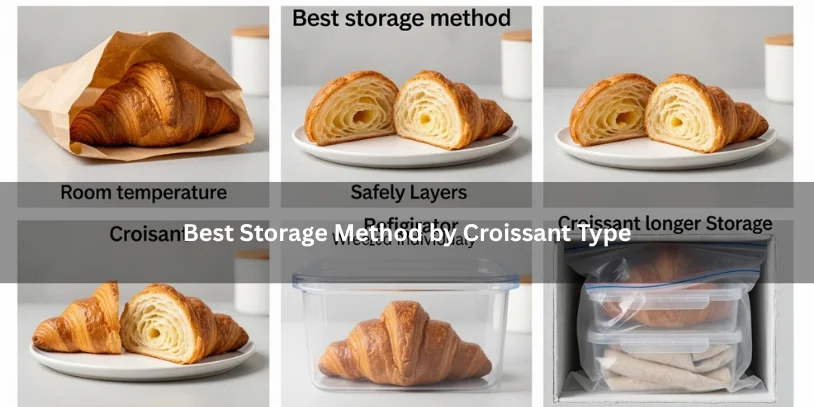
| Croissant Type | Overnight Storage | Morning Plan |
|---|---|---|
| Plain butter croissant | Airtight container at room temperature | Oven refresh |
| Chocolate croissant | Usually room temp if baked-in filling | Oven refresh |
| Almond croissant | Room temp if non-perishable, refrigerate if unsure | Light reheat |
| Cream-filled croissant | Refrigerate | Serve cool or warm gently |
| Custard-filled pastry | Refrigerate | Warm carefully if suitable |
| Ham and cheese croissant | Refrigerate | Reheat until warmed through |
Quick Decision Path
If you want the fastest answer, use this:
- Plain croissant + eating tomorrow morning = room temperature, airtight storage
- Cream/custard/cheese/meat filling = refrigerate
- Not eating tomorrow = freeze
- Want crisp texture back = oven, not microwave
That is really the whole strategy.
Do Almond and Chocolate Croissants Need Different Storage?

Sometimes, yes.
Chocolate croissants
Most pain au chocolat style pastries can usually be treated like plain croissants for overnight storage, since the chocolate is baked into the pastry and not usually perishable in the same way cream fillings are.
Almond croissants
These can be trickier. Some are just topped or filled with almond cream and are fine overnight at room temperature. Others may include additions that make refrigeration the safer option.
When in doubt:
- check how the pastry was made
- ask the bakery
- refrigerate if the filling seems dairy-heavy or unstable
Who This Advice Is Best For
This storage method is useful for:
- home bakers
- people buying croissants for breakfast
- meal preppers
- bakery customers bringing pastries home
- anyone trying not to waste good pastries
It is especially useful if you care about both flakiness and food safety, not just one or the other.
FAQs
Can I leave croissants out overnight?
Yes, plain croissants can usually stay out overnight if they are fully cooled and stored in an airtight container or sealed bag.
Should croissants be refrigerated overnight?
Only if they contain perishable fillings like custard, cream, cream cheese, or meat. Plain croissants are usually better at room temperature overnight.
What is the best container for storing croissants?
An airtight container or zip-top bag works best for plain croissants because it limits air exposure without leaving them completely unprotected.
Can you store croissants in a paper bag?
You can for a short time, but it is not ideal for overnight storage. Paper bags let in too much air, which can make croissants stale faster.
How long do croissants last at room temperature?
Plain croissants are best the day they are baked, but they can usually hold up for overnight storage if packed properly.
How do you make day-old croissants crispy again?
Reheat them in a 300°F / 150°C oven for 5 to 8 minutes. That is the easiest way to restore crispness.
Can cream-filled croissants stay out overnight?
No, that is not a good idea. Cream-filled pastries should be refrigerated because the filling is perishable.
Can you freeze croissants after baking?
Yes. If you are not eating them the next day, freezing is one of the best ways to preserve quality.
Why did my croissants turn soggy overnight?
Most likely because they were stored while still warm or sealed in a way that trapped steam and condensation.
Conclusion
The best answer to how to store croissants overnight depends on what kind of croissant you have.
For plain croissants, let them cool completely, then store them at room temperature in an airtight container or sealed bag. In the morning, give them a short oven refresh to bring back the flaky crust and soft interior.
For filled croissants, especially those with cream, custard, cheese, or meat, refrigeration is the safer choice.
If you remember just one thing, make it this: plain croissants are about texture, filled croissants are about safety. Once you understand that split, storing them the right way gets a lot easier.