

Is Brown Sugar Cane Sugar? The Short, Clear Answer
Yes, brown sugar is typically cane sugar. In most cases, it starts as refined sugar made from sugarcane, with molasses either left in or added back after refining. That combination gives brown sugar its color, moisture, and flavor.
However, how brown sugar is produced—and why that matters—depends on the type of brown sugar and the manufacturing method. That’s where confusion usually starts.
Let’s clear it up properly.
What Exactly Is Brown Sugar?

Brown sugar is a sucrose-based sweetener that contains molasses. Sucrose is the same sugar molecule found in white sugar, made up of glucose and fructose.
What makes brown sugar different is:
- Molasses content
- Moisture level
- Flavor profile
Those differences affect baking performance, taste, and texture—but not nutritional value in any meaningful way.
Where Does Brown Sugar Come From?
In modern food production, brown sugar almost always comes from sugarcane, not sugar beets.
Here’s why:
- Sugarcane naturally produces molasses with a desirable caramel flavor
- Beet-derived molasses tastes bitter and is rarely used for brown sugar
- Global food standards and consumer preference favor cane-based brown sugar
As a result, commercial brown sugar in most countries is cane sugar by default, even when labels simply say “sugar.”
How Brown Sugar Is Made (Step by Step)

There are two main production pathways, and this distinction explains most of the confusion.
Method 1: Refined Cane Sugar + Molasses (Most Common)
This is how most supermarket brown sugar is made.
- Sugarcane is crushed to extract juice
- The juice is refined into white sugar
- Molasses is fully removed
- A controlled amount of molasses is added back
This creates consistent, predictable brown sugar with uniform moisture and flavor.
Method 2: Partially Refined Cane Sugar (Traditional)
Some brown sugars retain molasses naturally.
- Sugarcane juice is boiled
- Crystals form without full refinement
- Some molasses remains in the sugar
This method produces darker, stronger-flavored sugars with more variation.
Types of Brown Sugar You’ll See on Labels

Not all brown sugar behaves the same in recipes. Understanding the type matters.
Light Brown Sugar
- Lower molasses content
- Mild caramel flavor
- Best for cookies, muffins, and quick breads
Dark Brown Sugar
- Higher molasses content
- Deeper flavor and darker color
- Common in gingerbread, BBQ sauce, and spice-forward baking
Muscovado Sugar
- Unrefined or minimally refined cane sugar
- High natural molasses
- Moist, sticky texture
- Strong flavor used in specialty baking
Turbinado Sugar
- Partially refined cane sugar
- Very little molasses
- Coarse crystals
- Often used for topping, not baking structure
Brown Sugar vs White Sugar: What’s the Real Difference?

| Feature | Brown Sugar | White Sugar |
|---|---|---|
| Source | Sugarcane | Sugarcane or sugar beet |
| Molasses | Present | Removed |
| Moisture | Higher | Dry |
| Flavor | Caramel-like | Neutral |
| Baking Effect | Chewier, softer | Crisp, dry |
Key takeaway: The difference is functional, not nutritional.
Cane Sugar vs Beet Sugar: Does It Matter?

From a chemical standpoint, sucrose is sucrose. Your body processes cane sugar and beet sugar the same way.
But in brown sugar production:
- Cane sugar dominates the market
- Beet sugar is rarely used
- Molasses flavor from beets is undesirable
So while white sugar may come from either source, brown sugar is overwhelmingly cane-based.
Is Brown Sugar Just White Sugar With Molasses?

In most cases, yes—and that’s not a bad thing.
Adding molasses back:
- Improves consistency
- Ensures predictable baking results
- Allows manufacturers to control moisture and flavor
This doesn’t make brown sugar artificial. It’s simply refined sugar with a natural byproduct reintroduced.
Is Brown Sugar Natural or Processed?
Brown sugar is processed, even when it sounds rustic or natural.
Important distinctions:
- “Natural” does not mean unrefined
- Brown color does not mean less processed
- Molasses does not make it nutritionally superior
Partially refined sugars like muscovado or jaggery are less processed, but standard brown sugar is still refined sugar.
Is Brown Sugar Healthier Than White Sugar?

No, not in any meaningful way.
Brown sugar contains:
- Slight traces of minerals from molasses
- Nearly identical calories and glycemic impact
Those mineral amounts are too small to provide health benefits. Choosing brown sugar for health reasons alone is a common misconception.
Why Molasses Matters in Baking
Molasses affects chemistry, not just flavor.
In baking, brown sugar:
- Attracts and retains moisture
- Creates softer textures
- Reacts with baking soda for better rise
- Enhances browning and aroma
That’s why swapping white sugar for brown sugar (or vice versa) can change results dramatically.
Is Cane Sugar the Same as Brown Sugar?
No, cane sugar and brown sugar are not the same, although both come from sugarcane.
What Is Cane Sugar?
Cane sugar is sugar made directly from sugarcane. It is usually:
- White (refined)
- Light golden (less refined)
- Dry and granulated
It does not contain molasses unless specifically added.
What Is Brown Sugar?
Brown sugar is typically:
- White sugar mixed with molasses
- Moist and soft in texture
- Light brown or dark brown, depending on molasses content
The molasses gives brown sugar its:
Extra moisture
Caramel-like flavor
Darker color
When the Cane Sugar Question Actually Matters
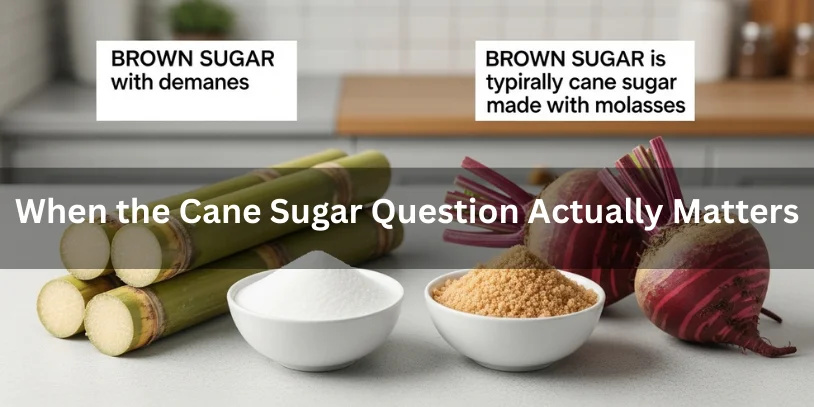
Knowing whether brown sugar is cane sugar matters most when:
- Baking precise recipes
- Interpreting ingredient labels
- Choosing between sugar types for flavor
- Following sourcing or dietary preferences
For everyday sweetening, the difference is minor. For baking and formulation, it’s critical.
How to Read Brown Sugar Labels Correctly
When checking labels, look for:
- “Cane sugar” explicitly listed
- “Sugar + molasses” wording
- Organic or minimally refined indicators
Avoid assuming:
- Brown = healthier
- Natural-sounding names = unprocessed
- Darker color = better quality
Can Brown Sugar Be Made From Sugar Beets?

Technically, yes—but commercially, almost never.
Reasons include:
- Flavor incompatibility
- Limited consumer acceptance
- Manufacturing inefficiency
If beet sugar is used, it’s usually disclosed clearly, especially in regulated markets.
Substitutes for Brown Sugar (When You’re Out)
If you don’t have brown sugar, you have options.
Best DIY Substitute
- White sugar + molasses
- 1 cup sugar + 1 tablespoon molasses (light)
- 2 tablespoons molasses (dark)
Other Alternatives
- Jaggery (less refined, stronger flavor)
- Coconut sugar (different taste and behavior)
- Honey (changes moisture balance)
Each substitute affects texture and flavor differently.
Common Myths That Cause Confusion
- Brown sugar is raw sugar
- Brown sugar is healthier
- Brown sugar is unrefined
- All brown sugar is the same
Understanding production clears up all of these.
Why This Topic Keeps Confusing People
The confusion comes from:
- Marketing language
- Overlapping terms like raw, natural, cane
- Inconsistent global labeling practices
- Social media nutrition myths
Once you understand the role of molasses and refining, the picture becomes simple.
FAQs
Is brown sugar always made from sugarcane?
Almost always. Commercial brown sugar is overwhelmingly cane-based.
Does brown sugar contain molasses naturally?
Sometimes. It may be retained naturally or added back after refining.
Is dark brown sugar less refined than light brown sugar?
No. The difference is molasses quantity, not refinement level.
Can I replace white sugar with brown sugar in baking?
Yes, but expect changes in texture, moisture, and flavor.
Is brown sugar better for cookies?
Often, yes. It creates chewier cookies with deeper flavor.
Is muscovado the same as brown sugar?
No. Muscovado is less refined and has naturally higher molasses.
Does brown sugar expire?
It doesn’t spoil, but it can harden if exposed to air.
Conclusion
So, is cane sugar the same as brown sugar?
Yes—in the vast majority of cases, brown sugar is made from sugarcane, with molasses defining its color, moisture, and baking behavior.
Understanding how brown sugar is produced helps you:
- Bake with confidence
- Read labels accurately
- Avoid nutrition myths
- Choose the right sugar for the right job
Brown sugar isn’t healthier or more natural—but it is functionally different, and that difference matters where it counts: in the kitchen.