

If you’re halfway through a banana bread craving and your bananas are still too firm, you’re not alone. “Ripen bananas in oven” searches usually come from one urgent moment: you need bananas that are soft, sweet-ish, and mashable for baking—today. Pasted text
Here’s the key truth upfront: oven “ripening” is mostly heat-softening. It can make bananas taste sweeter and bake-ready, but it doesn’t perfectly copy the slow, natural ripening process driven by ethylene (ethene gas) and starch → sugar conversion in this climacteric fruit (banana / Musa, typically Cavendish). Pasted text
Quick answer (for the “just tell me what to do” crowd)
Bake bananas in the peel on a lined baking sheet until the peel turns brown-black and the banana feels very soft. Cool, scoop, mash, and use for banana bread, muffins, pancakes, or smoothies. Pasted text
What “ripening bananas in the oven” actually does (and doesn’t do)
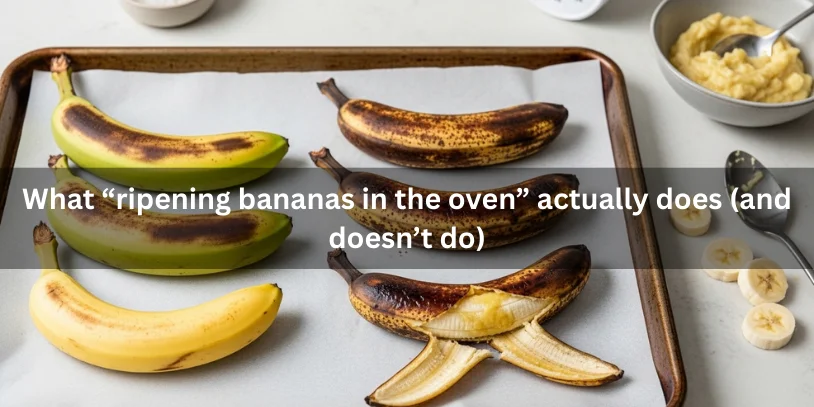
Natural bananas ripen because they produce ethylene, which triggers enzymes to break down starches into sugars, shift aromas, soften texture, and change peel color.
Oven heat can:
- soften the banana quickly (cell structure relaxes)
- deepen “banana” aroma (warm volatile compounds)
- darken the peel and sometimes intensify sweetness for baking
But it usually won’t:
- turn very green bananas into truly sweet, naturally ripe bananas
- give the same fresh-eating texture or flavor you get after a couple days on the counter Pasted text
So if your goal is out-of-hand eating, the oven method can taste a bit “cooked.” If your goal is baking bananas, it’s one of the best shortcuts.
Who this method is for (B2C + B2B use cases)
This oven method is perfect for:
- home bakers making banana bread or banana loaf last-minute
- parents trying to rescue underripe bananas before they go to waste
- meal-preppers who want to mash and freeze ripe bananas
- cafés and small bakeries that need consistent mashable banana base on short notice (just scale it up on sheet pans)
If you’re working with plantains, note they’re starchier and behave differently—oven-softening helps texture, but the sweetness won’t mimic ripe dessert bananas. (Same idea for red bananas: flavor profile shifts, but the method still softens.)
Tools you’ll need (simple, but worth doing right)
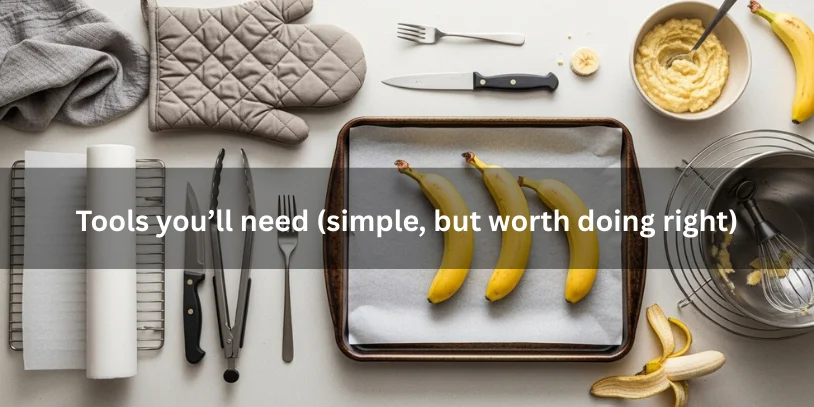
- Bananas (Cavendish is the common supermarket type)
- Baking sheet (rimmed is best)
- Parchment paper or aluminum foil (prevents sticky cleanup)
- Oven mitts + tongs (optional, but handy)
- Bowl + fork/potato masher Pasted text
Pro tip: Remove produce stickers before heating. They can melt and smell weird.
How to ripen bananas in the oven (step-by-step)
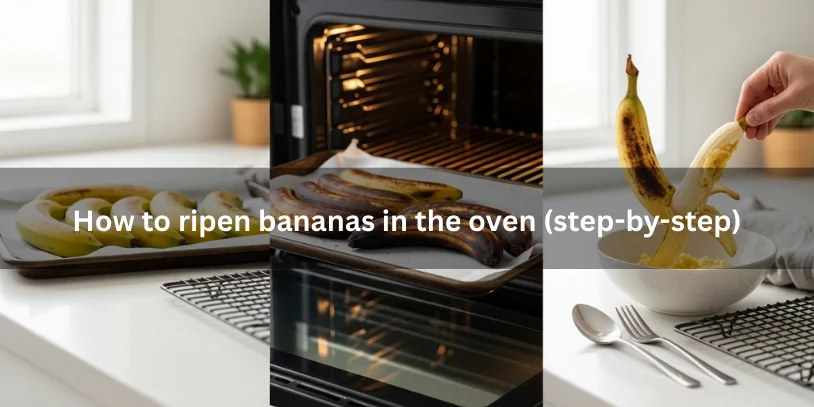
Step 1: Preheat your oven
Pick a temperature based on your goal and banana stage (we’ll break this down below).
Step 2: Line your tray
Bananas can leak sugary liquid and split. Lining avoids a burnt, sticky mess. Pasted text
Step 3: Bake bananas in the peel
Place bananas in a single layer with a bit of space between them.
Step 4: Look for doneness cues (not just time)
You’re aiming for:
- peel turning deep brown to black
- banana feeling very soft through the peel
- some syrupy leakage is normal
Step 5: Cool, then mash
Let them cool 10–15 minutes. Slice open the peel, scoop out the fruit, mash, and measure for your recipe.
The temperature confusion resolver (why you see 250°F, 300°F, 350°F—and what to choose)
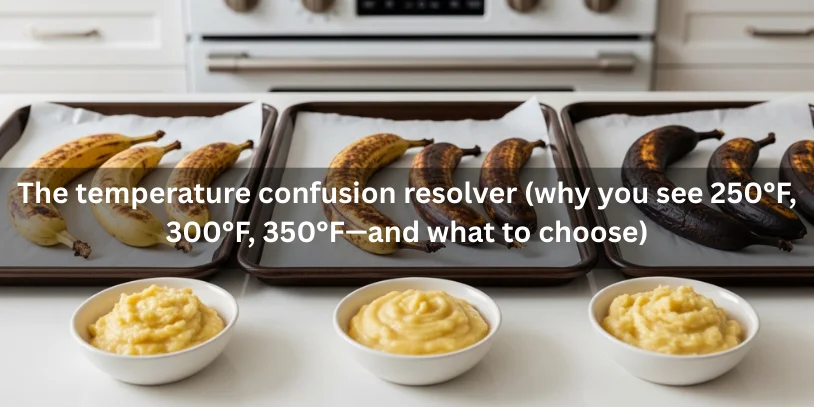
If you’ve Googled this, you’ve probably seen wildly different instructions. That’s because people are solving different problems:
Lower temp (gentler) = better for firmer bananas
300°F / 150°C is the “safe middle” for most kitchens. It warms the banana through without scorching the outside too quickly.
Higher temp (faster) = best when bananas are already yellow
350°F / ~175–180°C can work fast when bananas are already mostly yellow and you just need them softer/mashable.
UK oven notes (fan + gas mark)
In UK-style instructions, you’ll often see something like 180°C / 160°C fan / gas 4, which is essentially a “moderate oven” approach. Use it mainly when bananas are already yellow and you’re prioritizing speed. Pasted text
Bottom line: Choose your temp based on starting ripeness, not based on one “magic number.” Pasted text
Timing guide: how long to ripen bananas in the oven (by banana stage)
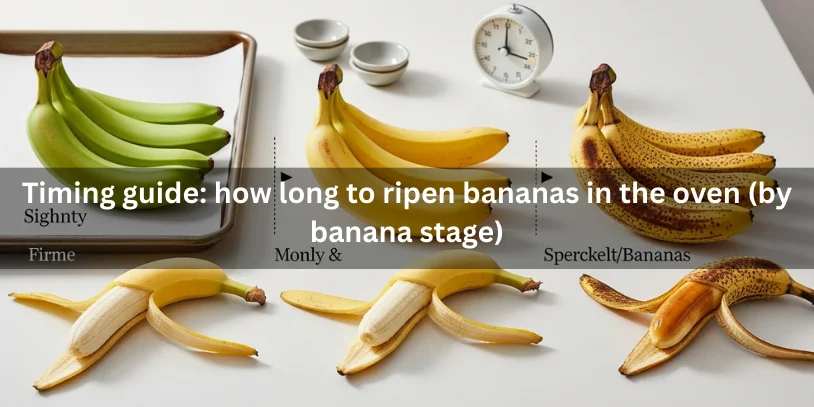
Use this as a practical baseline. Always trust the “soft through the peel” test more than the clock.
| Starting banana stage | Best goal | Temp | Typical time window |
|---|---|---|---|
| Yellow but firm | Soft + mashable (banana bread ready) | 300°F / 150°C | 15–25 min |
| Yellow with a few spots | Deeper flavor + easy mash | 300°F / 150°C | 20–30 min |
| Very firm / slightly green-tinted | “Baking-ready” softening (not true sweetness) | 300°F / 150°C | 25–40 min |
| Fully green | Usually not worth oven-only | — | Use paper bag (ethylene) instead |
Why the warning on green bananas? Because oven heat may soften them, but they can still taste starchy—not the sweet “bananas ripening” outcome people expect.
How to brown bananas in the oven (for richer banana bread flavor)
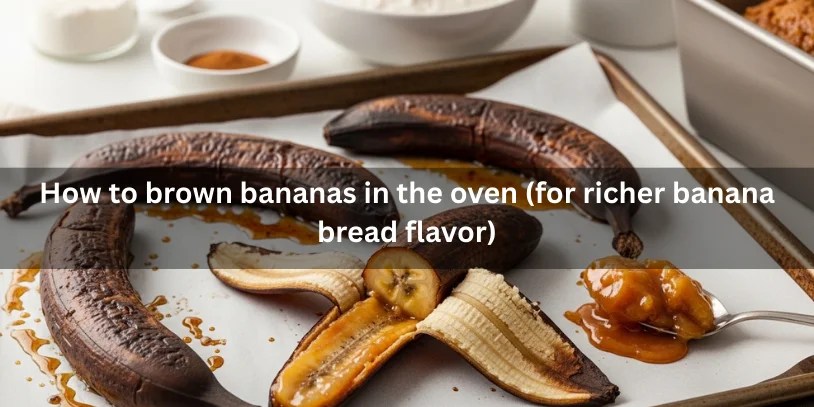
If your recipe wants that deep banana bread vibe (not just soft fruit), let the peel go dark brown to nearly black. That extra time boosts aroma and makes the mash more “banana-forward.”
A simple way to do it:
- stick with 300°F / 150°C
- bake until the peel looks dramatic (it’s fine)
- cool and mash
This is also the method people mean by “browning bananas” or “brown bananas in oven” when they’re chasing flavor—not just softness. Pasted text
Troubleshooting matrix (symptom → cause → fix)
This is where most oven-ripening guides stop short—so here’s the practical fix list.
| Problem | Likely cause | Fix |
|---|---|---|
| Banana is soft but not sweet | Too green to start | Use paper bag ripening next time; add a little sugar/honey to recipe if needed |
| Mash seems watery | Higher heat or very underripe banana | Reduce other liquids slightly; bake a few extra minutes to evaporate moisture; use in muffins/pancakes |
| Bananas burst/leak a lot | Totally normal at times | Always line tray with parchment/foil; don’t overcrowd |
| Peel turns black fast but inside still firm | Oven too hot for banana stage | Lower temp to 300°F/150°C and extend time |
| Tray smells “burnt sugar” | Syrup caramelized on bare metal | Line tray next time; add a splash of water on the tray after cooling to loosen stuck sugar |
These match the exact pain points people complain about: watery/cooked taste, mess, and “will I ruin my baking?” Pasted text
Safety and “is this banana still okay?”
Bananas can look ugly and still be completely usable—especially for baking. But toss them if you notice:
- visible mold (especially fuzzy patches)
- a rotten smell
- leaking that looks like rot rather than clear sticky syrup Pasted text
Also, avoid “chemical ripening” shortcuts. If you ever see tips involving unsafe ripening agents (like calcium carbide), skip them entirely. Pasted text
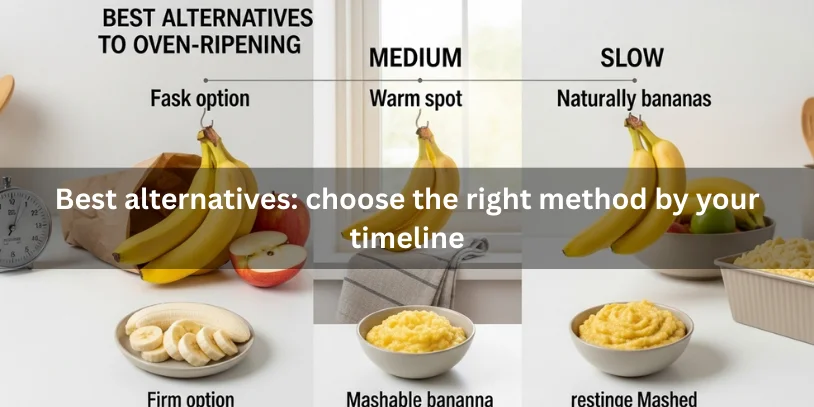
Best alternatives: choose the right method by your timeline
A lot of people aren’t asking “how do you ripen bananas in the oven?”—they’re asking, “What’s the fastest way that won’t mess up my recipe?” Pasted text
Use this decision table
| You have… | Best method | Why it works | Best for |
|---|---|---|---|
| 5–8 minutes | Microwave | Softens fast (not true ripening) | Pancakes, smoothies |
| 20–45 minutes | Oven | Most “baking-ready” mash | Banana bread, muffins |
| 1–2 hours | Air fryer | Quick, less heat-up time | Small batches |
| Overnight / 1–2 days | Paper bag + ethylene fruit | Closest to real ripening | Better sweetness for eating + baking |
This comparison solves the “5 minutes vs 30 minutes vs 2 days” micro-decision people get stuck on. Pasted text
Paper bag method (best “real ripening”)
Put bananas in a paper bag (optionally with an apple/avocado). The ethylene builds up and pushes natural ripening forward.
Freeze-thaw softening (bonus trick)
If you already have frozen bananas, thawing them makes them extremely soft and mashable. Texture is not great for eating, but it’s fantastic for banana bread and smoothies.
Buying guidance: when it’s smarter to just get ripe bananas “near me”
Sometimes the fastest answer isn’t a banana oven hack.
If you’re on a deadline and your oven is busy, searching:
- “ripe bananas near me”
- “overripe bananas near me”
- “grocery delivery ripe bananas”
…can be the simplest solution (even though overripe bananas can be surprisingly hard to find in stores). Pasted text
Cost/pricing angle (real-world)
Running a full-size oven for one loaf can feel silly if electricity is expensive where you live. If bananas are cheap and available, buying ripe ones may win. If you’re already baking something, tossing bananas in while the oven’s hot is basically “free.”
Storage: what to do after you oven-ripen bananas
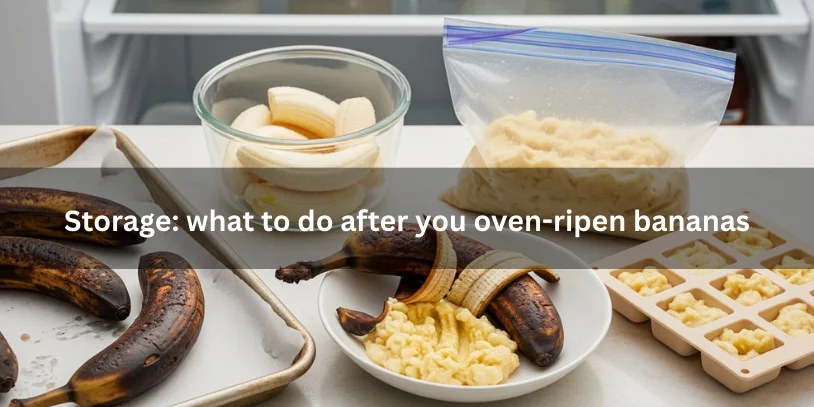
If you’ll bake within 24–48 hours
Mash and store in an airtight container in the fridge.
If you want future banana bread on demand
Freeze mashed bananas in:
- zip bags (flatten for quick thaw)
- small containers (portion-sized)
- ice cube trays (then bag the cubes)
Label with date and amount (for example: “1 cup mashed banana”). This is one of the easiest ways to reduce waste and always have “ripe bananas for baking” ready. Pasted text
Mini glossary (so the terms actually make sense)
- Ethylene / ethene gas: a natural plant hormone that triggers ripening.
- Climacteric fruit: fruit that keeps ripening after harvest (bananas do).
- Starch → sugar conversion: why ripe bananas taste sweet; oven heat doesn’t fully replicate this for green bananas. Pasted text
Quick “final decision paths”
- Bananas are yellow but firm: use the oven method and bake until very soft.
- Bananas are green: paper bag ripening is more reliable than the oven.
- You only need bananas for a smoothie in 5 minutes: microwave or thaw frozen bananas.
- You need banana bread today and hate mess: line the tray, bake peel-on, cool, mash.
That’s the whole game: match the method to the deadline and starting ripeness. Pasted text
FAQs
1) Can you ripen bananas in the oven?
Yes—especially for baking. Oven heat softens bananas and makes them mashable, but it’s not identical to natural ethylene ripening. Pasted text
2) What temperature to ripen bananas in the oven?
A dependable baseline is 300°F / 150°C. If bananas are already yellow and you need speed, some people go hotter (around 350°F / 175–180°C), but watch for watery results.
3) How long to ripen bananas in the oven?
Typically 15–40 minutes, depending on how firm they are. Use the peel-darkening + “very soft through the peel” test rather than relying only on time. Pasted text
4) Do I peel bananas before baking them to ripen?
No. Bake them in the peel. It’s cleaner, easier to handle, and the peel color is a helpful doneness cue. Pasted text
5) Can I use green bananas with the oven method?
You can soften them, but they often won’t become sweet the way naturally ripened bananas do. For green bananas, the paper bag method is usually better. Pasted text
6) Do oven-ripened bananas taste the same as naturally ripened?
Usually no. They can taste a bit “cooked.” For banana bread, muffins, pancakes, and smoothies, that’s rarely a problem.
7) What if my bananas burst or leak in the oven?
That’s common. Line your baking sheet with parchment or foil, give bananas space, and don’t worry unless you see actual spoilage signs. Pasted text
8) How do I store extra oven-ripened bananas?
Mash and refrigerate short-term, or freeze in portions for future baking. This is one of the best ways to avoid wasting bananas. Pasted text
Conclusion
If you need ripe bananas fast for baking, the oven method is the most reliable shortcut: bake peel-on bananas on a lined tray until they’re very soft, then cool, scoop, and mash. Just remember the trade-off—it’s softening, not true ripening, so very green bananas won’t magically become sweet. When timing is tight, pick the method that fits your deadline, your banana stage, and whether you’re baking or eating.