

Sugar cookieloaf is most often a misspelling or shorthand for sugar cookie loaf (also called sugar cookie bread or sugar cookie loaf cake): a sliceable, buttery vanilla loaf that delivers “classic sugar cookie” flavor without rolling, chilling, and cutting dough. Pasted text
Think of it as the best parts of a sugar cookie—vanilla, butter, a soft bite—rebuilt into a single loaf pan bake. It’s popular for holidays, parties, brunch tables, gifting, and anytime you want something festive that doesn’t require cookie-cutter effort.
short answer
Sugar cookieloaf is a vanilla-forward loaf cake that tastes like a sugar cookie. It’s baked in one pan, often finished with a simple glaze or frosting and sprinkles. It’s easier than traditional cutout cookies and slices cleanly for sharing.
Why sugar cookieloaf matters (and who it’s for)
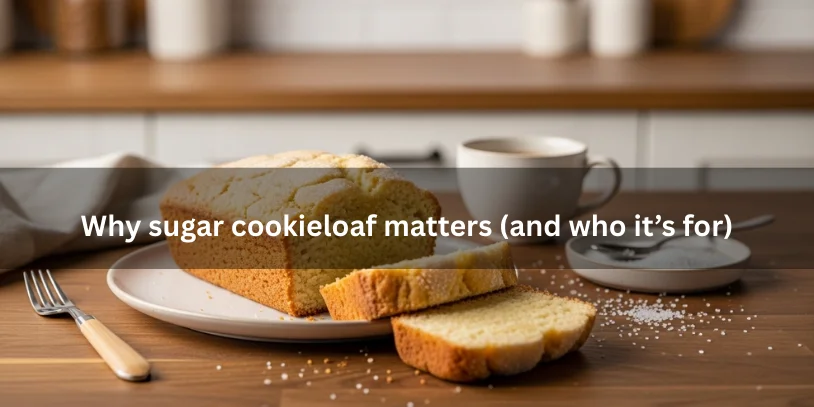
Why it matters
- Faster than cookies: no rolling pins, no chilling, no trays of batches.
- More predictable: one bake, one texture target.
- More versatile: easy to flavor, decorate, and portion.
Who it’s for
- B2C home bakers: busy schedules, school events, holiday platters, birthdays.
- Mixed / micro-business: home bakers and small dessert sellers who want a consistent, sliceable product that photographs well.
When it’s the perfect choice
- You want a “cookie vibe” dessert for a crowd.
- You need a giftable bake that travels well.
- You want a base that can become funfetti, citrus, almond, or diet-friendly with minimal changes.
The sugar-cookie flavor blueprint
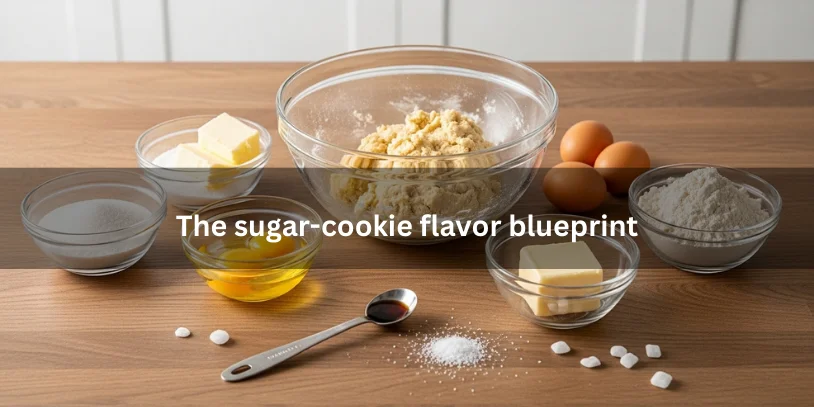
Sugar-cookie flavor is simple, but it’s specific. Aim for these attributes:
- Vanilla-forward (and optionally a light almond note)
- Buttery rather than oily
- Tender, moist crumb that slices without crumbling
- Sweet finish balanced by salt
Core ingredients (and what each does)
- Butter (or a butter-forward substitute): signature flavor and richness.
- Sugar: sweetness plus structure; also helps aerate if creamed.
- Eggs (or egg replacer): binding and structure.
- Flour: framework of the loaf.
- Leavener: lift; too much can cause a fast rise then a sink.
- Salt: makes vanilla and butter taste “bigger.”
- Moisture booster (yogurt/sour cream/milk): helps prevent dryness and supports a soft crumb. Pasted text
- Sprinkles (optional): visual identity—choose types that don’t bleed.
Tools that make results consistent
You can bake this with basics, but these tools reduce failure rates:
- Loaf pan: 9×5 inch (23×13 cm) is the most common; 8×4 runs taller and may need longer bake time. Pasted text
- Parchment sling: quick lift-out, cleaner slices.
- Digital scale: makes global baking easier (grams work everywhere).
- Oven thermometer: oven temps can be off; calibration helps long bakes. Pasted text
- Digital probe thermometer: removes guesswork for doneness.
For baking precision culture, brands like ThermoWorks are commonly referenced in baking communities (even if you use any reliable thermometer).
How to make sugar cookieloaf (step-by-step)
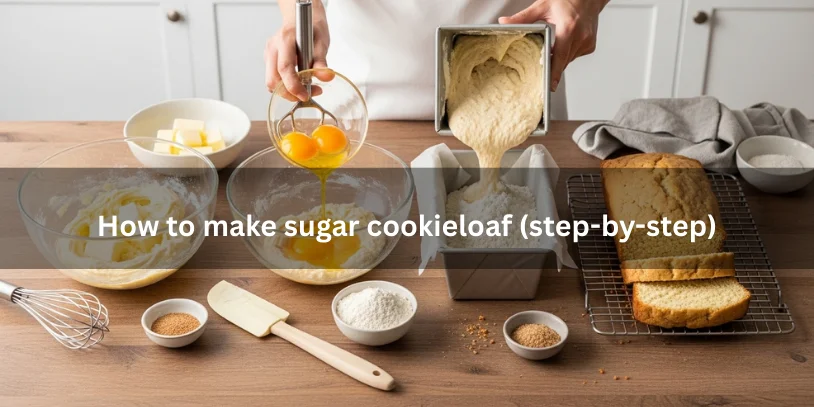
This is the most dependable “classic” method—designed for a tender crumb, sugar-cookie aroma, and clean slices.
Step 1: Prep your pan and oven
- Heat oven to 350°F / 175°C.
- Grease the loaf pan and line with a parchment sling.
- If your oven runs hot, plan to tent with foil later.
Step 2: Build the flavor base
- Cream butter and sugar until noticeably lighter (this adds air).
- Mix in eggs one at a time.
- Add vanilla. For a bakery-style sugar cookie vibe, add a tiny amount of almond extract (optional).
Step 3: Combine dry ingredients separately
Whisk flour, leavener, and salt together. This prevents uneven rise and salty pockets.
Step 4: Mix gently for tenderness
Add dry ingredients in additions, alternating with your moisture booster (milk/yogurt/sour cream). Stop mixing as soon as the flour disappears—overmixing is the #1 “tough loaf” cause.
Step 5: Add sprinkles the smart way (optional)
Fold in sprinkles at the end with a spatula. For less bleeding, use “jimmies” style sprinkles and avoid ultra-dyed nonpareils in the batter.
Step 6: Bake and protect the top
Bake until the center is set and the loaf springs back. If the top browns early, tent with foil mid-bake (a common fix for loaf-style cakes). Pasted text
Step 7: Cool correctly
- Cool in pan 10–15 minutes.
- Lift out, then cool fully before glazing or frosting.
Doneness decision (fast framework)
Use two checks for confidence:
- Visual/touch: set center + gentle spring-back
- Thermometer (optional): quick-bread/loaf cakes commonly land around ~200–205°F (93–96°C), but formula and pan size can shift that slightly. Pasted text
Glaze vs frosting (and when to choose each)
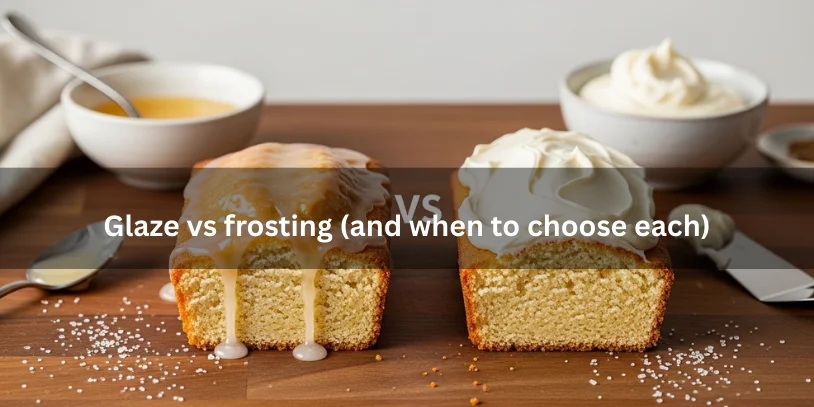
Both are valid. Pick based on how you’re serving, storing, or selling.
| Finish | Best for | Pros | Cons |
|---|---|---|---|
| Glaze (thin drizzle) | gifting, quick finish, clean slicing | sets faster, looks polished, less messy | can crack if too thick/dry |
| Frosting (thicker) | party loaf, “cake-like” feel | richer bite, hides surface flaws | softer in heat, can smear in transport |
A simple cookie-style glaze is often associated with King Arthur Baking Company, but any powdered sugar + milk + vanilla approach works—aim for a ribbon-like consistency that sets without becoming chalky.
Troubleshooting: the most common failures (and fixes)
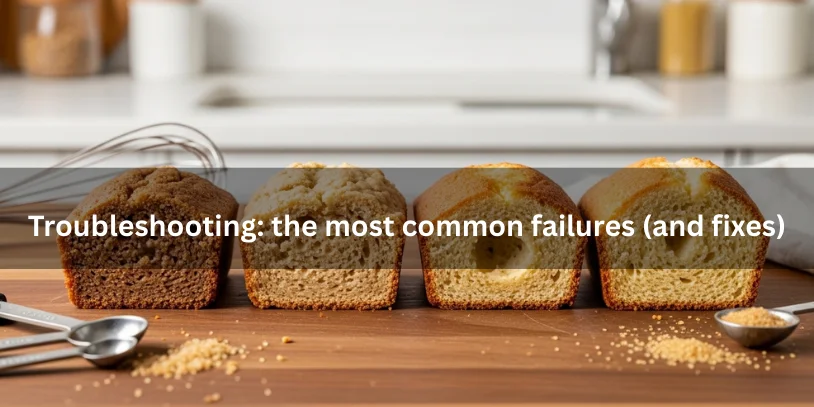
Dense loaf
Likely cause: overmixing after flour, cold ingredients, or not enough aeration.
Fix: bring ingredients to room temp; mix gently after flour; cream butter/sugar longer.
Sunken middle
Likely cause: underbaked center, too much leavener, or opening the oven too early. Pasted text
Fix: bake until set; verify oven temperature; reduce leavener slightly next time if it consistently domes then collapses.
Gummy or raw center
Likely cause: loaf needs more time (tall pans and moist batters take longer).
Fix: tent with foil and continue baking; next time, lower your batter moisture slightly or use a wider pan.
Dry edges, dry crumb
Likely cause: overbaking or too little moisture booster.
Fix: check earlier; consider yogurt/sour cream; store airtight once fully cooled.
Sprinkles bleeding into batter
Likely cause: sprinkle type (some dyes dissolve) or overmixing.
Fix: use jimmies; fold gently; consider reserving sprinkles only for the top.
Variations: formats, flavors, and diet-friendly options
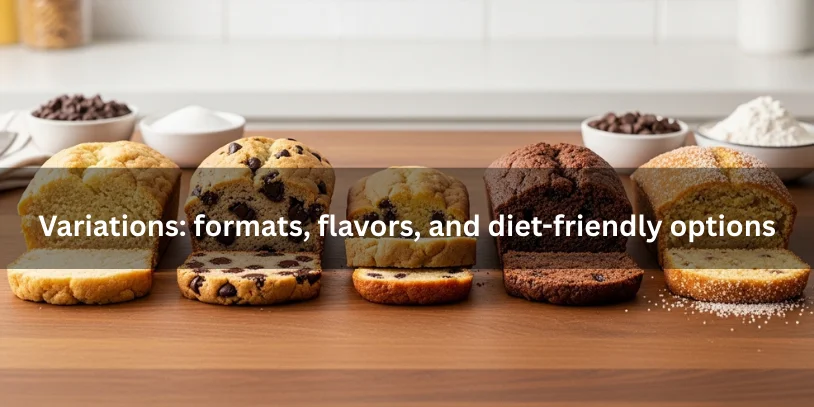
Sugar cookieloaf is a “base template” dessert. Here are high-demand variants that satisfy different intent paths:
Flavor variants (low risk, high payoff)
- Funfetti sugar cookie loaf: more sprinkles, extra vanilla.
- Citrus sugar cookie loaf: lemon or orange zest + citrus glaze.
- Almond sugar cookie loaf: a whisper of almond extract for bakery nostalgia.
- Holiday sugar cookie loaf: seasonal sprinkles; optional warm spice accent.
For brand context, “Funfetti/confetti cake” is widely associated with Pillsbury in consumer culture, which helps readers instantly understand the sprinkle-driven vibe.
Diet and macro variants (what changes most)
- Vegan: plant butter + egg replacer. Expect a slightly more delicate crumb; chill before slicing for clean cuts. Pasted text
- Gluten-free: use a 1:1 GF baking blend; avoid overbaking (GF loaves dry faster). Pasted text
- High-protein: protein powder can dry batters; compensate with added moisture and avoid overbake. Pasted text
Storage, freezing, and gifting (with safety notes)
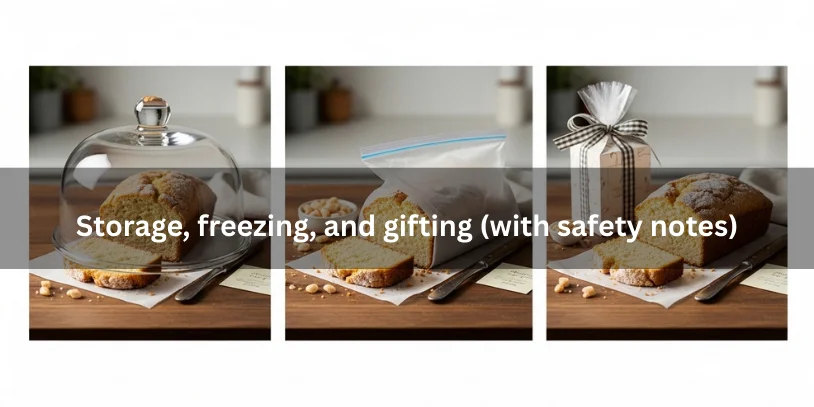
Storage (best practice)
- Unglazed: airtight at room temp for short-term freshness.
- Glazed/frosted: store cooler if your topping is dairy-rich or your climate is hot/humid.
For general leftovers guidance, agencies like USDA Food Safety and Inspection Service emphasize prompt refrigeration of perishable foods; in very hot environments, be extra conservative. Pasted text
Freezing (best texture)
- Freeze unglazed when possible.
- Wrap tight (plastic + foil), then bag.
- Thaw wrapped, then glaze fresh.
Gifting checklist
- Fully cooled loaf (no trapped steam).
- Firm glaze set before wrapping.
- Include allergen note if sharing widely (nuts, dairy, eggs, gluten).
For broader safe-handling guidance, U.S. Food and Drug Administration publishes consumer food safety information.
Buy vs bake: a decision framework (and “near me” search intent)
Even globally, this topic has a commercial edge: people want a bakery-quality loaf without the work—or they want to order one.
Bake it if…
- You want customization (sprinkles, flavors, sweetness level).
- You want the best value per slice.
- You need a same-day result.
Buy it if…
- You need perfect presentation for an event.
- You’re ordering in volume (office, school, catering).
- You want consistent results with no testing.
How to find “sugar cookie loaf near me” (global-safe)
Because bakeries may label this differently, search with multiple phrases:
- “sugar cookie loaf near me”
- “sugar cookie bread bakery near me”
- “funfetti loaf cake near me”
- “custom loaf cake delivery in [city]” Pasted text
Provider types to look for: local bakery, grocery bakery, home/cottage baker, custom cake studio, dessert caterer. Pasted text
What to ask before ordering (quality filter)
- Is it baked to order or held for days?
- Butter-based or oil-based? (Butter reads more “sugar cookie.”)
- Glaze or frosting—can you request “less sweet”?
- Can they handle allergens or special diets?
If you sell loaves, note that cottage-food rules and labeling vary by country/state. For technical definitions and recipe markup structure in publishing ecosystems, you’ll often see Schema.org and Google Search Central referenced by site owners—but your customer-facing priority is clarity: ingredients, allergens, and storage guidance.
“Viral” factor: why this loaf trends
Sliceable, sprinkle-topped desserts perform well on short video. Platforms like TikTok, Instagram, Pinterest, and Reddit amplify “easy but impressive” baking—exactly what sugar cookieloaf delivers.
The best-performing versions usually have:
- a clean slice shot (tight crumb, visible sprinkles)
- a glossy glaze drip
- a simple “one pan, no cutters” message
Alternatives (if you want the vibe but not the loaf)
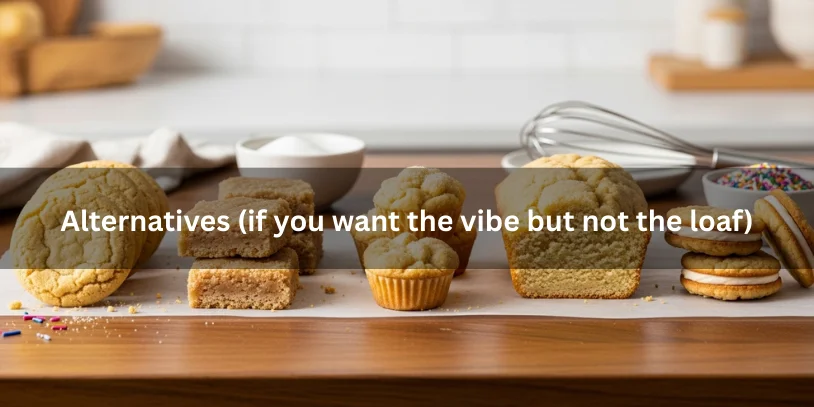
- Sugar cookie bars: faster bake, softer bite, easy frosting.
- Vanilla snack cake: similar crumb, less “cookie” identity.
- Pound cake: richer and denser; closer to “butter cake” than “cookie.” Pasted text
FAQs
- Is sugar cookieloaf the same as sugar cookie bread?
Usually, yes. “Sugar cookieloaf” often refers to sugar cookie loaf/bread—a loaf cake that tastes like a sugar cookie and is typically finished with glaze or frosting. Pasted text - Does it taste exactly like a sugar cookie?
It’s extremely close in flavor (buttery vanilla, sometimes almond), but the texture is loaf-cake soft rather than crisp-edged like a baked cookie. - What pan size should I use?
A 9×5-inch (23×13 cm) loaf pan is most common. An 8×4 pan makes a taller loaf and often needs more bake time. Pasted text - How do I know it’s done without drying it out?
Use two signals: the center springs back and a tester shows moist crumbs. If using a thermometer, loaf-style quick breads commonly finish around ~200–205°F (93–96°C), with some variation. Pasted text - Why did my loaf sink in the middle?
The most common causes are underbaking, too much leavener, or opening the oven early. Bake until fully set, verify oven temperature, and measure leaveners precisely. Pasted text - Which sprinkles won’t bleed?
Jimmies usually bleed less than tiny nonpareils. Fold sprinkles gently at the end and avoid overmixing once they’re added. - Glaze or frosting—what’s better?
Glaze is cleaner for slicing and transport. Frosting is richer and more “cake-like,” but can smear in warm climates or long deliveries. - Can I freeze sugar cookieloaf?
Yes. Freeze it unglazed for best texture, wrapped tightly. Thaw wrapped, then glaze fresh. Pasted text - Can I make it vegan or gluten-free?
Yes—both are common variants. Vegan versions rely on plant butter and egg replacers; gluten-free versions work best with a 1:1 baking blend and careful bake time to prevent dryness. Pasted text
Conclution
Sugar cookieloaf is the easiest way to get sugar-cookie flavor with loaf-cake convenience: one pan, clean slices, and a finish that can look bakery-level with a simple glaze and sprinkles. Choose your format (loaf cake vs quick bread), pick glaze or frosting based on transport and climate, and use doneness cues (or a thermometer) to avoid the classic sink-or-dry traps.