
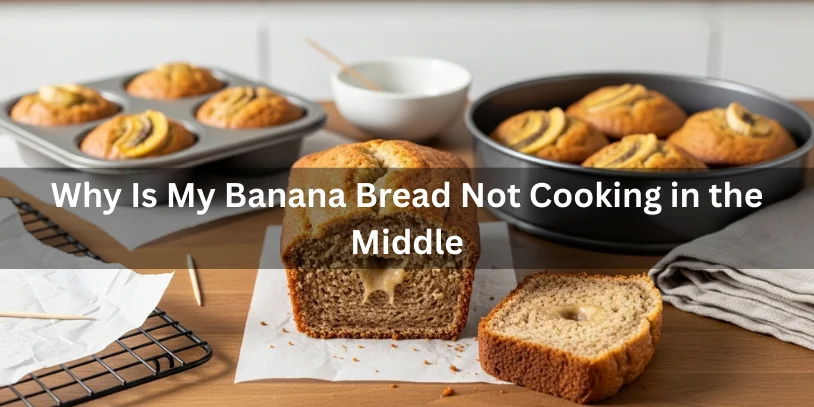
Few baking frustrations compare to cutting into a golden banana bread only to find a gooey, undercooked center. Understanding why this happens—and how to fix it—is essential for both beginner and experienced bakers. This guide covers causes, fixes, ingredient science, oven and pan considerations, alternative methods, and practical preventive tips.
Why is banana bread not cooking in the middle?
Banana bread usually stays undercooked in the middle when the batter is too wet, the loaf is too thick, the oven runs too hot or too cool, or the bread simply needs more baking time. In many cases, the top looks done first while the center still needs time to fully set.
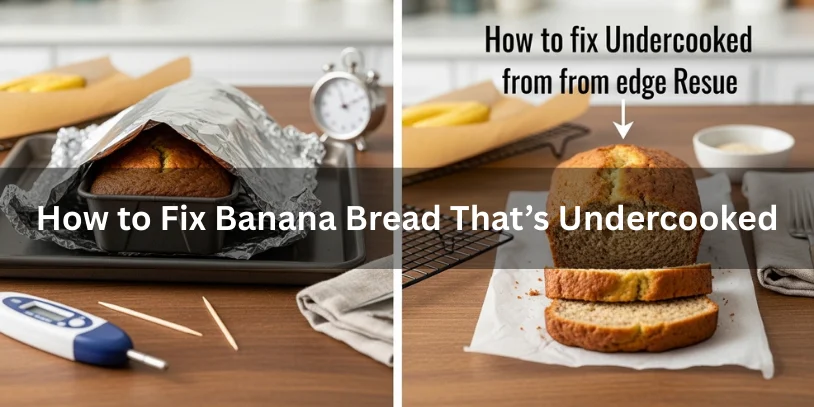
If your banana bread is brown on top but raw in the middle, loosely cover it with foil and keep baking until the center reaches doneness. A clean skewer or an internal temperature of around 205–210°F usually means it is ready.
Why Is My Banana Bread Not Cooking in the Middle?
1. Oven Temperature Issues
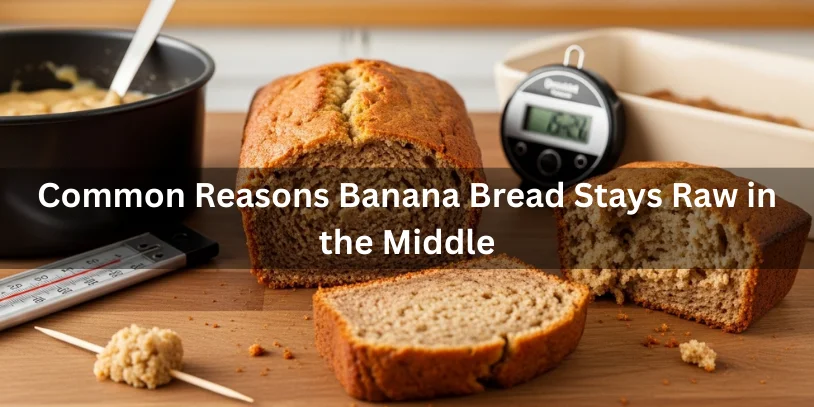
Oven heat inconsistencies are a major culprit. If the temperature is too high, the outside browns quickly while the center remains uncooked. Too low, and the bread may never fully set. Ideal baking temperature is typically 160–175°C (325–350°F).
Tip: Use an oven thermometer to ensure accuracy; most built-in oven dials are off by 10–20°C.
2. Underbaking or Short Bake Time
Banana bread is a dense, moist quick bread that requires sufficient time to cook through. Depending on your pan size and batter volume, baking can take 50–70 minutes or longer.
Check doneness: Insert a toothpick or skewer in the center; it should come out clean or with a few moist crumbs.
3. Excess Moisture from Bananas or Liquid
Overripe bananas add natural moisture, which can make the center dense or wet if proportions aren’t balanced. Too much oil, eggs, or milk can compound this effect.
Decision framework: For every cup of mashed banana, use 1–1¼ cups of flour to maintain structure without drying out the loaf.
4. Pan Size and Material
Pan Type and Effect on Baking
Metal: Conducts heat evenly and usually bakes faster
Glass: Slower heat penetration and may brown the edges first
Silicone: May bake less evenly and leave the center softer
Small pan: Creates a thicker loaf with a higher risk of a raw center
Large pan: Spreads batter more thinly and usually bakes faster
Tip: Standard banana bread pans are 8.5×4.5 or 9×5 inches. Adjust batter accordingly.
5. Batter Thickness or Overfilling
Overfilled pans create thick loaves that cook unevenly. Leave ½ inch of space at the top for proper rising.
6. Opening the Oven Too Frequently
Every time the oven door is opened, heat escapes, and the center may collapse or remain undercooked. Wait until the minimum baking time before checking.
7. Environmental Factors
High humidity or altitude can affect baking. Humid conditions retain more moisture, potentially delaying center cooking. High-altitude baking may cause faster rising but insufficient internal cooking.
Banana Bread Brown on Top but Raw in the Middle
If your banana bread is brown on top but still raw in the middle, the oven is often too hot or the loaf is too thick for the center to cook through at the same speed. This happens when the outside sets and darkens before enough heat reaches the middle.
It can also happen if the pan is too small, the batter is overfilled, or the loaf is placed too high in the oven. In this situation, loosely cover the top with foil and keep baking until the center is fully set.
What to Do If Banana Bread Is Not ooked in the Middle
Immediate Steps (During Baking)
- Cover with foil to prevent further browning.
- Lower oven temperature by 10–15°C.
- Continue baking 10–25 minutes, depending on thickness.
- Test center with a skewer for doneness.
Preventive Adjustments for Next Time
- Measure bananas and liquids precisely.
- Avoid overmixing batter to prevent density.
- Use a metal loaf pan for more even heat conduction.
- Preheat the oven fully, mid-rack position.
- Consider high-altitude adjustments if applicable.
Why Is My Banana Bread Gooey in the Middle?
A gooey center does not always mean the loaf is completely raw. Sometimes banana bread turns gooey in the middle because the batter has too much banana, too much oil, or not enough flour to support the extra moisture.
Banana bread can also seem gooey if it is sliced too early before the center has finished setting. Letting the loaf cool properly often improves the final texture and makes it easier to judge whether it is truly underbaked or just too warm.
Step-by-Step Baking Framework
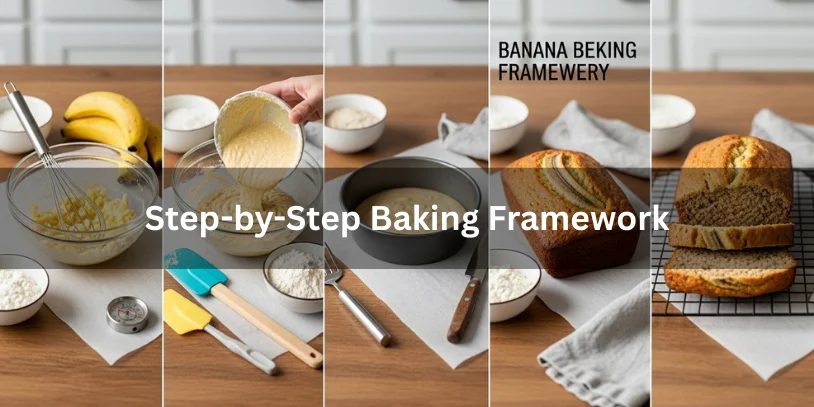
- Preheat Oven
Wait at least 15 minutes for full heat stabilization. - Prepare Pan
Grease and lightly flour a metal pan, or use parchment paper. - Mix Ingredients Properly
- Mash bananas evenly.
- Combine wet ingredients separately from dry.
- Fold gently to maintain fluffiness.
- Bake at Optimal Temperature
- 170°C (338°F) works for most ovens.
- Use an oven thermometer for accuracy.
- Test Doneness
- Toothpick/skewer test: clean or slightly moist crumbs indicate readiness.
- Internal temperature: 96–99°C (205–210°F).
- Cooling
- Cool in pan 10–15 minutes, then transfer to a rack.
- Avoid cutting immediately to prevent collapse.
Ingredient Science: Moisture vs Structure
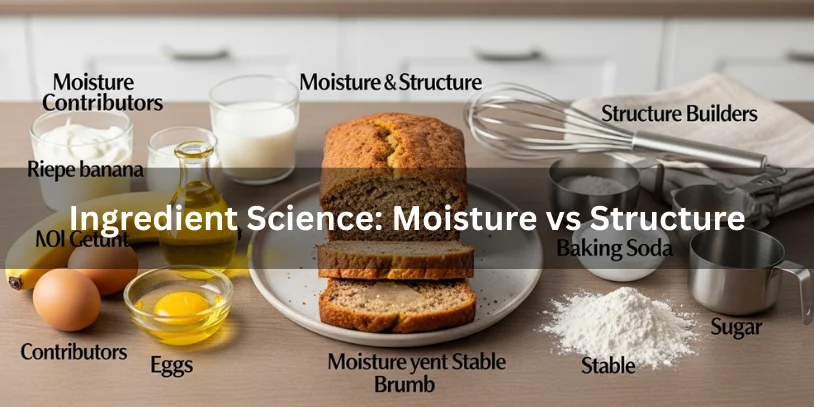
How each ingredient affects banana bread
Bananas: Add moisture, sweetness, and flavor
Flour: Provides structure
Eggs: Bind and stabilize the batter
Sugar: Adds sweetness, browning, and a tender crumb
Butter or oil: Adds softness and richness
Baking soda: Helps the loaf rise
Oven, Pan, and Equipment Considerations
- Oven Types:
- Conventional ovens provide slower, even heat.
- Convection ovens circulate air, browning faster but may dry the edges.
- Pan Material: Metal is best for even baking.
- Tools: Toothpicks, skewer testers, and oven thermometers improve precision.
Decision Table: Diagnosing Undercooked Banana Bread
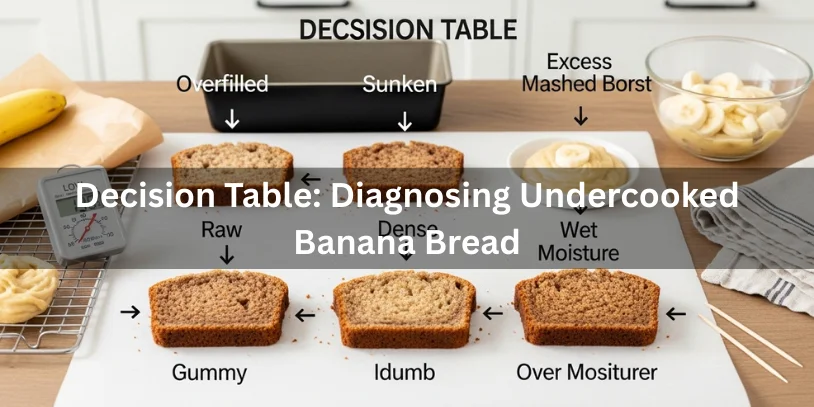
| Symptom | Likely Cause | Fix |
|---|---|---|
| Burnt top, raw center | Oven too hot | Lower temp, cover with foil |
| Dense, wet | Excess moisture | Reduce banana or oil, balance flour |
| Sinks after cooling | Underbaked | Extend baking time, check doneness |
| Only edges cooked | Thick batter in large pan | Reduce batter thickness, adjust pan |
Alternative Baking Methods
Alternative pans can work, but loaf thickness still matters most. Muffin tins usually bake faster because the batter is shallower, while silicone and glass pans may need extra time for the center to cook through evenly. If you use a different pan shape, always check doneness in the middle rather than relying only on bake time.
Common Mistakes to Avoid
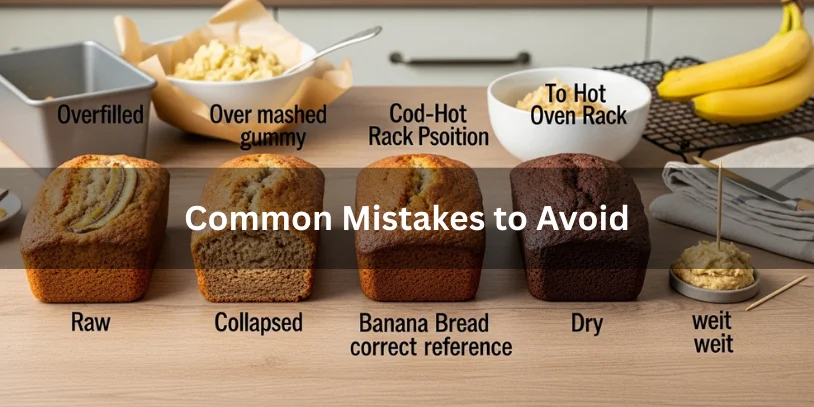
- Guessing measurements
- Using frozen bananas without draining excess liquid
- Overmixing batter
- Skipping the doneness test
- Opening the oven too early
People Also Ask
1. Why is my banana bread raw in the middle but cooked outside?
High oven temperature or excess moisture can cook the edges faster than the center.
2. How do I know banana bread is fully cooked?
Insert a skewer; it should come out clean or with a few moist crumbs.
3. Can I fix undercooked banana bread?
Yes. Cover it with foil, lower the oven temperature, and bake longer until the center sets.
4. Why does banana bread sink in the center?
Usually underbaking or excessive moisture causes collapse.
5. What pan is best for banana bread?
Metal loaf pans provide even heat; 8.5×4.5 or 9×5 inches is standard.
6. How long should banana bread bake?
50–70 minutes depending on pan size, batter thickness, and oven type.
7. Can I bake banana bread without a loaf pan?
Yes, in round, square, or muffin pans; adjust bake time and check doneness carefully.
8. Does altitude affect banana bread?
Yes, high-altitude baking may require longer baking time and slight recipe adjustments.
9. How does banana ripeness affect baking?
Overripe bananas increase moisture and sweetness but may slow center cooking if not balanced with flour.
10.Can I put banana bread back in the oven if the middle is undercooked?
Yes. If the center is still undercooked, loosely cover the top with foil and continue baking until the middle is fully set.
Conclusion
If your banana bread is not cooking in the middle, the cause is usually too much moisture, the wrong pan, uneven oven heat, or not enough baking time. The good news is that this is a common baking problem and usually easy to fix. Once you adjust the batter, use the right pan, and check the center properly, you are much more likely to get a loaf that is fully baked in the middle and still moist enough to enjoy.