
If you are asking, why did my banana bread come out gummy, the answer is usually simple: the loaf held more moisture than its crumb structure could support. In most cases, banana bread gummy texture comes from underbaking, too much banana, excess liquid, overmixing, weak leaveners, or slicing the loaf too soon.
But not all gummy banana bread is the same.
Sometimes the center is wet and sticky. Sometimes the bottom has a dense, gluey layer. Sometimes the whole loaf feels heavy, chewy, and damp. If my banana bread is gummy, the fastest way to solve the problem is to look at where the gumminess appears and match it to the right cause.
Why Did My Banana Bread Come Out Gummy?
If your banana bread came out gummy, one of these issues is usually behind it:
- too much banana or too much liquid
- underbaking in the center
- overmixing after adding flour
- old or poorly measured baking soda or baking powder
- a dark loaf pan that baked the outside too fast
- cutting the loaf while it was still too warm
A lot of bakers think a golden top means the loaf is done. That is where trouble starts. Banana bread can look beautifully browned outside and still be wet inside.
What Does Gummy Banana Bread Actually Mean?
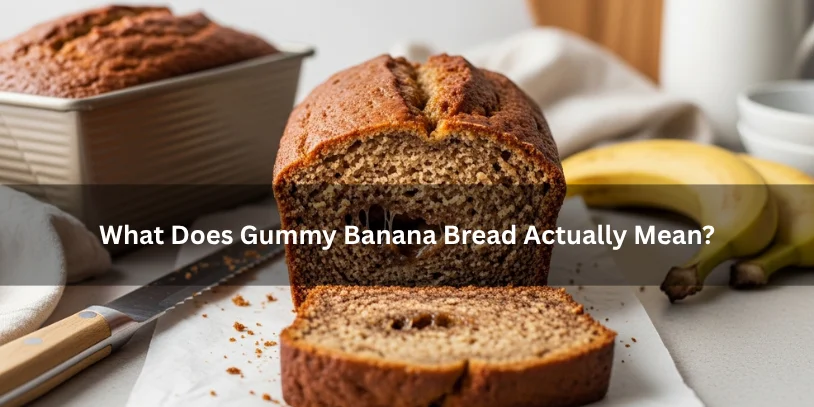
A gummy banana bread texture is different from a moist one.
A moist loaf feels:
- soft
- tender
- rich
- lightly springy
A gummy loaf feels:
- sticky
- gluey
- rubbery
- pasty
- wet or under-set
When banana bread is gummy, it usually means one of two things happened:
- the batter had too much moisture
- the crumb structure did not set properly during baking
That is why a loaf can be fully shaped and still slice badly.
Banana Bread Gummy in the Middle vs Bottom
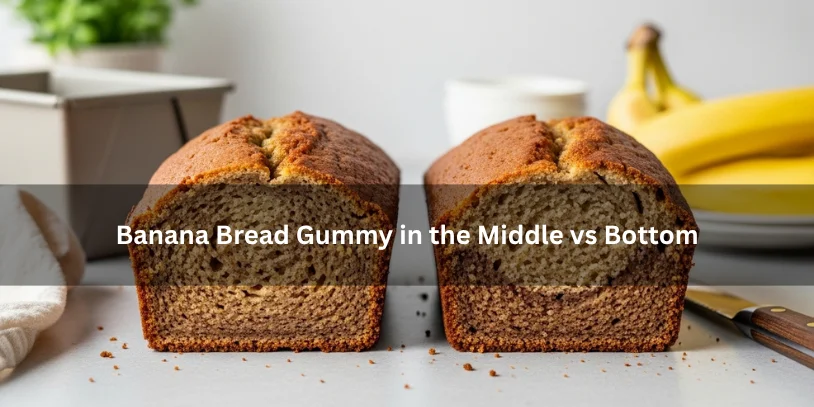
One of the most useful ways to diagnose the problem is to separate the symptom.
| Symptom | Most likely cause | What it usually means |
|---|---|---|
| Gummy in the middle | Underbaked center or too much moisture | The center did not finish setting |
| Gummy at the bottom | Extra liquid, trapped steam, or compressed crumb | Moisture or structure issue |
| Dense and gummy all over | Overmixing or weak leaveners | Tight crumb with poor rise |
| Brown top, wet inside | Pan or oven issue | Outside baked faster than the center |
| Sticky only when warm | Sliced too soon | Crumb needed more cooling time |
If my banana bread is gummy only in the center, the cause is usually different from a loaf that has a sticky bottom layer.
Why Is My Banana Bread So Gummy? The Most Common Causes
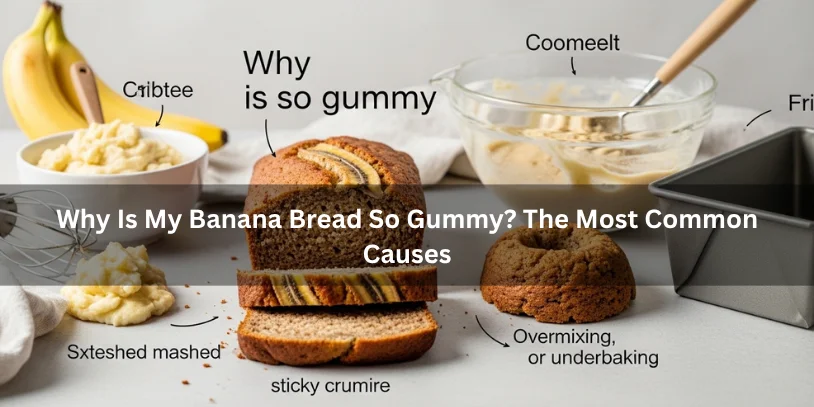
If you keep wondering, why is my banana bread so gummy, these are the biggest reasons.
Too Much Banana
Bananas add moisture, sugar, and weight. A small change can make a big difference. If you add one extra large banana to a recipe designed for 3 medium bananas, the batter may become too wet.
This is one of the top reasons banana bread turned out gummy even when the recipe looked fine on paper.
Excess Liquid From Frozen Bananas
Frozen bananas are useful, but they release a lot of liquid when thawed. If you pour all that liquid into the batter, the center can stay wet and the bottom can turn dense.
If you use frozen bananas and your banana bread is gummy, the extra liquid is a strong suspect.
Underbaking
This is the biggest cause of a gummy middle.
Banana bread often needs more time than people expect, especially in a standard 9 x 5-inch loaf pan (about 23 x 13 cm). A loaf can brown on top and still be underdone inside.
A digital thermometer is more reliable than guessing. The center of banana bread should generally reach about 200°F to 205°F (93°C to 96°C).
Overmixing the Batter
Once the flour goes in, too much stirring develops gluten. That creates a tighter, heavier crumb. Instead of soft slices, you get a loaf that feels chewy, dense, and damp.
If banana bread turned out gummy all the way through, overmixing is one of the first things to check.
Undermixing the Batter
This is less talked about, but it matters. If dry flour pockets, uneven banana mash, or leavener streaks stay in the batter, parts of the loaf may rise and bake unevenly.
The goal is not “mix as little as possible.”
The goal is mix until just combined.
Weak or Mismeasured Leaveners
Banana bread depends on baking soda, baking powder, or both. If they are old, weak, or not measured properly, the loaf may not rise the way it should.
That poor rise often creates a heavy crumb, dense streaks, and a texture that feels wet even after baking.
Wrong Pan or Uneven Oven Heat
A dark pan can set the outside too fast. The crust starts firming up while the center still needs time. That leads to one of the most frustrating problems: brown top, gummy inside.
If your banana bread came out gummy but looked done on top, the pan or oven setup may be part of the issue.
Slicing Too Soon
Fresh banana bread smells amazing, so this mistake is common. But if you cut the loaf while it is still hot, the crumb can look sticky and under-set even if it was properly baked.
In some cases, people think the loaf failed when really it just needed more cooling time.
What Is the Gummy Layer at the Bottom?
When the bottom of the loaf has a compact, sticky section, that is often not the same thing as a raw center. It can be a compressed, gluey layer caused by too much moisture or by how the structure formed during baking.
Some bakers refer to this kind of bottom-layer problem as cleaching. In simple words, it is a dense gummy section that forms when the loaf is too wet, too heavy, or poorly balanced in mixing or leavening.
A gummy bottom often points to:
- too much banana
- extra liquid from frozen bananas
- old leaveners
- overmixing or undermixing
- steam trapped in the pan during cooling
So if banana bread is gummy only near the base, do not assume the whole loaf is raw. It may be a specific moisture and structure issue.
How to Diagnose the Real Problem
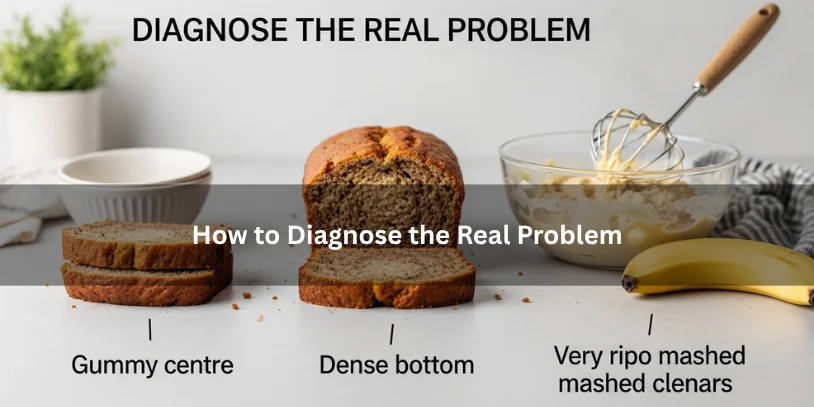
If you are standing in the kitchen thinking, my banana bread is gummy, use this quick process.
1. Check where the gumminess is
Ask:
- Is it in the middle?
- At the bottom?
- Through the whole loaf?
- Only when warm?
2. Check doneness
Use a digital thermometer if possible. If the center is below about 200°F / 93°C, underbaking is likely.
No thermometer? Then look for:
- wet streaks on a skewer
- a shiny, pasty center
- a loaf that sinks slightly when pressed
3. Think about moisture
Did you:
- add extra banana?
- use very large bananas?
- use yogurt, sour cream, or buttermilk?
- use frozen bananas with all the thawed liquid?
If yes, excess moisture is a likely cause.
4. Think about mixing
Did you stir until perfectly smooth? That may mean overmixing.
Did you leave uneven batter or dry flour pockets? That may mean undermixing.
5. Check pan and oven behavior
If the top browned too fast but the center lagged behind, the pan or oven likely played a role.
How to Fix Gummy Banana Bread
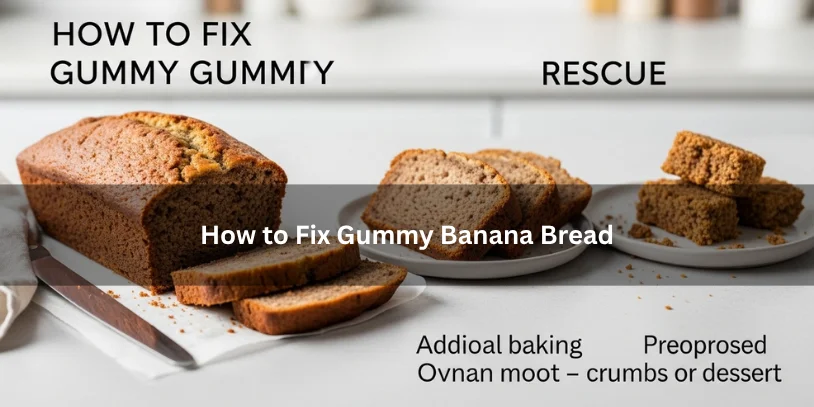
A lot of bakers search for how to fix gummy banana bread after the loaf is already out of the oven. The good news is that some gummy loaves can still be improved.
If the center is slightly underbaked
Put the loaf back in the oven.
- Cover the top loosely with foil if it is already dark enough
- Bake a little longer
- Recheck the center before removing it again
This is often the best answer to how to fix gummy banana bread when the main issue is underbaking.
If it is already sliced
Toast the slices. Toasting helps dry the surface and improves texture quickly.
If the bottom is gummy but the rest is okay
Trim around the sticky part and use the rest of the loaf.
If it was overmixed
You usually cannot fully undo that texture, but you can still use the loaf in other ways.
What to Do With Gummy Banana Bread
If you are wondering what to do with gummy banana bread, you have a few practical options.
- toast slices and serve with butter
- turn it into bread pudding
- cube it and crisp it lightly for dessert toppings
- warm it and serve with nut butter
- use it as a base for a simple trifle-style dessert
So even if banana bread turned out gummy, it does not always need to be thrown away.
Can I Eat Gummy Banana Bread?
Many bakers ask, can I eat gummy banana bread?
If the loaf is only slightly sticky because it was sliced too warm, it is usually just a texture issue. If it is clearly raw, very wet, or pasty in the center, it is better to bake it longer or avoid eating that underdone portion.
The safest approach is simple:
- if it seems slightly under-set, finish baking or toast it
- if the middle looks truly raw, do not treat it as fully baked
So the answer to can I eat gummy banana bread depends on why it is gummy.
How to Prevent Banana Bread From Turning Out Gummy Next Time
If your banana bread came out gummy this time, focus on prevention for the next loaf.
Measure more accurately
Use cups and grams if possible. A digital scale helps most with:
- flour
- mashed banana
- liquid ingredients
Do not freestyle the banana amount
More banana does not always mean better banana bread.
Mix until just combined
Once the flour goes in:
- stir gently
- stop when no dry flour remains
- do not beat until silky smooth
Use the right loaf pan
A recipe written for a 9 x 5-inch loaf pan may behave very differently in a smaller or deeper pan.
Be careful with dark pans
If you use a dark or black nonstick loaf pan, you may need to lower the oven temperature slightly and bake longer.
Check doneness properly
A digital thermometer is one of the easiest ways to prevent banana bread gummy texture.
Cool on a rack
Let the loaf rest briefly in the pan, then move it to a cooling rack. This helps steam escape instead of collecting at the bottom.
Toothpick vs Thermometer
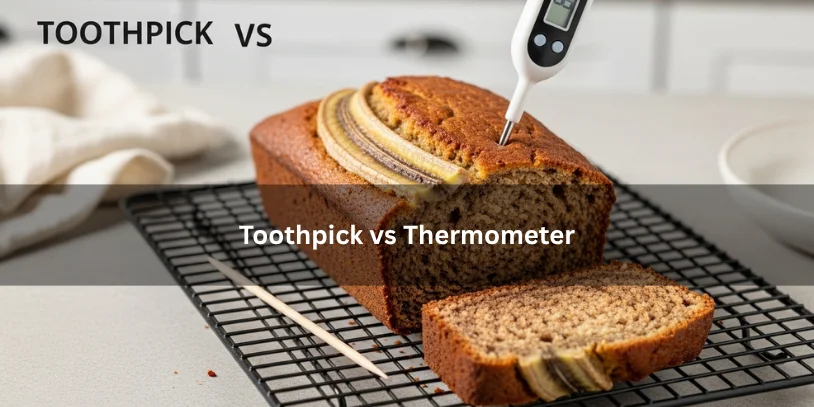
A lot of banana bread problems come from relying on the wrong doneness test.
| Method | Good for | Limitation |
|---|---|---|
| Toothpick test | Quick check | May miss a very moist center |
| Digital thermometer | Reliable center doneness | Requires a tool |
| Top color | Surface clue | Can be misleading |
| Press test | General feel | Not precise enough alone |
If you have had gummy banana bread more than once, the thermometer is worth using.
Why Quick Breads Behave This Way
Banana bread is a quick bread, so it behaves more like a loaf cake than a yeasted bread. That means small changes in:
- banana weight
- liquid level
- flour measurement
- leavener strength
- mixing method
can change the final crumb a lot more than many home bakers expect.
That is why two loaves made from “almost the same recipe” can turn out completely different.
A Simple Prevention Checklist
Before baking:
- use ripe bananas, but not extra unless the recipe allows it
- measure flour carefully
- check that your baking soda and baking powder are fresh
- choose the correct loaf pan
During mixing:
- combine wet and dry ingredients evenly
- do not overmix
- do not leave obvious flour pockets
During baking:
- do not rely on color alone
- watch for top browning too fast
- check the center, not just the crust
After baking:
- cool briefly in the pan
- move the loaf to a rack
- wait before slicing
If My Banana Bread Is Gummy and Brown on Top, What Does That Mean?
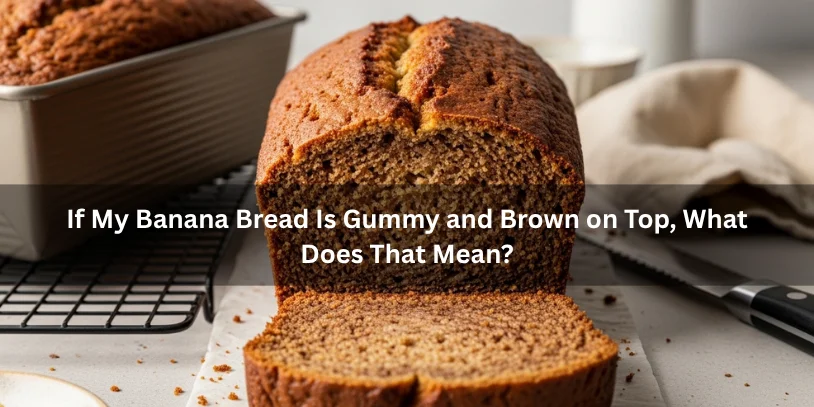
If my banana bread is gummy in the middle but looks done on top, the issue is usually one of these:
- outside baked too fast
- pan was too dark
- batter was too wet
- loaf needed more time
- oven temperature was not as even as expected
This is one of the strongest signs that the problem is not “bad luck.” It is usually a moisture or heat-balance issue.
Final Takeaway
If you keep asking why did my banana bread come out gummy, remember this: the loaf is telling you where the problem started.
- gummy middle = usually underbaking or excess moisture
- gummy bottom = often moisture imbalance, trapped steam, or a dense compressed layer
- gummy all over = often overmixing or weak leaveners
Once you diagnose the symptom correctly, fixing the next loaf becomes much easier.
FAQs
Why did my banana bread come out gummy even though the top was brown?
Because the center can lag behind the crust. A dark pan, wet batter, or uneven oven heat can make the top look done before the inside is ready.
Why is my banana bread so gummy in the middle?
Usually because it is underbaked or the batter was too wet from extra banana or other liquid.
Why is there a gummy layer on the bottom of my banana bread?
That often points to excess moisture, trapped steam, or a dense compressed layer caused by mixing or leavener issues.
How to fix gummy banana bread after baking?
If it is slightly underbaked, return it to the oven. If it is already sliced, toast the pieces. If only the bottom is gummy, trim around it.
Can I eat gummy banana bread if it is only slightly sticky?
If it is only slightly sticky from being cut too soon, it may just be a texture issue. If it is clearly raw in the center, bake it longer or avoid that part.
What to do with gummy banana bread if I cannot fix it?
Toast it, turn it into bread pudding, or use it in a simple dessert. A loaf that is not perfect can still be useful.
Can frozen bananas make banana bread gummy?
Yes. Frozen bananas release extra liquid when thawed, which can make the batter too wet.
Does overmixing really make banana bread gummy?
Yes. Overmixing develops gluten and can create a dense, chewy, damp crumb.
Should I cool banana bread before slicing?
Yes. Slicing too early can make the loaf seem gummy even when it was baked properly.
What internal temperature should banana bread reach?
A good target is around 200°F to 205°F, or about 93°C to 96°C in the center.
Conclusion
If your banana bread turned out gummy, do not guess blindly next time. Start by checking where the problem showed up, then work backward. A gummy middle usually means underbaking or too much moisture. A gummy bottom often points to extra liquid, trapped steam, or a dense layer caused by mixing and leavener issues. A loaf that feels heavy and chewy all over usually points to overmixing.
The best fix is a simple one: measure more carefully, do not add random extra banana, use the right loaf pan, mix until just combined, check the center properly, and cool the loaf before slicing. Do that, and your next banana bread has a much better chance of coming out moist instead of gummy.