
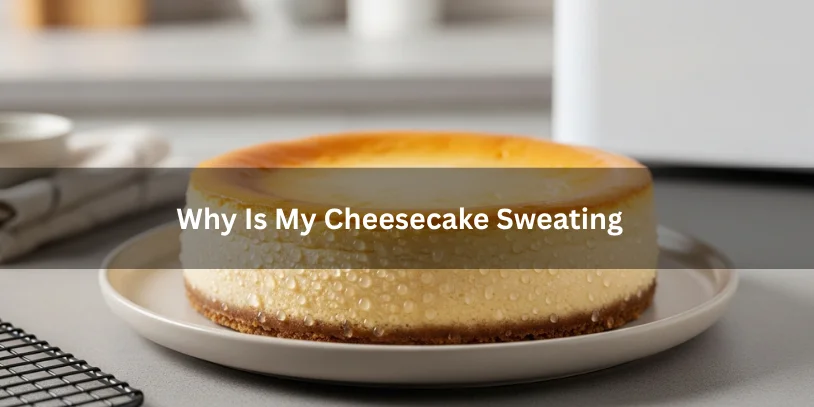
If you’re wondering why your cheesecake is sweating, the short answer is this: moisture is forming on the surface because of condensation, trapped steam, or liquid release from the filling.
In many cases, that wet, glossy, or blotchy look appears after the cheesecake has been in the fridge overnight. Sometimes it shows up under plastic wrap. Sometimes it forms on top, around the sides, or even near the base. It looks alarming, but it does not always mean the cheesecake is ruined.
Most of the time, cheesecake sweating is a storage and cooling problem, not a total baking disaster.
What cheesecake sweating actually means
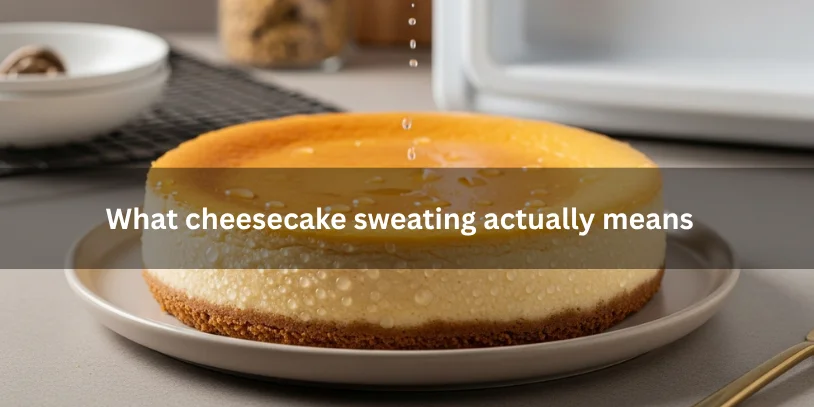
Cheesecake sweating usually refers to surface moisture. You may see:
- clear droplets on top
- a damp or sticky surface
- wet patches under plastic wrap
- moisture near the springform pan edges
- a slightly blotchy appearance after chilling
This can happen for two main reasons.
First, condensation forms when moisture in the air hits a colder cheesecake surface. Second, an overbaked cheesecake can sometimes release liquid because the cream cheese proteins tighten too much during baking.
That is why “sweating” is not always one single issue. Sometimes it is just harmless condensation. Other times, it is closer to weeping from texture stress.
Why is my cheesecake sweating?

Here are the most common causes.
1. You refrigerated it while it was still warm
This is the number one reason.
When a warm cheesecake goes straight into a cold refrigerator, the sudden temperature change creates condensation. The moisture in the air turns into droplets on the cake’s surface.
This often happens when someone is in a hurry and wants the cheesecake to set faster. Instead, the rapid chill creates a wet top.
2. You covered it too early
If you wrapped the cheesecake tightly with plastic wrap or foil before it had cooled completely, you probably trapped steam inside.
That trapped steam has nowhere to go. It settles back onto the cheesecake and creates water droplets, especially overnight.
If your cheesecake is wet under plastic wrap, this is the first thing to suspect.
3. Your fridge humidity is high
Fridge humidity can play a bigger role than many people realize.
If the cheesecake is stored near high-moisture foods, placed in a crowded fridge, or kept near the door where the temperature changes often, surface condensation becomes more likely. A fridge shelf with unstable airflow can make the problem worse.
4. The cheesecake is overbaked
An overbaked cheesecake can release liquid because the filling tightens too much. Cream cheese, eggs, and sour cream create a delicate structure. When that structure is pushed too far, it can squeeze out moisture.
This is different from classic condensation, but many people describe both problems the same way: “my cheesecake is sweating.”
Signs that overbaking may be part of the issue include:
- a dry or rubbery texture
- cracks on top
- very little jiggle in the center when it first came out
- liquid or moisture appearing even without wrapping
5. There was a water bath leak
If you baked the cheesecake in a water bath, also called a bain-marie, and the springform pan was not sealed well, water may have seeped in.
That usually causes a soggy crust more than a sweaty top, but users often confuse the two. If the bottom or crust is wet, the water bath method may be the real cause.
6. It was not cooled gradually
Cheesecake benefits from gradual cooling. A dramatic jump from hot oven to cool room to cold fridge increases temperature shock.
A more controlled cooling process helps reduce both cracks and surface moisture.
Is sweaty cheesecake safe to eat?

Usually, yes.
If the cheesecake smells normal, has been refrigerated properly, and only shows clear surface droplets, it is usually still fine to eat. In that case, the problem is mostly cosmetic.
However, there is a difference between harmless moisture and spoilage.
It is usually safe if:
- the cheesecake has been refrigerated promptly
- the fridge is at 40°F or below
- the moisture is clear, not slimy
- it smells normal
- it has not been left out for more than about 2 hours
Be cautious if:
- it smells sour in a bad way, not just tangy
- the texture is slimy
- it sat out too long
- you see discoloration or mold
- the moisture is paired with obvious spoilage signs
Condensation vs overbaking vs soggy crust
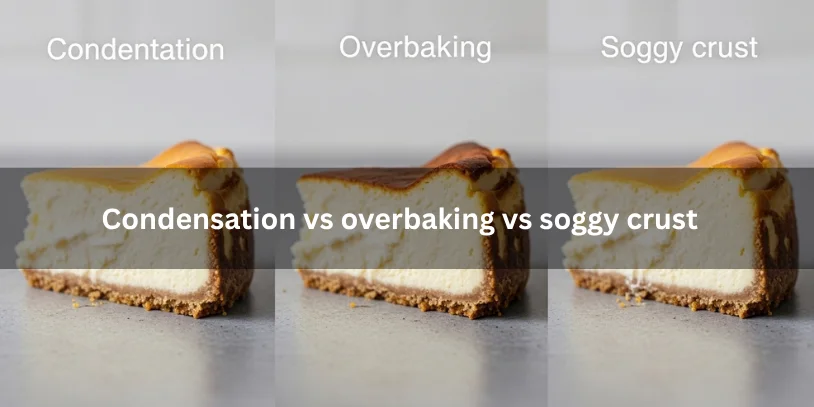
This is where most articles are too vague, so here is a simple troubleshooting table.
| Symptom | Most likely cause | What it means | What to do |
|---|---|---|---|
| Clear droplets on top after refrigeration | Condensation | Moisture formed on the cold surface | Blot gently and chill uncovered briefly |
| Wet surface under plastic wrap | Trapped steam | Cheesecake was covered too soon | Remove wrap, dry lightly, re-chill properly |
| Liquid release with dry texture or cracks | Overbaking | Filling tightened and pushed out moisture | Serve chilled, improve bake time next round |
| Wet crust or base | Water bath leak | Water entered the springform pan | Check wrapping method and pan seal |
| Soft, wet top with unset center | Underchilling or underbaking | Cheesecake may not be fully set | Chill longer and assess texture |
How to fix a cheesecake that is already sweating
If the cheesecake is already wet, do not panic. You can often save the appearance.
Quick fix
- Remove any tight plastic wrap or sealed cover.
- Gently blot the surface with a paper towel.
- Do not rub, or you may damage the smooth top.
- Chill it uncovered for 20 to 30 minutes.
- Once the surface is dry and fully cold, cover it loosely.
If you plan to add fruit or topping, wait until the surface moisture is under control.
How to prevent cheesecake condensation next time
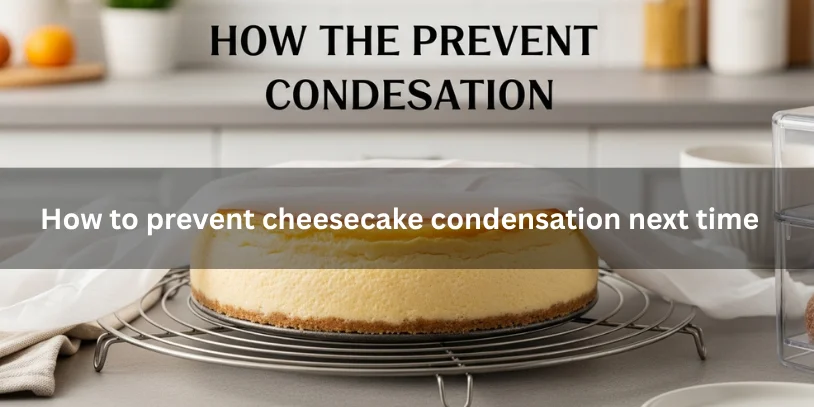
The best solution is a better cooling and storage process.
Use this prevention workflow
1. Bake until just set
A cheesecake should not bake until it looks totally firm. The center should still have a slight jiggle or wobble test movement when you gently shake the pan.
That jiggle means the interior can finish setting without becoming overbaked.
2. Cool it gradually
Let the cheesecake cool after baking before refrigerating it. Do not rush it straight into the fridge while it is still warm.
A cooling rack helps with airflow during this stage.
3. Refrigerate only after it has cooled enough
Hot food should cool before refrigeration. For quality and safety, avoid leaving it out too long, but also do not move it into the fridge while it is still giving off steam.
4. Do not wrap tightly at first
If you need to protect it, use a loose cover or give it a little container airflow. Tight plastic wrap pressed close to the surface is a common cause of trapped steam.
5. Store it in a stable part of the fridge
Avoid the fridge shelf near the door. The back-middle area is usually more stable.
6. Let it set overnight
Cheesecake texture improves when it has enough time to set overnight. Rushing the process increases the chances of both sweating and slicing issues.
Does cheesecake sweating mean it is underbaked?
Not always.
This is one of the biggest misconceptions.
A cheesecake with surface condensation may be perfectly baked. Moisture on top does not automatically mean the center is underdone. That is why you need to look at the full picture:
- Was it refrigerated while warm?
- Was it covered too early?
- Does the center hold its shape after chilling?
- Is the texture creamy or loose?
If the center is creamy and set after overnight chilling, the top moisture was probably condensation.
If the center is still runny, then underbaking or underchilling may be involved.
Why does Basque cheesecake leak more often?

Basque burnt cheesecake is a little different.
It has a darker exterior, a softer interior, and a naturally more rustic structure. Because it is baked at a higher heat and often served with a creamier center, a Basque cheesecake can sometimes show more visible moisture or liquid release.
That does not always mean something went wrong. In this style, a bit of softness and moisture can be normal. Still, sudden refrigeration, trapped steam, and overbaking can affect it too.
Can no-bake cheesecake sweat?
Yes, no-bake cheesecake can sweat as well.
The reason is usually not overbaking, of course, but storage conditions, ingredient water content, or topping moisture. Lower-fat ingredients and unstable setting methods can also create a wetter surface.
If a no-bake cheesecake is wet on top, check:
- whether the filling was fully set
- whether fruit topping released liquid
- whether the cake was covered too tightly
- whether the fridge environment was humid
Common mistakes that make cheesecake sweat
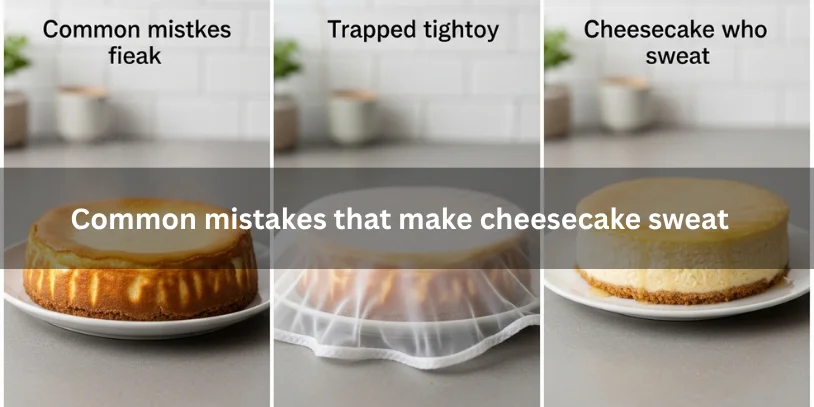
These are the most common errors:
- putting the cheesecake in the refrigerator too early
- wrapping with plastic wrap while still warm
- overbaking until the center no longer jiggles
- storing it near the fridge door
- using lower-fat dairy that changes texture balance
- confusing a water bath leak with condensation
- adding wet toppings too early
Even small mistakes can create clear droplets, trapped steam, or a damp surface by morning.
A simple decision guide
Ask yourself these questions.
If the top is wet, but the crust is fine:
Think condensation or trapped steam.
If the top is wet and the texture is dry or cracked:
Think overbaked cheesecake.
If the crust or base is wet:
Think water bath leak.
If the center is still very loose after chilling:
Think underbaking or not fully set overnight.
This kind of symptom-based diagnosis is the fastest way to tell what happened.
Best practices for a smooth, dry cheesecake
For the cleanest finish, use these habits every time:
- start with room temperature ingredients
- use a springform pan that seals well
- bake gently
- watch for the wobble test, not total firmness
- cool gradually
- avoid sudden temperature change
- store at 40°F or below
- cover only after the cheesecake is no longer warm
- keep toppings off until closer to serving
These small details make a big difference in both texture and appearance.
FAQs
Why is there water on top of my cheesecake?
The most common reason is condensation. Moisture in the air hits the cold surface of the cheesecake and forms droplets, especially if it was refrigerated while warm or covered too early.
Can I eat cheesecake if it is sweating?
Yes, usually. If it smells normal, has been stored properly, and only has clear surface moisture, it is typically safe to eat.
Is cheesecake sweating a sign of underbaking?
Not necessarily. Surface moisture is often caused by condensation, not an underbaked filling. Check whether the center is actually set after chilling.
Can overbaking make cheesecake release liquid?
Yes. Overbaking can tighten the cream cheese and egg structure so much that it pushes out moisture, creating a wet or weeping surface.
Should cheesecake cool before going in the fridge?
Yes. Let it cool first so you do not create trapped steam or sudden temperature shock that leads to condensation.
Should I cover cheesecake overnight?
Yes, but only after it has cooled properly. Covering it too early is a common reason cheesecake gets wet under plastic wrap.
Is condensation the same as a soggy crust?
No. Condensation usually appears on top or around the sides. A soggy crust often points to a water bath leak or moisture migrating into the base.
Why does my Basque cheesecake leak water?
Basque cheesecake has a softer, creamier interior and can show more moisture naturally. But overbaking, trapped steam, or sudden chilling can also cause extra liquid.
Does plastic wrap cause cheesecake sweating?
Plastic wrap itself is not the problem. Wrapping the cheesecake while it is still warm is what traps steam and causes sweating.
Conclution
If your cheesecake is sweating, the most likely cause is condensation from cooling or storage mistakes, though overbaking and water bath leakage can also play a role. In most cases, the cheesecake is still salvageable and safe to eat.
The best fix is simple: cool it gradually, avoid wrapping it too early, store it in a stable fridge environment, and use the wobble test instead of baking until fully firm. Once you know the difference between condensation, weeping, and a soggy crust, it becomes much easier to troubleshoot and prevent the problem next time.