
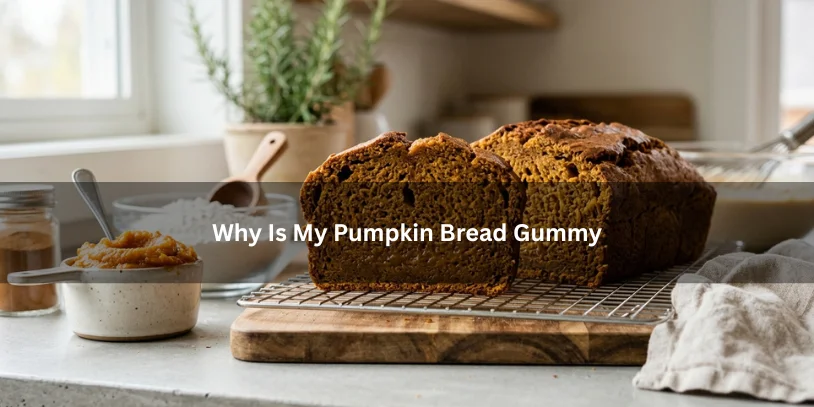
Pumpkin bread usually turns gummy because the center did not fully set. The most common causes are underbaking, too much moisture, overmixed batter, undermeasured flour, weak leavening, or slicing the loaf before it has cooled.
A good pumpkin bread should be moist, tender, and sliceable. A gummy pumpkin bread feels sticky, dense, rubbery, wet, or paste-like, especially in the middle or along the bottom.
Pumpkin bread is a quick bread, which means it relies on baking soda, baking powder, eggs, flour, and oven heat for structure. It does not rise and bake like yeast bread. Because pumpkin purée adds a lot of moisture, the loaf needs enough time and structure to set all the way through.
If your loaf looked done on the outside but turned sticky inside, the problem was probably not one single mistake. It was likely a mix of moisture, bake time, mixing, and pan behavior.
Moist Pumpkin Bread vs. Gummy Pumpkin Bread
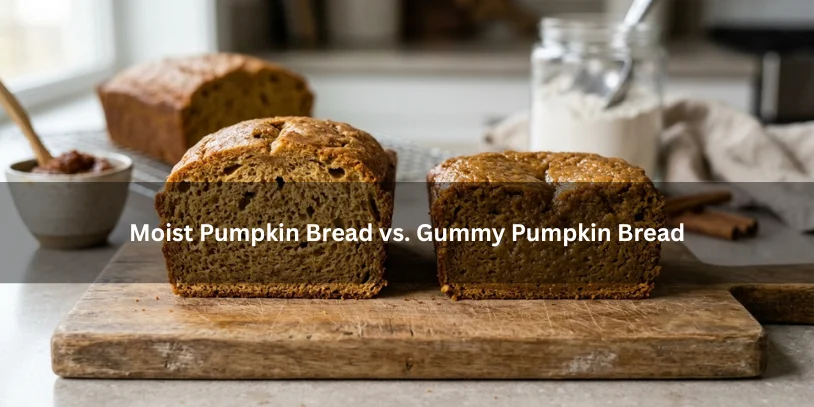
Pumpkin bread is supposed to be moist. The problem starts when moist turns into gluey.
| Moist Pumpkin Bread | Gummy Pumpkin Bread |
|---|---|
| Tender and soft | Sticky or paste-like |
| Slices cleanly | Clings to the knife |
| Springs back slightly | Compresses when touched |
| Has even crumbs | Has dense streaks or wet pockets |
| Tastes rich but baked | Tastes heavy or underdone |
A moist loaf is pleasant and stable. A gummy loaf usually means the crumb structure did not fully set.
Quick Diagnosis: What Your Pumpkin Bread Texture Means
| What You See | Most Likely Cause | What to Do |
|---|---|---|
| Wet center | Underbaked loaf | Bake longer and test the center |
| Gummy bottom layer | Batter collapse, overmixing, or weak structure | Check mixing, leavening, and pan size |
| Dark crust but raw middle | Oven too hot or pan too deep | Tent with foil and bake longer |
| Rubbery crumb | Overmixed batter | Mix less after adding flour |
| Sticky after cooling | Too much moisture | Check pumpkin, oil, sugar, and flour |
| Sunken middle | Underbaking or too much leavening | Check bake time and baking powder/soda |
| Clean toothpick but gummy slices | Tester missed wet area | Use an instant-read thermometer |
1. The Pumpkin Bread Was Underbaked
Undercooking is the top reason pumpkin bread becomes gummy in the middle.
Pumpkin bread can look finished before it actually is. The top may crack, brown, and smell wonderful while the center is still wet. This happens because the outside receives heat first, while the dense pumpkin-rich center needs more time.
Signs your pumpkin bread is underbaked
- The middle looks shiny or wet
- The knife comes out sticky
- The loaf sinks after cooling
- The center feels heavy or pudding-like
- The bottom has a dense, gluey streak
- The top is brown but the inside is raw or damp
The easiest fix is to stop relying only on bake time. Recipes give ranges, but your oven, loaf pan, batter temperature, and pumpkin purée all change the actual baking time.
For many quick breads, the center should reach about 200°F to 205°F. Gluten-free pumpkin bread may need to be closer to 205°F to 210°F because gluten-free starches often need more time to set.
2. You Used Too Much Pumpkin Purée
Pumpkin purée gives pumpkin bread its flavor, color, and softness. But too much pumpkin can make the batter too wet and heavy.
This often happens when someone adds the rest of the can because they do not want to waste it. Even a few extra spoonfuls can change the wet-to-dry ratio.
Too much pumpkin can cause:
- Dense crumb
- Wet middle
- Collapsed center
- Gummy slices
- Longer bake time
- Heavy loaf texture
If your recipe calls for 1 cup of pumpkin purée, use 1 cup. Do not add the full can unless the recipe was designed for it.
3. You Used Pumpkin Pie Filling Instead of Pumpkin Purée
Pumpkin purée and pumpkin pie filling are not the same.
Plain pumpkin purée is cooked and mashed pumpkin. Pumpkin pie filling usually includes sugar, spices, and other ingredients. If you use pie filling in a bread recipe that calls for plain pumpkin, the loaf may become too sweet, too wet, and poorly balanced.
Look for labels such as:
- 100% pumpkin
- Pure pumpkin
- Pumpkin purée
Avoid cans labeled:
- Pumpkin pie filling
- Pumpkin pie mix
This small ingredient mistake can completely change the texture of pumpkin bread.
4. The Batter Was Overmixed
Overmixing is another major cause of gummy pumpkin bread.
Once flour touches wet ingredients, gluten starts forming. Some gluten gives structure, but too much makes quick bread chewy, rubbery, and dense.
Pumpkin bread batter should not be beaten until silky smooth. It should be gently folded or stirred just until the dry flour disappears.
Signs of overmixed pumpkin bread
- Rubbery texture
- Tough crumb
- Long tunnels or holes
- Dense bottom layer
- Gummy streaks
- Chewy slices instead of tender ones
A few small lumps in the batter are fine. Smooth batter is not the goal.
5. You Undermeasured the Flour
Too little flour leaves the batter without enough structure to absorb moisture and set properly.
This is common when flour is measured too lightly or when a recipe is adjusted casually. Flour helps create the crumb, absorb liquid, and support the loaf as it rises.
For best results, use a kitchen scale. If you use measuring cups, use the spoon-and-level method:
- Fluff the flour.
- Spoon it into the measuring cup.
- Level it with a knife.
- Do not pack it down.
Small measuring errors matter more in pumpkin bread because the batter already contains a lot of moisture.
6. Your Oven Temperature Is Off
Many ovens do not heat to the temperature shown on the dial. Some run cool. Others run hot. Either problem can make pumpkin bread gummy.
If the oven is too cool, the loaf may never set in the center during the suggested bake time. If the oven is too hot, the outside browns too fast while the middle stays underbaked.
Signs your oven may be the problem
- Crust gets dark early
- Center stays wet
- Edges dry out before the middle bakes
- Same recipe works in another oven
- Baking times are always longer than expected
An oven thermometer is an inexpensive way to check calibration. If your pumpkin bread is often dark outside and gummy inside, the oven temperature deserves attention.
7. The Loaf Pan Size or Material Changed the Bake
Loaf pan size affects how heat moves through the batter.
A smaller pan makes a taller loaf, which needs more time to bake. A wider pan spreads the batter thinner and may finish sooner. Glass pans also behave differently than metal pans because they heat and retain heat differently.
A recipe written for a 9×5-inch loaf pan may not bake the same way in an 8.5×4.5-inch pan.
Best pan guidance
- Use the pan size listed in the recipe.
- Use a light-colored metal loaf pan for predictable results.
- If the top browns too quickly, tent with foil.
- Avoid filling the pan too high.
If the batter is deep, the center needs more time.
8. The Bread Was Sliced Too Soon
Pumpkin bread continues to set after it comes out of the oven. This is part of carryover cooking and cooling.
If you slice the loaf while it is hot, steam escapes and the soft crumb compresses. The bread may look gummy even if it was close to done.
Best cooling method
- Let the loaf cool in the pan for 10–15 minutes.
- Remove it from the pan.
- Place it on a cooling rack.
- Let it cool completely before slicing.
- Use a serrated knife for cleaner slices.
Do not wrap pumpkin bread while it is still warm. Trapped steam can make the crust sticky and the crumb wet.
9. The Leavening Was Weak or Imbalanced
Pumpkin bread usually uses baking soda, baking powder, or both. These chemical leaveners create gas that helps the loaf rise.
If the leavening is old, the bread may be dense. If there is too much leavening, the loaf may rise quickly, collapse, and become gummy in the middle.
Leavening problems can cause:
- Sunken center
- Dense bottom layer
- Bitter taste
- Coarse crumb
- Heavy texture
- Poor rise
Do not add extra baking powder or baking soda unless you are adjusting the recipe carefully. More leavening does not automatically mean a better rise.
10. Homemade Pumpkin Purée Was Too Watery
Homemade pumpkin purée varies a lot. Some pumpkins are thick and starchy. Others are watery.
If your homemade purée is loose, it can make pumpkin bread wet in the middle even if the recipe is reliable.
How to fix watery pumpkin purée
Drain it using:
- Cheesecloth
- Fine mesh sieve
- Coffee filter
- Clean kitchen towel
The purée should be thick and spoonable, similar to canned pumpkin.
This also applies to butternut squash purée and sweet potato purée if you use them as substitutes.
Can You Fix Gummy Pumpkin Bread?
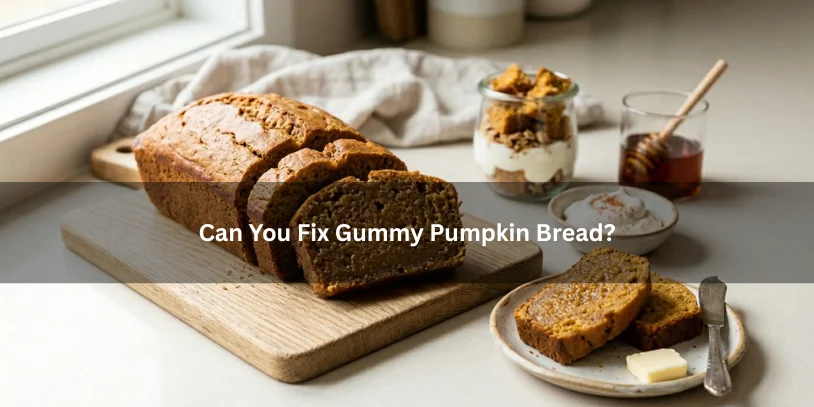
Sometimes, yes.
If the bread is still warm and clearly underbaked, you can put it back in the oven.
How to rebake undercooked pumpkin bread
- Preheat the oven to 325°F.
- Place the loaf back in the pan if possible.
- Cover loosely with foil to prevent burning.
- Bake for 10–20 more minutes.
- Check the center with an instant-read thermometer.
- Cool completely before slicing again.
If the loaf is only slightly gummy, slice and toast it. Toasting dries the crumb and improves texture.
If the center looks like raw batter, do not serve that portion. Raw flour and raw eggs can carry food safety risks, so discard any clearly raw sections.
What If the Toothpick Came Out Clean but the Bread Is Still Gummy?
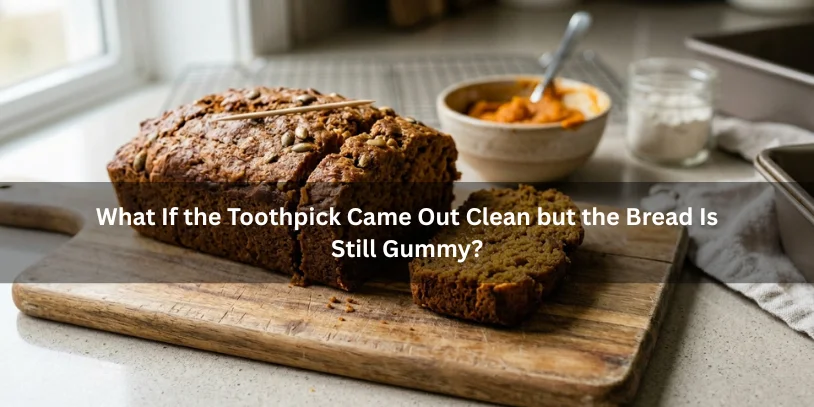
The toothpick test is useful, but it is not perfect.
A toothpick may miss the wettest part of the loaf. It may also come out clean if the gummy area is dense rather than liquid. Chocolate chips, nuts, or cracks in the loaf can also make testing confusing.
For better accuracy:
- Test in more than one center spot
- Insert the toothpick deeply
- Look for dry crumbs, not wet batter
- Use internal temperature for confirmation
The thermometer is especially helpful for pumpkin bread, banana bread, zucchini bread, and other moist quick breads.
Why Is My Pumpkin Bread Gummy at the Bottom?
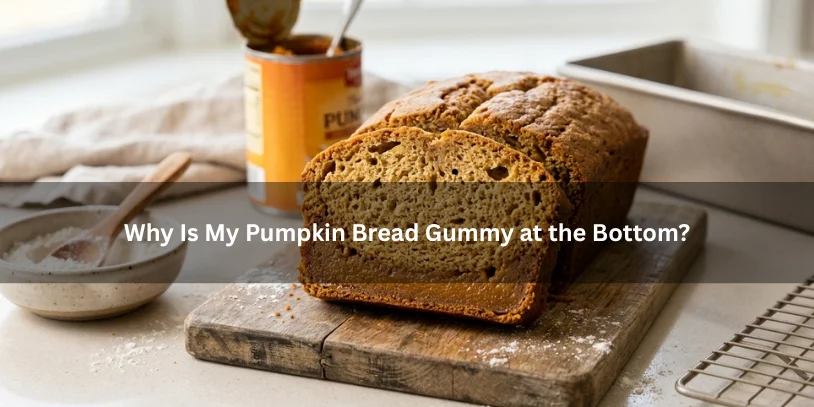
A gummy bottom layer often means the lower part of the loaf compressed or failed to set. Bakers sometimes call this kind of dense, gluey layer “cleaching” when it appears in cakes and similar batters.
In pumpkin bread, a gummy bottom can come from:
- Overmixing
- Undermixing
- Too much pumpkin
- Too much oil or sugar
- Weak leavening
- Too much leavening
- Batter that sat too long before baking
- Cooling too long in the pan
- Underbaking
If the bottom is gummy but the top is dry, check your pan, oven temperature, and mixing method first.
High Altitude, Humidity, and Climate Can Affect Pumpkin Bread
Pumpkin bread behaves differently depending on where you bake.
In high-altitude areas such as Denver, Colorado Springs, Santa Fe, Flagstaff, Mexico City, Bogotá, Quito, La Paz, and Kathmandu, quick breads may rise quickly and collapse before setting. You may need small adjustments to leavening, flour, liquid, or bake time.
In humid climates such as Singapore, Manila, Mumbai, Karachi, Jakarta, Kuala Lumpur, Miami, Houston, and New Orleans, flour and sugar can absorb moisture from the air. Pumpkin bread may stay sticky longer after baking.
In dry climates such as Phoenix, Las Vegas, Dubai, Riyadh, and inland Australia, the outside may dry or brown before the center finishes. Foil tenting can help protect the crust while the middle bakes.
Tools That Help Prevent Gummy Pumpkin Bread
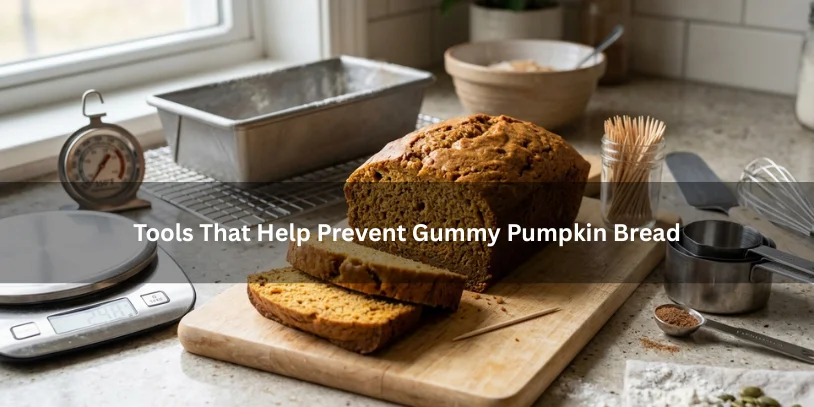
You do not need expensive equipment, but a few tools make pumpkin bread more reliable.
| Tool | Why It Helps |
|---|---|
| Instant-read thermometer | Confirms the center is baked |
| Oven thermometer | Checks oven accuracy |
| Kitchen scale | Improves flour measurement |
| Metal loaf pan | Gives more predictable heat transfer |
| Cooling rack | Prevents trapped steam |
| Rubber spatula | Helps gentle folding |
| Serrated knife | Slices without smashing the crumb |
If you buy only one tool, choose an instant-read thermometer. It solves more pumpkin bread problems than guessing by color or time.
How to Prevent Gummy Pumpkin Bread Next Time
Use this checklist before baking your next loaf:
- Use plain pumpkin purée, not pumpkin pie filling.
- Measure flour accurately.
- Do not add extra pumpkin.
- Drain watery homemade purée.
- Use fresh baking soda and baking powder.
- Mix wet and dry ingredients separately first.
- Fold gently after adding flour.
- Use the correct loaf pan size.
- Bake until the center reaches about 200°F to 205°F.
- Let the loaf cool completely before slicing.
- Store only after fully cooled.
For gluten-free pumpkin bread, give the loaf enough time to fully set. Gluten-free flour blends can stay gummy if underbaked or sliced too soon.
For vegan pumpkin bread, watch moisture closely. Egg replacements, applesauce, banana, maple syrup, and extra pumpkin can all increase gumminess if the recipe is not balanced.
For sourdough discard pumpkin bread, remember that discard adds moisture and acidity. Follow a recipe designed for it rather than adding discard to a standard loaf.
FAQs
Why is my pumpkin bread gummy in the middle?
Pumpkin bread is gummy in the middle because the center did not fully set. This usually happens from underbaking, too much pumpkin purée, undermeasured flour, or an oven that runs too cool.
Is gummy pumpkin bread undercooked?
Often, yes. If the center is wet, shiny, or batter-like, it is probably undercooked. If it is only slightly dense but fully baked, the issue may be excess moisture or overmixing.
Can I eat gummy pumpkin bread?
Do not eat pumpkin bread that looks like raw batter. If the loaf is fully baked but just a little dense or sticky, it can usually be toasted or repurposed.
Can I put pumpkin bread back in the oven?
Yes, if it is still warm or clearly underbaked. Return it to a 325°F oven, tent with foil, and bake until the center is fully set.
What temperature should pumpkin bread be when done?
Many pumpkin breads are done when the center reaches about 200°F to 205°F. Gluten-free versions may need about 205°F to 210°F for the crumb to fully set.
Does overmixing make pumpkin bread gummy?
Yes. Overmixing develops too much gluten after flour is added. This can make pumpkin bread rubbery, dense, tough, or gummy.
Does too much pumpkin make bread gummy?
Yes. Extra pumpkin purée adds moisture and weight. If the dry ingredients and eggs are not adjusted, the loaf can collapse or stay wet inside.
Why did my pumpkin bread sink in the middle?
Pumpkin bread may sink if it is underbaked, too wet, overleavened, or removed from the oven before the center structure sets.
Why is my pumpkin bread gummy after cooling?
If pumpkin bread is gummy after cooling, it may have been underbaked, wrapped while warm, sliced too soon, or made with too much moisture.
Why is my gluten-free pumpkin bread gummy?
Gluten-free pumpkin bread can turn gummy when it is underbaked, too wet, or made with a flour blend that needs more baking time. Let it cool fully before slicing.
Conclusion
Gummy pumpkin bread usually comes down to one problem: the loaf structure did not set properly. The most common reasons are underbaking, excess pumpkin moisture, overmixing, undermeasured flour, inaccurate oven temperature, or slicing before cooling.
Start with the simplest fix. Bake until the center is truly done, not just until the top looks brown. Use an instant-read thermometer, measure flour carefully, avoid extra pumpkin, and mix gently once the flour goes in.
A tender pumpkin bread should be moist, spiced, and soft — not wet, rubbery, or paste-like. With the right balance of moisture, heat, and cooling time, your next loaf should slice cleanly and taste exactly the way pumpkin bread should.