
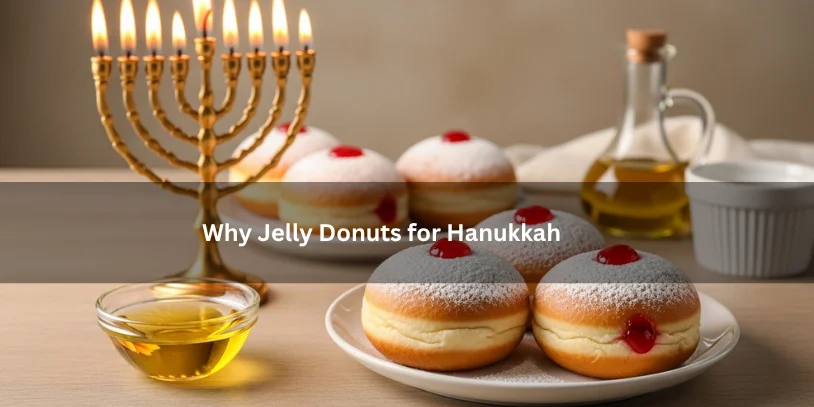
Jelly donuts are eaten on Hanukkah because they are fried in oil, and oil is one of the most important symbols of the holiday. In Jewish tradition, Hanukkah recalls the rededication of the Second Temple of Jerusalem after the Maccabees’ victory, and the best-known miracle connected to the holiday is that a small amount of sacred oil burned for eight days instead of one.
That is the short answer. But the fuller story is richer, and far more interesting.
The custom is not really about donuts alone. It is about fried foods in general. Over time, one specific fried food, the jelly-filled donut known as sufganiyah in the singular and sufganiyot in the plural, became one of the most recognizable Hanukkah foods, especially in Israel.
So if you have ever wondered whether jelly donuts are just a festive extra or a real part of Hanukkah tradition, the answer is this: they are a meaningful custom tied to the holiday’s oil miracle, even though they were not literally around in the days of Judas Maccabeus.
What are sufganiyot?
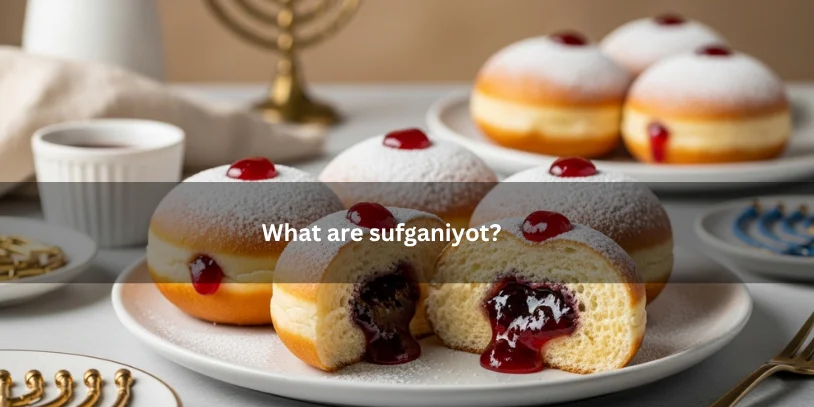
Sufganiyot are deep-fried jelly donuts traditionally eaten during Hanukkah. They are usually dusted with powdered sugar and filled with jam, though modern versions may include custard, chocolate, dulce de leche, pistachio cream, or other fillings.
Today, many people use “Hanukkah jelly donuts” and “sufganiyot” almost interchangeably. That is broadly accurate, but the word sufganiyot carries a specifically Jewish and especially Israeli cultural association.
How do you pronounce sufganiyot?
A simple English-friendly pronunciation is:
soof-gah-nee-YOT
And if you want the singular form, it is:
sufganiyah
That small detail matters because many readers search both versions, and many people hear the word before they ever see it written.
Why is oil so important in Hanukkah?
To understand why jelly donuts matter, you have to understand why oil matters.
Hanukkah marks the rededication of the Temple after it had been defiled under the rule of Antiochus IV Epiphanes. The Maccabees, led by figures such as Judas Maccabeus, reclaimed the Temple and restored Jewish worship. In later Jewish tradition, especially in the Babylonian Talmud, the most familiar miracle of Hanukkah is the story that one small jar of pure olive oil, enough for a single day, lasted for eight days.
That is why Hanukkah lasts eight nights and why the menorah, or more precisely the hanukkiyah, is lit across the holiday.
It is also why foods fried in oil became associated with Hanukkah. The food is not random. The oil is the point.
A simple way to explain it
If you need a child-friendly or quick explanation, this works well:
- Hanukkah remembers a miracle involving oil.
- Fried foods symbolize that miracle.
- Jelly donuts are one of the most famous fried Hanukkah foods.
That is the foundation of the tradition.
Why jelly donuts specifically and not just any fried food?
This is where the story becomes more layered.
Fried foods as a category are the broader custom. That includes latkes, which are fried potato pancakes, and also other sweets and pastries in different Jewish communities. So Hanukkah is not only about donuts.
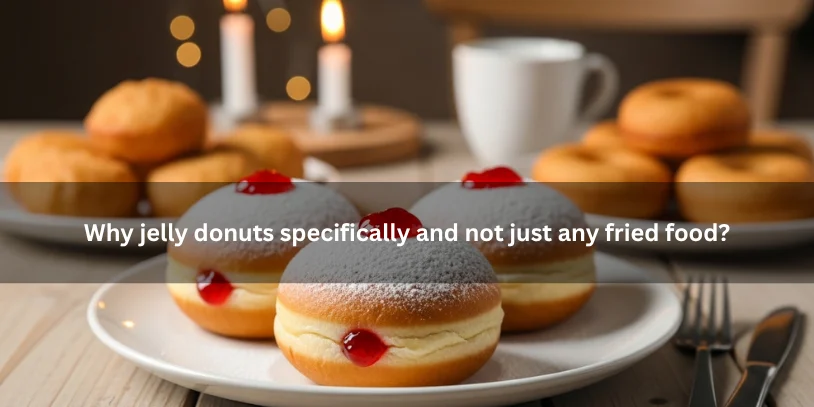
But jelly donuts became especially prominent because they are festive, sweet, visually appealing, and easy to turn into a seasonal tradition. They work well for family gatherings, school celebrations, parties, gift boxes, and bakery displays.
In other words, the religious symbolism came first, and the donut became one of the most successful and beloved expressions of that symbolism.
The history of sufganiyot: how a donut became a Hanukkah icon
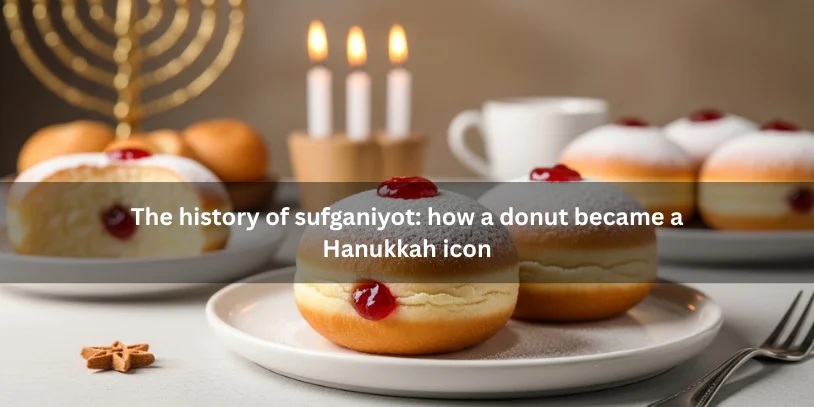
The biggest misconception is that Jews have always eaten jelly donuts for Hanukkah in exactly the same way. That is not really true.
Hanukkah itself is ancient. The specific dominance of sufganiyot is much more modern.
The ancient layer: Hanukkah and the Temple
The oldest layer of the holiday is the Maccabean story, the struggle for Jewish worship, and the rededication of the Temple in Jerusalem. The Books of Maccabees focus more on the victory and the Temple than on donuts, which, thankfully, should not be shocking.
The rabbinic layer: the miracle of the oil
Later Jewish tradition, especially the Talmudic telling, emphasizes the miracle of the oil. That emphasis shaped the holiday’s symbolism and helped build the custom of eating fried foods.
This is why it is more accurate to say:
- Hanukkah is rooted in the Temple rededication.
- Fried foods are tied to the later emphasis on the oil miracle.
- Jelly donuts are one especially popular form of those fried foods.
The cultural layer: Europe and fried pastry traditions
Jewish food traditions developed in conversation with local cuisines across the Jewish Diaspora. As Jews lived across Europe, North Africa, and the Middle East, Hanukkah foods reflected regional ingredients and familiar cooking styles.
That is why fried pastries and sweets appear in different forms across communities. Depending on place and family background, you may see:
- latkes among many Ashkenazi Jews
- sfenj in North African Jewish communities
- bimuelos among some Sephardic communities
- other donut-like pastries such as ponchiks, paczki, or Berliners in the wider European pastry tradition
This variety matters because not every Jewish community grew up with the same Hanukkah menu.
The modern Israeli layer: why sufganiyot became so famous
The strongest reason sufganiyot became so central is modern Israel.
In the early 20th century, especially in the 1920s, the Histadrut, also called the Israeli Labor Federation, helped promote sufganiyot as a Hanukkah food. One practical reason was that donuts created work for bakers and food sellers in a growing economy. Unlike latkes, which many families could easily make at home, sufganiyot supported bakery production and seasonal sales.
That economic and cultural push helped turn the jelly donut from one fried Hanukkah option into the signature Hanukkah pastry many people picture today.
Latkes vs. sufganiyot: what is the difference?
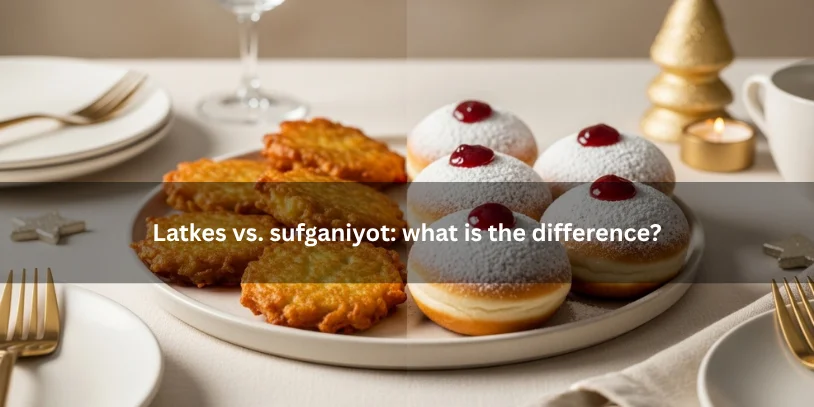
Both foods are traditional, but they play different roles on the Hanukkah table.
| Feature | Sufganiyot | Latkes |
|---|---|---|
| Type of food | Jelly-filled fried donut | Fried potato pancake |
| Flavor profile | Sweet | Savory |
| Core symbolism | Oil miracle | Oil miracle |
| Strong modern association | Israel | Ashkenazi Jewish cooking |
| Typical use | Dessert or snack | Meal side dish or main item |
The key point is simple: latkes and sufganiyot are not opponents. They are two different ways of expressing the same oil-based symbolism.
Are sufganiyot Israeli or Jewish?
The best answer is: both, but in different ways.
They are Jewish in the sense that they are part of Hanukkah food tradition and tied to the holiday’s symbolism. They are especially Israeli in the sense that Israel played a major role in turning them into the best-known Hanukkah donut tradition in the modern world.
That distinction helps avoid two common mistakes:
- claiming they were the original food of the Maccabees
- pretending they are only a modern bakery invention with no authentic Jewish meaning
Neither extreme gets the story right.
Are jelly donuts required on Hanukkah?
No, not in the sense of a strict legal requirement for every Jewish household.
Eating sufganiyot is better understood as a custom rather than the central ritual obligation of the holiday. The core observance of Hanukkah involves lighting the hanukkiyah, reciting blessings, and commemorating the holiday. Fried foods are a meaningful and beloved tradition that adds symbolic and cultural depth.
That matters because many readers want to know whether jelly donuts are “the official rule” or “just a fun extra.” They are more than random holiday dessert, but they are not the sole defining practice of Hanukkah.
Why different Jewish communities have different Hanukkah foods
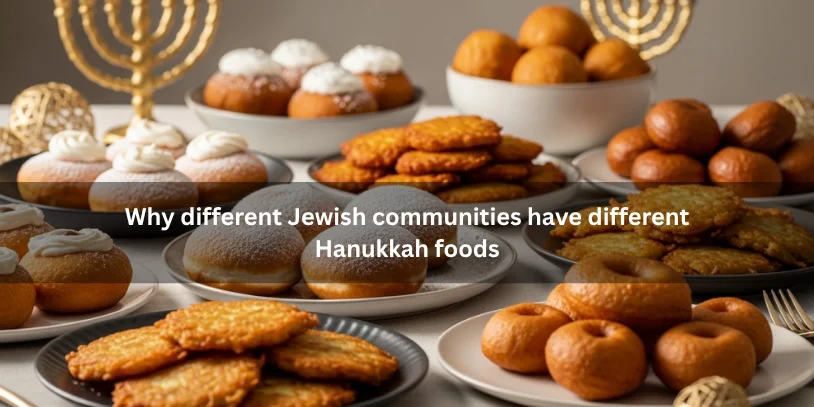
Jewish tradition is shared, but Jewish food culture is diverse.
Ashkenazi traditions
Many Ashkenazi Jews are especially associated with latkes, though sufganiyot are also widely known today.
Sephardic traditions
Sephardic families may emphasize different fried sweets, including bimuelos, depending on family and regional heritage.
North African and Mizrahi traditions
In some communities, sfenj and other fried pastries may be more familiar than classic jam-filled donuts.
That diversity is not a contradiction. It is one reason Hanukkah food traditions are so rich. The underlying symbol is the same, but the culinary expression changes with geography, migration, and local taste.
Common misconceptions about jelly donuts and Hanukkah
A lot of confusion comes from flattening several layers of history into one sentence. Here are the biggest misunderstandings to avoid.
1. “Jelly donuts come directly from the Maccabees”
Not really. Hanukkah comes from that era, but the specific donut tradition developed much later.
2. “Hanukkah food is only about donuts”
Also not true. Fried foods are the broader category, and latkes remain deeply traditional.
3. “All Jews celebrate Hanukkah with sufganiyot”
Not universally. Jewish communities vary, and family customs differ.
4. “Sufganiyot are only Israeli, not Jewish”
Too narrow. They became especially iconic in Israel, but they are still part of broader Jewish Hanukkah food tradition.
5. “Oil is just a cooking detail”
Oil is the heart of the symbolism. Without the oil miracle, the donut connection makes far less sense.
Why this tradition still matters today
Sufganiyot endure because they work on more than one level at once.
They are:
- symbolic
- festive
- communal
- easy to share
- adaptable to regional tastes
- instantly recognizable during Hanukkah season
A family can fry simple jam donuts at home. A bakery can create elaborate seasonal versions. A teacher can use them to explain the holiday to students. A parent can use them as a joyful way to connect children to tradition.
That flexibility helps explain why the tradition remains strong.
A quick timeline of how jelly donuts became linked to Hanukkah
Ancient period
Hanukkah commemorates the Maccabean victory and Temple rededication.
Rabbinic tradition
The oil miracle becomes central to the holiday’s symbolism.
Diaspora food development
Jewish communities connect Hanukkah with fried foods in different regional forms.
Early modern and modern periods
Donut-like pastries and jelly-filled fried sweets become more visible in Jewish food culture.
20th-century Israel
Sufganiyot are strongly promoted and become the signature Hanukkah pastry.
That timeline explains why sufganiyot are both authentic and historically layered.
If someone asks, “Why jelly donuts for Hanukkah?” what is the best answer?
Use this:
Jelly donuts are eaten on Hanukkah because they are fried in oil, which symbolizes the miracle of oil at the heart of the holiday, and over time sufganiyot became one of the most iconic Hanukkah foods, especially in Israel.
It is short, accurate, and culturally respectful.
Related Hanukkah food traditions worth knowing
If you want a fuller understanding of Hanukkah cuisine, it helps to know the surrounding food landscape.
Other common Hanukkah foods
- Latkes
- Sfenj
- Bimuelos
- Other fried pastries and sweets
- Dairy foods in some households and traditions
This wider context keeps the donut story in perspective. Sufganiyot matter, but they belong to a larger tradition of symbolic holiday foods.
FAQs
1. Why do Jews eat jelly donuts on Hanukkah?
Because jelly donuts are fried in oil, and the oil represents the Hanukkah miracle in which a small amount of sacred oil lasted for eight days.
2. What are sufganiyot?
Sufganiyot are jelly-filled fried donuts traditionally eaten during Hanukkah, especially in Israel.
3. Are sufganiyot the same as jelly donuts?
Broadly yes. Sufganiyot are a type of jelly donut, but the word usually refers specifically to the Hanukkah tradition.
4. Why are fried foods eaten on Hanukkah?
Fried foods symbolize the miracle of the oil, which is one of the central stories associated with Hanukkah.
5. Are latkes and sufganiyot both traditional?
Yes. Both are fried in oil, which is why both are strongly linked to Hanukkah.
6. Did sufganiyot originate in Israel?
Not exactly. Fried pastries and donut-like foods existed earlier, but Israel played a major role in making sufganiyot the best-known Hanukkah donut tradition.
7. Is eating jelly donuts a religious commandment?
No. It is better understood as a meaningful and popular Hanukkah custom rather than the main ritual obligation of the holiday.
8. Why does Hanukkah last eight days?
According to Jewish tradition, the sacred oil in the Temple lasted eight days, even though there was only enough for one.
9. Do all Jewish communities eat sufganiyot on Hanukkah?
No. Many do, especially today, but Jewish communities around the world have different Hanukkah food traditions.
10. What is the difference between latkes and sufganiyot?
Latkes are savory fried potato pancakes, while sufganiyot are sweet jelly-filled donuts. Both connect to the same oil symbolism.
Conclusion
Jelly donuts are part of Hanukkah because they turn one of the holiday’s central symbols, oil, into something visible, edible, and memorable. The deeper story begins with the Maccabees and the rededication of the Second Temple, grows through the Talmudic emphasis on the oil miracle, and eventually becomes a beloved food tradition expressed through sufganiyot, latkes, and other fried foods across the Jewish world.
So the next time someone asks why jelly donuts show up during Hanukkah, the best answer is not just “because they taste good.” It is because they carry memory, symbolism, and history in a form people can actually gather around and share.