
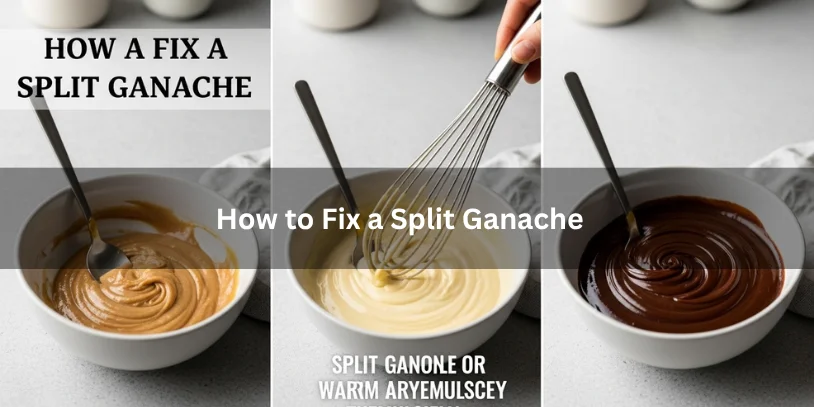
If your ganache has turned oily, grainy, dull, or separated, it usually is not ruined. In most cases, you can fix a split ganache by restoring the emulsion with gentle heat, a small amount of warm liquid, or careful blending.
Ganache may look simple, but it is actually a delicate balance of chocolate, cream, cocoa butter, and water. When that balance breaks, the fat separates from the liquid. That is why you see greasy pools, a broken texture, or a mixture that looks curdled instead of smooth and glossy.
The good news is that split ganache is one of the most fixable pastry problems. The key is knowing what kind of break happened and choosing the right correction.
What Is a Split Ganache?
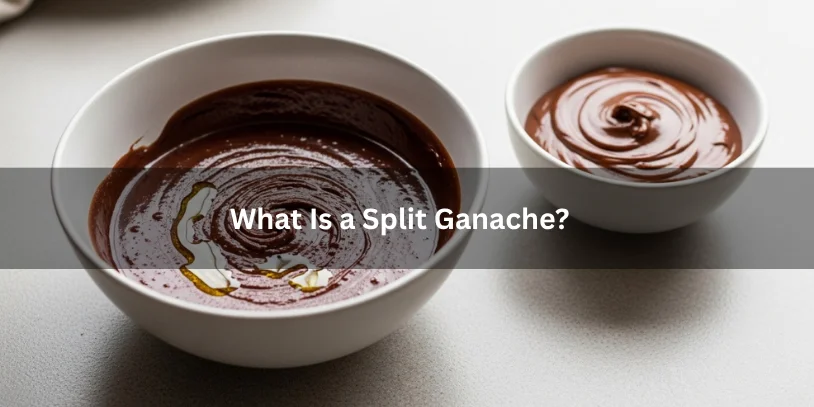
A split ganache is a broken emulsion. Instead of staying smooth and stable, the chocolate and cream separate. You may notice:
- an oily sheen on top
- grainy texture
- thick paste in one part and liquid around the edges
- a dull, uneven finish
- a curdled or greasy appearance
This can happen with dark chocolate, milk chocolate, or white chocolate ganache, although white chocolate is usually the most fragile.
Why Ganache Splits
Ganache usually splits for one of five reasons.
1. Overheating
Too much heat melts the cocoa butter too aggressively and destabilizes the mixture. This often happens when cream boils hard, chocolate is microwaved too long, or ganache is reheated carelessly.
2. Wrong chocolate-to-cream ratio
If there is too much liquid, the ganache may become loose and unstable. If there is too much chocolate or fat, it may turn thick, greasy, or grainy instead of silky.
3. Mixing too hard or too early
Ganache likes controlled mixing. Rough whisking can break the emulsion, especially once it starts cooling.
4. Temperature shock
Cold cream, butter, or flavorings added to warm ganache can cause fat separation. This is common in reheated batches.
5. Chocolate type differences
Dark chocolate is usually the most forgiving. Milk chocolate is softer and more sensitive. White chocolate, which contains cocoa butter but no cocoa solids, splits more easily and needs extra care.
Fast Answer: How to Fix a Split Ganache
If you need the quickest working fix, do this:
- Warm the ganache gently.
- Stir slowly from the center outward.
- If it still looks broken, add 1 teaspoon of warm milk, cream, or hot water.
- Mix again until it turns smooth and glossy.
- If needed, use an immersion blender or stick blender.
That solves most cases.
How to Diagnose the Problem Before You Fix It
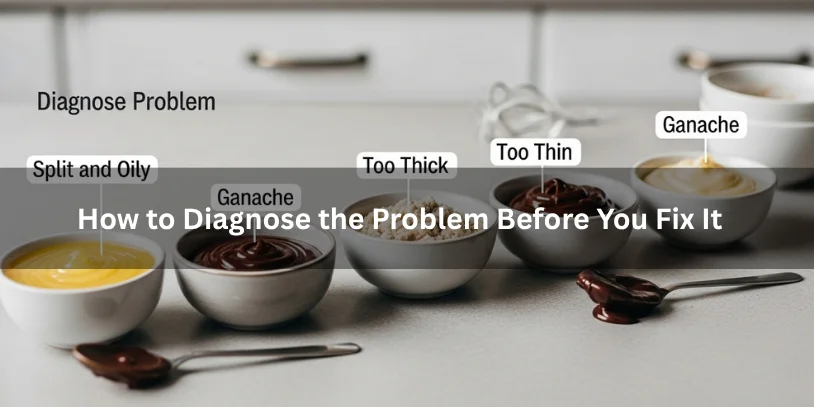
Before adding anything, look at the texture.
| What you see | Likely problem | Best first fix |
|---|---|---|
| oily sheen or greasy pools | fat separation | warm gently, then add a little warm liquid |
| grainy or curdled texture | broken emulsion or uneven melting | warm gently and blend |
| very stiff paste | too little available moisture or seized-style texture | add a small amount of hot water or warm milk |
| loose and greasy | too much fat or weak emulsion | re-emulsify, then adjust with a little melted chocolate if needed |
| broken after reheating | overheated or unevenly heated ganache | low heat plus careful mixing or blending |
This step matters because the wrong fix can make the texture worse.
Best Ways to Fix a Split Ganache
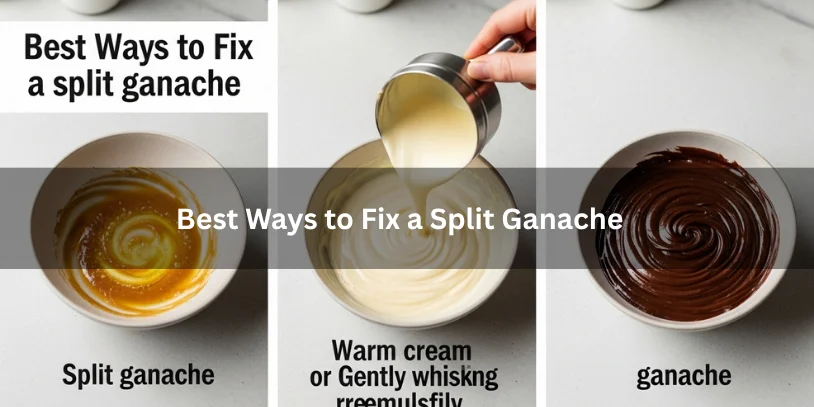
Method 1: Gentle heat and slow stirring
This is the best first move when the ganache is only slightly broken.
Set the bowl over a double boiler or bain-marie with gentle heat, or microwave in very short bursts. Stir slowly with a spatula, starting in the center and working outward.
This method works well for:
- slightly oily ganache
- dark chocolate ganache
- ganache that cooled too quickly
If the ganache becomes glossy again, stop there.
Method 2: Add a small amount of warm liquid
If gentle heating alone does not work, add a very small amount of warm liquid.
Good options include:
- warm cream
- warm milk
- hot water
Start with 1 teaspoon at a time. Stir or whisk gently after each addition.
This works because ganache is an emulsion. A small amount of liquid can help pull the mixture back together when the fat has separated. Hot water sounds surprising to some bakers, but it can be an effective rescue method when used in tiny, controlled amounts.
Best for:
- oily ganache
- grainy chocolate ganache
- broken ganache that needs re-emulsifying fast
Method 3: Use an immersion blender
An immersion blender is often the most effective tool for badly split ganache.
Place the ganache in a narrow container if needed. Warm it slightly if it is stiff, then blend on low speed until smooth. Keep the blender head below the surface to avoid adding too many air bubbles.
Best for:
- white chocolate ganache
- larger batches
- ganache that stays broken after hand mixing
- whipped ganache base before re-whipping
Method 4: Add a little melted chocolate
Sometimes the ganache becomes too thin after you fix it, or the original issue was too much liquid. In that case, you may need a small amount of melted chocolate to restore body.
Use this only after the ganache is smooth again. Add melted chocolate gradually and mix well.
Best for:
- drip ganache that became too runny
- frosting ganache that needs more structure
- repaired ganache that lost thickness
Water vs Milk vs Cream: What Should You Add?
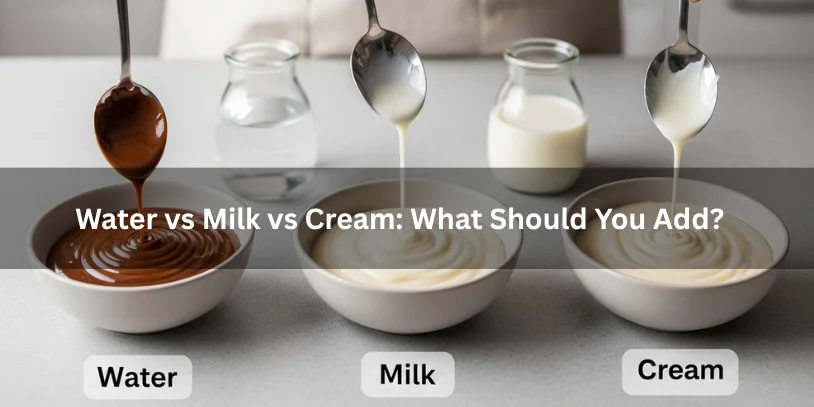
This is where many people get stuck.
Use hot water when:
- the ganache is very stiff or badly split
- you want to re-emulsify without adding extra fat
- you only need a tiny rescue amount
Use warm milk when:
- the ganache is grainy or slightly oily
- you want a gentle correction
- you are working with milk chocolate or white chocolate
Use warm cream when:
- you want to keep the original richness
- the ganache is thick but still close to correct texture
- you are fixing ganache for glaze or frosting
Use more chocolate when:
- the ganache becomes too thin after rescue
- you know the ratio was too loose from the start
The best choice depends on the exact problem, not a one-size-fits-all rule.
Split Ganache vs Seized Chocolate
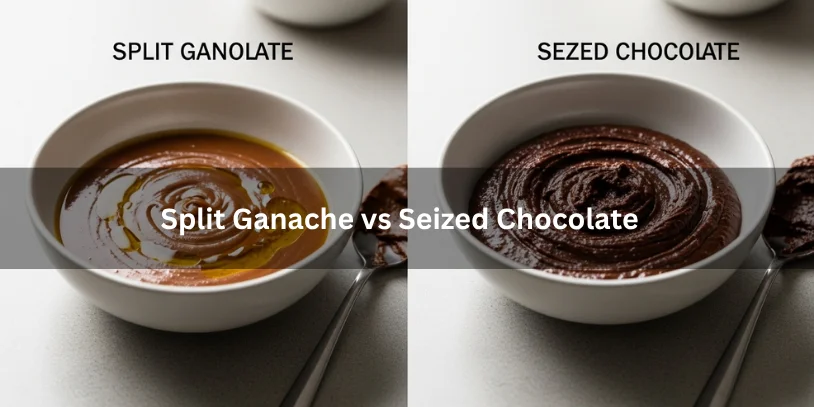
These are related, but not exactly the same.
Split ganache
- oily
- broken
- separated
- often fixable with gentle heat and a little liquid
Seized chocolate
- stiff
- clumpy
- paste-like
- often caused by too little liquid meeting melted chocolate
A ganache can sometimes move toward a seized texture if the balance becomes too dry or too cold. That is why a tiny amount of hot water or warm milk can help rescue it.
How to Fix White Chocolate Ganache That Split
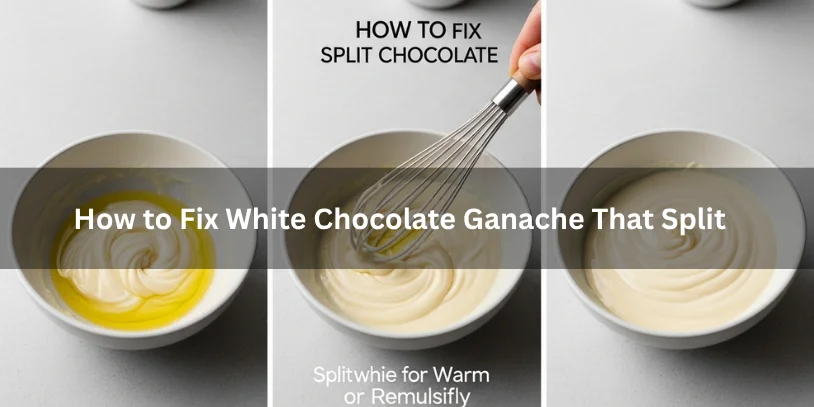
White chocolate ganache needs more care than dark chocolate ganache.
White chocolate is more sensitive because it contains cocoa butter, milk solids, and sugar, but no cocoa solids to help stabilize the structure in the same way dark chocolate does.
If white chocolate ganache splits:
- Warm it very gently.
- Add a very small amount of warm milk or hot water.
- Blend with an immersion blender if possible.
- Stop as soon as it becomes smooth.
Do not overheat it. Do not add large amounts of cream at once. White chocolate ganache can go from broken to too loose very quickly.
How to Fix Ganache That Split After Reheating
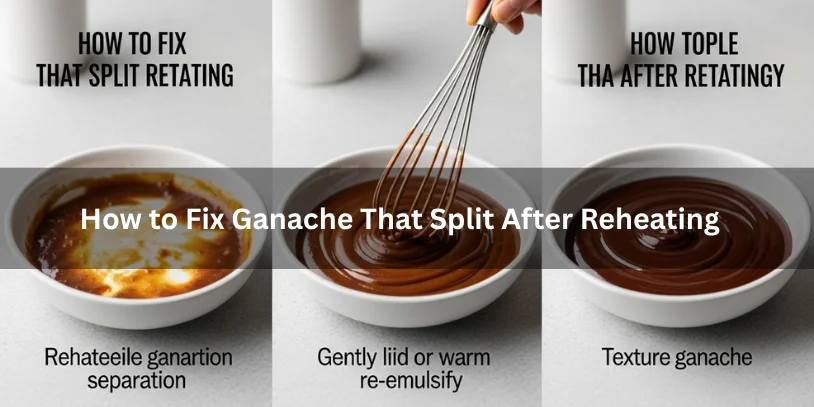
Reheated ganache often breaks because the outer edges get too hot before the center warms through.
To fix reheated ganache:
- microwave only in very short bursts
- stir thoroughly between each burst
- or use a double boiler on low heat
- if it turns oily, add a teaspoon of warm milk, cream, or water
- blend if necessary
This is especially important for ganache used for frosting, glaze, sauce, or filling. Repeated harsh reheating can make the texture less stable each time.
Can You Still Use Split Ganache?
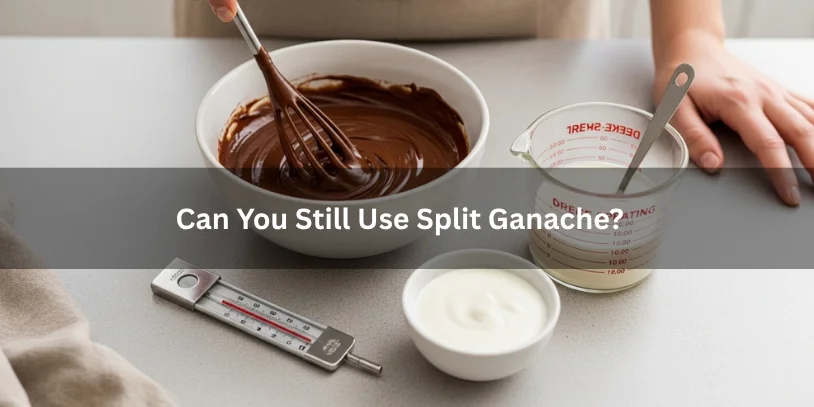
Usually, yes, if it has not scorched and the dairy has been handled safely.
Once repaired, ganache can still work for:
- cake drip
- truffles
- frosting
- filling
- sauce
- whipped ganache
Just make sure the final texture matches the intended use.
End-use guide after fixing
- For drip cakes: keep it smooth and pourable
- For frosting: let it cool to a spreadable consistency
- For truffles: chill until firm
- For whipped ganache: cool fully, then whip carefully
- For filling: aim for smooth, pipeable texture
Can You Fix Whipped Ganache?
Yes, but it depends on when it broke.
If the ganache split before whipping, repair the base first and let it cool again before whipping.
If whipped ganache breaks during whipping, it may have been overwhipped or too warm. In that case:
- gently warm a small portion
- fold it back into the broken mixture
- or melt the whole batch slightly and re-chill before whipping again
This is one area many guides do not explain clearly, but it matters for cakes, layered desserts, and pipeable fillings.
Common Mistakes That Make Ganache Worse
Avoid these if you want a smooth, glossy finish.
- adding too much liquid at once
- overheating during rescue
- whisking too aggressively
- using low-quality chocolate chips that resist melting smoothly
- ignoring differences between couverture chocolate, dark chocolate, milk chocolate, and white chocolate
- trying multiple fixes too fast without checking the texture after each one
Ganache responds best to small, controlled corrections.
How to Prevent Ganache From Splitting Next Time
Prevention is easier than rescue.
Use a better process
- chop chocolate evenly
- heat cream until hot, not violently boiling
- let the cream sit over the chocolate briefly before stirring
- mix slowly from the center outward
- use short microwave bursts if reheating
Respect chocolate type
Dark chocolate, milk chocolate, and white chocolate need different ratios. White chocolate is the least forgiving, so do not treat it like dark chocolate.
Use the right tools
Helpful tools include:
- kitchen scale
- heatproof bowl
- silicone spatula
- thermometer
- immersion blender
- double boiler or bain-marie
Watch temperature closely
Too much heat is one of the biggest reasons ganache fails. If you have ever wondered why your ganache was oily but not grainy, overheating is often the answer.
When Ganache Is Beyond Saving
Most broken ganache can be rescued, but not all.
It may be beyond repair if:
- the chocolate has scorched
- it smells burnt
- it was repeatedly overheated
- dairy safety is questionable
- the texture remains badly broken after careful re-emulsifying
If the batch cannot be used for frosting or glaze, you may still be able to repurpose it in brownies, cake layers, or dessert sauces if the flavor is still good.
Quick Rescue Checklist
If your ganache splits, remember this order:
- Stop mixing.
- Check whether it is oily, grainy, stiff, or too thin.
- Warm it gently.
- Add 1 teaspoon of warm liquid only if needed.
- Blend if hand stirring is not enough.
- Adjust thickness with a little chocolate only after it turns smooth.
That simple sequence will save more batches than panic fixes ever will.
FAQ’s
1. Can split ganache be fixed?
Yes. Most split ganache can be fixed with gentle heat, a small amount of warm liquid, and careful mixing or blending until the emulsion comes back together.
2. Why is my ganache oily but not grainy?
An oily ganache usually means the fat has separated from the liquid. This often happens from overheating, uneven reheating, or an unstable chocolate-to-cream ratio.
3. Can I use water instead of cream to fix broken ganache?
Yes. A small amount of hot water can help re-emulsify broken ganache and is a valid rescue method when used carefully.
4. Why did my white chocolate ganache split?
White chocolate is more delicate than dark chocolate. It reacts more easily to excess heat, wrong ratios, and sudden temperature changes.
5. Can I still use split ganache for a drip cake?
Yes, but only after fixing it. Drip ganache must be smooth and pourable, or it can leave oily streaks and uneven drips on the cake.
6. Why did ganache split after reheating?
Ganache often splits after reheating because parts of it get too hot while other parts stay cool. Gentle reheating in short bursts helps prevent that.
7. Is split ganache the same as seized chocolate?
Not exactly. Split ganache is a broken chocolate-and-cream emulsion, while seized chocolate is usually a stiff, clumpy reaction caused by poor moisture control.
8. Can I fix whipped ganache after it breaks?
Sometimes. If it broke during whipping, gently warming part of it and folding it back in can help. If it broke before whipping, fix the base first, then chill and whip again.
9. Should I add more chocolate or more cream?
It depends on the problem. Add a tiny amount of warm liquid if the emulsion is broken. Add more chocolate only if the ganache is too thin after it becomes smooth again.
Conclusion
A split ganache looks dramatic, but it is usually recoverable. The smartest approach is to diagnose the texture first, then choose the fix that matches the problem. Gentle heat, small amounts of warm liquid, and an immersion blender will solve most cases.
Whether your ganache is for frosting, truffles, glaze, sauce, filling, or a cake drip, the goal is always the same: restore a smooth, stable emulsion without overcorrecting. Once you understand that, fixing broken ganache becomes much easier and far less stressful.