
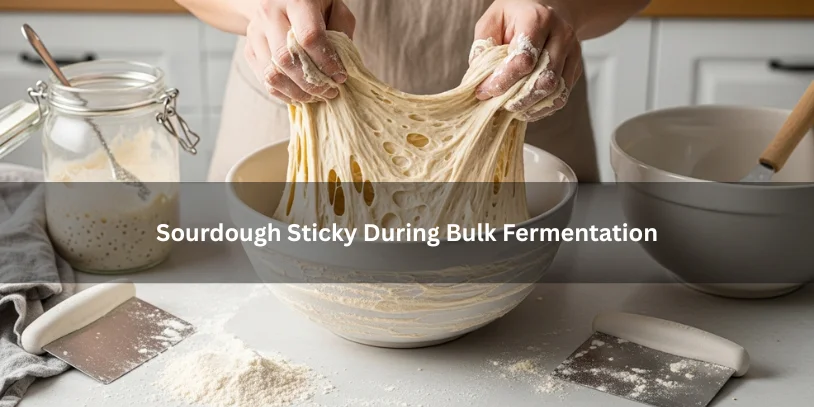
If your sourdough feels sticky during bulk fermentation, you are not automatically dealing with a failed dough. Some stickiness is completely normal. The real issue is figuring out whether your dough is simply tacky and active, or whether it is turning weak, slack, and hard to recover.
That difference matters a lot.
A healthy dough during the first rise should feel soft, slightly tacky, and more manageable after each stretch and fold or coil fold. A problem dough feels wet, tears easily, spreads fast, refuses to hold tension, and sometimes turns into a puddle by the time you try to shape it.
This guide will help you diagnose what is happening, fix what you can, and avoid repeating it on your next bake.
What bulk fermentation actually does
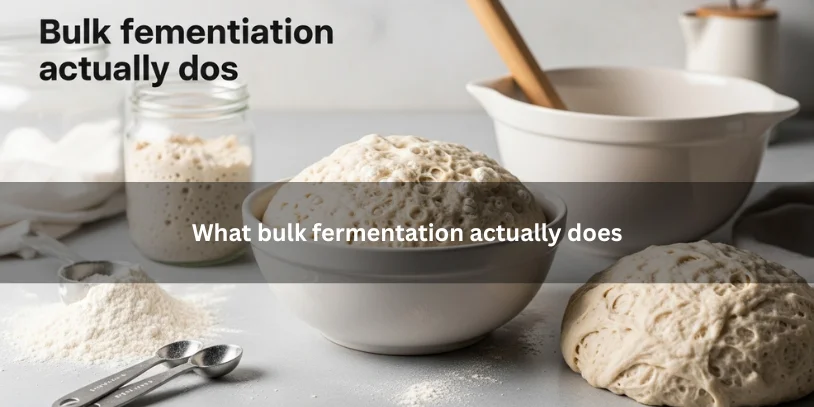
Bulk fermentation is the stage after mixing when the dough rests as one mass. During this time, fermentation builds gas, develops flavor, and helps create dough strength. This is also when gluten development improves through time, folds, and proper dough temperature.
So if your sourdough is sticky during bulk fermentation, the cause usually falls into one of two buckets:
- The dough is wet, but still developing normally
- The dough is getting weaker instead of stronger
That second one is where most bakers get into trouble.
Sticky vs tacky: the first thing to understand
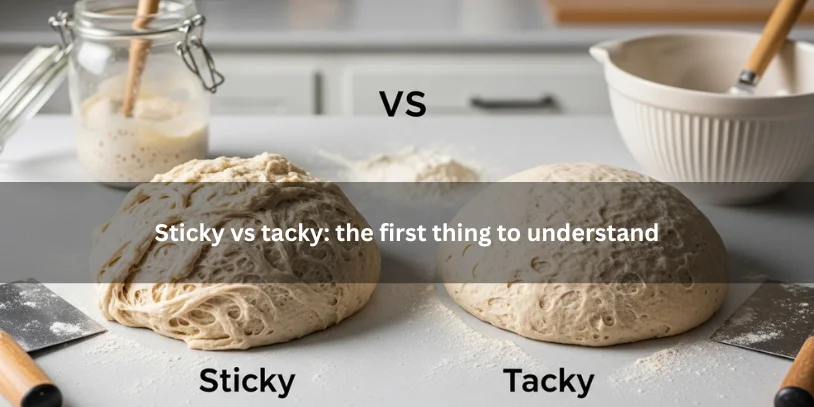
A lot of bakers call every soft dough “sticky,” but not all sticky dough is bad.
Tacky dough
Tacky dough feels moist and clingy, but it still has structure. It stretches, tightens up after folds, and becomes smoother as bulk continues. It may stick a little to your fingers or bench scraper, but it still behaves like dough.
Problem sticky dough
Problem dough feels slack, wet, weak, or gummy. It may tear when stretched, flatten quickly after folding, or become harder to handle as time goes on instead of easier.
A quick rule: if the dough is getting stronger, smoother, and bubblier, the stickiness may be normal. If it is getting looser, shinier, and more fragile, you need to intervene.
Why sourdough gets sticky during bulk fermentation
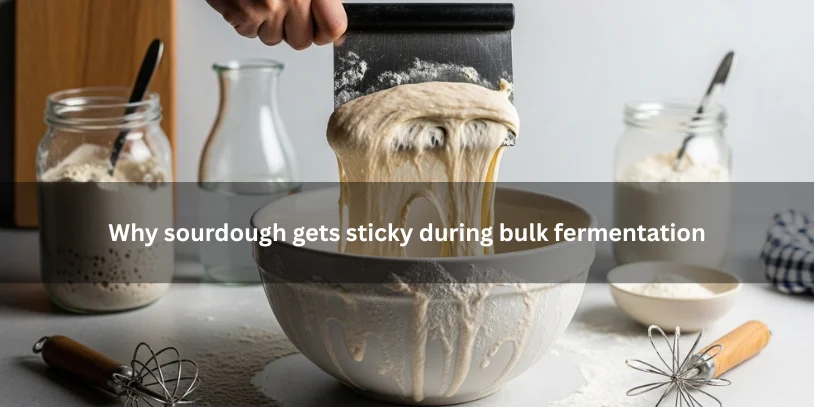
Here are the most common causes.
1. Hydration is too high for your flour
High hydration sourdough is naturally softer and sticker than lower hydration dough. But the real issue is not just water. It is whether your flour can actually handle that water.
Bread flour with higher protein content usually holds structure better than all-purpose flour. Whole wheat flour and rye flour also change how dough feels. Rye, especially, can feel much stickier and less elastic than white dough.
If your dough felt very wet from the start and never really tightened up, hydration may be too high for your flour choice.
2. Gluten development is too weak
Sometimes the hydration is fine, but the dough never built enough strength. This can happen if mixing was too short, folds were skipped, or the dough simply needed more structure early in bulk fermentation.
When gluten development is weak, the dough feels sticky because it has not organized itself yet. It stretches without resistance, tears easily, and spreads more than it should.
This is especially common in beginner sourdough bakes where the baker sees sticky dough and stops handling it too early.
3. The starter was not at peak
An active starter or levain helps the dough ferment in a more predictable way. If the starter was used too early, too late, or when it was weak, bulk fermentation can go sideways.
A missed peak starter can cause sluggish fermentation, poor rise, and sticky dough that never seems to gain strength. In other cases, an overripe starter can contribute extra acidity, which can weaken dough structure over time.
4. Dough temperature is too warm
Warm kitchens speed everything up.
That sounds good until the dough ferments faster than the gluten can hold up. High dough temperature can push the dough from soft and promising to sticky and collapsing much faster than expected.
This is one of the biggest reasons dough behaves differently in summer, in humid weather, or after sitting near an oven light. If the dough became more sticky late in bulk, warmth may be part of the problem.
5. Bulk fermentation went too far
Over fermentation is a huge reason dough becomes sticky, weak, and difficult to shape.
At first, the dough may look airy and full of bubbles. Then suddenly it starts flattening, sticking to everything, and losing tension. That is not a sign to keep waiting. It is a sign the dough may have crossed the line.
This is why reading the dough matters more than following a fixed number of hours.
6. Flour choice is working against you
Not all flours behave the same way.
- Bread flour usually gives more strength
- All-purpose flour can struggle with very wet formulas
- Whole wheat absorbs water differently
- Rye flour often feels wetter, stickier, and less elastic
If you switched flour brands, used a lower-protein flour, or increased whole grain flour without adjusting hydration, that can explain the problem.
7. Autolyse was too long
Autolyse can improve extensibility, but too much of it can create a sticky, weak dough, especially in warm conditions or with whole grain flour. If the dough already felt odd before bulk fermentation really got going, an overlong autolyse may be part of the issue.
Early-bulk vs late-bulk stickiness
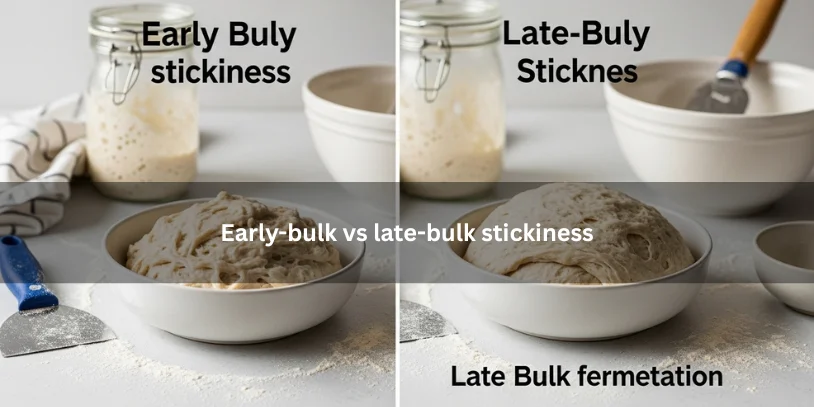
This is one of the easiest ways to diagnose the problem.
| Stage | What it usually means | Most likely issue |
|---|---|---|
| Early bulk and sticky from the start | Dough never felt organized | Too much hydration, weak flour, weak mixing |
| Mid bulk and still weak after folds | Not enough strength built yet | Underdeveloped gluten, weak starter |
| Late bulk and getting slacker | Dough is breaking down | Over fermentation, warm dough, excess acidity |
| Sticky but also not rising | Fermentation is lagging | Weak starter, cool dough, low activity |
| Sticky and very bubbly but collapsing | Structure is gone | Bulk went too far |
This stage-based diagnosis is often more useful than asking whether the dough is simply overproofed or underproofed.
How to diagnose your dough in 4 checks
Before adding flour or giving up, check these four things.
1. Check dough strength
Lift the dough during a stretch and fold. Does it resist slightly and hold together, or does it tear and sag?
If it holds together better after each fold, you are probably still on track.
2. Check rise percentage
Using a straight-sided vessel helps a lot here. If the dough has barely risen and is still sticky, the issue may be weak fermentation or weak gluten development. If it has risen a lot and feels fragile, over fermentation becomes more likely.
3. Check dough temperature
Warm dough moves faster. If your dough is very warm, shorten bulk or move it somewhere cooler. Final dough temperature has a huge effect on the pace of fermentation.
4. Check handling response
After a fold, does the dough tighten up for a while, or does it immediately spread flat again? That response tells you whether structure is still building or already failing.
What to do right now if your sourdough is sticky
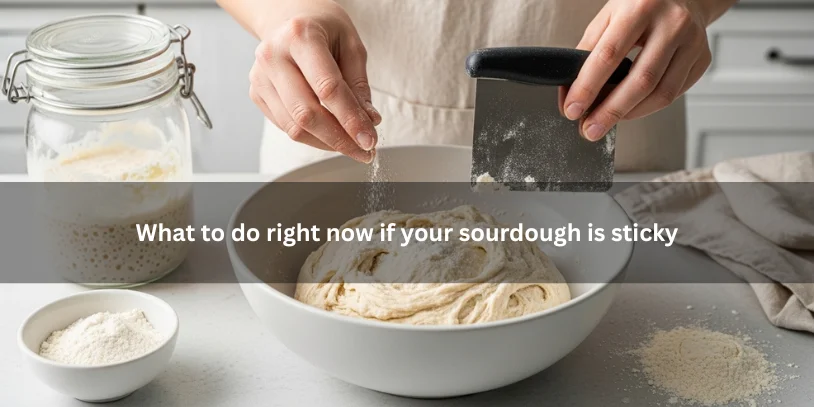
If the dough is sticky but improving
Do not panic.
Use wet hands or lightly damp hands, keep using a dough scraper or bench knife, and continue your planned folds. Many high-hydration doughs look messy early on but become much easier later.
If the dough is sticky and weak early in bulk
Give it another fold set and let it rest. A few well-timed stretch and folds or coil folds can make a big difference if the issue is underdevelopment rather than over fermentation.
Do not throw in a lot of flour at this stage. That often creates uneven texture and hides the real problem.
If the dough is sticky because the room is too warm
Move it to a cooler place. Stop using the oven light. If needed, chill the container briefly to slow things down.
Warm bulk fermentation can get away from you fast, especially with an active starter.
If the dough is sticky, bubbly, and collapsing
Stop trying to build more strength through aggressive folding. At this point, more handling may just deflate and smear the dough.
Your best options are:
- gently preshape if possible
- use a cold proof to firm the dough
- bake it in a loaf pan
- repurpose it as focaccia if it will not hold shape
That is not failure. It is just smart recovery.
Should you add flour?
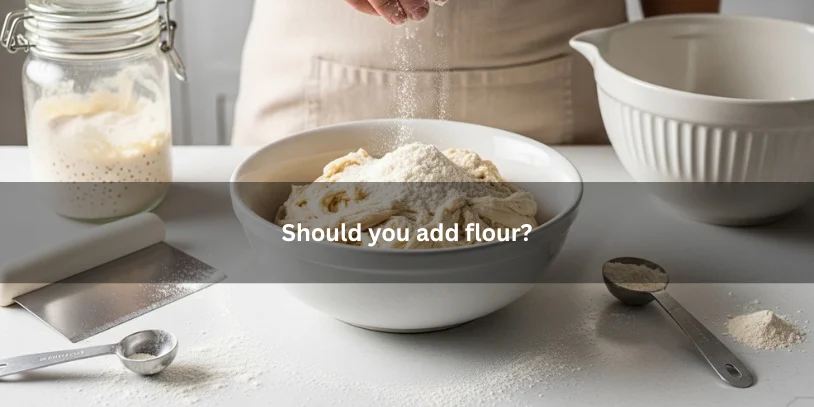
Usually, no.
If the dough was mixed correctly, adding raw flour during bulk fermentation rarely fixes the real problem. It can make the dough patchy, dry in spots, and poorly balanced.
The better move is to diagnose why it is sticky:
- too much water
- too much heat
- too little strength
- too much fermentation
- flour mismatch
Then adjust on the next bake.
The exception is when the dough was clearly mis-scaled or accidentally overwatered. In that case, you are correcting a measuring error, not troubleshooting normal sourdough behavior.
How to prevent sticky sourdough next time
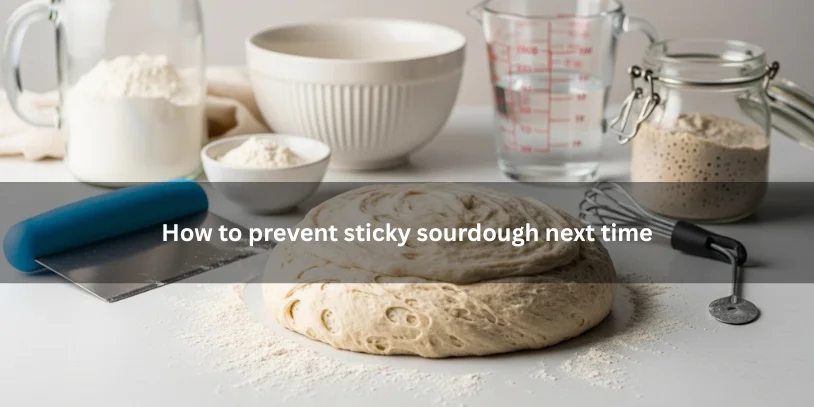
If this happens a lot, simplify your process for two or three bakes.
Lower hydration slightly
Dropping hydration a little can make the dough much easier to read and shape. This is especially helpful if you use all-purpose flour or are still learning how to judge bulk fermentation.
Use stronger flour
Bread flour usually gives better dough strength than lower-protein flour. If your dough is always slack and sticky, flour protein content may be part of the answer.
Watch the dough, not just the clock
Bulk fermentation is affected by room temperature, dough temperature, starter strength, and flour choice. A fixed timetable cannot account for all of that.
Build strength early
Use stretch and fold, coil fold, or lamination fold during the early part of bulk fermentation. Once the dough is already over fermented, folds will not save it.
Use a straight-sided container
This makes rise percentage much easier to judge. It helps you see whether the dough is actually progressing or just sitting there looking sticky.
Track your starter peak
A starter at peak usually gives you cleaner, more predictable dough behavior than one that is underactive or collapsing.
Be careful with oven-light proofing
This can overheat the dough more easily than many bakers realize. If the dough feels too warm, that may be why it suddenly becomes loose.
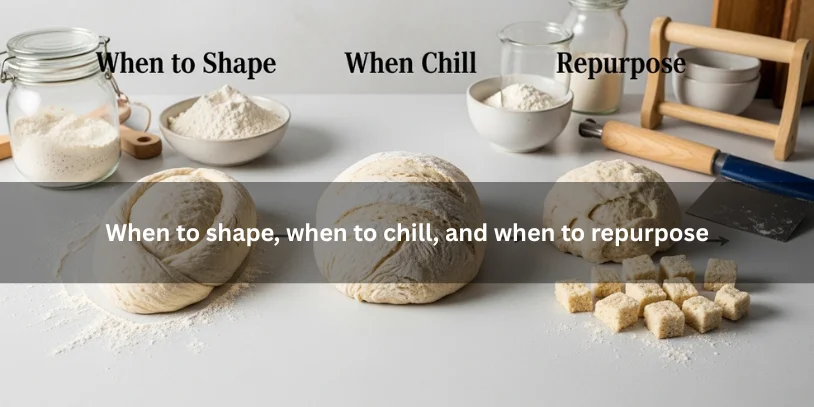
When to shape, when to chill, and when to repurpose
Shape it
Shape the dough if it has visible bubbles, moderate rise, decent strength, and still responds well to handling.
Chill it
Cold proof is helpful when the dough is soft but still salvageable. Chilling firms it up and can make shaping easier.
Repurpose it
Turn it into focaccia or a pan loaf if the dough is extremely wet, slack, or collapsing. This is one of the best rescue moves for over-fermented or overly sticky sourdough.
Tools that actually help
You do not need a lot of gear, but a few tools make sticky dough much easier to manage:
- straight-sided fermentation container
- dough scraper or bench knife
- kitchen scale
- thermometer for dough temperature
- banneton for final proof
- loaf pan for rescue bakes
These are not magic fixes, but they make diagnosis and handling much easier.
The bottom line
Sticky dough during bulk fermentation is not one problem. It is a symptom.
Sometimes it means you are working with a soft, high-hydration dough that simply needs time and folds. Other times it means the dough is too wet, too warm, under-strengthened, over fermented, or made with flour that cannot support the formula.
The key is to stop asking, “Is sticky always bad?” and start asking, “What stage is this happening at, and is the dough getting stronger or weaker?”
That is the question that leads to the right fix.
FAQs
Why is my sourdough sticky during bulk fermentation?
Usually because of high hydration, weak gluten development, warm dough temperature, over fermentation, weak starter activity, or a flour mismatch.
Is sticky sourdough always overproofed?
No. Sticky dough can be underdeveloped, too wet, or completely normal for a high-hydration loaf. Overproofed dough usually becomes sticky and weak later in bulk, not just from the start.
Should sourdough become less sticky during bulk fermentation?
In many cases, yes. As gluten development improves and folds build strength, the dough should feel smoother and more organized. If it gets weaker instead, something is off.
Can I add flour during bulk fermentation?
Usually it is better not to. Adding flour during bulk can create an uneven dough. It is better to fix hydration or flour choice on the next bake unless you made a clear measuring mistake.
How do I know bulk fermentation is done?
Look for a noticeable rise, visible bubbles, smoother texture, and better structure. The dough should feel alive and elastic, not flat and collapsing.
Why is rye sourdough stickier than white sourdough?
Rye behaves differently because it forms less of the stretchy gluten structure bakers expect from wheat dough. That makes it feel wetter and more gummy.
Does warm weather make sourdough stickier?
It can. Warm kitchens speed fermentation, which can push the dough into over fermentation faster and make it feel slack, sticky, and harder to shape.
Can I still bake sticky sourdough?
Yes, often you can. If it will not hold shape for a boule or batard, use a loaf pan or turn it into focaccia.
Is sticky dough normal in high-hydration sourdough?
Yes, some stickiness is normal in high-hydration dough. The important thing is whether the dough still builds strength and becomes easier to handle over time.
Can I cold proof sticky dough to firm it up?
Yes, if the dough still has enough structure to recover. Chilling can make a soft dough easier to handle and shape.
Conclusion
If your sourdough is sticky during bulk fermentation, the goal is not to panic or dump in more flour. The goal is to read the dough correctly.
Check when the stickiness started, whether the dough is gaining strength, how warm it is, how much it has risen, and how it responds after folds. Once you know whether the issue is hydration, gluten development, starter strength, flour type, or over fermentation, the next step becomes much clearer.
And if the dough still refuses to cooperate, do not force it into a perfect artisan shape. A good focaccia or pan loaf is still a win.