
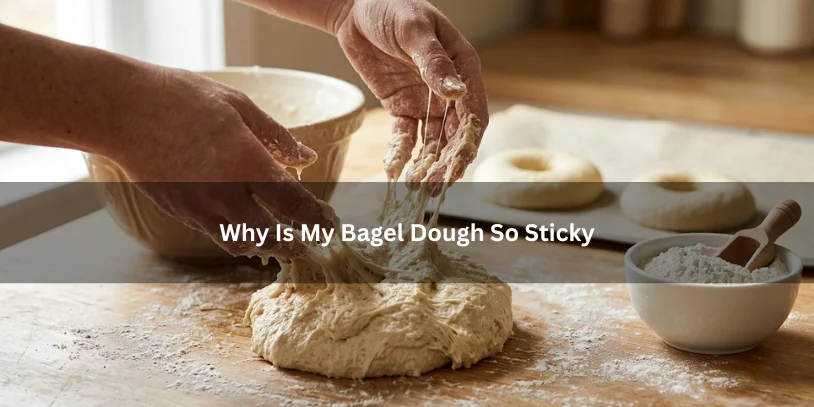
Bagel dough is sticky when it has too much water, weak gluten development, low-protein flour, warm dough temperature, or not enough resting time. It should feel firm, elastic, and slightly tacky — not wet, loose, or paste-like.
If your dough is clinging to your fingers or smearing across the counter, don’t panic. Sticky bagel dough is usually fixable. The key is knowing whether the dough is simply tacky, under-kneaded, too warm, over-hydrated, or overproofed.
Bagel dough is not supposed to feel like focaccia, ciabatta, or very soft sandwich bread dough. Classic bagel dough is usually a lean, stiff dough made from wheat flour, water, yeast, salt, and often barley malt syrup, malt powder, honey, or brown sugar.
A little stickiness is normal. A dough that refuses to hold its shape is not.
Is Bagel Dough Supposed to Be Sticky?
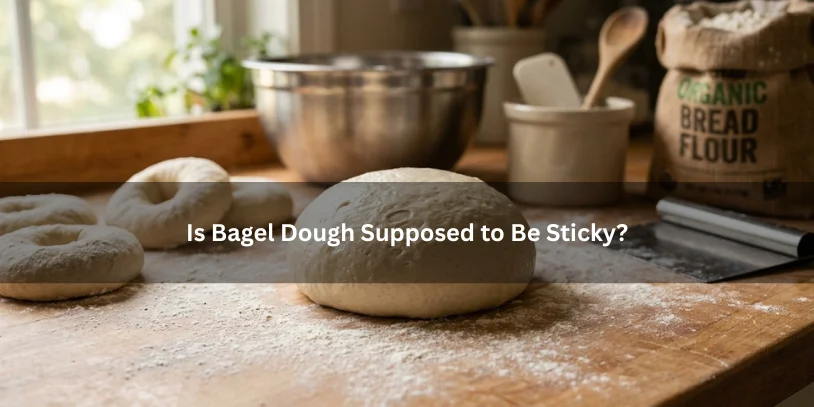
Bagel dough should be slightly tacky but not truly sticky. If you press it lightly, your finger may feel some resistance, but the dough should not coat your hands or stretch into a wet paste.
Think of the difference this way:
| Dough Feel | What It Means | What to Do |
|---|---|---|
| Slightly tacky | Normal | Keep kneading or shaping |
| Sticky but elastic | Needs rest or more kneading | Rest 10–15 minutes |
| Wet and spreading | Too much hydration | Add flour gradually |
| Warm and slack | Dough temperature is too high | Chill briefly |
| Sticky after proofing | Possible overproofing | Handle gently and chill |
| Sticky after overnight rise | Condensation, overproofing, or high hydration | Dust lightly and reshape carefully |
A good bagel dough should feel dense, smooth, and strong. It should resist your hands more than pizza dough and much more than high-hydration bread dough.
The 7 Most Common Reasons Bagel Dough Gets Sticky
1. You Added Too Much Water
The most common reason bagel dough becomes sticky is too much water in relation to flour.
Bagel dough generally works best as a lower-hydration dough. Hydration means the amount of water compared with flour weight. For example, 300g water with 500g flour equals 60% hydration.
If your dough feels wet, loose, or batter-like, the water-to-flour ratio is probably too high.
This can happen when:
- You measured flour with cups instead of grams
- Your flour was loosely scooped
- You added all the water at once
- The recipe used too much liquid
- You added extra honey, malt syrup, or oil
- Your flour absorbs less water than expected
Fix: Add flour slowly, one tablespoon at a time, kneading between additions. Do not dump in a large amount at once.
2. You Used All-Purpose Flour Instead of Bread Flour
Bagels need strong gluten development. Bread flour and high-gluten flour create a stronger dough structure than most all-purpose flour.
All-purpose flour can still make bagels, but the dough may feel softer, stickier, and less elastic. The finished bagels may also be less chewy.
| Flour Type | Best Use | Dough Result |
|---|---|---|
| High-gluten flour | Bakery-style bagels | Strongest chew and structure |
| Bread flour | Homemade bagels | Reliable, elastic, chewy dough |
| All-purpose flour | Softer bagels | More likely to feel sticky |
| Whole wheat flour | Hearty bagels | Absorbs water but can weaken structure |
| Gluten-free flour blends | Gluten-free bagels | Usually stickier and less elastic |
Fix: If the dough is already mixed, knead longer and add small amounts of bread flour if available. Next time, use bread flour or high-gluten flour.
3. The Dough Has Not Been Kneaded Enough
Under-kneaded bagel dough often feels sticky because the gluten network has not developed yet.
At first, dough may look shaggy, rough, and sticky. As kneading continues, gluten forms a stronger structure. The dough becomes smoother, tighter, and easier to handle.
Signs your bagel dough needs more kneading:
- It tears easily
- It feels pasty
- It sticks in clumps
- It has no stretch
- It cannot form a smooth ball
- It looks rough instead of elastic
Fix: Knead for another 3–5 minutes, then check again. If using a stand mixer, use the dough hook and avoid overloading the machine because bagel dough is stiff.
4. The Dough Is Too Warm
Warm dough feels softer and stickier. This is common in hot kitchens, summer weather, humid climates, or when warm water was used.
Dough temperature matters because yeast works faster in warmth. If fermentation moves too quickly, the dough may become slack before it has enough strength.
This can happen in:
- Humid kitchens
- Hot apartments
- Small bakery kitchens
- Summer baking conditions
- Warm regions such as South Asia, the Middle East, Southeast Asia, and tropical coastal areas
Fix: Cover the dough and refrigerate it for 15–30 minutes. Cold dough is easier to divide, roll, and shape.
5. You Did Not Let the Dough Rest
Sometimes sticky dough does not need more flour. It needs time.
Flour takes time to absorb water. A short rest allows hydration to even out and gives the dough a chance to relax. This is especially helpful if you are kneading by hand.
Fix: Cover the dough and rest it for 10–15 minutes. Then knead again before deciding whether to add flour.
6. You Added Too Much Malt Syrup, Honey, or Sugar
Bagel dough often includes barley malt syrup, non-diastatic malt powder, honey, brown sugar, or another sweetener. These ingredients help flavor, browning, and fermentation.
But liquid sweeteners can make dough tackier, especially if you add extra without reducing the water.
This is common with:
- Barley malt syrup
- Honey
- Maple syrup
- Brown sugar dissolved in water
- Enriched bagel doughs
- Montreal-style bagels with honey
Fix: Dust lightly with flour while kneading. Next time, weigh liquid sweeteners and reduce the water slightly if increasing syrup or honey.
7. The Dough Is Overproofed
Overproofed bagel dough can become sticky, gassy, fragile, and difficult to shape.
This often happens after a long room-temperature rise or an overnight cold proof that went too far. The dough may feel airy but weak, and shaped bagels may wrinkle, collapse, or spread after boiling.
Signs of overproofed bagel dough:
- Very puffy but fragile
- Sticky surface
- Sour or overly fermented smell
- Bagels deflate when moved
- Dough tears during shaping
- Rings lose their shape
Fix: Chill the dough, handle it gently, and avoid adding too much flour. If it is severely overproofed, reshape lightly and bake as bagel-style rolls instead of perfect rings.
How to Fix Sticky Bagel Dough Right Now
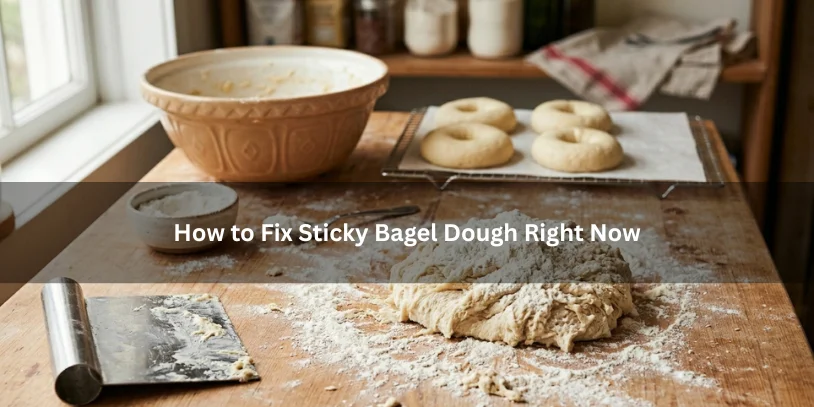
If your dough is on the counter and sticking to everything, use this rescue method.
Step 1: Stop Adding Water
Do not add more liquid. Even if the dough looked dry at first, bagel dough can become stickier as kneading continues.
Step 2: Rest the Dough
Cover it and leave it for 10–15 minutes. This gives the flour time to absorb moisture.
Step 3: Knead Again
Knead until the dough becomes smoother and more elastic. Use firm pressure. Bagel dough should feel stronger than regular bread dough.
Step 4: Add Flour Slowly
If the dough is still too sticky, add flour in small amounts.
Use this method:
- Dust the counter lightly.
- Knead for 30–60 seconds.
- Check the texture.
- Repeat only if needed.
Too much flour can make bagels dense, dry, and tough.
Step 5: Chill Warm Dough
If the dough feels warm or loose, refrigerate it for 15–30 minutes before shaping.
Step 6: Shape with Minimal Flour
Use lightly floured hands, not a heavily floured surface. Too much bench flour can stop seams from sealing and make the surface dry while the inside stays sticky.
Should You Add More Flour to Sticky Bagel Dough?
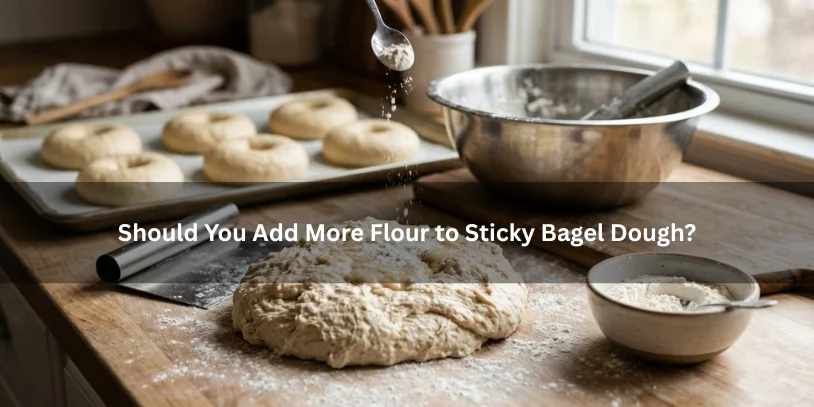
Add more flour only if the dough is still wet after resting and kneading. If it is merely tacky and elastic, keep going.
| Situation | Add Flour? | Better First Move |
|---|---|---|
| Dough just mixed | Not yet | Rest first |
| Dough feels tacky but holds shape | No | Continue kneading |
| Dough smears across the counter | Yes | Add flour slowly |
| Dough feels warm and sticky | Maybe | Chill first |
| Dough tears and sticks | Not yet | Knead longer |
| Dough is sticky after overnight proof | Very little | Chill and handle gently |
The goal is not dry dough. The goal is strong, elastic dough that can be shaped into rings and boiled without collapsing.
Why Sticky Bagel Dough Matters
Sticky dough affects more than handling. It can change the final bagel.
If the dough is too wet or weak, your bagels may:
- Spread instead of rising upward
- Lose their ring shape
- Wrinkle after boiling
- Turn dense or gummy
- Lack chew
- Stick to parchment
- Collapse in the oven
- Develop a rough or uneven crust
Bagels need dough strength. They go through mixing, kneading, shaping, proofing, boiling, topping, and baking. A weak dough has trouble surviving all those steps.
Sticky After Kneading vs Sticky After Proofing
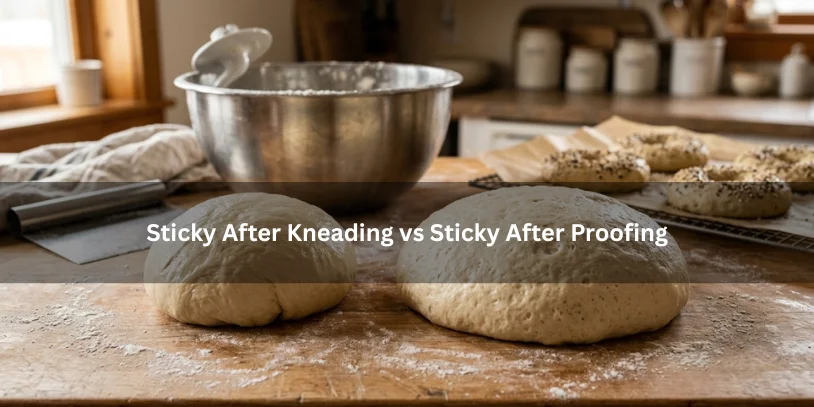
When the stickiness appears tells you a lot.
Sticky After Mixing
This usually means the flour has not fully absorbed the water yet.
Best fix: Rest the dough, then knead again.
Sticky After Kneading
This usually means too much water, weak flour, or not enough gluten development.
Best fix: Knead longer, then add flour gradually if needed.
Sticky After First Rise
This may mean the dough is too warm, slightly overproofed, or too hydrated.
Best fix: Chill briefly before shaping.
Sticky After Overnight Proof
This can come from condensation, overproofing, or dough that was too wet from the start.
Best fix: Use minimal flour, shape gently, and shorten the proof next time.
Sticky After Boiling
This often points to overproofing, weak shaping, or excess hydration.
Best fix next time: Strengthen the dough, reduce water slightly, and avoid letting shaped bagels get too puffy before boiling.
What Should Bagel Dough Feel Like?
Bagel dough should feel:
- Firm
- Smooth
- Elastic
- Dense
- Slightly tacky
- Strong enough to hold a ring shape
It should not feel:
- Wet
- Batter-like
- Sloppy
- Pasty
- Extremely soft
- Impossible to lift
- Loose like ciabatta dough
A simple test: press the dough with a clean finger. If it feels slightly tacky but your finger comes away mostly clean, the dough is probably fine. If dough coats your finger, it is too sticky.
Bread Flour, High-Gluten Flour, and All-Purpose Flour
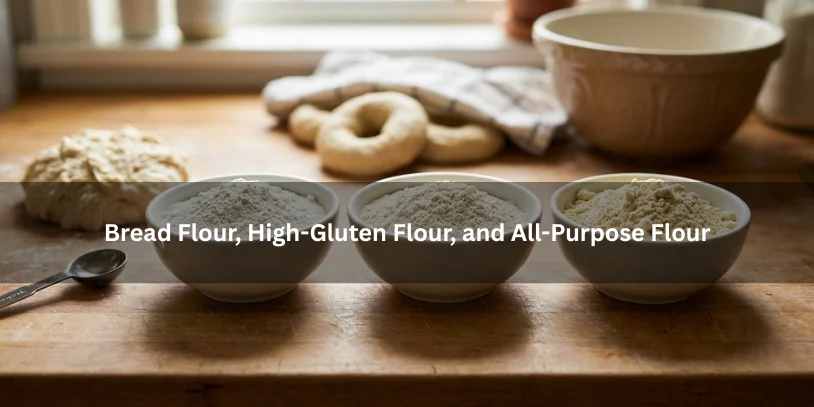
Flour choice changes everything.
Bread flour has more protein than all-purpose flour, which helps build gluten. Gluten gives bagel dough elasticity, chew, and strength.
High-gluten flour is even stronger and is often used for bakery-style bagels. It can make dough easier to shape and less likely to spread.
All-purpose flour is more available globally, but it may produce a softer dough. In the UK, look for strong white bread flour or very strong flour. In Australia, baker’s flour is often the closest option. In parts of Europe, strong wheat flour or Type 550-style flour may be useful depending on the country. In South Asia, maida may not behave like bread flour because protein strength can vary widely.
If your flour is weak, your dough may feel sticky even when the recipe is technically correct.
Does Hydration Cause Sticky Bagel Dough?
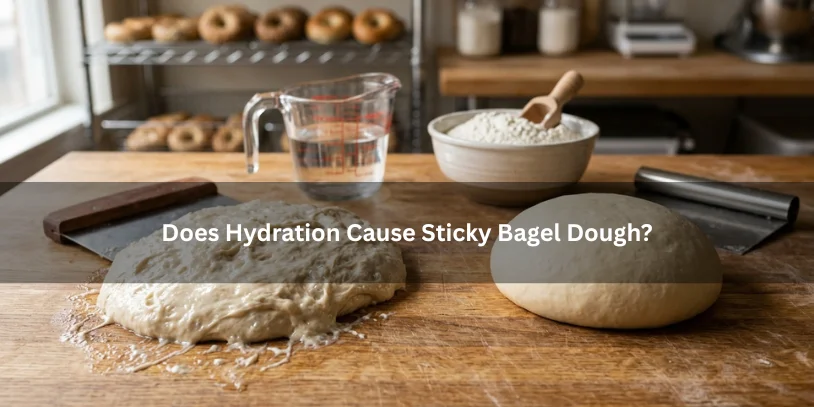
Yes. Hydration is one of the biggest causes of sticky bagel dough.
Hydration is the percentage of water compared with flour.
Here is the formula:
Water weight ÷ flour weight × 100 = hydration percentage
Example:
- 300g water
- 500g flour
- 300 ÷ 500 × 100 = 60% hydration
For many bagel doughs, this would be firm and workable. If hydration rises too high, the dough may feel soft, wet, or hard to shape.
This is why a digital kitchen scale is so useful. Cups can vary dramatically depending on how flour is scooped, packed, or settled.
Tools That Help with Sticky Bagel Dough
You do not need fancy equipment to make bagels, but a few tools make sticky dough easier to manage.
| Tool | Why It Helps |
|---|---|
| Digital kitchen scale | Prevents water/flour ratio problems |
| Bench scraper | Lifts and folds sticky dough cleanly |
| Stand mixer | Helps develop gluten in stiff dough |
| Dough hook | Kneads dense dough more efficiently |
| Proofing container | Helps track dough rise |
| Instant-read thermometer | Helps manage water and dough temperature |
| Parchment paper | Helps transfer shaped bagels |
| Slotted spoon or spider strainer | Makes boiling safer and easier |
A scale and bench scraper are the best low-cost upgrades. A stand mixer is helpful for frequent bakers, but stiff bagel dough can strain smaller machines
Common Mistakes to Avoid
Adding Too Much Flour Too Soon
This is the biggest mistake. Rest and knead before correcting with flour.
Confusing Tacky with Wet
A tacky dough is normal. A wet dough needs adjustment.
Using Weak Flour Without Adjusting
All-purpose flour may need less water than bread flour.
Letting Dough Get Too Warm
Warm dough becomes sticky and harder to shape.
Overproofing Before Boiling
Shaped bagels should look slightly puffy, not fragile and ballooned.
Skipping the Rest
A short rest can turn sticky dough into manageable dough.
Using Too Much Bench Flour
Excess bench flour can dry the outside and prevent proper sealing.
Can Sticky Bagel Dough Still Be Saved?
Yes, most sticky bagel dough can be saved.
If it is only slightly tacky, continue the recipe. If it is sticky but elastic, rest and knead it. If it is wet and spreading, add flour gradually. If it is warm and slack, chill it.
The dough is harder to save if it is severely overproofed, batter-like, or unable to hold any shape. Even then, you can often bake it as bagel-style rolls, flat rounds, or a rustic bread instead of throwing it away.
FAQs
1. Is bagel dough supposed to be sticky?
Bagel dough should be slightly tacky, but it should not be wet or gluey. It should feel firm, smooth, elastic, and strong enough to hold a ring shape.
2. How do I fix sticky bagel dough?
Rest the dough for 10–15 minutes, knead again, then add flour slowly if it is still wet. If the dough feels warm, chill it before shaping.
3. Should I add flour to sticky bagel dough?
Only add flour if the dough remains wet after resting and kneading. Add small amounts at a time. Too much flour can make bagels dry, dense, and tough.
4. Why is my bagel dough sticky after kneading?
It may be under-kneaded, over-hydrated, too warm, or made with low-protein flour. Knead longer first, then add flour gradually if the dough still smears or spreads.
5. Why is my bagel dough sticky after rising?
Sticky dough after rising can mean the dough is too warm, slightly overproofed, or too wet. Chill it briefly and handle it gently with lightly floured hands.
6. Why is my bagel dough sticky after an overnight proof?
Overnight dough can feel sticky from condensation, long fermentation, or high hydration. Dust lightly with flour, shape gently, and reduce proofing time or water next time.
7. Can all-purpose flour make bagel dough sticky?
Yes. All-purpose flour usually has less protein than bread flour, so it may create a softer, stickier dough with less chew and structure.
8. Does malt syrup make bagel dough sticky?
Barley malt syrup, honey, and other liquid sweeteners can make dough tackier. If you add extra syrup, reduce the water slightly or expect to use a little more flour.
9. What should bagel dough feel like before rising?
Before rising, bagel dough should feel firm, dense, and slightly tacky. It should form a smooth ball and hold its shape instead of spreading.
10. Can sticky bagel dough still make good bagels?
Yes. If the dough is only tacky or slightly sticky, it can still make good bagels. Resting, kneading, chilling, or small flour additions can usually correct it.
11. Why did my bagels turn out dense?
Dense bagels can come from too much added flour, underproofing, overproofing, weak gluten development, or dough that was too dry after correction.
12. Is sourdough bagel dough stickier than yeast dough?
It can be. Sourdough bagel dough may become stickier during long fermentation, especially if hydration is high or the dough gets too warm.
13. Should bagel dough pass the windowpane test?
It does not need to stretch as thinly as soft sandwich bread dough, but it should show good gluten development. The dough should feel elastic, smooth, and resistant.
14. Why is my gluten-free bagel dough sticky?
Gluten-free bagel dough lacks wheat gluten, so it often feels stickier and less elastic. It usually depends on binders, starches, and resting time for structure.
Conclusion
Sticky bagel dough usually comes from too much water, weak flour, under-kneading, warm dough, overproofing, or liquid sweeteners like malt syrup and honey.
Start with the gentlest fix: rest the dough. Then knead longer. If it is still wet, add flour slowly. If it feels warm or slack, chill it before shaping.
The best bagel dough is firm, elastic, and slightly tacky. It should feel strong enough to shape, boil, and bake without collapsing. Once you learn the difference between tacky and truly sticky, bagel dough becomes much easier to judge — and much easier to save.