

If you’re standing in the kitchen wondering, why is my cake batter so thick, the good news is that thick batter does not always mean disaster.
Sometimes it means something went wrong, like too much flour, not enough liquid, cold ingredients, or a mixing issue. But sometimes thick cake batter is completely normal, especially in pound cake, coffee cake, fruit-heavy cake, and some recipes made with sour cream, pumpkin puree, or the reverse creaming method.
The trick is knowing the difference before you start randomly adding milk and hoping for the best.
Quick Answer: Why is my cake batter so thick?
Cake batter is usually too thick because of one of these reasons:
- too much flour
- not enough liquid
- cold ingredients
- overmixing or undermixing
- the wrong flour or ingredient substitutions
- a recipe style that naturally produces thick, spreadable batter
That last point matters more than most people think. Not every cake batter should be pourable. Some should fall in ribbons, some should spread with a spatula, and some will look almost too thick until they bake up perfectly.
When Thick Cake Batter Is Actually Normal
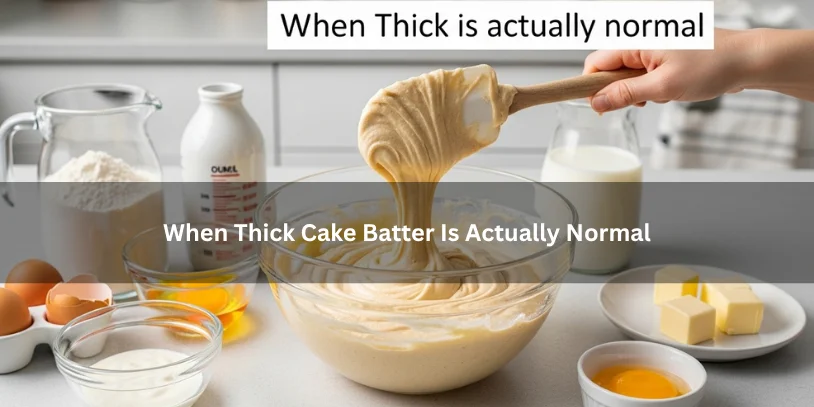
Before you try to fix anything, step back and ask what kind of cake you’re making.
A standard vanilla layer cake often has a smoother, more pourable batter. But a pound cake, coffee cake, and many fruit or pumpkin cakes are usually thicker by design. They need more structure to hold fruit, streusel, pie filling, or a tighter crumb structure.
Cake types that often have naturally thick batter
- pound cake
- coffee cake
- pumpkin cake
- banana cake
- fruit-heavy cake
- sour cream cake
- cream cheese cake
- some reverse creamed or paste method cakes
If your batter is thick but still smooth and spreadable, that may be exactly right for the recipe.
The Most Common Reasons Your Cake Batter Is Too Thick
1. You added too much flour
This is the most common reason by far.
Flour is easy to overmeasure when you scoop it straight from the bag with a measuring cup. That packs in more flour than the recipe intended. If you bake by cups instead of grams, the difference can be bigger than you think.
What this looks like
- batter feels heavy and pasty
- it clings to the mixer paddle in a thick mass
- it looks more like dough than batter
- the finished cake turns out dense or dry
How to avoid it next time
Use a digital kitchen scale whenever possible. If you’re using measuring cups, spoon the flour into the cup and level it off instead of scooping directly from the container.
This matters whether you are using all-purpose flour or cake flour. Cake flour is lighter and softer, while all-purpose flour has more protein and can create more gluten development, which affects texture and thickness.
2. There isn’t enough liquid
Cake batter needs balance. If the recipe has milk, eggs, butter, oil, sour cream, or another liquid ingredient, even a small measuring mistake can throw the whole thing off.
This can happen when:
- you forgot part of the milk
- you used too little sour cream
- you used extra dry ingredients like cocoa powder
- you substituted a thicker ingredient without adjusting
- your pumpkin puree or fruit mixture was drier than expected
This is one reason fruit-heavy cake and pumpkin cake recipes can vary from batch to batch. Different brands and ingredients hold different amounts of moisture.
3. Your ingredients were too cold
Cold ingredients are a quiet troublemaker in baking.
When butter, eggs, milk, or sour cream are too cold, they do not blend smoothly. Instead of forming a stable emulsion, the batter can look stiff, slightly curdled, or unusually thick. That is especially common in cakes made with the creaming method, where butter and sugar are beaten together first.
Signs this is your problem
- the batter looks thick and grainy
- it seems slightly curdled
- butter appears to have seized
- the mixture looks uneven instead of smooth
Room-temperature ingredients combine more evenly and help create a better crumb. That means better rise, fewer gummy streaks, and a more even texture.
4. You overmixed or undermixed
Most people only worry about overmixing, but undermixing can also cause problems.
Overmixing
Once flour is added, too much mixing encourages gluten development. That can make the batter tighter and the cake heavier. You may end up with a dense cake or a dry cake instead of a soft, fluffy crumb.
Undermixing
Undermixing can leave pockets of flour, uneven leavening, or streaks of butter and sugar that never fully came together. The batter may look thick in some places, loose in others, and bake unevenly.
This is why “mix until just combined” is helpful, but only if the batter is already properly incorporated. The goal is not careless mixing. The goal is enough mixing to create a smooth batter without taking it too far.
5. The recipe method changes the batter texture
Not all cake batters are built the same way.
A blended method batter may look smoother and looser. A creaming method batter often starts out thicker. A reverse creaming or paste method cake can look surprisingly dense before it goes into the pan. Sponge cake batter behaves differently again because the eggs or egg whites are whipped to build air, often reaching a ribbon stage before dry ingredients are folded in.
That means comparing one cake batter to a random video online can mislead you fast.
6. Ingredient substitutions changed the balance
Swaps can be useful, but they also change the batter.
Common examples:
- using all-purpose flour instead of cake flour
- adding extra cocoa powder
- replacing milk with a thicker dairy product
- using Greek yogurt in place of sour cream without adjustment
- changing the fat balance between butter and oil
- using a different pumpkin puree brand
- adding fruit or pie filling without accounting for moisture
Even baking powder vs baking soda matters in some recipes because the recipe is built around a specific balance of acid, lift, and moisture.
Thick Batter vs Normal Batter: How to Tell the Difference
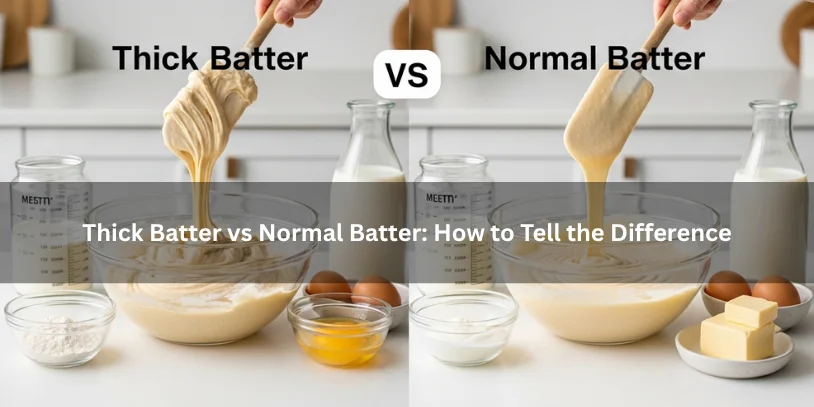
Here’s the simplest way to judge it.
| What the batter looks like | What it usually means |
|---|---|
| Smooth and pourable | Common for many layer cakes and oil cakes |
| Thick but spreadable | Often normal for pound cake, coffee cake, sour cream cake |
| Thick and ribbon-like | Often normal for richer batters |
| Thick, grainy, or curdled | Usually a temperature or emulsion problem |
| Heavy like scoopable dough | Often too much flour or not enough liquid |
| Uneven with dry pockets | Usually undermixed |
A quick real-world test
Lift some batter with a spatula.
- If it falls off in slow ribbons, that may be normal.
- If it spreads with a little help, it may still be fine.
- If it sticks in a solid lump and barely moves, something is probably off.
- If it looks broken or greasy, think cold ingredients and curdling before anything else.
How to Fix Thick Cake Batter Safely
Do not dump in lots of milk right away. That usually makes things worse.
Use this step-by-step approach instead.
Step 1: Identify the cake type
Ask yourself what you’re making.
If it’s a pound cake, coffee cake, or fruit-heavy cake, the batter may be thicker than a regular vanilla cake on purpose. In that case, no fix may be needed.
Step 2: Check what happened
Before adjusting anything, run through this list:
- Did I measure flour by weight or by cups?
- Did I forget any liquid?
- Were my eggs, butter, or milk too cold?
- Did I substitute cake flour with all-purpose flour?
- Did I add pumpkin puree, fruit, or pie filling?
- Did I overmix after adding flour?
This quick check often tells you more than the batter itself.
Step 3: Adjust liquid slowly if needed
If the batter is clearly too thick for the style of cake, add a small amount of the recipe’s existing liquid.
Good options include:
- milk
- buttermilk
- cream
- water, if the recipe already uses water
- coffee, if the recipe includes it
Add 1 tablespoon at a time, then mix gently and reassess. That small-step approach is much safer than making a big correction.
Step 4: Fix a curdled batter differently
If the batter is thick because it looks curdled rather than dry, the solution may not be more liquid.
Try this:
- let the bowl sit briefly so the ingredients warm slightly
- scrape the sides and bottom of the bowl
- mix gently until the batter smooths out
- avoid aggressive extra mixing
A curdled batter is often an emulsion issue, not a moisture issue.
Step 5: Stop once the batter looks right
Do not chase a perfectly silky texture if the recipe does not call for it.
Many bakers turn a fixable batter into a bad batter by overcorrecting. Once it becomes smooth, thick, and workable for that cake type, stop.
What Happens If You Bake Cake Batter That’s Too Thick?
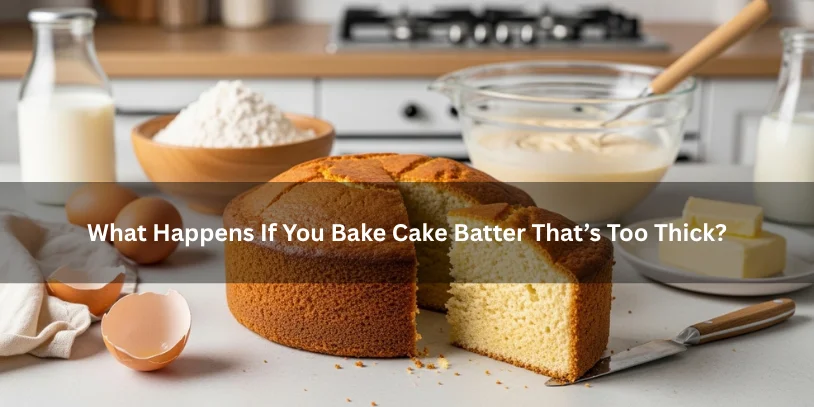
Sometimes the cake still works. Sometimes it really doesn’t.
Common results of overly thick batter
- dense cake
- dry cake
- poor rise
- tight crumb
- uneven baking
- tunnels or gummy streaks
- a cake that feels heavy instead of fluffy
The more the balance is off, the more likely the final cake will suffer.
Cake Batter Consistency by Cake Type
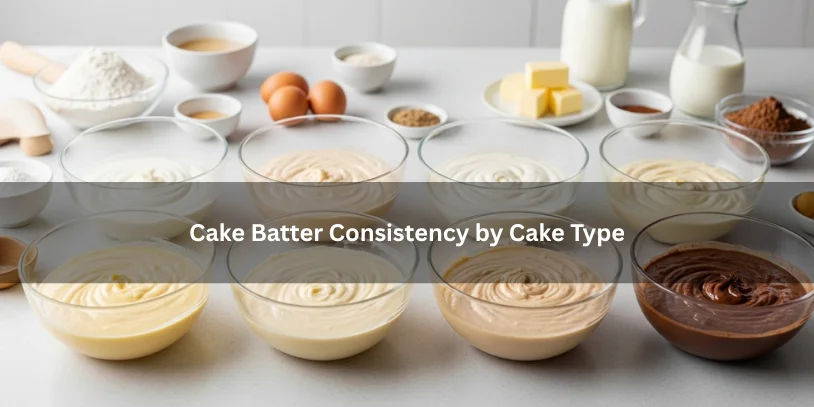
This is where a lot of confusion comes from. People expect every batter to behave the same way.
| Cake Type | Expected Batter Texture |
|---|---|
| Vanilla layer cake | Smooth, medium, often pourable |
| Chocolate cake | Medium to loose, often easy to pour |
| Pound cake | Thick, rich, spreadable |
| Coffee cake | Thick to very thick |
| Sponge cake | Airy, foam-based, often ribbon-like |
| Fruit cake | Thick and sturdy |
| Pumpkin cake | Medium to thick, depends on puree moisture |
| Box cake mix | Usually smoother and looser than many scratch cakes |
If you’re asking, should cake batter be pourable? the answer is: sometimes yes, sometimes no.
The Tools That Help Most
You do not need a professional bakery setup, but a few tools make a big difference.
Helpful tools for better batter consistency
- digital kitchen scale for measuring flour in grams
- dry measuring cups for flour and sugar
- liquid measuring cup for milk, water, or oil
- stand mixer or hand mixer for controlled mixing
- rubber spatula to scrape the bowl sides and bottom
- instant-read thermometer if you want more precision with ingredient temperature
Using the correct tool sounds basic, but it solves a surprising number of baking problems before they start.
How to Prevent Thick Cake Batter Next Time
Use this checklist before you begin.
Prevention checklist
- measure flour by weight if possible
- spoon and level if using cups
- use room-temperature ingredients unless the recipe says otherwise
- read the full method before you start
- use the correct flour called for in the recipe
- do not compare every batter to one visual standard
- alternate dry and wet ingredients if the recipe says to
- scrape the bowl sides and bottom
- watch pan size and oven temperature, because both affect how the batter performs during baking
Pan size and oven temperature will not usually make the raw batter thicker, but they can make you think the recipe failed when the real issue was how the cake baked.
A Simple Decision Framework
If your batter is thick, use this rule:
If the batter is thick but smooth
It may be normal for the recipe.
If the batter is thick and dry-looking
Check flour and liquid balance.
If the batter is thick and curdled
Think ingredient temperature and emulsion.
If the batter is thick after adding flour
You may have overmeasured flour, undermixed earlier, or overmixed after the flour went in.
If the batter is thick in a sponge cake
Check whether the eggs reached proper ribbon stage and whether the dry ingredients were folded in correctly.
That one framework covers the gaps most baking articles miss.
Why Online Videos Can Make You Doubt Your Batter
One more thing people do not talk about enough: video clips can be misleading.
A batter may look looser on camera because of lighting, angle, editing, or because the creator used grams, different flour, a different brand of pumpkin puree, or a different room temperature. Even humidity and altitude can slightly change how ingredients behave.
So if your batter does not look exactly like a social media clip, that does not automatically mean it is wrong.
FAQs
Is thick cake batter normal?
Yes, sometimes. Pound cake, coffee cake, fruit cake, and some sour cream or pumpkin cakes often have thick batter on purpose.
Can I add milk if my cake batter is too thick?
Yes, but only a little at a time. Add 1 tablespoon, mix gently, and stop as soon as the batter reaches the right consistency for that recipe.
Why is my pound cake batter so thick?
Pound cake batter is usually thick because it is rich in butter, eggs, and flour. That thicker texture helps create a tight, fine-grained crumb.
Why is my sponge cake batter too thick?
A sponge cake can seem too thick if the eggs were not whipped properly to ribbon stage, or if the dry ingredients were folded in too heavily.
Does overmixing make cake batter thicker?
It can. Overmixing after adding flour increases gluten development, which can tighten the batter and lead to a denser cake.
Can cold ingredients make batter thick?
Yes. Cold butter, eggs, milk, or sour cream can make the emulsion unstable and create a thick, curdled-looking batter.
What happens if I bake thick cake batter anyway?
You may end up with a dense cake, dry texture, poor rise, or uneven crumb. If the batter is only naturally thick for that cake type, though, the result may still be perfect.
How do I know if my batter consistency is right?
Look at the cake type first. A layer cake batter is often more pourable, while a coffee cake or pound cake batter is usually thicker and spreadable.
Why is my cake batter thick after adding flour?
This usually points to too much flour, mixing issues, or the fact that the recipe simply uses a thicker batter style.
Is cake flour better than all-purpose flour for thin batter?
Cake flour usually creates a softer, lighter texture than all-purpose flour, but it does not mean the batter should always be thin. It depends on the recipe.
Conclusion
If you keep asking yourself, why is my cake batter so thick, the answer usually comes down to one of two things: either the recipe balance changed, or your expectations did.
Too much flour, not enough liquid, cold ingredients, curdling, overmixing, undermixing, and ingredient swaps can all make batter thicker than it should be. But plenty of cakes are supposed to have thick batter, especially pound cake, coffee cake, pumpkin cake, and fruit-heavy bakes.
The smartest move is to diagnose first, not panic first. Check the cake type, check your flour, check your liquid, check your ingredient temperature, and only then make a small correction. That is how you save the batter, protect the crumb, and stop one thick bowl from turning into a disappointing cake.