

Runny cookie batter usually means the mixture has too much liquid, not enough flour, overly warm fat, or a weakened structure. In most cases, the fastest fix is to chill the dough first, then adjust with a little flour only if needed.
If you searched for cookie batter, you are not alone. Most home bakers use that phrase casually, even though cookie dough is the more accurate term for most recipes. Either way, the problem is the same: your mixture looks too loose, too glossy, too sticky, or too thin to hold its scoop shape.
That matters because dough consistency affects everything that comes next. If the dough is too wet or too warm, the cookies often spread too much, turn flat, bake greasy at the edges, or lose that soft chewy center you were hoping for.
The good news is that most runny cookie dough can be saved.
The 3-step quick fix
Before you panic or throw in lots of extra flour, do this:
- Chill the dough for 20 to 60 minutes
This firms up butter and gives the flour time to hydrate. - Bake one test cookie
A dough that looks soft in the bowl may still bake well. - Add flour only if needed
Use 1 tablespoon at a time, mixing gently after each addition.
That simple sequence prevents the most common mistake of all: overcorrecting and ending up with dry, dense cookies.
What “runny” actually looks like
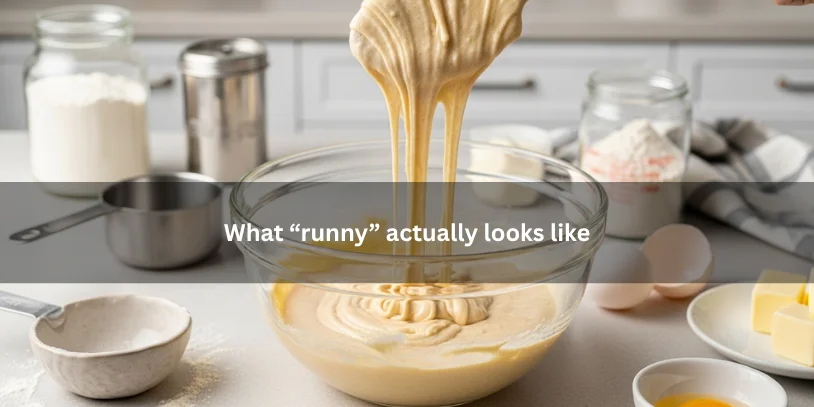
Not every soft dough is a problem. Some cookie recipes are naturally looser, especially ones made with brown butter, extra brown sugar, molasses, pumpkin, or cream cheese.
Your cookie dough is probably too runny if it:
- Pours or slides off the spoon
- Looks glossy or oily
- Will not hold scoop shape
- Spreads like thick batter instead of sitting in mounds
- Feels more fluid than soft
- Turns into puddles on the baking sheet
A dough that is just a little sticky is usually manageable. A dough that cannot hold shape at all needs troubleshooting.
Runny vs sticky vs oily cookie dough
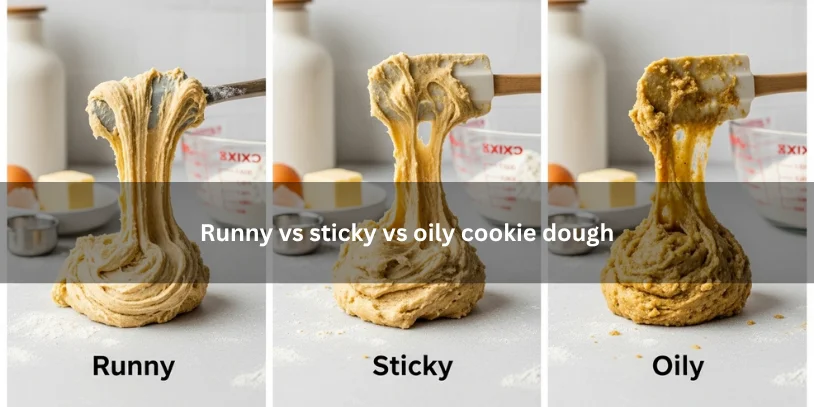
| Dough texture | What it usually means | Best first move |
|---|---|---|
| Runny or thin | Too much liquid, too little flour, or very warm butter | Chill, then test bake |
| Sticky but scoopable | Normal softness or slightly under-hydrated flour | Rest or chill briefly |
| Oily and glossy | Melted butter, ingredient imbalance, or overmixing | Chill first |
| Soft but not loose | Recipe may be normal | Test bake before changing anything |
This distinction matters because many bakers treat every soft dough like a mistake. Sometimes the dough is fine. Sometimes it just needs a short rest.
The most common reasons cookie batter turns runny
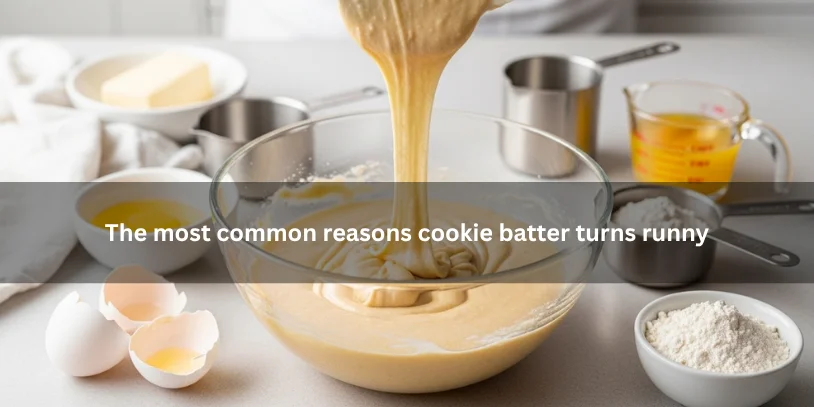
1. Your butter was too soft or fully melted
This is the biggest culprit in many kitchens.
Softened butter should give slightly when pressed, but it should not look shiny, greasy, or partially liquid. Melted butter changes the structure of cookie dough and often leads to excess spread unless the recipe was designed for it.
Signs
- Dough looks glossy
- The bowl feels warm
- The dough spreads fast on the tray
- Cookies come out flat and greasy
What to do
- Refrigerate the dough for 30 to 60 minutes
- Use cool baking sheets
- Bake one test cookie before adding flour
2. You did not add enough flour
Flour gives cookies structure. If you under-measure it, the fat-to-flour ratio shifts and the dough becomes too loose.
This happens often when:
- Flour is scooped directly with the measuring cup
- Cups are packed unevenly
- A recipe written in grams is converted loosely to cups
- A small amount of flour was forgotten
Best method
Use a kitchen scale whenever possible. If using cups, use the spoon-and-level method instead of scooping directly from the bag.
3. You added too much liquid
An extra egg, a heavy pour of vanilla extract, or extra milk can change the texture more than people realize. In a small batch, even one oversized egg can make the dough much looser.
Watch for these ingredients
- Eggs
- Milk
- Vanilla extract
- Molasses
- Honey
- Pumpkin puree
- Liquid sweeteners
What to do
- Chill first
- Then add flour gradually if needed
- Test bake before making more adjustments
4. Your kitchen is too warm
Warm-weather baking changes dough faster than many people expect. In hot kitchens, butter softens quickly. In humid climates, flour can absorb moisture from the air, which changes how the dough behaves.
This shows up more often in:
- Tropical climates
- Humid weather
- Summer baking
- Small kitchens near a hot oven
- Homes without strong air conditioning
What to do
- Mix faster
- Keep ingredients cool
- Chill dough between trays
- Avoid leaving dough near the oven
5. You overmixed the dough
Overmixing can warm the fat, make the dough extra glossy, and weaken the final texture. Once the flour goes in, mixing should stay gentle.
Warning sign
If the dough looks almost whipped, shiny, or overly smooth, you may have gone too far.
6. A substitution changed the structure
Not all swaps behave the same way.
Common troublemakers include:
- Margarine instead of butter
- Gluten-free flour blends without enough binding
- Egg substitutes with too much moisture
- Brown butter without adjusting flour
- Cream cheese added without accounting for extra moisture
A recipe can still work with substitutions, but the dough may need a different balance.
7. The dough was supposed to be soft
Some cookie dough is intentionally softer before chilling. This is common in bakery-style chocolate chip cookies, brown sugar-heavy doughs, and recipes that tell you to refrigerate before scooping.
If the recipe specifically says chill before baking, soft dough may be expected.
Symptom-based troubleshooting table
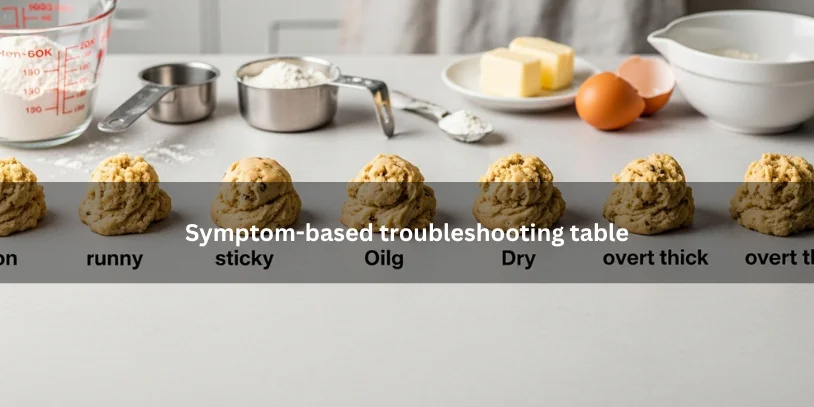
| Symptom | Likely cause | What to do now | What to avoid |
|---|---|---|---|
| Dough looks oily and thin | Butter too warm or melted | Chill 30–60 minutes | Dumping in lots of flour immediately |
| Dough pours off the spoon | Too much liquid or too little flour | Chill, then add 1 tbsp flour at a time | Baking the full tray without testing |
| Dough is still runny after mixing in dry ingredients | Flour was under-measured | Recheck recipe and add flour gradually | Guessing with large additions |
| Cookies spread into puddles | Warm dough or weak structure | Chill dough and use cool pans | Reusing hot baking sheets |
| Dough is sticky but not liquid | May be normal | Rest 10–20 minutes, then test bake | Assuming every sticky dough is broken |
| Dough stayed soft even overnight | Ratio issue or wrong substitution | Add a small amount of flour and test again | Repeating the same bake unchanged |
Should you chill it, add flour, or start over?
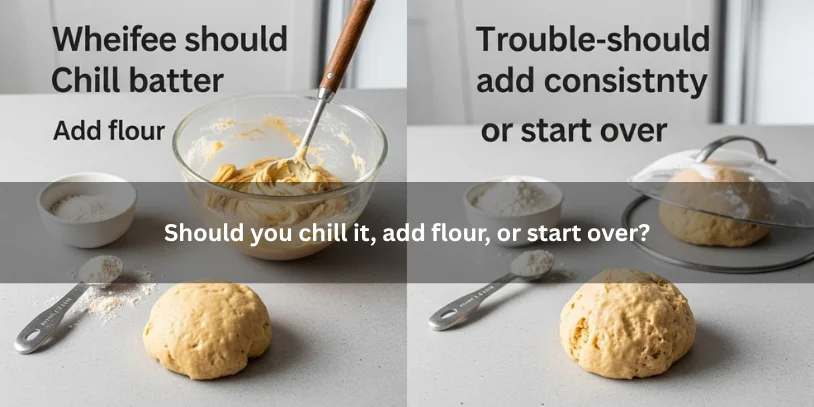
This is the decision point most bakers struggle with.
Chill the dough if:
- Butter was very soft or melted
- The kitchen is warm
- The dough only seems slightly loose
- The recipe already mentions chilling
- The dough looks glossy but otherwise balanced
Add flour if:
- You know the flour was under-measured
- You added extra liquid
- The dough still will not hold shape after chilling
- It feels closer to batter than dough
How much flour to add
Add 1 tablespoon at a time. Mix gently and stop as soon as the dough becomes scoopable. Too much flour can make cookies dry, thick, and cakey.
Start over if:
- You misread major ingredient amounts
- The dough tastes obviously off
- The mixture separated badly
- A key ingredient was doubled or skipped
- The texture still makes no sense after chilling and a small correction
Sometimes saving the batch costs more quality than it saves.
The one-cookie test method
If you are unsure what to do, bake one cookie.
This is one of the best ways to avoid overcorrecting. Scoop a small portion onto parchment paper or a silicone baking mat and bake it as a test.
What the test cookie tells you
- Spreads too much: chill longer or add a little flour
- Bakes flat and greasy: butter or flour balance is off
- Holds shape well: the dough may be fine
- Turns dry after you added flour: you added too much
This method is especially useful when the dough seems soft but the recipe includes brown sugar, melted butter, or chilling time.
Why cookies turn flat when dough is runny
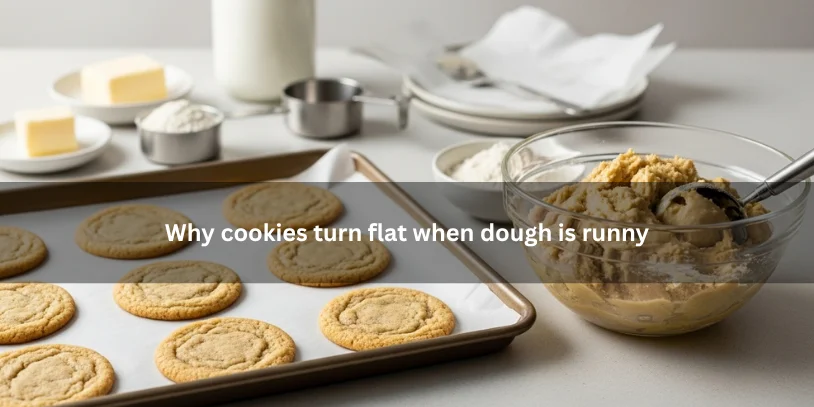
Flat cookies happen when the fat melts before the dough structure sets.
Flour, eggs, and leaveners like baking soda or baking powder help build structure. But if the butter is too warm, the dough too wet, or the baking sheet too hot, the cookies spread before that structure can hold them in place.
That is why warm dough and hot pans are such a bad combination.
Common mistakes that make the problem worse
When bakers try to fix runny cookie dough fast, they often create a second problem.
Avoid these moves
- Adding too much flour all at once
- Baking the whole batch without a test cookie
- Using a hot baking sheet from the previous tray
- Leaving dough next to a preheating oven
- Using melted butter when the recipe calls for room-temperature butter
- Scooping flour directly from the container
- Overmixing after adding flour
Tools that make troubleshooting easier
You do not need expensive equipment, but a few basics help a lot:
- Kitchen scale for accurate flour measurement
- Cookie scoop to check if the dough holds shape
- Parchment paper or silicone baking mat for controlled spread
- Oven thermometer if your oven runs hot
- Cool baking sheets between batches
- Refrigerator or freezer for quick rescue
A simple scale is especially useful if cookie consistency is a recurring issue.
What if the dough is still runny after chilling?

This is a real frustration point.
If the dough stayed loose after chilling overnight, one of these is usually true:
- The flour was under-measured
- There is too much liquid in the recipe
- A substitution changed the balance
- The dough was meant for a different format
- The recipe itself is flawed
At that point:
- Let the dough sit at room temperature for just a few minutes so it is mixable
- Add a small amount of flour
- Mix gently
- Bake one test cookie
If it still spreads too much, do not keep chasing perfection with endless flour. Consider using it for another dessert format.
Smart rescue options if you do not want to waste the batch
If classic scoop cookies are not happening, you still have options.
Turn it into bar cookies
Spread the dough in a lined pan and bake it as bars. This works especially well for chocolate chip-style dough.
Make a skillet cookie
A softer dough often works better in a cast-iron skillet or baking dish.
Use it as a crumble-style topping
If the mixture is only slightly off, you may be able to bake it as a topping over fruit or dessert bars.
These are practical ways to save ingredients without forcing the dough into something it no longer wants to be.
Food safety note
When you are troubleshooting cookie batter, it is tempting to taste it over and over. Avoid that. The CDC and FDA advise against eating raw dough or batter because raw flour and eggs can carry harmful germs.
That also means homemade cookie dough should not be used as ready-to-eat filling unless it was specifically prepared for that purpose.
How to prevent runny cookie dough next time
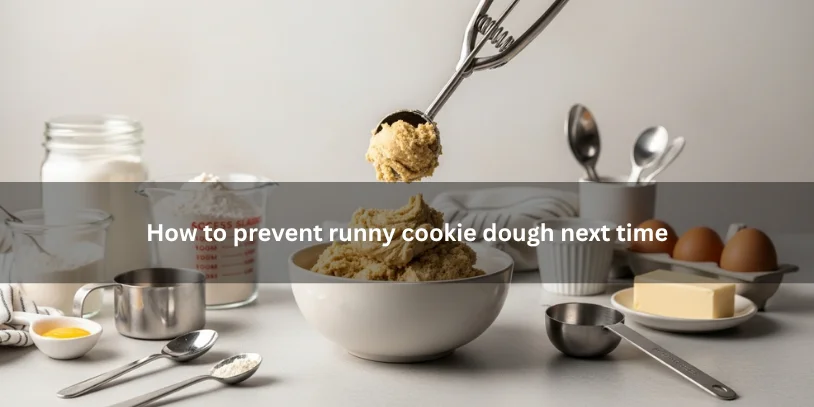
A few habits solve most cookie dough problems before they start.
Before mixing
- Read the recipe all the way through
- Check whether it calls for chilling
- Bring butter to the right temperature
- Measure ingredients carefully
During mixing
- Cream butter and sugar properly
- Add eggs one at a time
- Mix just until combined
- Watch the texture after each step
Before baking
- Scoop one test cookie
- Use a cool baking sheet
- Chill between batches if needed
- Keep the dough away from heat
Best consistency checklist
Your cookie dough should usually be:
- Soft but not pourable
- Thick enough to hold scoop shape
- Slightly sticky, not glossy liquid
- Easy to portion onto the tray
FAQs
1. Why is my cookie dough runny even after I followed the recipe exactly?
You may still have a measurement issue, especially with flour. Warm butter, oversized eggs, humid weather, and cup-based measuring can all affect the final dough even when you think you followed the recipe correctly.
2. Can I add flour to fix runny cookie dough?
Yes, but do it carefully. Add 1 tablespoon at a time after chilling the dough first. Too much flour can make the cookies dry and dense.
3. Does melted butter make cookie dough runny?
Yes. Melted butter is one of the most common causes of thin, loose dough and flat cookies unless the recipe was specifically built for melted butter.
4. Is cookie batter supposed to be runny?
Usually no, although some recipes are naturally softer than others. Most cookie dough should be soft, thick, and scoopable rather than pourable.
5. Why are my cookies flat and greasy?
That usually points to overly warm butter, too little flour, a hot baking sheet, or dough that needed chilling before baking.
6. Can humidity make cookie dough wetter?
It can affect how ingredients behave, especially flour and butter in warm kitchens. In humid or tropical conditions, dough often benefits from a longer chill.
7. Should cookie dough be sticky?
A little sticky is normal. What you want to watch for is whether it still holds shape. Sticky dough can bake well. Runny dough usually will not.
8. Can overmixing make cookie dough too soft?
Yes. Overmixing can warm the fat, change the texture, and make the dough look glossy or loose.
9. Why is my sugar cookie dough too soft to roll?
The dough may be too warm, under-floured, or overly rich in butter. Chill it well before rolling, and add a little flour only if the texture stays too loose.
10. Can I refrigerate runny cookie dough overnight?
Yes. Overnight chilling often helps, especially when the problem is warm butter or under-hydrated flour. If it is still too loose the next day, add flour in small amounts and test bake.
Conclusion
If your cookie batter is runny, the problem is usually one of three things: temperature, ingredient balance, or mixing technique. Start with the least invasive fix by chilling the dough, then bake one test cookie, and only add a little flour if the texture still needs help.
Most importantly, do not judge the batch too early. A soft dough is not always a ruined dough. With the right adjustment, you can usually turn a loose, sticky, or oily mixture into cookies that bake with better structure, better texture, and far less frustration.