

If your sourdough is coming out pale, blond, matte, or dull instead of deep golden-brown, the problem is usually not just “more bake time.” Sourdough crust color depends on heat, steam, fermentation, surface drying, and how much sugar is available on the outside of the loaf for browning.
In simple terms, sourdough browns when the crust gets hot enough and dry enough for the Maillard reaction and caramelization to happen. If one part of that chain is off, your loaf may rise, bake through, and still look too light.
What Makes Sourdough Brown in the First Place?
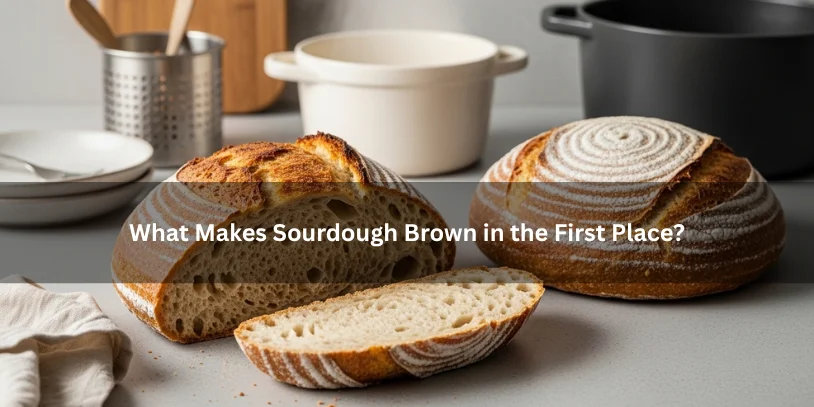
A dark, flavorful crust develops from two main browning processes:
- Maillard reaction between amino acids and reducing sugars
- Caramelization of sugars at higher heat
For either one to happen well, your loaf needs:
- strong oven heat
- enough time in the oven
- the right amount of steam early on
- a drier surface later in the bake
- well-fermented dough with enough usable sugars
That is why pale crust is rarely caused by one issue alone. It is usually a combination of oven setup, bake timing, steam control, and fermentation.
Quick Diagnosis Table
| Symptom | Most likely cause | What to change first |
|---|---|---|
| Pale crust all over | Oven too cool or loaf underbaked | Preheat longer and bake uncovered longer |
| Pale top, dark bottom | Weak top heat or rack too low | Move loaf higher after lid removal |
| Pale crust + gummy crumb | Underbaked or surface stayed too moist | Extend bake and release steam sooner |
| Pale crust + flat loaf | Overproofed or weak starter | Shorten proof and strengthen starter |
| Pale crust + tight crumb | Underproofed or weak fermentation | Allow fuller bulk fermentation |
| Soft, glossy, rubbery crust | Too much steam too long | Switch to dry heat earlier |
| White dusty patches | Too much flour on surface | Brush off excess flour before baking |
The Most Common Reasons Your Sourdough Is Not Browning
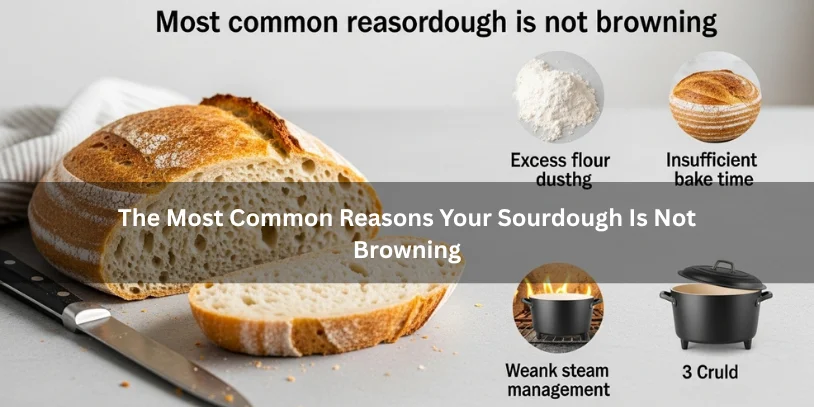
1. Your Oven Is Not as Hot as You Think
This is the biggest cause of sourdough pale crust. Many home ovens run cool, cycle unevenly, or signal “preheated” before the baking chamber and Dutch oven are truly ready.
A loaf may still get oven spring in a slightly cool oven, but crust color will lag behind. That leaves you with bread that looks baked but never develops that crisp, deep brown finish.
What to do:
- Preheat for 45 to 60 minutes, not just until the beep
- Use an oven thermometer if your crust color is inconsistent
- Let cast iron, a covered baker, baking stone, or baking steel fully heat through
2. You’re Pulling the Loaf Too Early
A lot of bakers are actually underbaking when they think the loaf is “done.” This happens especially when the crust has set and the loaf sounds hollow, but the outer layer still needs more dry heat to deepen in color.
If your sourdough is pale and the crumb is slightly gummy, chewy, or damp, it usually needs more time.
Signs this is the issue:
- pale crust all over
- soft crust after cooling
- slightly gummy interior
- weak crackle instead of a crisp crust
A useful doneness checkpoint for many lean artisan loaves is an internal temperature around 205–210°F / 96–99°C, but crust color still matters. A loaf can hit temperature and still benefit from a few more uncovered minutes.
3. You’re Keeping Steam Too Long
Steam is helpful at the beginning of the bake because it delays crust set and improves oven spring. But if the crust stays wet too long, browning slows down.
This is one of the most misunderstood parts of sourdough baking. More steam is not always better. What you want is:
- steam early
- dry heat later
If you bake in a Dutch oven and leave the lid on too long, or if you keep adding moisture during the entire bake, the crust can stay pale, soft, or glossy rather than crisp and golden-brown.
A good starting structure:
- Bake covered for 20 to 25 minutes
- Remove the lid
- Finish uncovered for 20 to 25 minutes
- Add 5 to 10 more minutes if the loaf still looks too blond
4. Your Dough Is Overproofed
Overproofed sourdough often spreads, loses strength, and bakes with a dull-looking crust. The loaf may not spring enough in the oven, and the exterior may never develop the same depth of color as a well-timed loaf.
This confuses many bakers because they assume more fermentation always means better browning. In reality, over-fermented dough can work against you.
Common clues:
- loaf is flatter than usual
- scoring barely opens
- crust looks pale and lifeless
- crumb is weak or slightly collapsed
5. Your Dough Is Underproofed
This is the other side of the same problem. Underproofed dough can also brown poorly because fermentation was not complete enough to support proper expansion, sugar balance, and crust development.
That is why “underproofed vs overproofed vs underbaked” needs to be handled carefully. All three can lead to disappointing crust color, but the loaf will look and feel different in each case.
Underproofed loaf signs:
- tight crumb
- dense texture
- dramatic tearing
- thick crust but lighter overall color
6. Your Starter Is Weak or Too Acidic
A sluggish starter or poorly balanced levain can affect oven spring, fermentation strength, and sugar availability. If the dough looks active but lacks real fermentation power, the loaf may come out flatter, denser, and paler than expected.
If your starter has been neglected, recently revived, or is peaking too early or too late, it can quietly undermine crust color.
7. The Surface of the Dough Stayed Too Wet
Surface moisture matters. If the outside of the loaf remains damp too long, the crust cannot dry enough for effective browning.
This can happen when:
- you cold-proof overnight and condensation forms
- humidity is high
- your dough hydration is very high
- your oven holds too much steam late in the bake
A pale loaf with a soft, glossy, or slightly rubbery crust often points to this exact issue.
8. Your Top Heat Is Too Weak
If your sourdough is pale on top but dark on the bottom, the issue is not just total bake time. It is usually a heat-distribution problem.
That could mean:
- your rack is too low
- your Dutch oven shields the loaf too much
- your oven’s upper heat is weak
- your baking steel or stone is driving strong bottom heat while the top lags behind
What to do:
- move the loaf higher in the oven after removing the lid
- finish the last few minutes on a slightly higher rack
- rotate the loaf if your oven has hot and cool zones
9. Too Much Flour on the Surface
If your loaf comes out with white patches or a dusty pale look, the crust may be browned underneath but hidden by too much bench flour or rice flour.
This is common with bannetons. The flour helps prevent sticking, but too much of it can block that rich golden-brown finish.
Brush off excess flour before scoring if you want more color.
10. You’re Applying Advice for Enriched Bread to Lean Sourdough
Some bread articles recommend sugar, milk, butter, or egg wash to encourage browning. That can help enriched dough, but it is not the first fix for lean artisan sourdough.
If your sourdough is not browning, do not jump straight to adding sugar or a wash. Fix the actual cause first:
- heat
- steam timing
- fermentation
- bake length
- oven setup
Underproofed vs Overproofed vs Underbaked
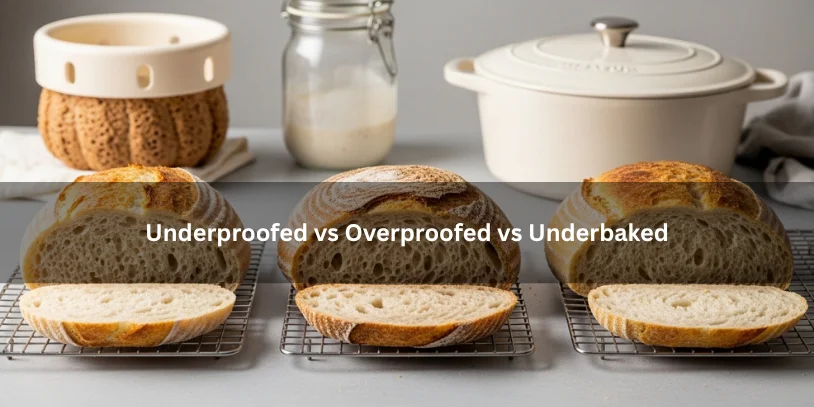
This is where many bakers get stuck, so here is the clean version.
Underproofed
- pale crust possible
- tighter crumb
- stronger tearing
- denser loaf
- less balanced oven spring
Overproofed
- pale or dull crust possible
- flatter shape
- weaker ear
- less lift
- softer structure
Underbaked
- pale crust very likely
- gummy or damp crumb
- crust softens quickly
- loaf may feel heavier than expected
If your loaf is pale and gummy, start by suspecting underbaking or excess late steam.
If it is pale and flat, look harder at overproofing or starter weakness.
If it is pale and tight inside, underproofing is more likely.
How to Fix Pale Sourdough on Your Next Bake
Change this one thing first
If you only change one variable, make it this:
Preheat longer and bake uncovered longer.
That single correction solves a surprising number of pale-crust problems.
A reliable next-bake plan
- Preheat oven and vessel for 45 to 60 minutes
- Use a fully active starter
- Bulk ferment until the dough shows real aeration and strength
- Avoid overproofing the final rise
- Bake with steam early, then dry heat later
- Remove the lid in time for real crust development
- Extend the final bake until the loaf looks fully colored, not merely “safe to remove”
Dutch Oven vs Open Bake vs Convection
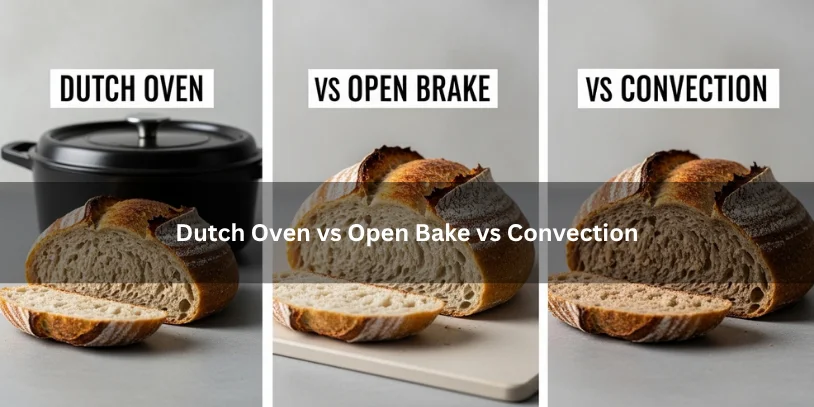
If you use a Dutch oven
A Dutch oven is excellent for steam retention and oven spring, but it can leave the loaf pale if the lid stays on too long.
Best if:
- you want strong bloom
- your oven runs dry
- you want more reliable spring
Watch out for:
- pale crust from excessive lid-on time
- weak top color if you finish too low in the oven
If you open bake with a steam tray
This can produce beautiful blistered crust, but steam has to be controlled well. Too little steam can limit spring. Too much late steam can keep the loaf pale.
Best if:
- you bake multiple loaves
- you want more flexibility
- you understand your oven well
If you use convection
Convection can help the crust dry and color more effectively in the second half of the bake, especially if your loaf browns poorly on top.
It can be useful:
- after the lid comes off
- in ovens with weak top browning
- when the crust stays matte and blond
Tools That Actually Help
You do not need to buy a full shelf of bread gear to fix this problem.
The most useful tools are:
- oven thermometer for checking real heat
- probe thermometer for confirming doneness
- Dutch oven or covered baker for early steam control
- baking steel or stone if your tray setup is weak
- proofing box only if your fermentation is wildly inconsistent
If you are going to buy just one thing, an oven thermometer usually gives the clearest answers.
Environment Still Matters
This is a global issue, not a local-service topic, but your environment can still affect results.
In humid climates
The crust may stay moist longer, especially after cold retard.
In cold kitchens
Fermentation can lag, which makes underproofing more likely.
At higher altitude
Moisture behavior and bake timing can change enough that you may need longer drying time or small process adjustments.
In gas vs electric ovens
Gas ovens often vent moisture differently. Electric ovens may hold steadier heat but still brown unevenly depending on the upper element.
Safety Note
Be careful with boiling water, cast iron, hot Dutch oven lids, and enclosed steam setups. Also check manufacturer guidance before preheating any pot, knob, or covered baker at high heat.
A Simple Decision Path
If your sourdough is not browning, ask these questions in order:
- Was the oven truly hot enough?
- Did I bake long enough uncovered?
- Did I keep steam too long?
- Is the loaf pale all over or only on top?
- Was the dough underproofed, overproofed, or underbaked?
- Did surface moisture or excess flour affect the crust?
That sequence is far more useful than randomly changing five things at once.
FAQs
Why is my sourdough not browning even after 50 minutes?
Usually because the oven is running cool, the Dutch oven was not fully preheated, the lid stayed on too long, or the crust is still too moist. If the loaf is also gummy, underbaking is especially likely.
Can sourdough be fully baked but still pale?
Yes. A loaf can be baked through and still look too light if the uncovered stage was too short or the surface never dried enough for strong browning.
Does too much steam stop sourdough from browning?
Yes. Steam helps early oven spring, but too much moisture late in the bake can leave the crust pale, soft, or rubbery.
Does overproofing cause a pale crust?
It can. Overproofed dough often has weaker oven spring and a duller finish, which can reduce crust color.
Does underproofing also cause pale crust?
Yes. Underproofed dough may not ferment enough to support balanced browning, and it often bakes up denser with less attractive color.
Why is my sourdough pale on top but dark on the bottom?
That usually points to uneven heat distribution. Your rack may be too low, your top heat may be weak, or your baking steel or stone may be pushing strong bottom heat.
Should I remove the Dutch oven lid earlier?
If your loaf consistently stays blond, yes. Try keeping the lid on for 20 to 25 minutes, then finish uncovered long enough for the crust to color properly.
Can diastatic malt powder help?
It can help in some doughs by improving sugar availability, but it is not the first fix for pale sourdough. Start with heat, steam timing, fermentation, and bake length.
Does convection help or hurt crust color?
It can help, especially during the uncovered stage, because it encourages drying and browning. Just watch the loaf closely so you do not overshoot and burn it.
Why is my crust soft after cooling?
That usually means the loaf needed more uncovered bake time, the crust stayed too moist from excess steam, or the bread cooled in a humid environment.
Conclusion
If your sourdough is not browning, the answer is usually not more ingredients or a completely new recipe. It is better control of heat, steam, fermentation, and timing.
Start with the biggest wins first: preheat longer, bake uncovered longer, and stop treating steam as something that should last the whole bake. Once those are dialed in, most pale sourdough problems become much easier to fix.